To acknowledge the Black Women Best framework to empower and improve life for all through guaranteed income, expanding child and income tax credit, increasing access to equitable health care and government assistance, prohibiting policing in schools, and prioritizing restorative justice.
Sponsor
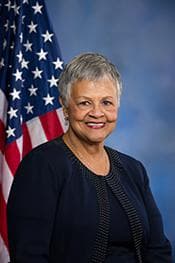
Full profile: /officials/W000822
Source: Congress.gov · FEC
Cosponsors (6)
Members who have signed on to support this bill since introduction. Source: Congress.gov.
Latest Action
The most recent step in the bill's legislative path. Committee Activity below shows referrals and reports; the full action-by-action history including floor proceedings lives at Congress.gov →
Committee Activity
Currently in
- House Committee on Oversight and Government ReformReferred To · 2026-05-14
Plain-English Summary
This resolution supports the need for and use of certain policy frameworks to incorporate the experiences of Black women into public policies.
Plain-English rewrite of the Congressional Research Service summary published on Congress.gov. Cached and reviewed.
Subjects
Full Bill Text
Verbatim text published on Congress.gov via GovInfo. Use Cmd+F / Ctrl+F to search within this excerpt.
[Congressional Bills 119th Congress] [From the U.S. Government Publishing Office] [H. Res. 1292 Introduced in House (IH)] <DOC> 119th CONGRESS 2d Session H. RES. 1292 To acknowledge the Black Women Best framework to empower and improve life for all through guaranteed income, expanding child and income tax credit, increasing access to equitable health care and government assistance, prohibiting policing in schools, and prioritizing restorative justice. _______________________________________________________________________ IN THE HOUSE OF REPRESENTATIVES May 14, 2026 Mrs. Watson Coleman (for herself, Ms. Kelly of Illinois, Ms. Clarke of New York, Ms. Norton, Mrs. McIver, Ms. Wilson of Florida, and Mr. Johnson of Georgia) submitted the following resolution; which was referred to the Committee on Oversight and Government Reform _______________________________________________________________________ RESOLUTION To acknowledge the Black Women Best framework to empower and improve life for all through guaranteed income, expanding child and income tax credit, increasing access to equitable health care and government assistance, prohibiting policing in schools, and prioritizing restorative justice. Whereas, throughout United States history, the country's economy was built in large part upon Black women's diminished power, through unpaid, exploited, and forced labor; Whereas discriminatory features of the United States labor market and the punitive design of public benefits programs hinder the economic mobility of Black women with disabilities; Whereas income gaps, wealth gaps, lack of adequate worker protection laws, and a host of other socioeconomic indicators illustrate a system that has been designed to keep Black women without power; Whereas Black women made up 6.4 percent of the United States workforce in 2025, with a median annual salary of $40,000 a year, compared to non-Hispanic men at $63,210 a year, a difference of $23,210; Whereas, between February and June of 2025, Black women's workforce participation dropped by 1.8 percent from 2024; Whereas, between February and July of 2025, Black women lost over 300,000 jobs in the United States labor market; Whereas Black women made between 63 and 66 cents for every dollar made by a White, non-Hispanic man in 2025; Whereas economic insecurity is intensified for Black women, who have little to no wealth to fall back on due to generational inequality and ongoing discrimination; Whereas guaranteed income, direct cash transfers, hazard pay, an increase in worker power, sectoral worker bargaining, and stronger labor law protection can benefit the economic well-being of marginalized demographics, specifically Black women; Whereas expanding the child tax credit and earned income tax credit, incentivizing State tax changes, and strengthening the estate tax can assist in centering Black women in tax reform; Whereas studies show that Black women, whether insured or uninsured, receive worse care by health care professionals, often at the expense of their lives; Whereas, in 2024, over 4,000,000 Black women relied on Medicaid as their primary source of health coverage; Whereas Black women not only need access to health care providers that value their identity, but also providers who look like them to improve Black women's access to quality care; Whereas Black women do not breastfeed at the same rates as their non-Black counterparts and are disproportionately affected by first food deserts and maternity care deserts; Whereas single woman-led households have the highest rates of food insecurity, and this disproportionately affects Black women; Whereas Black women are less likely to have wealth, to own a home, to hold retirement savings, and to receive inheritances and other family financial support; Whereas Black women have been stigmatized in the United States welfare state, which affects their equitable access to government assistance programs; Whereas Black women have been denied access to safe and affordable housing through the current rental housing market and Federal housing assistance programs;…
Show the remaining 371 wordsHide the remaining 371 words
Whereas racist and sexist Federal policies have denied Black women access to safe and affordable housing in both home ownership and rental markets, rendering them more likely to be cost burdened and face eviction; Whereas policymakers must provide robust, permanent, dedicated funding for home and community-based services to protect the rights of Black women with disabilities to receive care within their homes and communities; Whereas about 5 percent of Black women overall report serious psychological distress, and this rate nearly doubles for Black people living in poverty; Whereas the school-to-prison pipeline for Black girls must be eliminated, and restorative justice in lieu of policing in schools and communities to promote equitable academic success must be prioritized; Whereas critical legislation, such as the Protect Black Women and Girls Act, establishes a task force to examine the conditions and experiences of Black women and girls to identify and assess the efficacy of policies and programs designed to improve outcomes for Black women; and Whereas the Black Women Best (BWB) framework, as designed by Janelle Jones, the first African-American woman to serve as chief economist at the Department of Labor, offers the blueprint to adopt a more innovative and equitable approach to center the lived experiences of Black women in policymaking: Now, therefore, be it Resolved, That the House of Representatives-- (1) acknowledges the BWB framework to empower and improve life for all through guaranteed income, expanding child and income tax credit, increasing access to equitable health care and government assistance, prohibiting policing in schools, and prioritizing restorative justice; (2) supports the need to use policy frameworks similar to the BWB framework to center the lived experience of Black women in the policymaking process in order to ensure a more equal and just future for all; (3) encourages the use of this framework and those that complement it as a guideline to create and implement better public policies to benefit all people, and specifically Black women; and (4) considers legislative proposals presented in the Congressional Caucus on Black Women and Girls March 2023 report, ``An Economy for All: Building a `Black Women Best' Legislative Agenda'' to repair the historical disparities that Black women endure and to secure an economy that works for everyone. <all>
Related legislation
Bills by the same sponsor or covering overlapping subjects.
- HRES1450Condemning all forms of hate.Referred to Committee · 2026-07-22
- HR9208HEAR Act of 2026Referred to Committee · 2026-06-08
- HR9114Gig Is Up ActReferred to Committee · 2026-06-02
- HR9044Minority Fellowship Program Reauthorization Act of 2026Referred to Committee · 2026-05-26