HRES1329Referred to Committee
Expressing support for the designation of May 2026 as "Mental Health Awareness Month".
Introduced
In Committee
3
Passed One Chamber4
Passed Both5
Signed into Law119th
Congress
2026-05-29
Introduced
35
Cosponsors
HRES
ⓘType
Sponsor
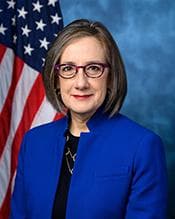
Andrea Salinas
Democrat · OR · Representative
Votes with party: 97.2% (670 recorded votes)
Top industries funding sponsor:
- Climate & Environment$24k
Full profile: /officials/S001226
Source: Congress.gov · FEC
Cosponsors (35)
Members who have signed on to support this bill since introduction. Source: Congress.gov.
- Adriano Espaillat (D-NY-13)Original· 2026-05-29
- Angie Craig (D-MN-2)Original· 2026-05-29
- Becca Balint (D-VT)Original· 2026-05-29
- Bonnie Watson Coleman (D-NJ-12)Original· 2026-05-29
- Brian K. Fitzpatrick (R-PA-1)Original· 2026-05-29
- Brittany Pettersen (D-CO-7)Original· 2026-05-29
- Daniel S. Goldman (D-NY-10)Original· 2026-05-29
- David Rouzer (R-NC-7)Original· 2026-05-29
- Derek Tran (D-CA-45)Original· 2026-05-29
- Don Bacon (R-NE-2)Original· 2026-05-29
- Donald S. Beyer, Jr. (D-VA-8)Original· 2026-05-29
- Doris O. Matsui (D-CA-7)Original· 2026-05-29
- Frank J. Mrvan (D-IN-1)Original· 2026-05-29
- Gabe Amo (D-RI-1)Original· 2026-05-29
- Gwen Moore (D-WI-4)Original· 2026-05-29
- J. Luis Correa (D-CA-46)Original· 2026-05-29
- Jennifer L. McClellan (D-VA-4)Original· 2026-05-29
- Jill N. Tokuda (D-HI-2)Original· 2026-05-29
- Jim Costa (D-CA-21)Original· 2026-05-29
- John Garamendi (D-CA-8)Original· 2026-05-29
- Josh Riley (D-NY-19)Original· 2026-05-29
- Judy Chu (D-CA-28)Original· 2026-05-29
- LaMonica McIver (D-NJ-10)Original· 2026-05-29
- Madeleine Dean (D-PA-4)Original· 2026-05-29
- Melanie A. Stansbury (D-NM-1)Original· 2026-05-29
- Nanette Diaz Barragán (D-CA-44)Original· 2026-05-29
- Nikema Williams (D-GA-5)Original· 2026-05-29
- Paul Tonko (D-NY-20)Original· 2026-05-29
- Raja Krishnamoorthi (D-IL-8)Original· 2026-05-29
- Rashida Tlaib (D-MI-12)Original· 2026-05-29
- Ritchie Torres (D-NY-15)Original· 2026-05-29
- Shri Thanedar (D-MI-13)Original· 2026-05-29
- Stephen F. Lynch (D-MA-8)Original· 2026-05-29
- Suzanne Bonamici (D-OR-1)Original· 2026-05-29
- Troy A. Carter (D-LA-2)Original· 2026-05-29
Latest Action
The most recent step in the bill's legislative path. Committee Activity below shows referrals and reports; the full action-by-action history including floor proceedings lives at Congress.gov →
Committee Activity
Currently in
- House Committee on Energy and CommerceReferred To · 2026-05-29
Plain-English Summary
Congress would formally recognize May 2026 as "Mental Health Awareness Month" to encourage public attention to mental health issues and support for people struggling with mental illness and substance abuse. The designation aims to promote education, reduce stigma, and highlight the importance of mental health services for all Americans. This is a symbolic measure that doesn't create new programs or funding, but signals congressional support for mental health awareness efforts.
AI-assisted summary generated from the official bill metadata (title, subjects, actions) sourced from Congress.gov. Cached and reviewed. Always verify against the official text linked below.
Subjects
Health
Full Bill Text
Verbatim text published on Congress.gov via GovInfo. Use Cmd+F / Ctrl+F to search within this excerpt.
[Congressional Bills 119th Congress] [From the U.S. Government Publishing Office] [H. Res. 1329 Introduced in House (IH)] <DOC> 119th CONGRESS 2d Session H. RES. 1329 Expressing support for the designation of May 2026 as ``Mental Health Awareness Month''. _______________________________________________________________________ IN THE HOUSE OF REPRESENTATIVES May 29, 2026 Ms. Salinas (for herself, Mr. Beyer, Mr. Bacon, Ms. Williams of Georgia, Ms. Chu, Ms. Dean of Pennsylvania, Ms. Tokuda, Ms. Stansbury, Mrs. Watson Coleman, Ms. Barragan, Mr. Espaillat, Mr. Lynch, Mr. Mrvan, Ms. Balint, Mr. Tonko, Mr. Goldman of New York, Mr. Garamendi, Mr. Correa, Ms. Pettersen, Ms. Tlaib, Ms. Craig, Mr. Krishnamoorthi, Ms. Moore of Wisconsin, Mr. Torres of New York, Mr. Fitzpatrick, Mr. Rouzer, Mr. Thanedar, Ms. Bonamici, Ms. Matsui, Mr. Amo, Mrs. McIver, Mr. Costa, Ms. McClellan, Mr. Carter of Louisiana, Mr. Tran, and Mr. Riley of New York) submitted the following resolution; which was referred to the Committee on Energy and Commerce _______________________________________________________________________ RESOLUTION Expressing support for the designation of May 2026 as ``Mental Health Awareness Month''. Whereas Americans across the country continue to confront an ongoing mental health crisis; Whereas Americans continue to see increasing reports of loneliness, stress, anxiety, depression, suicidal thoughts, and substance abuse; Whereas the 2024 National Survey on Drug Use and Health conducted by the Substance Abuse and Mental Health Services Administration (SAMHSA) found that-- (1) the number of American adults living with a mental illness has risen from 51,400,000 in 2019 to 61,500,000 in 2024; (2) 23.4 percent of Americans over the age of 18 and 33.2 percent of Americans between the ages of 18 and 25 have lived with a mental illness during the past year; and (3) 14,300,000 adults had serious thoughts of suicide during the past year; Whereas a 2025 Mental Health America online screening program found that-- (1) 79 percent of Americans who took the screening scored at risk for a mental health condition; (2) of those who scored at risk, 56 percent had never received treatment for a mental health condition before; and (3) 51 percent of all United States youth under 18 who took the depression screening reported frequent suicidal ideation, compared to 48 percent of youth in 2024; Whereas the Stress in America 2025 survey conducted by the American Psychological Association found that-- (1) 54 percent of adults reported feeling emotionally disconnected, saying they felt isolated from others; (2) 70 percent of adults with high loneliness levels said it was hard to plan for the future; and (3) 69 percent of adults said they needed more emotional support in the past year than they received; Whereas the 2025 Poll of Public Perspectives on the U.S. Mental Health Care System conducted by the National Alliance on Mental Illness found that-- (1) 1 in 6 people currently say they have poor mental health; (2) 57 percent of adults have an unfavorable view of the current state of the U.S. mental health care system; and (3) nearly 2 in 3 Americans say the U.S. spends too little on resources for mental health services; Whereas a February 2024 Household Pulse Survey found that 17.7 percent of adults reported symptoms of anxiety disorder; Whereas, according to the Centers for Disease Control and Prevention (CDC), mental health disorders are chronic conditions, and without proper diagnosis and treatment children can face problems at home and in school which can interfere with their future development; Whereas more resources should be dedicated in schools to the prevention, early detection, and treatment of mental health disorders in children; Whereas childhood depression is more likely to persist into adulthood if it is left untreated; Whereas it…
Show the remaining 1,090 wordsHide the remaining 1,090 words
is important that the United States provide the necessary funding and resources to reach children and youth early on in life; Whereas the October 10, 2024, CDC Morbidity and Mortality Weekly Report found that adverse childhood experiences (ACEs) were common among adolescents, with approximately three in four students experiencing one or more ACEs and approximately one in five students experiencing four or more ACEs and that these experiences contribute substantially to numerous health conditions and risk behaviors in adolescence; Whereas the May 12, 2023, CDC Morbidity and Mortality Weekly Report found that between 2020 and 2023, the number of pediatric emergency department visits associated with mental health conditions increased and was most pronounced in girls between the ages of 12 and 17; Whereas there has been a great concern about the impact of social media on the mental health of children and youth; Whereas social media does expose children to bullying, depression, anxiety, and self-harm; Whereas there is a strong need to further understand and deter any negative impacts of social media on children and youth; Whereas the CDC's Youth Risk Behavior Survey Data Summary and Trends Report: 2013-2023, found that-- (1) nearly 3 in 5 teenage girls in the United States felt persistently sad or hopeless in 2021, which is double that of boys and the highest level reported in decades; (2) 30 percent of teenage girls in the United States seriously considered attempting suicide in the past year; (3) youth experienced high and worsening levels of persistent sadness or hopelessness across all racial and ethnic groups; and (4) 40 percent of high school students felt so sad or hopeless almost every day for at least 2 weeks in a row that they stopped doing their usual activities; Whereas the CDC's Youth Risk Behavioral Survey Data Summary and Trends Report: 2013-2023, found that-- (1) 31 percent of heterosexual high school students and 65 percent of LGBTQ+ high school students felt persistent feelings of sadness or hopelessness during 2023; (2) 11 percent of heterosexual high school students and 32 percent of LGBTQ+ high school students made a suicide plan during the last 12 months; and (3) 6 percent of heterosexual high school students and 20 percent of LGBTQ+ high school students actually attempted suicide during the last 12 months; Whereas, according to the 2024 National Survey on LGBTQ Youth Mental Health conducted by The Trevor Project, 50 percent of LGBTQ youth who wanted mental health care in the past year were not able to get it and 39 percent of LGBTQ youth seriously considered attempting suicide over this same time period; Whereas disparities remain in access to mental health treatment for communities of color, with Asian, Native American, Hispanic, and Black individuals less likely to receive mental health care than their White counterparts; Whereas a 2023 survey conducted by the Kaiser Family Foundation found that from June 2023 to August 2023-- (1) 24 percent of Black adults who reported fair or poor mental health say they went without needed mental health services; (2) 23 percent of American Indian and Alaska Native adults who reported fair or poor mental health say they went without needed mental health services; (3) 19 percent of Hispanic adults who reported fair or poor mental health say they went without needed mental health services; (4) 18 percent of Asian adults who reported fair or poor mental health say they went without needed mental health services; and (5) Black, American Indian and Alaska Native, Hispanic, and Asian adults reported higher levels of unfair treatment when seeking health care which made them more likely to not get the mental health services they thought they needed; Whereas suicide is a significant public health issue that can have an enduring impact on individuals and their communities; Whereas additional resources should be dedicated to the prevention of suicide in the United States; Whereas, according to the CDC, approximately 48,824 people died by suicide in 2024; Whereas, according to the CDC, 12,800,000 adults seriously thought about suicide, 3,700,000 made a plan for suicide, and 1,500,000 attempted suicide; Whereas final data published by the CDC in April 2026 found that-- (1) suicide is one of the leading causes of death in the United States; and (2) the number of suicides was 3 percent higher in 2022 than it was in 2021; Whereas, according to the CDC, construction occupations have the highest rate of suicide, as well as the highest number of suicides across all occupational groups, with more than 5,000 people working in construction dying by suicide each year; Whereas, according to data from the National Center for Health Statistics National Vital Statistics System, in 2021 almost a fifth of deaths by suicide with a reported industry code were in construction, with male construction workers accounting for 97.8 percent of suicide deaths; Whereas, according to the National Rural Health Association, farmers are 3.5 times more likely to die by suicide than the general population; Whereas veterans are more likely to experience mental health challenges than nonveterans; Whereas it is important that the United States provide additional funding and resources to support veterans with mental health needs; Whereas the 2025 National Veteran Suicide Prevention Annual Report found that-- (1) 6,398 veterans died by suicide in 2023, which is a daily average of 17.5; (2) in 2023, suicide was the 12th leading cause of death for veterans and was the 2nd leading cause of death for veterans under age 45; and (3) the suicide rate was highest among veterans between the ages of 18 and 34; and Whereas it would be appropriate to observe May 2026 as ``Mental Health Awareness Month'': Now, therefore, be it Resolved, That the House of Representatives-- (1) supports the designation of ``Mental Health Awareness Month'' to remove the stigma associated with mental illness and place emphasis on scientific findings regarding mental health recovery; (2) declares mental health a national priority; (3) supports the expansion of funding for mental health services; (4) recognizes that mental well-being is equally as important as physical well-being for citizens, communities, schools, businesses, and the economy in the United States; (5) applauds the coalescing of national, State, local, medical, and faith-based organizations in working to promote public awareness of mental health and providing critical information and supports to individuals and families affected by mental illness; and (6) encourages all to draw on Mental Health Awareness Month as an opportunity to promote mental well-being and awareness, ensure access to appropriate coverage and services, and support an overall quality of life for those living with mental illness. <all>
Related legislation
Bills by the same sponsor or covering overlapping subjects.
- HR10698ICE Shootings Transparency ActReferred to Committee · 2026-10-01
- HR10458Grand Ronde Land Transfer Act of 2026Referred to Committee · 2026-09-16
- HR10116Lifeline for First Responders ActReferred to Committee · 2026-08-17
- HR10102Data Center Community Reinvestment Act of 2026Referred to Committee · 2026-08-13