Expressing support for a "World Sickle Cell Awareness Day" in order to increase public awareness across the United States and global community about sickle cell disease and the continued need for empirical research, early detection screenings, novel effective treatments leading to a cure, and preventative care programs with respect to complications from sickle cell anemia and conditions relating to sickle cell disease.
Sponsor
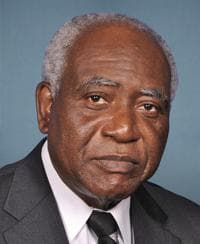
Full profile: /officials/D000096
Source: Congress.gov · FEC
Cosponsors (1)
Members who have signed on to support this bill since introduction. Source: Congress.gov.
Latest Action
The most recent step in the bill's legislative path. Committee Activity below shows referrals and reports; the full action-by-action history including floor proceedings lives at Congress.gov →
Committee Activity
Currently in
- House Committee on Energy and CommerceReferred To · 2026-06-18
Plain-English Summary
This resolution calls for the United States to officially recognize and support a "World Sickle Cell Awareness Day" to help educate the public about sickle cell disease and the importance of research, early screening, and treatment options. The measure aims to increase attention to sickle cell disease both in America and worldwide, with a focus on finding better treatments and preventing complications from the condition. It affects patients with sickle cell disease, researchers, healthcare providers, and public health organizations working to combat this inherited blood disorder.
AI-assisted summary generated from the official bill metadata (title, subjects, actions) sourced from Congress.gov. Cached and reviewed. Always verify against the official text linked below.
Subjects
Full Bill Text
Verbatim text published on Congress.gov via GovInfo. Use Cmd+F / Ctrl+F to search within this excerpt.
[Congressional Bills 119th Congress] [From the U.S. Government Publishing Office] [H. Res. 1371 Introduced in House (IH)] <DOC> 119th CONGRESS 2d Session H. RES. 1371 Expressing support for a ``World Sickle Cell Awareness Day'' in order to increase public awareness across the United States and global community about sickle cell disease and the continued need for empirical research, early detection screenings, novel effective treatments leading to a cure, and preventative care programs with respect to complications from sickle cell anemia and conditions relating to sickle cell disease. _______________________________________________________________________ IN THE HOUSE OF REPRESENTATIVES June 18, 2026 Mr. Davis of Illinois (for himself and Mr. Dunn of Florida) submitted the following resolution; which was referred to the Committee on Energy and Commerce _______________________________________________________________________ RESOLUTION Expressing support for a ``World Sickle Cell Awareness Day'' in order to increase public awareness across the United States and global community about sickle cell disease and the continued need for empirical research, early detection screenings, novel effective treatments leading to a cure, and preventative care programs with respect to complications from sickle cell anemia and conditions relating to sickle cell disease. Whereas the 2026 theme of ``World Sickle Cell Awareness Day'', ``Closing the Survival Gap: Equity in Sickle Cell Disease'', is an immediate call to close the survival gap and push towards a universal cure; Whereas, in 1972, Dr. Charles Whitten cofounded the Sickle Cell Disease Association of America to improve research, education, and health care for SCD patients and which is now headquartered in Hanover, Maryland; Whereas, in 1972, Congress passed the National Sickle Cell Anemia Control Act (Public Law 92-294; 86 Stat. 136), which, for the first time, provided authority to establish education, information, screening, testing, counseling, research, and treatment programs for SCD; Whereas sickle cell trait (referred to in this preamble as ``SCT'') is a gene mutation that causes a single misspelling in the DNA instructions for hemoglobin, a protein that aids in carrying oxygen in the blood, and can result in chronic complications for individuals living with SCD, including anemia, stroke, infections, organ failure, tissue damage, intense periods of pain referred to as vaso-occulsive crises, and even premature death; Whereas SCT occurs when an individual inherits 1 copy of the sickle cell gene from 1 parent, and, although most individuals who have SCT live normal lives, when both parents have SCT, there is a 25 percent chance that any of their children will have SCD; Whereas there are an estimated 1,000,000 to 3,000,000 individuals with SCT in the United States, with many unaware of their status; Whereas approximately 100,000 individuals have SCD in the United States, with 1 out of every 365 African-American births and 1 out of every 16,300 Hispanic-American births resulting in SCD, and nearly 1 out of 13 African-American babies are born with SCT; Whereas SCD affects millions of individuals throughout the world, especially individuals of genetic descent from certain countries in sub-Saharan Africa, South and Central America, Saudi Arabia, India, and the Mediterranean basin; Whereas the variance relating to the prevalence of SCT ranges greatly by region and demography, with overall rates as high as 40 percent in parts of Africa; Whereas approximately 1,000 children in Africa are born with SCD each day, 50 to 80 percent of whom will die before their fifth birthday; Whereas, in 2006, the World Health Assembly passed a resolution, adopted by the United Nations in 2009, recognizing SCD as a public health priority with a call to action for each country to implement measures to tackle the disease, and in 2010, the World Health Assembly passed a resolution relating to preventing and…
Show the remaining 730 wordsHide the remaining 730 words
managing birth defects, including SCD; Whereas screening newborns for SCD is a crucial first step for families to obtain a timely diagnosis, to obtain comprehensive care, and to decrease the mortality rate for children with respect to SCD; Whereas, in 2023, hematopoietic stem cell transplantation (commonly known as ``HSCT'' or bone marrow transplant) was the only cure for SCD, and the Food and Drug Administration has since approved 2 gene therapies that have been demonstrated to cure SCD; Whereas there is an immediate need for lifesaving therapeutics that can improve the duration and quality of life for individuals with SCD; Whereas, in 2020, the National Academies of Sciences, Engineering, and Medicine developed a comprehensive strategic plan and blueprint for action to address SCD, which highlights the need to develop new innovative therapies and to address barriers to the equitable access of approved treatments; Whereas, in 2020, the Department of Health and Human Services, in partnership with the American Society of Hematology and the SickleInAfrica Consortium, and in collaboration with the World Health Organization, hosted a webinar for a joint effort to strengthen efforts to combat SCD during the COVID-19 pandemic and beyond; Whereas the late Kwaku Ohene-Frempong, M.D., Professor Emeritus of Pediatrics at the Perelman School of Medicine at the University of Pennsylvania, an American Society of Hematology member who founded and served as a member of the Global Sickle Cell Disease Network, was a leader in advancing the body of knowledge in SCD research, public health, and medicine and is recognized as immeasurably benefitting thousands of children worldwide; Whereas there are emerging genetic therapy technologies, including 2 therapies approved by the Food and Drug Administration in December of 2023, that can modify the hematopoietic stem cells of a patient to enable them to generate healthy red blood cells to prevent sickle cell crises; Whereas hematopoietic stem cell transplantation (commonly known as ``HSCT'' or bone marrow transplant) is currently the only cure for SCD, and while advancements in treatment for complications associated with SCD have been made, more research is needed to find widely available and accessible treatments and cures to help individuals with SCD; and Whereas, although June 19, 2026, has been designated as ``World Sickle Cell Awareness Day'' to increase public awareness across the United States and global community about SCD, there remains a continued need for empirical research, early detection screenings, novel effective treatments leading to a cure, and preventative care programs with respect to complications from sickle cell anemia and conditions relating to SCD: Now, therefore, be it Resolved, That the House of Representatives-- (1) supports the goals and ideals of ``World Sickle Cell Awareness Day''; (2) commits to ensuring equitable access to new sickle cell disease (referred to in this resolution as ``SCD'') treatments by shining the light among all economic, racial, and ethnic groups to improve health outcomes for individuals living with SCD; (3) calls on the Department of Health and Human Services to create global policy solutions aimed at providing support for the global community with respect to SCD and, in partnership with local governments, the domestic resources needed to provide access to newborn screening programs, therapeutic interventions, and support services with respect to SCD; (4) supports eliminating barriers to equitable access to innovative SCD therapies, including cell, gene, and gene- editing therapies in the Medicare and Medicaid systems for the most vulnerable patients; (5) encourages the people of the United States and the world to hold appropriate programs, events, and activities on ``World Sickle Cell Awareness Day'' to raise public awareness of SCD traits, preventative-care programs, treatments, and other patient services for those suffering from SCD, complications from SCD, and conditions relating to SCD; (6) encourages the President to form a Sickle Cell Disease Interagency Group, which should include the Department of Health and Human Services, the Department of Veterans Affairs, the National Institutes of Health, the Food and Drug Administration, and the Centers for Medicare & Medicaid Services, to work toward policies that will support equitable and appropriate access to innovative SCD therapies; and (7) with respect to the policies described in paragraph (6), urges the interagency group described in that paragraph to consider options that not only address access to potential future curative treatments for SCD, but also address the bias that the population most affected by SCD continues to face within the United States and global healthcare systems. <all>
Related legislation
Bills by the same sponsor or covering overlapping subjects.
- HRES1577Expressing support for the designation of September 2026 as "Sickle Cell Disease Awareness Month" in order to educate communities across the United States about sickle cell disease and the need for research, early detection methods, effective treatments, and preventative care programs with respect to complications from sickle cell disease and conditions related to sickle cell disease.Referred to Committee · 2026-09-24
- HR10429To designate the facility of the United States Postal Service located at 901 Lake Street in Oak Park, Illinois, as the "Detective Allan Reddins Post Office Building".Referred to Committee · 2026-09-16
- HRES1432Of inquiry requesting the President and directing the Secretary of Health and Human Services to transmit, respectively, certain documents to the House of Representatives relating to the freeze on State-based Temporary Assistance for Needy Families, Child Care and Development Fund, and Social Services Block Grant payments for California, Colorado, Illinois, Minnesota, and New York.Referred to Committee · 2026-07-15
- HR8887Julius Rosenwald and Rosenwald Schools National Historical Park ActReferred to Committee · 2026-05-19