Supporting the efforts of the Trump Administration to obtain a rehearing of the decision of the Supreme Court of the United States in Trump v. Barbara, and for other purposes.
Sponsor
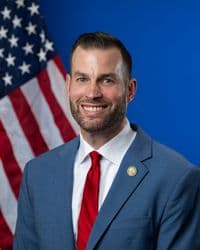
Full profile: /officials/F000485
Source: Congress.gov · FEC
Cosponsors (0)
Members who have signed on to support this bill since introduction. Source: Congress.gov.
No cosponsors on record. Bills can pass without cosponsors — this often means the sponsor introduced the bill alone, either because it's a messaging bill, a chairman's mark, or simply early in the legislative cycle.
Latest Action
The most recent step in the bill's legislative path. Committee Activity below shows referrals and reports; the full action-by-action history including floor proceedings lives at Congress.gov →
Committee Activity
Currently in
- House Committee on the JudiciaryReferred To · 2026-07-15
Plain-English Summary
The proposal would support the Trump Administration's legal efforts to ask the Supreme Court to reconsider its decision in the Trump v. Barbara case. This would allow the administration to present new arguments or evidence in hopes of changing the Court's original ruling on the matter.
AI-assisted summary generated from the official bill metadata (title, subjects, actions) sourced from Congress.gov. Cached and reviewed. Always verify against the official text linked below.
Subjects
Full Bill Text
Verbatim text published on Congress.gov via GovInfo. Use Cmd+F / Ctrl+F to search within this excerpt.
[Congressional Bills 119th Congress] [From the U.S. Government Publishing Office] [H. Res. 1434 Introduced in House (IH)] <DOC> 119th CONGRESS 2d Session H. RES. 1434 Supporting the efforts of the Trump Administration to obtain a rehearing of the decision of the Supreme Court of the United States in Trump v. Barbara, and for other purposes. _______________________________________________________________________ IN THE HOUSE OF REPRESENTATIVES July 15, 2026 Mr. Fuller submitted the following resolution; which was referred to the Committee on the Judiciary _______________________________________________________________________ RESOLUTION Supporting the efforts of the Trump Administration to obtain a rehearing of the decision of the Supreme Court of the United States in Trump v. Barbara, and for other purposes. Whereas the Fourteenth Amendment to the Constitution provides that ``All persons born or naturalized in the United States, and subject to the jurisdiction thereof, are citizens of the United States and of the State wherein they reside''; Whereas, on January 20, 2025, President Donald J. Trump signed Executive Order 14160, entitled ``Protecting the Meaning and Value of American Citizenship,'' directing Federal agencies not to recognize automatic citizenship for children born in the United States to parents who are unlawfully present in the United States or whose presence in the United States, while lawful, is temporary; Whereas the United States District Court for the District of New Hampshire entered a class-wide injunction against enforcement of Executive Order 14160, and the United States Court of Appeals for the First Circuit affirmed that injunction; Whereas, on December 5, 2025, the Supreme Court of the United States granted a petition for a writ of certiorari before judgment in Trump v. Barbara (No. 25-365) to determine whether children born in the United States to parents who are unlawfully or only temporarily present are ``subject to the jurisdiction'' of the United States within the meaning of the Citizenship Clause of the Fourteenth Amendment; Whereas, on June 30, 2026, the Supreme Court issued its decision in Trump v. Barbara, holding by a vote of 5 to 4 that such children are ``subject to the jurisdiction'' of the United States and are citizens at birth, thereby invalidating Executive Order 14160; Whereas in the weeks following that decision, reports emerged of billboards and advertisements near the southern border of the United States marketing so-called ``birth tourism'' packages guaranteeing United States citizenship for children born on American soil, with fees reported to begin at $4,000; Whereas such advertised schemes raise serious concerns that the decision in Trump v. Barbara will be exploited by individuals and organized networks to circumvent the immigration laws of the United States for commercial gain; Whereas President Trump has announced his intention to seek a rehearing of the decision in Trump v. Barbara pursuant to Rule 44 of the Rules of the Supreme Court of the United States; Whereas Rule 44 of the Rules of the Supreme Court of the United States permits any party to petition for rehearing of a decision, provided that the petition is filed within 25 days of the entry of judgment and states with particularity the grounds warranting reconsideration, and such relief is rarely granted in argued cases; Whereas the House of Representatives has an independent and continuing interest in the proper interpretation of the Citizenship Clause of the Fourteenth Amendment and in ensuring that the immigration and citizenship laws of the United States are not subject to circumvention or abuse; and Whereas it is in the interest of the United States for the Supreme Court to have the opportunity to fully consider the ramifications of its decision in Trump v. Barbara, including evidence regarding its exploitation through commercial ``birth…
Show the remaining 166 wordsHide the remaining 166 words
tourism'' schemes, before that decision becomes the final and unreviewable law of the land: Now, therefore, be it Resolved, That the House of Representatives-- (1) supports the efforts of the Trump Administration to obtain a rehearing of the decision of the Supreme Court of the United States in Trump v. Barbara, No. 25-365 (2026); (2) urges the Solicitor General of the United States to file, and the Supreme Court of the United States to grant, a petition for rehearing in Trump v. Barbara; (3) affirms that the proper interpretation of the Citizenship Clause of the Fourteenth Amendment, and the prevention of its exploitation through commercial ``birth tourism'' schemes, is a matter of profound and continuing national importance; and (4) calls on the Committee on the Judiciary of the House of Representatives to closely monitor developments in Trump v. Barbara and to consider such legislative or oversight action as may be necessary to protect the integrity of the citizenship and immigration laws of the United States. <all>
Related legislation
Bills by the same sponsor or covering overlapping subjects.
- HR10264American Made Federal Uniforms and Apparel Act of 2026Referred to Committee · 2026-09-03
- HR10266No Elite Athletes Using X-pro status to ensure Prioritizing Recruitment Of Student-athletes (NEAUX PROS) ActReferred to Committee · 2026-09-03
- HR10265White House Fellows Program Authorization ActReferred to Committee · 2026-09-03
- HJRES204Proposing an amendment to the Constitution of the United States to require that certain individuals are natural born citizens.Referred to Committee · 2026-07-21