HRES1468Referred to Committee
Encouraging Congress to pursue reforms to ensure that all United States citizens contribute to funding the operations of the Federal Government in proportion to the economic gains they realize.
Introduced
In Committee
3
Passed One Chamber4
Passed Both5
Signed into Law119th
Congress
2026-07-30
Introduced
0
Cosponsors
HRES
ⓘType
Sponsor
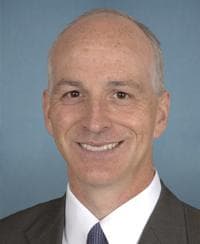
Adam Smith
Democrat · WA · Representative
Votes with party: 98.7% (630 recorded votes)
Full profile: /officials/S000510
Source: Congress.gov · FEC
Cosponsors (0)
Members who have signed on to support this bill since introduction. Source: Congress.gov.
No cosponsors on record. Bills can pass without cosponsors — this often means the sponsor introduced the bill alone, either because it's a messaging bill, a chairman's mark, or simply early in the legislative cycle.
Latest Action
The most recent step in the bill's legislative path. Committee Activity below shows referrals and reports; the full action-by-action history including floor proceedings lives at Congress.gov →
Committee Activity
Currently in
- House Committee on Ways and MeansReferred To · 2026-07-30
Plain-English Summary
This resolution encourages Congress to reform the federal tax system so that all Americans pay taxes based on the economic benefits they receive from government operations. The measure suggests that current tax contributions may not fairly reflect how much different people and groups benefit from federal programs and services. It has been referred to the House Committee on Ways and Means for consideration.
AI-assisted summary generated from the official bill metadata (title, subjects, actions) sourced from Congress.gov. Cached and reviewed. Always verify against the official text linked below.
Subjects
Congress
Full Bill Text
Verbatim text published on Congress.gov via GovInfo. Use Cmd+F / Ctrl+F to search within this excerpt.
[Congressional Bills 119th Congress] [From the U.S. Government Publishing Office] [H. Res. 1468 Introduced in House (IH)] <DOC> 119th CONGRESS 2d Session H. RES. 1468 Encouraging Congress to pursue reforms to ensure that all United States citizens contribute to funding the operations of the Federal Government in proportion to the economic gains they realize. _______________________________________________________________________ IN THE HOUSE OF REPRESENTATIVES July 30, 2026 Mr. Smith of Washington submitted the following resolution; which was referred to the Committee on Ways and Means _______________________________________________________________________ RESOLUTION Encouraging Congress to pursue reforms to ensure that all United States citizens contribute to funding the operations of the Federal Government in proportion to the economic gains they realize. Whereas the Federal Government has accumulated $39,400,000,000,000 in national debt, a figure that has grown exponentially even as the current tax system remains unable to generate revenue commensurate with the size of the modern economy, demonstrating that the existing structure of Federal taxation is failing to meet the basic fiscal needs of the Nation; Whereas Federal Reserve data shows the wealthiest 1 percent of the population now hold approximately $55,000,000,000,000 in net worth, while the majority of United States citizens report having little to no financial cushion against an unexpected expense, illustrating a widening gap between the capital-derived wealth largely exempted from the ordinary income tax base and the wage income that funds the great majority of Federal revenue; Whereas recent Federal financial disclosures illustrate how individuals whose wealth derives primarily from capital appreciation, business equity, and investment holdings can realize billions of dollars in gains that remain substantially outside the ordinary income tax structure applicable to wage earners, whose income is verified and taxed at the source; Whereas the disparity in disclosure and verification standards between wage income and capital-derived wealth means the public often cannot assess the true scale of gains accumulated by the wealthiest United States citizens, undermining the transparency the tax system depends on to maintain public confidence in its fairness; Whereas individual income taxes account for approximately 49 percent of Federal revenue, and payroll taxes account for approximately 35 percent, meaning the operation of the Federal Government depends overwhelmingly on the taxation of wages rather than the taxation of capital gains, inheritance, or business equity appreciation; Whereas mechanisms such as the deferral of unrealized gains, the use of appreciated assets as loan collateral to fund consumption without triggering a taxable event, and the elimination of embedded capital gains at the time of inheritance allow substantial and growing concentrations of wealth to remain permanently outside the ordinary income tax base; Whereas emerging asset classes, including digital assets and cryptocurrency holdings, have expanded the range of vehicles through which wealth can accumulate rapidly and substantially outside conventional income reporting and disclosure frameworks, compounding the existing gap between how wage income and capital income are taxed; Whereas charitable-giving vehicles, including private foundations and donor- advised funds, provide immediate and substantial tax relief across multiple tax categories without corresponding requirements that the underlying funds be distributed for public benefit within any defined timeframe; Whereas the scale of individual charitable commitments now reported in the billions of dollars demonstrates both the concentration of wealth available for such gifts and the absence of any public mechanism to verify that funds moving through these tax-advantaged vehicles serve the broad public interest rather than the strategic or reputational interests of the donor; Whereas the Federal estate tax, once a meaningful check on the concentration of dynastic wealth, has been substantially narrowed over the past 3 decades through successive legislative changes, reducing its practical application to a small fraction of the wealthiest…
Show the remaining 195 wordsHide the remaining 195 words
estates and diminishing its function as an equalizing mechanism; Whereas the current structure of the tax code creates materially different outcomes for United States citizens based on the source of their income rather than its amount, such that 2 individuals with comparable economic gains can face substantially different tax obligations depending on whether those gains were earned through wages or realized through capital appreciation; and Whereas a tax system in which the verification, reporting, and enforcement mechanisms differ fundamentally based on income source undermines the principle that all United States citizens should contribute to funding Federal Government functions in proportion to their economic gains: Now, therefore, be it Resolved, That the House of Representatives-- (1) finds that the Federal tax code should apply consistent treatment to income regardless of its source or form; (2) encourages Congress to pursue reforms to ensure that all United States citizens contribute to funding the operations of the Federal Government in proportion to the economic gains they realize; and (3) encourages the Committee on Ways and Means of the House of Representatives to hold hearings examining the disparate tax treatment of wage income and capital-derived wealth under current law. <all>
Related legislation
Bills by the same sponsor or covering overlapping subjects.
- HR10708Immigrants in Nursing and Allied Health Act of 2026Referred to Committee · 2026-10-01
- HR10707Internationally Trained Physicians Assistance Act of 2026Referred to Committee · 2026-10-01
- HR10077Safety Starts at the Top Act of 2026Referred to Committee · 2026-08-10
- HR9765Educators for America ActReferred to Committee · 2026-07-16