HRES1479Referred to Committee
Impeaching Russell Thurlow Vought, Director of the Office of Management and Budget, for high crimes and misdemeanors.
Introduced
In Committee
3
Passed One Chamber4
Passed Both5
Signed into Law119th
Congress
2026-08-06
Introduced
0
Cosponsors
HRES
ⓘType
Sponsor
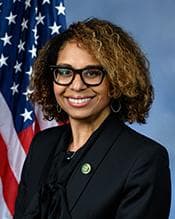
Sydney Kamlager-Dove
Democrat · CA · Representative
Votes with party: 97.7% (651 recorded votes)
Full profile: /officials/K000400
Source: Congress.gov · FEC
Cosponsors (0)
Members who have signed on to support this bill since introduction. Source: Congress.gov.
No cosponsors on record. Bills can pass without cosponsors — this often means the sponsor introduced the bill alone, either because it's a messaging bill, a chairman's mark, or simply early in the legislative cycle.
Latest Action
The most recent step in the bill's legislative path. Committee Activity below shows referrals and reports; the full action-by-action history including floor proceedings lives at Congress.gov →
Committee Activity
Currently in
- House Committee on the JudiciaryReferred To · 2026-08-06
Plain-English Summary
Plain-English summary pending. Introduced on 2026-08-06. Check back soon — summaries are generated as bills progress through Congress.
Subjects
Government Operations and Politics
Full Bill Text
Verbatim text published on Congress.gov via GovInfo. Use Cmd+F / Ctrl+F to search within this excerpt.
[Congressional Bills 119th Congress] [From the U.S. Government Publishing Office] [H. Res. 1479 Introduced in House (IH)] <DOC> 119th CONGRESS 2d Session H. RES. 1479 Impeaching Russell Thurlow Vought, Director of the Office of Management and Budget, for high crimes and misdemeanors. _______________________________________________________________________ IN THE HOUSE OF REPRESENTATIVES August 6, 2026 Ms. Kamlager-Dove submitted the following resolution; which was referred to the Committee on the Judiciary _______________________________________________________________________ RESOLUTION Impeaching Russell Thurlow Vought, Director of the Office of Management and Budget, for high crimes and misdemeanors. Resolved, That Russell Thurlow Vought, Director of the Office of Management and Budget, is impeached for high crimes and misdemeanors, and that the following articles of impeachment be exhibited to the Senate: article i: abuse of power through improper impoundment of congressionally appropriated funds The Constitution grants Congress exclusive authority over Federal appropriations. The executive branch may not refuse to spend funds appropriated by Congress except pursuant to authority provided by law. In his conduct as Director of the Office of Management and Budget, Russell Thurlow Vought abused the powers of his office by implementing policies and directives that interfered with Congress' constitutional power of the purse. Specifically, on January 27, 2025, the Office of Management and Budget issued Memorandum M-25-13 directing Federal agencies to temporarily pause obligations and disbursements of certain Federal financial assistance programs pending review by the Administration. The memorandum caused Federal agencies to suspend or delay implementation of programs funded through appropriations enacted by Congress. Subsequent litigation involving the Department of Energy further demonstrated that the Administration's withholding of congressionally appropriated funds was carried out for political purposes rather than pursuant to lawful budgetary authority. In Federal court, the Department of Energy acknowledged that political considerations were used in evaluating previously awarded clean energy grants and hydrogen hub projects, including whether projects were located in States perceived to support or oppose the Administration. Internal court filings further revealed that Department officials considered the political affiliation of affected States when determining which awards to terminate. These grants had been lawfully appropriated by Congress and competitively awarded pursuant to statutory authority. Rather than faithfully executing those appropriations, the Administration selectively terminated or withheld funding based upon political considerations unrelated to congressional directives or the governing statutes. Such conduct represents an unconstitutional interference with Congress' exclusive authority over appropriations and an abuse of executive power. The scope of these actions further demonstrates that they were not isolated incidents. On October 1, 2025, Director Vought announced the termination of approximately $8,000,000,000 in Department of Energy projects, after which the Department terminated 321 previously awarded grants affecting projects across sixteen States. Those awards had already been appropriated by Congress and competitively selected through established statutory processes. Russell Vought publicly advanced the position that the Congressional Budget and Impoundment Control Act of 1974 improperly restricts Presidential authority over Federal spending. During Senate confirmation proceedings, Vought stated that he agreed with the view that the Congressional Budget and Impoundment Control Act of 1974 is unconstitutional. The Government Accountability Office has repeatedly emphasized that the Congressional Budget and Impoundment Control Act of 1974 governs executive withholding of appropriated funds and requires congressional notification procedures when funds are withheld. The Government Accountability Office has reviewed multiple executive branch actions involving the withholding or proposed rescission of appropriated funds during Vought's tenure at the Office of Management and Budget. The Government Accountability Office found that transparency regarding apportionments is essential to Congress' oversight of Federal spending and the exercise of Congress' constitutional power of the purse. By using the authority of the Office of Management and Budget to delay or restrict…
Show the remaining 271 wordsHide the remaining 271 words
the availability of congressionally appropriated funds while advancing a legal theory that Congress' restrictions are unconstitutional, Russell Thurlow Vought abused the authority entrusted to his office. Wherefore, Russell Thurlow Vought warrants impeachment and trial, and removal from office. article ii: failure to faithfully execute the laws of the united states The Constitution requires executive officers to faithfully execute laws enacted by Congress. Russell Thurlow Vought failed to faithfully execute Federal spending laws by implementing policies that substituted executive branch priorities for statutory requirements enacted by Congress. Specifically, the Office of Management and Budget directed agencies to review Federal financial assistance programs before continuing implementation of congressionally authorized spending. The executive branch conditioned implementation of certain spending programs on compliance with Administration priorities rather than solely on requirements enacted by Congress. Federal courts have reviewed challenges to executive branch funding pauses and issued preliminary relief in cases involving Federal financial assistance. The Administration's funding restrictions affected programs funded through congressional appropriations, including grants and assistance programs. The Government Accountability Office has noted that the Congressional Budget and Impoundment Control Act of 1974 prohibits officers and employees from withholding or delaying budget authority unless authorized under the statute. The Government Accountability Office has maintained that changes to spending priorities should be addressed through the legislative process between Congress and the Administration rather than through unilateral withholding of appropriated funds. By failing to execute appropriations according to congressional directives and instead implementing policies that expanded executive control over Federal spending, Russell Thurlow Vought violated his obligation to faithfully execute the law. Wherefore, Russell Thurlow Vought warrants impeachment and trial, and removal from office. <all>
Related legislation
Bills by the same sponsor or covering overlapping subjects.
- HR10677Expanded Coverage for Former Foster Youth ActReferred to Committee · 2026-10-01
- HR10676Foster Youth Dental Act of 2026Referred to Committee · 2026-10-01
- HRES1587Expressing support for the designation of September 2026 as "National Kinship Care Month".Referred to Committee · 2026-09-28
- HR10565Sexual Abuse Services in Detention ActReferred to Committee · 2026-09-24