Expressing support for the designation of September 2026 as National Campus Sexual Assault Awareness Month.
Sponsor
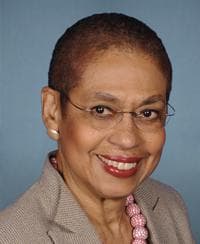
Full profile: /officials/N000147
Source: Congress.gov · FEC
Cosponsors (0)
Members who have signed on to support this bill since introduction. Source: Congress.gov.
No cosponsors on record. Bills can pass without cosponsors — this often means the sponsor introduced the bill alone, either because it's a messaging bill, a chairman's mark, or simply early in the legislative cycle.
Latest Action
The most recent step in the bill's legislative path. Committee Activity below shows referrals and reports; the full action-by-action history including floor proceedings lives at Congress.gov →
Committee Activity
Currently in
- House Committee on Oversight and Government ReformReferred To · 2026-09-08
Plain-English Summary
Plain-English summary pending. Introduced on 2026-09-08. Check back soon — summaries are generated as bills progress through Congress.
Full Bill Text
Verbatim text published on Congress.gov via GovInfo. Use Cmd+F / Ctrl+F to search within this excerpt.
[Congressional Bills 119th Congress] [From the U.S. Government Publishing Office] [H. Res. 1518 Introduced in House (IH)] <DOC> 119th CONGRESS 2d Session H. RES. 1518 Expressing support for the designation of September 2026 as National Campus Sexual Assault Awareness Month. _______________________________________________________________________ IN THE HOUSE OF REPRESENTATIVES September 8, 2026 Ms. Norton submitted the following resolution; which was referred to the Committee on Oversight and Government Reform _______________________________________________________________________ RESOLUTION Expressing support for the designation of September 2026 as National Campus Sexual Assault Awareness Month. Whereas freshmen and sophomores in college are at a greater risk of being sexually assaulted than juniors or seniors; Whereas college students are at a higher risk of sexual assault during the first few months of school, with more than 50 percent of college sexual assaults occurring in either August, September, October, or November; Whereas many college students are survivors of ``incapacitated assault'', in which they are sexually assaulted while drugged, drunk, passed out, or otherwise incapacitated; Whereas these survivors often know their attackers; Whereas less than 12 percent of rapes and attempted rapes of college students are reported to campus authorities or local law enforcement; Whereas college sexual assault survivors are likely to tell someone they know, most often a friend, about their experience; Whereas 20 percent of college sexual assault survivors fear reprisal by the perpetrator; Whereas many college sexual assault survivors fear poor treatment by campus or law enforcement authorities, or even lack knowledge of the reporting process; Whereas 10 percent of colleges still do not allow confidential reporting of sexual assaults to campus authorities; Whereas 22 percent of colleges provide no sexual assault response training for members of their faculty and staff; Whereas 41 percent of colleges have not conducted a single sexual assault investigation in the last 5 years; Whereas most colleges fail to provide access to a specially trained Sexual Assault Nurse Examiner; Whereas law enforcement officials at 30 percent of colleges receive no training on how to respond to reports of sexual violence; Whereas more than 70 percent of colleges do not have protocols regarding how the institution and local law enforcement should work together to respond to sexual violence; Whereas 33 percent of colleges fail to provide training to dispel ``rape myths'' to persons adjudicating sexual assault claims; Whereas 43 percent of the Nation's largest colleges have students assisting in adjudicating sexual assault cases, which creates privacy and conflict- of-interest concerns; Whereas 22 percent of colleges allow athletic department oversight of sexual violence cases involving student athletes; Whereas many college sexual assault survivors experience confusion over how to report a sexual assault, are unsure of acceptable standards of sexual conduct and definitions of rape and sexual assault, and fear punishment for activities preceding some sexual assaults, such as underage drinking; Whereas 21 percent of the Nation's largest private colleges report not independently investigating all claims of sexual assault that they conveyed to the Department of Education; Whereas only 10 to 25 percent of the perpetrators of college sexual assaults are permanently expelled; Whereas less than 7 percent of reported college rape cases result in criminal charges against the perpetrator; Whereas survivors of campus sexual assaults are more likely to have their lives disrupted, such as by changing a college major, changing campus housing, and dropping a class, than the average student; Whereas 7 States require colleges to adopt affirmative consent policies; and Whereas September 2026, when many students begin or return to college, is an appropriate month to designate as National Campus Sexual Assault Awareness Month: Now, therefore, be it Resolved, That the House of Representatives supports the designation…
Show the remaining 8 wordsHide the remaining 8 words
of National Campus Sexual Assault Awareness Month. <all>
Related legislation
Bills by the same sponsor or covering overlapping subjects.
- HRES1502Expressing support for the designation of September 2026 as "Peace Month" and calling on Congress to take action to promote peace.Referred to Committee · 2026-08-31
- HR10172To amend title 38, United States Code, to extend eligibility for survivors' and dependents' educational assistance to the dependent parent of a person who dies of a service-connected disability or has a total and permanent service-connected disability, and for other purposes.Referred to Committee · 2026-08-27
- HRES1485Expressing support for the designation of August 22, 2026, as "Chuck Brown Day", and honoring Chuck Brown's contributions to music and to the District of Columbia.Referred to Committee · 2026-08-20
- HRES1480Honoring the lives, work, and sacrifice of Joseph Curseen, Jr., and Thomas Morris, Jr., the 2 United States Postal Service employees who died as a result of their contact with anthrax while working at the United States Postal facility located at 900 Brentwood Road NE, Washington, DC, during the anthrax attack in the fall of 2001; United States Postal Service employees, who have continued to work diligently in service to the people of the United States notwithstanding the anthrax attack; as well as the other 3 Americans who died and the 17 who became ill in the attack.Referred to Committee · 2026-08-10