Expressing support for the designation of September 19, 2025, as "Black Autism Acceptance and Awareness Day".
Sponsor
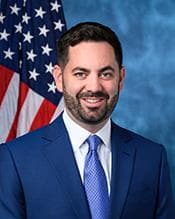
- Abortion Rights$3k
Full profile: /officials/L000599
Source: Congress.gov · FEC
Cosponsors (0)
Members who have signed on to support this bill since introduction. Source: Congress.gov.
No cosponsors on record. Bills can pass without cosponsors — this often means the sponsor introduced the bill alone, either because it's a messaging bill, a chairman's mark, or simply early in the legislative cycle.
Latest Action
The most recent step in the bill's legislative path. Committee Activity below shows referrals and reports; the full action-by-action history including floor proceedings lives at Congress.gov →
Plain-English Summary
This resolution would officially recognize September 19, 2025, as "Black Autism Acceptance and Awareness Day" to highlight autism in Black communities and promote understanding and acceptance. The designation aims to raise awareness about how autism presents differently across racial groups and to address disparities in diagnosis and support for Black autistic individuals. While symbolic rather than creating new programs or funding, the recognition could help draw attention to the needs of Black autistic people and their families.
AI-assisted summary generated from the official bill metadata (title, subjects, actions) sourced from Congress.gov. Cached and reviewed. Always verify against the official text linked below.
Subjects
Full Bill Text
Verbatim text published on Congress.gov via GovInfo. Use Cmd+F / Ctrl+F to search within this excerpt.
[Congressional Bills 119th Congress] [From the U.S. Government Publishing Office] [H. Res. 752 Introduced in House (IH)] <DOC> 119th CONGRESS 1st Session H. RES. 752 Expressing support for the designation of September 19, 2025, as ``Black Autism Acceptance and Awareness Day''. _______________________________________________________________________ IN THE HOUSE OF REPRESENTATIVES September 19, 2025 Mr. Lawler submitted the following resolution; which was referred to the Committee on Energy and Commerce _______________________________________________________________________ RESOLUTION Expressing support for the designation of September 19, 2025, as ``Black Autism Acceptance and Awareness Day''. Whereas autism is a form of neurodivergence characterized by differences in social communication skills and by repetitive and highly focused behaviors and ways of thinking; Whereas, despite recent efforts to serve Black autistic individuals, there appear to be significant racial inequities in the diagnosis and treatment of Black autistic children; Whereas Black parents of autistic children reported significantly less autism concerns and behavioral concerns, with children more likely to be seen as ``disruptive'' instead of neurodivergent; Whereas Black autistic individuals are more likely to be misdiagnosed, underdiagnosed, and diagnosed late; Whereas Black autistic individuals are underrepresented in autism research; Whereas Black autistic individuals have been found to have more difficulty in accessing specialty care; Whereas the Black community reports more accounts of marginalization and dismissal of concerns in health care settings, including in the autism space; Whereas Black autistic youth face increased risk of negative outcomes during interactions with law enforcement; and Whereas Black autistic youth face disproportionate discipline at school, resulting in a higher prevalence of suspensions, expulsions, and other classroom punishments: Now, therefore, be it Resolved, That the House of Representatives-- (1) expresses support for the designation of ``Black Autism Acceptance and Awareness Day''; (2) encourages all Americans to celebrate Black Autism Acceptance and Awareness Day by-- (A) raising awareness about the inequalities facing Black autistic individuals; (B) promoting understanding, acceptance, and inclusion of Black autistic individuals; (C) reinforcing the importance of amplifying the voices of Black autistic individuals; and (D) advocating for justice and equity for Black autistic individuals; (3) recognizes that acceptance for Black autistic individuals is essential; (4) recognizes that true acceptance for Black autistic individuals means culturally competent care, challenging existing biases, building community, and providing equitable access to resources and opportunities; (5) recognizes that autism does not end after childhood, and resources and acceptance are needed for Black autistic individuals into adulthood; and (6) recognizes that neurological differences, like autism, are natural variations in the human experience, and those variations should be celebrated. <all>
Related legislation
Bills by the same sponsor or covering overlapping subjects.
- HR10825To prohibit Joint Fundraising Committees that include federal candidates and Independent Expenditure-Only Political Committees from making disbursements on paid media.Referred to Committee · 2026-10-15
- HR10762Anthony Amoros Law Right to Know ActReferred to Committee · 2026-10-06
- HRES1599Expressing support for the recognition of September 2026 as "National Childhood Cancer Awareness Month".Referred to Committee · 2026-10-01
- HR10573Tax Relief for Surviving Spouses ActReferred to Committee · 2026-09-24