S1041Passed Senate
Affordable Prescriptions for Patients Act
Introduced
In Committee
Passed One Chamber
4
Passed Both5
Signed into Law119th
Congress
2025-03-13
Introduced
3
Cosponsors
S
ⓘType
Sponsor
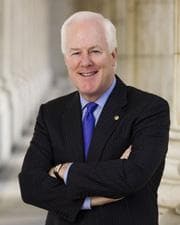
John Cornyn
Republican · TX · Senator
Votes with party: 76.8% (902 recorded votes)
Top industries funding sponsor:
- Conservative Groups$79,418k
- Climate & Environment$24,960k
Full profile: /officials/C001056
Source: Congress.gov · FEC
Cosponsors (3)
Members who have signed on to support this bill since introduction. Source: Congress.gov.
Latest Action
The most recent step in the bill's legislative path. Committee Activity below shows referrals and reports; the full action-by-action history including floor proceedings lives at Congress.gov →
Committee Activity
Currently in
- Senate Committee on the JudiciaryReported By · 2025-04-10
Previously
- Senate Committee on the JudiciaryMarkup By · 2025-04-03
- Senate Committee on the JudiciaryReferred To · 2025-03-13
Plain-English Summary
Affordable Prescriptions for Patients Act This bill limits in certain instances the number of patents that the manufacturer of a biologic drug can assert in a lawsuit against a company seeking to sell a biosimilar version of that drug. (A biologic drug is produced through natural processes or isolated from natural sources. A biosimilar version is substantially similar to the original biologic, which is the reference product, and is often marketed as a less expensive alternative.) The bill's provisions apply to an existing framework that gives the biosimilar manufacturer an abbreviated path to Food and Drug Administration approval to sell the biosimilar. Specifically, if the biosimilar manufacturer completes certain actions under the framework, such as sharing certain information about its product with the reference product manufacturer, the bill limits the number of certain patents that the reference product manufacturer may assert in a lawsuit, such as patents that were filed more than four years after the reference product received market approval. The limit shall not apply to patents claiming certain methods for using the biologic drug. The court in which the infringement lawsuit is filed may increase the limit if justice so requires or if there is good cause for the increase.
Plain-English rewrite of the Congressional Research Service summary published on Congress.gov. Cached and reviewed.
Subjects
Commerce
Full Bill Text
Verbatim text published on Congress.gov via GovInfo. Use Cmd+F / Ctrl+F to search within this excerpt.
[Congressional Bills 119th Congress] [From the U.S. Government Publishing Office] [S. 1041 Engrossed in Senate (ES)] <DOC> 119th CONGRESS 2d Session S. 1041 _______________________________________________________________________ AN ACT To amend title 35, United States Code, to address the infringement of patents that claim biological products, and for other purposes. Be it enacted by the Senate and House of Representatives of the United States of America in Congress assembled, SECTION 1. SHORT TITLE. This Act may be cited as the ``Affordable Prescriptions for Patients Act''. SEC. 2. PATENT INFRINGEMENT. (a) In General.--Section 271(e) of title 35, United States Code, is amended-- (1) in paragraph (2), in the flush text following subparagraph (C)(ii), by adding at the end the following: ``With respect to a submission described in subparagraph (C)(ii), the act of infringement shall extend to any patent that claims the biological product, a method of using the biological product, or a method or product used to manufacture the biological product.''; and (2) by adding at the end the following: ``(7)(A) Subject to subparagraphs (C), (D), and (E), if the sponsor of an approved application for a reference product, as defined in section 351(i) of the Public Health Service Act (42 U.S.C. 262(i)) (referred to in this paragraph as the `reference product sponsor'), brings an action for infringement under this section against an applicant for approval of a biological product under section 351(k) of such Act that references that reference product (referred to in this paragraph as the `subsection (k) applicant'), the reference product sponsor may assert in the action a total of not more than 20 patents of the type described in subparagraph (B), not more than 10 of which shall have issued after the date specified in section 351(l)(7)(A) of such Act. ``(B) The patents described in this subparagraph are patents that satisfy each of the following requirements: ``(i) Patents that claim the biological product that is the subject of an application under section 351(k) of the Public Health Service Act (42 U.S.C. 262(k)) (or a use of that product) or a method or product used in the manufacture of such biological product. ``(ii) Patents that are included on the list of patents described in paragraph (3)(A) of section 351(l) of the Public Health Service Act (42 U.S.C. 262(l)), including as provided under paragraph (7) of such section 351(l). ``(iii) Patents that-- ``(I) have an actual filing date of more than 4 years after the date on which the reference product is approved; or ``(II) include a claim to a method in a manufacturing process that is not used by the reference product sponsor. ``(C) The court in which an action described in subparagraph (A) is brought may increase the number of patents limited under that subparagraph-- ``(i) if the request to increase that number is made without undue delay; and ``(ii)(I) if the interest of justice so requires; or ``(II) for good cause shown, which-- ``(aa) shall be established if the subsection (k) applicant fails to provide information required by section 351(k)(2)(A) of the Public Health Service Act (42. U.S.C. 262(k)(2)(A)) that would enable the reference product sponsor to form a reasonable belief with respect to whether a claim of infringement under this section could reasonably be asserted; and ``(bb) may be established-- ``(AA) if there is a material change to the biological product (or process with respect to the biological product) of the subsection (k) applicant that is the subject of the application; ``(BB) if, with respect to a patent on the supplemental list described in section 351(l)(7) of the Public Health Service Act (42 U.S.C. 262(l)(7)), the patent would…
Show the remaining 296 wordsHide the remaining 296 words
have issued before the date specified in section 351(l)(7)(A) of such Act but for the failure of the Office to issue the patent or a delay in the issuance of the patent, as described in paragraph (1) of section 154(b) and subject to the limitations under paragraph (2) of such section 154(b); or ``(CC) for another reason that shows good cause, as determined appropriate by the court. ``(D) In determining whether good cause has been shown for the purposes of subparagraph (C)(ii)(II), a court may consider whether the reference product sponsor has provided a reasonable description of the identity and relevance of any information beyond the subsection (k) application that the court believes is necessary to enable the court to form a belief with respect to whether a claim of infringement under this section could reasonably be asserted. ``(E) The limitation imposed under subparagraph (A)-- ``(i) shall apply only if the subsection (k) applicant completes all actions required under paragraphs (2)(A), (3)(B)(ii), (5), (6)(C)(i), (7), and (8)(A) of section 351(l) of the Public Health Service Act (42 U.S.C. 262(l)); and ``(ii) shall not apply with respect to any patent that claims, with respect to a biological product, a method for using that product in therapy, diagnosis, or prophylaxis, such as an indication or method of treatment or other condition of use.''. (b) Applicability.--The amendments made by subsection (a) shall apply with respect to an application submitted under section 351(k) of the Public Health Service Act (42 U.S.C. 262(k)) on or after the date of enactment of this Act. Passed the Senate July 21, 2026. Attest: Secretary. 119th CONGRESS 2d Session S. 1041 _______________________________________________________________________ AN ACT To amend title 35, United States Code, to address the infringement of patents that claim biological products, and for other purposes.
Related legislation
Bills by the same sponsor or covering overlapping subjects.
- SRES948A resolution commending and congratulating Texas A&M University for 150 years of service to the State of Texas and the United States.Introduced · 2026-09-30
- S5677A bill to establish the Lone Star Coastal National Recreation Area to conserve, protect, and promote the economic benefits of the natural, cultural, and recreational resources of the Upper and Middle Texas Gulf Coast as a unit of the National Park System.Referred to Committee · 2026-09-30
- S5543STRONGER ActReferred to Committee · 2026-09-24
- S388Promoting Resilient Buildings ActReported by Committee · 2026-09-15