Savings Opportunity and Affordable Repayment Act
Sponsor
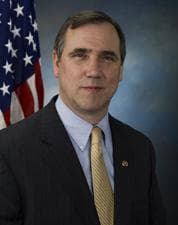
Full profile: /officials/M001176
Source: Congress.gov · FEC
Cosponsors (17)
Members who have signed on to support this bill since introduction. Source: Congress.gov.
- Alex Padilla (D-CA)Original· 2025-04-01
- Andy Kim (D-NJ)Original· 2025-04-01
- Bernard Sanders (I-VT)Original· 2025-04-01
- Charles E. Schumer (D-NY)Original· 2025-04-01
- Cory A. Booker (D-NJ)Original· 2025-04-01
- Edward J. Markey (D-MA)Original· 2025-04-01
- Elizabeth Warren (D-MA)Original· 2025-04-01
- Kirsten E. Gillibrand (D-NY)Original· 2025-04-01
- Mazie K. Hirono (D-HI)Original· 2025-04-01
- Peter Welch (D-VT)Original· 2025-04-01
- Richard Blumenthal (D-CT)Original· 2025-04-01
- Ron Wyden (D-OR)Original· 2025-04-01
- Tim Kaine (D-VA)Original· 2025-04-01
- Tina Smith (D-MN)Original· 2025-04-01
- Chris Van Hollen (D-MD)· 2025-06-18
- Ben Ray Luján (D-NM)· 2025-10-29
- Tammy Duckworth (D-IL)· 2025-11-06
Latest Action
The most recent step in the bill's legislative path. Committee Activity below shows referrals and reports; the full action-by-action history including floor proceedings lives at Congress.gov →
Read twice and referred to the Committee on Health, Education, Labor, and Pensions.
2025-04-01
Source: Congress.gov
Committee Activity
Currently in
- Senate Committee on Health, Education, Labor, and PensionsReferred To · 2025-04-01
Plain-English Summary
Savings Opportunity and Affordable Repayment Act This bill creates a new income-driven repayment plan for student loans called the Savings Opportunity and Affordable Repayment (SOAR) plan. The SOAR plan has similar provisions to, but further expands on, the Department of Education's (ED's) final rule published on July 10, 2023, that created the Saving on a Valuable Education (SAVE) plan. The SAVE plan was blocked by federal courts. The bill directs ED to carry out a SOAR plan program that complies with specified requirements. The bill allows all federal student loan types to be eligible for repayment under the SOAR plan, including Parent PLUS Loans and Federal Family Education Loans. Under the SOAR plan, a federal student loan borrower whose income is at or below 250% of the federal poverty level (FPL) has $0 monthly payments. A borrower whose income is over 250% of the FPL pays 5% of their discretionary income on loans obtained for undergraduate study and 10% of their discretionary income for all other outstanding loans (e.g., loans obtained for graduate study). Additionally, under the SOAR plan, holders of eligible federal student loans (e.g., ED or private lenders) must apply 50% of the borrower's monthly payment toward outstanding principal. The other 50% must be applied in the following order: (1) accrued charges and collection costs on the loan, (2) outstanding interest, and (3) outstanding principal. ED must forgive any loan balance that remains outstanding after a specified maximum repayment period (e.g., 10 years or 15 years).
Plain-English rewrite of the Congressional Research Service summary published on Congress.gov. Cached and reviewed.
Subjects
Related legislation
Bills by the same sponsor or covering overlapping subjects.
- S5362Assuring the Future of Tibet Act of 2026Referred to Committee · 2026-08-07
- S5319Nurse Overtime and Patient Safety ActReferred to Committee · 2026-08-06
- S5302Truth in Labeling Act of 2026Referred to Committee · 2026-08-06
- S5357TABOO ActReferred to Committee · 2026-08-06