S1628Referred to Committee
Improving Access to Nutrition Act of 2025
Introduced
In Committee
3
Passed One Chamber4
Passed Both5
Signed into Law119th
Congress
2025-05-06
Introduced
8
Cosponsors
S
ⓘType
Sponsor
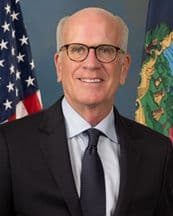
Peter Welch
Democrat · VT · Senator
Votes with party: 83.6% (862 recorded votes)
Full profile: /officials/W000800
Source: Congress.gov · FEC
Cosponsors (8)
Members who have signed on to support this bill since introduction. Source: Congress.gov.
- Alex Padilla (D-CA)Original· 2025-05-06
- Bernard Sanders (I-VT)Original· 2025-05-06
- Elizabeth Warren (D-MA)Original· 2025-05-06
- Jeff Merkley (D-OR)Original· 2025-05-06
- John Fetterman (D-PA)Original· 2025-05-06
- Kirsten E. Gillibrand (D-NY)Original· 2025-05-06
- Richard Blumenthal (D-CT)Original· 2025-05-06
- Ron Wyden (D-OR)Original· 2025-05-06
Latest Action
The most recent step in the bill's legislative path. Committee Activity below shows referrals and reports; the full action-by-action history including floor proceedings lives at Congress.gov →
Read twice and referred to the Committee on Agriculture, Nutrition, and Forestry.
2025-05-06
Source: Congress.gov
Committee Activity
Currently in
- Senate Committee on Agriculture, Nutrition, and ForestryReferred To · 2025-05-06
Plain-English Summary
This bill would make it easier for people to access nutritious food, likely by expanding or improving federal nutrition assistance programs like food stamps and school meal programs. The changes could affect low-income families, students, and seniors who rely on government food support, as well as farmers and food retailers who participate in these programs. The bill is currently being reviewed by the Senate Agriculture Committee to determine what specific improvements it would make.
AI-assisted summary generated from the official bill metadata (title, subjects, actions) sourced from Congress.gov. Cached and reviewed. Always verify against the official text linked below.
Affected Industries
Industries and interest groups with a stake in how this bill is resolved. Compare with each member's outside-money backers on their finance page.
Agriculture
Why this matters: Look up any member who voted on this bill and check their finance page — do the industries listed above match the groups funding their campaigns? That's the kind of connection this tool is built to help you find.
Subjects
Agriculture and Food
Full Bill Text
Verbatim text published on Congress.gov via GovInfo. Use Cmd+F / Ctrl+F to search within this excerpt.
[Congressional Bills 119th Congress] [From the U.S. Government Publishing Office] [S. 1628 Introduced in Senate (IS)] <DOC> 119th CONGRESS 1st Session S. 1628 To amend the Food and Nutrition Act of 2008 to repeal the particular work requirement that disqualifies able-bodied adults for eligibility to participate in the supplemental nutrition assistance program, and for other purposes. _______________________________________________________________________ IN THE SENATE OF THE UNITED STATES May 6, 2025 Mr. Welch (for himself, Mrs. Gillibrand, Mr. Fetterman, Mr. Padilla, Mr. Merkley, Mr. Blumenthal, Mr. Sanders, Ms. Warren, and Mr. Wyden) introduced the following bill; which was read twice and referred to the Committee on Agriculture, Nutrition, and Forestry _______________________________________________________________________ A BILL To amend the Food and Nutrition Act of 2008 to repeal the particular work requirement that disqualifies able-bodied adults for eligibility to participate in the supplemental nutrition assistance program, and for other purposes. Be it enacted by the Senate and House of Representatives of the United States of America in Congress assembled, SECTION 1. SHORT TITLE. This Act may be cited as the ``Improving Access to Nutrition Act of 2025''. SEC. 2. FINDINGS. Congress finds that-- (1) 35,000,000 people, including over 10,000,000 children, suffered from hunger even before the COVID-19 pandemic began; (2) analyses show that 50,000,000 people, including 17,000,000 children, could go hungry due to the effects of the COVID-19 pandemic; (3) as of December 2020, food insecurity among White households with children was 24.2 percent, while 38.6 percent of Latinx households and 40.6 percent of African-American households with children suffered from food insecurity; (4) Black and Hispanic children were twice as likely as White children to live in households without enough to eat, entering the COVID-19 pandemic at a disproportionate risk of going hungry; (5) adults who identify as American Indian, Alaska Native, Native Hawaiian, Pacific Islander, or multiracial were twice as likely as White adults to report that their household did not get enough to eat; (6) while official national data for Native American households is lacking, previous research in the State of Washington showed food insecurity among Native households was 2.5 times higher than in White households; (7) the COVID-19 pandemic has deepened longstanding racial disparities and food insecurity; (8) the supplemental nutrition assistance program established under the Food and Nutrition Act of 2008 (7 U.S.C. 2011 et seq.) (referred to in this section as the ``supplemental nutrition assistance program'') is the first line of defense against hunger and especially vital for vulnerable populations; (9) more than 85 percent of all benefits under the supplemental nutrition assistance program go to households with children, seniors, and persons with disabilities; (10) the supplemental nutrition assistance program helps restore access to healthy food, improves overall health, and reduces poverty; (11) participation in the supplemental nutrition assistance program is associated with educational advancement of children in poverty and improvements in math and reading scores; (12) the supplemental nutrition assistance program has a proven record of effectiveness in promoting food security and health and in providing economic stimulus; (13) each dollar of supplemental nutrition assistance program benefits during a downturn generates between $1.50 and $1.80 in economic activity; (14) studies have demonstrated that work requirements do not reduce poverty; (15) about 6,100,000 individuals are subject to work requirements under the supplemental nutrition assistance program and are at risk of losing critical food assistance if they cannot comply with those work requirements; (16) for individuals described in paragraph (15) who live in households with school-aged children, supplemental nutrition assistance program benefit reductions or terminations could jeopardize the health, development, and future success of those children; (17) children in poverty often depend on pooled…
Show the remaining 595 wordsHide the remaining 595 words
resources (including supplemental nutrition assistance program benefits) from extended family members who do not claim them as dependents; (18) studies show that health impediments are a primary cause of many recipients of supplemental nutrition assistance program benefits being unable to meet a work requirement; (19) work requirements cause an increase in the administrative bureaucracy of the supplemental nutrition assistance program, which some studies have shown cause a significant reduction in participation in the supplemental nutrition assistance program; (20) studies show that-- (A) Black people are particularly vulnerable to barriers to accessing the supplemental nutrition assistance program and most likely to face recent unemployment; and (B) work requirements would disproportionately prevent Black people from having access to benefits under that program; (21) families experiencing homelessness are most likely to leave programs such as the supplemental nutrition assistance program when there is a work requirement, thereby increasing their vulnerability; and (22) the COVID-19 pandemic has made people more vulnerable, and a work requirement under the supplemental nutrition assistance program would serve to only further burden people most at risk during the COVID-19 pandemic. SEC. 3. ELIMINATION OF WORK REQUIREMENT UNDER SUPPLEMENTAL NUTRITION ASSISTANCE PROGRAM. (a) In General.--Section 6 of the Food and Nutrition Act of 2008 (7 U.S.C. 2015) is amended-- (1) by striking subsection (o); and (2) by redesignating subsections (p) through (s) as subsections (o) through (r), respectively. (b) Conforming Amendments.-- (1) Section 5(a) of the Food and Nutrition Act of 2008 (7 U.S.C. 2014(a)) is amended, in the second sentence, by striking ``(r)'' and inserting ``(q)''. (2) Section 6(d)(4) of the Food and Nutrition Act of 2008 (7 U.S.C. 2015(d)(4)) is amended-- (A) in subparagraph (B)(ii)(I)(bb)(DD), by striking ``or subsection (o)''; and (B) in subparagraph (N), by striking ``or subsection (o)'' each place it appears. (3) Section 7(i)(1) of the Food and Nutrition Act of 2008 (7 U.S.C. 2016(i)(1)) is amended by striking ``section 6(o)(2) of this Act or''. (4) Section 16(h) of the Food and Nutrition Act of 2008 (7 U.S.C. 2025(h)) is amended-- (A) in paragraph (1)-- (i) in subparagraph (B), in the matter preceding clause (i), by striking ``that--'' and all that follows through the period at the end of clause (ii) and inserting ``that is determined and adjusted by the Secretary.''; (ii) by striking subparagraph (E); (iii) by redesignating subparagraph (F) as subparagraph (E); and (iv) in clause (ii)(III)(ee)(AA) of subparagraph (E) (as so redesignated), by striking ``, individuals subject to the requirements under section 6(o),''; and (B) in paragraph (5)(C)-- (i) in clause (ii), by adding ``and'' at the end; (ii) in clause (iii), by striking ``; and'' and inserting a period; and (iii) by striking clause (iv). (5) Section 51(d)(8)(A)(ii) of the Internal Revenue Code of 1986 is amended-- (A) in subclause (I), by striking ``, or'' at the end and inserting a period; (B) in the matter preceding subclause (I), by striking ``family--'' and all that follows through ``receiving'' in subclause (I) and inserting ``family receiving''; and (C) by striking subclause (II). (6) Section 103(a)(2) of the Workforce Innovation and Opportunity Act (29 U.S.C. 3113) is amended-- (A) by striking subparagraph (D); and (B) by redesignating subparagraphs (E) through (K) as subparagraphs (D) through (J), respectively. (7) Section 121(b)(2)(B) of the Workforce Innovation and Opportunity Act (29 U.S.C. 3151) is amended-- (A) by striking clause (iv); and (B) by redesignating clauses (v) through (vii) as clauses (iv) through (vi), respectively. SEC. 4. EFFECTIVE DATE. This Act and the amendments made by this Act shall take effect 180 days after the date of enactment of this Act. <all>
Related legislation
Bills by the same sponsor or covering overlapping subjects.
- SRES941A resolution expressing support for the designation of the week of October 24, 2026, to October 31, 2026, as "Bat Week".Introduced · 2026-09-30
- S5525Banning Toxics from Plastic Bottles Act of 2026Referred to Committee · 2026-09-24
- S5472Supporting Small Affordable Housing Developers ActReferred to Committee · 2026-09-23
- S5434American Renewable Energy Act of 2026Referred to Committee · 2026-09-17