S1884Enacted into Law
Holocaust Expropriated Art Recovery Act of 2025
Introduced
In Committee
Passed One Chamber
Passed Both
Signed into Law
119th
Congress
2025-05-22
Introduced
21
Cosponsors
S
ⓘType
Sponsor
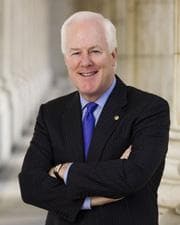
John Cornyn
Republican · TX · Senator
Votes with party: 76.8% (902 recorded votes)
Top industries funding sponsor:
- Conservative Groups$79,418k
- Climate & Environment$24,960k
Full profile: /officials/C001056
Source: Congress.gov · FEC
Cosponsors (21)
Members who have signed on to support this bill since introduction. Source: Congress.gov.
- Cory A. Booker (D-NJ)Original· 2025-05-22
- Eric Schmitt (R-MO)Original· 2025-05-22
- John Fetterman (D-PA)Original· 2025-05-22
- Katie Boyd Britt (R-AL)Original· 2025-05-22
- Marsha Blackburn (R-TN)Original· 2025-05-22
- Richard Blumenthal (D-CT)Original· 2025-05-22
- Thom Tillis (R-NC)Original· 2025-05-22
- Peter Welch (D-VT)· 2025-06-03
- Adam B. Schiff (D-CA)· 2025-06-04
- David McCormick (R-PA)· 2025-09-19
- Elissa Slotkin (D-MI)· 2025-10-08
- Bernie Moreno (R-OH)· 2025-10-14
- Kirsten E. Gillibrand (D-NY)· 2025-10-14
- Chuck Grassley (R-IA)· 2025-10-20
- Ted Cruz (R-TX)· 2025-10-28
- Christopher A. Coons (D-DE)· 2025-11-06
- Lindsey Graham (R-SC)· 2025-11-06
- Richard J. Durbin (D-IL)· 2025-11-06
- Rick Scott (R-FL)· 2025-12-08
- Jacky Rosen (D-NV)· 2025-12-09
- Raphael G. Warnock (D-GA)· 2025-12-09
Latest Action
The most recent step in the bill's legislative path. Committee Activity below shows referrals and reports; the full action-by-action history including floor proceedings lives at Congress.gov →
Committee Activity
Currently in
- Senate Committee on the JudiciaryReported By · 2025-11-18
Previously
- Judiciary CommitteeReported By · 2025-11-18
- Judiciary CommitteeMarkup By · 2025-11-06
- Senate Committee on the JudiciaryMarkup By · 2025-11-06
- Judiciary CommitteeReferred To · 2025-05-22
- Senate Committee on the JudiciaryReferred To · 2025-05-22
Plain-English Summary
Holocaust Expropriated Art Recovery Act of 2025 This act permanently extends and expands judicial authority under the Holocaust Expropriated Art Recovery Act of 2016. The law allows and establishes procedures for civil claims and causes of action to recover artwork and other property lost between 1933 and 1945 because of Nazi persecution. Among the changes, the act removes the deadline for filing civil claims or causes of action. Currently, the filing deadline is December 31, 2026. (Claims must still be filed within six years of the claimant's discovery of the property in question.) The act permits courts to exercise jurisdiction over civil claims or causes of action against a foreign state without regard to the nationality or citizenship of the alleged victim. The art or property at issue must still have a connection to the foreign state's commercial activities in the United States. Additionally, the act authorizes nationwide service of process, which allows courts to exercise personal jurisdiction over defendants in any judicial district where they may be found, reside, have an agent, or transact business. Finally, the act limits the defenses that may be asserted against civil claims or causes of action, including by prohibiting defenses based on the passage of time, including equitable defenses such as laches (i.e., unreasonable delays); and discretionary bases for dismissal that are unrelated to the merits of the claim, including international comity (i.e., deference to the laws of other countries). These changes apply to pending and future civil claims or causes of action.
Plain-English rewrite of the Congressional Research Service summary published on Congress.gov. Cached and reviewed.
Subjects
Law
Full Bill Text
Verbatim text published on Congress.gov via GovInfo. Use Cmd+F / Ctrl+F to search within this excerpt.
[Congressional Bills 119th Congress] [From the U.S. Government Publishing Office] [S. 1884 Enrolled Bill (ENR)] S.1884 One Hundred Nineteenth Congress of the United States of America AT THE SECOND SESSION Begun and held at the City of Washington on Saturday, the third day of January, two thousand and twenty six An Act To clarify the Holocaust Expropriated Art Recovery Act of 2016, to appropriately limit the application of defenses based on the passage of time and other non-merits defenses to claims under that Act. Be it enacted by the Senate and House of Representatives of the United States of America in Congress assembled, SECTION 1. SHORT TITLE. This Act may be cited as the ``Holocaust Expropriated Art Recovery Act of 2025''. SEC. 2. HOLOCAUST EXPROPRIATED ART RECOVERY ACT OF 2016 IMPROVEMENTS. (a) In General.--The Holocaust Expropriated Art Recovery Act of 2016 (22 U.S.C. 1621 note) is amended-- (1) in section 2-- (A) by redesignating paragraph (8) as paragraph (10); (B) by inserting after paragraph (7) the following: ``(8) The intent of this Act is to permit claims to recover Nazi-looted art to be brought, notwithstanding the passage of time since World War II. Some courts have frustrated the intent of this Act by dismissing recovery lawsuits in reliance on defenses based on the passage of time, such as laches (for example, Zuckerman v Metropolitan Museum of Art, 928 F.3d 186 (2d Cir. 2019)) or adverse possession, acquisitive prescription, or usucapion (for example, Cassirer v. Thyssen-Bornemisza Foundation, 89 F.4th 1226 (9th Cir. 2024)) or on other non-merits discretionary defenses, such as the act of state doctrine (for example, Von Saher v Norton Simon Museum of Art at Pasadena, 897 F.3d 1141 (9th Cir. 2018)), forum non conveniens, international comity, or prudential exhaustion. In order to effectuate the purpose of the Act to permit claims to recover Nazi-looted art to be resolved on the merits, these defenses must be precluded. ``(9) This Act also is intended to allow claims in accordance with the procedures under this Act for the recovery of artwork or other property lost during the covered period because, or as a result, of Nazi persecution, including by a covered government (as defined in section 1605(h)(3)(B) of title 28, United States Code) or an agent or associate of a covered government, regardless of the nationality or citizenship of the alleged victim, notwithstanding the `domestic takings' rule under Federal Republic of Germany v. Philipp, 592 U.S. 169 (2021).''; and (C) in paragraph (10), as so redesignated, by striking ``will yield just and fair resolutions in a more efficient and predictable manner'' and inserting ``may, in some circumstances, yield just and fair resolutions as well''; (2) in section 3(2), by inserting ``and other non-merits defenses'' after ``statutes of limitation''; (3) in section 5-- (A) by striking subsection (g); (B) by redesignating subsections (e) and (f) as subsections (h) and (i), respectively; (C) by redesignating subsections (b), (c), and (d) as subsections (c), (d), and (e), respectively; (D) by inserting after subsection (a) the following: ``(b) Relation to Foreign State Immunities.--Notwithstanding any other law or prior judicial decision, any civil claim or cause of action covered by subsection (a) shall be deemed to be an action in which rights in violation of international law are in issue for purposes of section 1605(a)(3) of title 28, United States Code, without regard to the nationality or citizenship of the alleged victim.''; (E) in subsection (d), as so redesignated, in the matter preceding paragraph (1), by striking ``subsection (e)'' and inserting ``subsection (h)''; (F) in subsection (e), as so redesignated-- (i) in the matter preceding paragraph…
Show the remaining 337 wordsHide the remaining 337 words
(1), by striking ``Subsection (a)'' and inserting ``Subsections (a), (b), (f), and (g)''; and (ii) in paragraph (2), by striking ``during the period'' and all that follows and inserting ``on or after the date of enactment of this Act.''; and (G) by inserting after subsection (e), as so redesignated, the following: ``(f) Defenses Based on Passage of Time and Other Non-Merits Defenses.--With respect to any claim that is otherwise timely under this Act-- ``(1) all defenses or substantive doctrines based on the passage of time, including laches, adverse possession, acquisitive prescription, and usucapion, may not be applied with respect to the claim; and ``(2) all non-merits discretionary bases for dismissal, including the act of state doctrine, international comity, forum non conveniens, prudential exhaustion, and similar doctrines unrelated to the merits, may not be applied with respect to the claim. ``(g) Nationwide Service of Process.--For a civil action brought under subsection (a) in any State or Federal court, process may be served in the judicial district where the case is brought or any other judicial district of the United States where the defendant may be found, resides, has an agent, or transacts business.''; and (4) by adding at the end the following: ``SEC. 6. SEVERABILITY. ``If any provision of this Act, or the application of a provision of this Act to any person or circumstance, is held invalid, the remainder of this Act, and the application of such provision to other persons and circumstances, shall not be affected thereby.''. (b) Applicability.--The amendments made by subsection (a) shall apply with respect to any civil claim or cause of action that is-- (1) pending in any court on the date of enactment of this Act, including any civil claim or cause of action that is pending on appeal or for which the time to file an appeal has not expired; or (2) filed on or after the date of enactment of this Act. Speaker of the House of Representatives. Vice President of the United States and President of the Senate.
Related legislation
Bills by the same sponsor or covering overlapping subjects.
- SRES948A resolution commending and congratulating Texas A&M University for 150 years of service to the State of Texas and the United States.Introduced · 2026-09-30
- S5677A bill to establish the Lone Star Coastal National Recreation Area to conserve, protect, and promote the economic benefits of the natural, cultural, and recreational resources of the Upper and Middle Texas Gulf Coast as a unit of the National Park System.Referred to Committee · 2026-09-30
- S5543STRONGER ActReferred to Committee · 2026-09-24
- S388Promoting Resilient Buildings ActReported by Committee · 2026-09-15