S2132Passed Senate
CLEAR Path Act
Introduced
In Committee
Passed One Chamber
4
Passed Both5
Signed into Law119th
Congress
2025-06-18
Introduced
4
Cosponsors
S
ⓘType
Sponsor
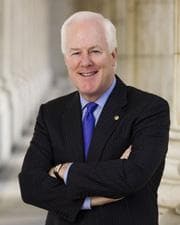
John Cornyn
Republican · TX · Senator
Votes with party: 76.8% (902 recorded votes)
Top industries funding sponsor:
- Conservative Groups$79,418k
- Climate & Environment$24,960k
Full profile: /officials/C001056
Source: Congress.gov · FEC
Cosponsors (4)
Members who have signed on to support this bill since introduction. Source: Congress.gov.
Latest Action
The most recent step in the bill's legislative path. Committee Activity below shows referrals and reports; the full action-by-action history including floor proceedings lives at Congress.gov →
Committee Activity
Currently in
- Senate Committee on the JudiciaryReported By · 2026-01-28
Previously
- Judiciary CommitteeReported By · 2026-01-28
- Senate Committee on the JudiciaryMarkup By · 2026-01-15
- Judiciary CommitteeMarkup By · 2026-01-15
- Judiciary CommitteeReferred To · 2025-06-18
- Senate Committee on the JudiciaryReferred To · 2025-06-18
Plain-English Summary
Conflict-free Leaving Employment and Activity Restrictions Path Act or the CLEAR Path Act This bill bans former presidential appointees in the executive branch from knowingly representing, aiding, or advising a foreign country of concern (e.g., China, Iran, North Korea, or Russia) with the intent to influence a decision of U.S. government officials. Under the bill, the ban applies to former presidential appointees who served (1) as head or deputy head of an executive branch department or agency, or (2) in any other Senate-confirmed position in an executive branch department or agency. The ban applies to those who are appointed to their positions on or after the date of this bill's enactment. The ban expires five years after the date of this bill's enactment. The bill also establishes a process that authorizes the Department of State to propose and Congress to enact changes to the list of foreign countries of concern.
Plain-English rewrite of the Congressional Research Service summary published on Congress.gov. Cached and reviewed.
Subjects
Crime and Law Enforcement
Full Bill Text
Verbatim text published on Congress.gov via GovInfo. Use Cmd+F / Ctrl+F to search within this excerpt.
[Congressional Bills 119th Congress] [From the U.S. Government Publishing Office] [S. 2132 Engrossed in Senate (ES)] <DOC> 119th CONGRESS 2d Session S. 2132 _______________________________________________________________________ AN ACT To amend title 18, United States Code, to prevent and mitigate the potential for conflicts of interest following government service, and for other purposes. Be it enacted by the Senate and House of Representatives of the United States of America in Congress assembled, SECTION 1. SHORT TITLE. This Act may be cited as the ``Conflict-free Leaving Employment and Activity Restrictions Path Act'' or the ``CLEAR Path Act''. SEC. 2. SENSE OF CONGRESS. It is the sense of Congress that-- (1) Congress and the executive branch have recognized the importance of preventing and mitigating the potential for conflicts of interest following Government service, including with respect to senior United States officials working on behalf of foreign governments; and (2) Congress and the executive branch should jointly evaluate the status and scope of post-employment restrictions. SEC. 3. POST-EMPLOYMENT RESTRICTIONS ON OFFICIALS IN POSITIONS SUBJECT TO SENATE CONFIRMATION. (a) In General.--Section 207 of title 18, United States Code, is amended by adding at the end the following: ``(m) Extended Post-employment Restrictions for Officials in Positions Subject to Senate Confirmation.-- ``(1) Definitions.--In this subsection: ``(A) Country of concern.--The term `country of concern' has the meaning given the term in section 1(m) of the State Department Basic Authorities Act of 1956 (22 U.S.C. 2651a(m)), except that it does not include the country described in paragraph (1)(A)(vi) of that section, as in effect on the date of enactment of the Conflict-free Leaving Employment and Activity Restrictions Path Act. ``(B) Foreign governmental entity.--The term `foreign governmental entity' has the meaning given the term in section 1(m) of the State Department Basic Authorities Act of 1956 (22 U.S.C. 2651a(m)). ``(C) Represent.--The term `represent' does not include representation by an attorney, who is duly licensed and authorized to provide legal advice in a United States jurisdiction, of a person or entity in a legal capacity or for the purposes of rendering legal advice. ``(D) Senate-confirmed position.--The term `Senate- confirmed position' means a position in a department or agency of the executive branch of the United States for which appointment is required to be made by the President, by and with the advice and consent of the Senate. ``(2) Agency heads, deputy heads, and other positions subject to senate confirmation.--Any person who serves in a position requiring appointment by the President as head or deputy head of, or serves in any other Senate-confirmed position in, a department or agency of the executive branch of the United States, and who, at any time after the termination of the person's service in that position, knowingly represents, aids, or advises a foreign governmental entity of a country of concern before an officer or employee of the executive or legislative branch of the United States with the intent to influence a decision of the officer or employee in carrying out his or her official duties shall be punished as provided in section 216. ``(3) Notice of restrictions.--Any person subject to the restrictions under this subsection shall be provided notice of these restrictions by the relevant department or agency-- ``(A) upon appointment by the President; and ``(B) upon termination of service with the relevant department or agency. ``(4) Effective date.-- ``(A) In general.--Except as provided in subparagraph (B), the restrictions under this subsection shall apply only to persons who are appointed by the President to the positions referenced in this subsection on or after the date of enactment of the Conflict-free Leaving Employment and Activity Restrictions Path Act. ``(B)…
Show the remaining 793 wordsHide the remaining 793 words
Grace period for added countries of concern.--If the definition of the term `country of concern' under subsection (m) of section 1 of the State Department Basic Authorities Act of 1956 (22 U.S.C. 2651a) is modified in accordance with paragraph (7) of that subsection by adding a country to the list of countries described in paragraph (1)(A) of that subsection, in the case of any person who is appointed by the President to a position referenced in this subsection on or after the date of enactment of the Conflict-free Leaving Employment and Activity Restrictions Path Act and who knowingly represents, aids, or advises a foreign governmental entity of a country added to the list of countries described in paragraph (1)(A) of such subsection (m), the restrictions under this subsection shall apply to such person on and after the date that is 30 days after the date of enactment of a relevant joint resolution of approval as described in paragraph (7)(C) of such subsection (m) adding that country to the list of countries described in paragraph (1)(A) of such subsection (m). ``(5) Sunset.-- ``(A) In general.--On and after the date that is 5 years after the date of enactment of the Conflict-free Leaving Employment and Activity Restrictions Path Act, the restrictions under paragraph (2) shall not apply to any person appointed by the President, on or after such date of enactment, to a position referenced in this subsection, without regard to the date on which the service of such person in such position terminates. ``(B) No effect on conduct before sunset.--Nothing in subparagraph (A) shall be construed to limit the applicability of paragraph (2) with respect to any conduct by a person appointed by the President to a position referenced in this subsection that occurred before the date that is 5 years after the date of enactment of the Conflict-free Leaving Employment and Activity Restrictions Path Act.''. (b) Conforming Amendment.--Section 1(m) of the State Department Basic Authorities Act of 1956 (22 U.S.C. 2651a(m)) is amended-- (1) by redesignating paragraphs (6) and (7) as paragraphs (8) and (9), respectively; and (2) by inserting after paragraph (5) the following: ``(6) Relation to government-wide restrictions.--This subsection shall not apply to a person by reason of the person's service in a position referenced in this subsection if the person is subject to the restrictions under section 207(m) of title 18, United States Code, by reason of the same service.''. SEC. 4. MECHANISM TO AMEND DEFINITION OF ``COUNTRY OF CONCERN''. Section 1(m) of the State Department Basic Authorities Act of 1956 (22 U.S.C. 2651a(m)) is amended by inserting after paragraph (6), as added by section 3(b), the following: ``(7) Modification to definition of `country of concern'.-- ``(A) In general.--The Secretary of State may, in consultation with the Attorney General, propose the addition or deletion of countries described in paragraph (1)(A). ``(B) Submission.--Any proposal described in subparagraph (A) shall-- ``(i) be submitted to the Chairman and Ranking Member of the Committee on Foreign Relations of the Senate and the Chairman and Ranking Member of the Committee on the Judiciary of the House of Representatives; and ``(ii) become effective upon enactment of a joint resolution of approval as described in subparagraph (C). ``(C) Joint resolution of approval.-- ``(i) In general.--For purposes of subparagraph (B)(ii), the term `joint resolution of approval' means only a joint resolution-- ``(I) that does not have a preamble; ``(II) that includes in the matter after the resolving clause the following: `That Congress approves the modification of the definition of ``country of concern'' under section 1(m) of the State Department Basic Authorities Act of 1956, as submitted by the Secretary of State on ____; and section 1(m)(1)(A) of the State Department Basic Authorities Act of 1956 (22 U.S.C. 2651a(m)(1)(A)) is amended by ______.', the blank spaces being appropriately filled in with the appropriate date and the amendatory language required to modify the list of countries in paragraph (1)(A) of this subsection by adding or deleting 1 or more countries; and ``(III) the title of which is as follows: `Joint resolution approving modifications to definition of ``country of concern'' under section 1(m) of the State Department Basic Authorities Act of 1956.'. ``(ii) Referral.-- ``(I) Senate.--A resolution described in clause (i) that is introduced in the Senate shall be referred to the Committee on Foreign Relations of the Senate. ``(II) House of representatives.--A resolution described in clause (i) that is introduced in the House of Representatives shall be referred to the Committee on the Judiciary of the House of Representatives.''. Passed the Senate April 21, 2026. Attest: Secretary. 119th CONGRESS 2d Session S. 2132 _______________________________________________________________________ AN ACT To amend title 18, United States Code, to prevent and mitigate the potential for conflicts of interest following government service, and for other purposes.
Related legislation
Bills by the same sponsor or covering overlapping subjects.
- SRES948A resolution commending and congratulating Texas A&M University for 150 years of service to the State of Texas and the United States.Introduced · 2026-09-30
- S5677A bill to establish the Lone Star Coastal National Recreation Area to conserve, protect, and promote the economic benefits of the natural, cultural, and recreational resources of the Upper and Middle Texas Gulf Coast as a unit of the National Park System.Referred to Committee · 2026-09-30
- S5543STRONGER ActReferred to Committee · 2026-09-24
- S388Promoting Resilient Buildings ActReported by Committee · 2026-09-15