Whole Milk for Healthy Kids Act of 2025
Sponsor
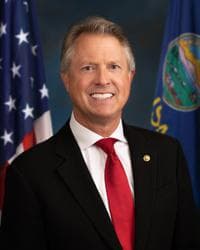
- Conservative Groups$1,092k
Full profile: /officials/M001198
Source: Congress.gov · FEC
Cosponsors (16)
Members who have signed on to support this bill since introduction. Source: Congress.gov.
16 cosponsors on record at Congress.gov. The named list is syncing into Govwatch and will appear here shortly — view on Congress.gov in the meantime.
Latest Action
The most recent step in the bill's legislative path. Committee Activity below shows referrals and reports; the full action-by-action history including floor proceedings lives at Congress.gov →
Committee Activity
Currently in
- Senate Committee on Agriculture, Nutrition, and ForestryReported By · 2025-07-10
Previously
- Senate Committee on Agriculture, Nutrition, and ForestryMarkup By · 2025-06-03
- Senate Committee on Agriculture, Nutrition, and ForestryHearings By (full committee) · 2025-04-01
- Senate Committee on Agriculture, Nutrition, and ForestryReferred To · 2025-01-23
Plain-English Summary
Whole Milk for Healthy Kids Act of 2025 This act revises requirements for milk provided by the National School Lunch Program of the Department of Agriculture (USDA) to allow schools to offer students whole and reduced-fat milk. The act also requires that local school food service personnel receive annual training and certification on food allergies. The act permits schools to offer students whole, reduced-fat (2%), low-fat (1%), and fat-free flavored and unflavored milk. The milk that is offered may be organic or nonorganic. Currently, USDA regulations require milk to be fat-free or low-fat and allow milk to be flavored or unflavored. The act also removes the requirement that schools participating in the program must provide milk that is consistent with the most recent Dietary Guidelines for Americans. The act also expands the nondairy beverages that are included in the program by allowing schools to offer all students nondairy beverages that are nutritionally equivalent to fluid milk and that meet nutritional standards established by USDA. Further, schools currently must provide a substitute for fluid milk, on receipt of a written statement from a licensed physician, for students whose disability restricts their diet. Under the act, a parent or legal guardian may also provide the written statement. In addition, the act excludes fluid milk from the saturated fat content calculation for school meals. Currently, schools participating in the program must provide meals that meet certain nutrition requirements; USDA regulations require that the average saturated fat content of the meals offered must be less than 10% of the total calories. Under the act, milk fat included in any fluid milk provided by the program must not be considered saturated fat for the purposes of measuring compliance with USDA regulations. Finally, the program's mandatory training and certification for local school food service personnel must include a module on food allergies, including information on the best practices to prevent, recognize, and respond to food-related allergic reactions. Food service personnel must receive an annual certification to demonstrate competence in the food allergies training and other training modules that are provided.
Plain-English rewrite of the Congressional Research Service summary published on Congress.gov. Cached and reviewed.
Subjects
Related legislation
Bills by the same sponsor or covering overlapping subjects.
- S2403Retire through Ownership ActEnacted into Law · 2026-10-15
- S5672Patients First Act of 2026Referred to Committee · 2026-09-30
- S5228STOP the SWAMP ActReferred to Committee · 2026-08-04
- S5156Retirement Simplification and Clarity ActReferred to Committee · 2026-07-29