Protecting Health Care and Lowering Costs Act
Sponsor
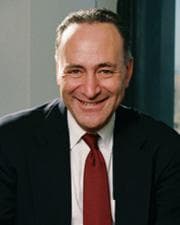
Full profile: /officials/S000148
Source: Congress.gov · FEC
Cosponsors (46)
Members who have signed on to support this bill since introduction. Source: Congress.gov.
- Adam B. Schiff (D-CA)Original· 2025-07-30
- Alex Padilla (D-CA)Original· 2025-07-30
- Amy Klobuchar (D-MN)Original· 2025-07-30
- Andy Kim (D-NJ)Original· 2025-07-30
- Angela D. Alsobrooks (D-MD)Original· 2025-07-30
- Angus S. King Jr. (I-ME)Original· 2025-07-30
- Ben Ray Luján (D-NM)Original· 2025-07-30
- Bernard Sanders (I-VT)Original· 2025-07-30
- Brian Schatz (D-HI)Original· 2025-07-30
- Catherine Cortez Masto (D-NV)Original· 2025-07-30
- Chris Van Hollen (D-MD)Original· 2025-07-30
- Christopher A. Coons (D-DE)Original· 2025-07-30
- Christopher Murphy (D-CT)Original· 2025-07-30
- Cory A. Booker (D-NJ)Original· 2025-07-30
- Edward J. Markey (D-MA)Original· 2025-07-30
- Elissa Slotkin (D-MI)Original· 2025-07-30
- Elizabeth Warren (D-MA)Original· 2025-07-30
- Gary C. Peters (D-MI)Original· 2025-07-30
- Jack Reed (D-RI)Original· 2025-07-30
- Jacky Rosen (D-NV)Original· 2025-07-30
- Jeanne Shaheen (D-NH)Original· 2025-07-30
- Jeff Merkley (D-OR)Original· 2025-07-30
- John Fetterman (D-PA)Original· 2025-07-30
- John W. Hickenlooper (D-CO)Original· 2025-07-30
- Jon Ossoff (D-GA)Original· 2025-07-30
- Kirsten E. Gillibrand (D-NY)Original· 2025-07-30
- Lisa Blunt Rochester (D-DE)Original· 2025-07-30
- Margaret Wood Hassan (D-NH)Original· 2025-07-30
- Maria Cantwell (D-WA)Original· 2025-07-30
- Mark Kelly (D-AZ)Original· 2025-07-30
- Mark R. Warner (D-VA)Original· 2025-07-30
- Martin Heinrich (D-NM)Original· 2025-07-30
- Mazie K. Hirono (D-HI)Original· 2025-07-30
- Michael F. Bennet (D-CO)Original· 2025-07-30
- Patty Murray (D-WA)Original· 2025-07-30
- Peter Welch (D-VT)Original· 2025-07-30
- Raphael G. Warnock (D-GA)Original· 2025-07-30
- Richard Blumenthal (D-CT)Original· 2025-07-30
- Richard J. Durbin (D-IL)Original· 2025-07-30
- Ron Wyden (D-OR)Original· 2025-07-30
- Ruben Gallego (D-AZ)Original· 2025-07-30
- Sheldon Whitehouse (D-RI)Original· 2025-07-30
- Tammy Baldwin (D-WI)Original· 2025-07-30
- Tammy Duckworth (D-IL)Original· 2025-07-30
- Tim Kaine (D-VA)Original· 2025-07-30
- Tina Smith (D-MN)Original· 2025-07-30
Latest Action
The most recent step in the bill's legislative path. Committee Activity below shows referrals and reports; the full action-by-action history including floor proceedings lives at Congress.gov →
Committee Activity
Currently in
- Senate Committee on FinanceReferred To · 2025-07-30
Previously
- Finance CommitteeReferred To · 2025-07-30
Plain-English Summary
Protecting Health Care and Lowering Costs Act This bill makes permanent temporary provisions that generally expand eligibility for and increase the amount of the premium tax credit. This bill also repeals multiple Medicaid, Medicare, and health-related tax provisions enacted by the One Big Beautiful Bill Act (OBBBA). Currently, eligible taxpayers may claim the premium tax credit, which applies toward the cost of obtaining health insurance through health insurance exchanges. To qualify, a taxpayer’s household income must meet or exceed 100% of the federal poverty level (FPL) and, after 2025, may not exceed 400% of the FPL (maximum income limit). For 2021-2025, the maximum income limit is eliminated, which generally expands eligibility for the premium tax credit. Further, under current law, the amount of the premium tax credit is partially based on the taxpayer’s household income multiplied by the applicable percentage. The applicable percentage varies depending on which of six income ranges (adjusted for inflation after 2025) the taxpayer’s household income falls within. For 2021-2025, the applicable percentages are lowered and the adjustment of the applicable percentages for inflation is eliminated, which generally increases the amount of the premium tax credit. The bill permanently eliminates the 400% maximum income limit, lowers the applicable percentages, and eliminates the inflation adjustment for the applicable percentages. Finally, the bill repeals multiple Medicaid, Medicare, and health-related tax provisions enacted by the OBBBA, including certain Medicare and Medicare eligibility and verification requirements, the reduced window for retroactive Medicaid coverage, and premium tax credit verification requirements.
Plain-English rewrite of the Congressional Research Service summary published on Congress.gov. Cached and reviewed.
Subjects
Related legislation
Bills by the same sponsor or covering overlapping subjects.
- S5619Restoring Essential Plan Coverage ActReferred to Committee · 2026-09-30
- S5461Strategic Fertilizer Reserve Act of 2026Referred to Committee · 2026-09-23
- S5390End Trump’s Tariff Tax ActReferred to Committee · 2026-09-14
- S5323A bill to designate a building of the Chancery of the United States in Pristina, Kosovo, as the "Elliot L. Engel Building".Referred to Committee · 2026-08-06