Foreign Robocall Elimination Act
Sponsor
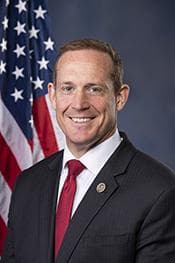
Full profile: /officials/B001305
Source: Congress.gov · FEC
Cosponsors (3)
Members who have signed on to support this bill since introduction. Source: Congress.gov.
Latest Action
The most recent step in the bill's legislative path. Committee Activity below shows referrals and reports; the full action-by-action history including floor proceedings lives at Congress.gov →
Committee Activity
Currently in
- Senate Committee on Commerce, Science, and TransportationReported By · 2026-06-01
Previously
- Commerce, Science, and Transportation CommitteeMarkup By · 2025-10-21
- Senate Committee on Commerce, Science, and TransportationMarkup By · 2025-10-21
- Commerce, Science, and Transportation CommitteeReferred To · 2025-08-01
- Senate Committee on Commerce, Science, and TransportationReferred To · 2025-08-01
Plain-English Summary
Foreign Robocall Elimination Act This bill establishes an interagency task force on unlawful robocalls to advise federal agencies and Congress on combating robocalls made from outside of the United States. The bill also increases the term applicable to the Federal Communications Commission’s designation of an industry-led consortium to trace the origin of suspected unlawful robocalls. Under current law, the commission must annually seek applications from industry groups to serve as the designated consortium; under the bill, the commission must seek applications once every three years.
Plain-English rewrite of the Congressional Research Service summary published on Congress.gov. Cached and reviewed.
Subjects
Full Bill Text
Verbatim text published on Congress.gov via GovInfo. Use Cmd+F / Ctrl+F to search within this excerpt.
[Congressional Bills 119th Congress] [From the U.S. Government Publishing Office] [S. 2666 Introduced in Senate (IS)] <DOC> 119th CONGRESS 1st Session S. 2666 To direct the Federal Communications Commission to establish a taskforce on unlawful robocalls, and for other purposes. _______________________________________________________________________ IN THE SENATE OF THE UNITED STATES August 1, 2025 Mr. Budd (for himself and Mr. Welch) introduced the following bill; which was read twice and referred to the Committee on Commerce, Science, and Transportation _______________________________________________________________________ A BILL To direct the Federal Communications Commission to establish a taskforce on unlawful robocalls, and for other purposes. Be it enacted by the Senate and House of Representatives of the United States of America in Congress assembled, SECTION 1. SHORT TITLE. This Act may be cited as the ``Foreign Robocall Elimination Act''. SEC. 2. INTERAGENCY TASKFORCE ON UNLAWFUL ROBOCALLS. (a) Definitions.--In this section: (1) Commission.--The term ``Commission'' means the Federal Communications Commission. (2) Consortium.--The term ``Consortium'' means the consortium described in section 13(d) of the Pallone-Thune TRACED Act (Public Law 116-105). (3) Federal agency.--The term ``Federal agency'' has the meaning given the term ``agency'' in section 551 of title 5, United States Code. (4) Taskforce.--The term ``taskforce'' means the taskforce on unlawful robocalls established under subsection (b). (5) Unlawful robocall.--The term ``unlawful robocall'' means a telephone call made in violation of subsection (b) or (e) of section 227 of the Communications Act of 1934 (47 U.S.C. 227). (b) Establishment.--Not later than 270 days after the date of enactment of this Act, the Commission, after consultation with the Federal Trade Commission and the Attorney General, shall establish a taskforce on unlawful robocalls. (c) Membership.-- (1) In general.--The taskforce shall be composed of the following members: (A)(i) A representative of each Federal agency that the Chairman of the Commission, in consultation with the Chairman of the Federal Trade Commission and the Attorney General, considers appropriate. (ii) With respect to each Federal agency considered under clause (i) to be appropriate, the Chairman of the Commission shall appoint a representative of that Federal agency to the taskforce based on the recommendations of the head of that Federal agency. (B) Seven representatives of private sector entities, to be appointed as described in paragraph (2)-- (i) 3 of whom shall be representatives from private sector entities with expertise in combating unlawful robocalls, including-- (I) voice service providers; (II) analytics providers; (III) technologists; and (IV) technology experts; (ii) 1 of whom shall be a representative from the Consortium; (iii) 1 of whom shall be a representative of a marketing business that communicates with consumers by telephone as part of the normal course of business of that marketing business; (iv) 1 of whom shall be a representative of a business or nonprofit organization that communicates with consumers by telephone for non-marketing purposes on a regular basis; and (v) 1 of whom shall be a representative of an organization that advocates on behalf of customers and who has relevant experience and expertise in combating unlawful robocalls. (2) Appointment of representatives of private sector entities.-- (A) In general.--Notwithstanding any provision of chapter 10 of title 5, United States Code, the members of the taskforce described in paragraph (1)(B) shall be jointly appointed by the Chairman of the Commission, the Chairman of the Federal Trade Commission, and the Attorney General. (B) Inability to reach agreement.-- (i) In general.--Subject to clauses (ii) and (iii), if the Chairman of the Commission, the Chairman of the Federal Trade Commission, and the Attorney General cannot reach agreement regarding an appointment described in subparagraph (A), as determined by the Chairman of the Commission, the Chairman of the Commission…
Show the remaining 880 wordsHide the remaining 880 words
shall make that appointment. (ii) Notice of appointments.--Not later than 48 hours before appointing a member to the taskforce under clause (i), the Chairman of the Commission shall provide notice of the proposed appointment to the commissioners of the Commission. (iii) Request for vote.-- (I) In general.--Except as provided in subclause (II), if, after receiving notice under clause (ii) of a proposed appointment under clause (i), not fewer than 2 commissioners of the Commission request that the proposed appointment be subject to a vote of the Commission, the Chairman of the Commission may not make that appointment unless a majority of the commissioners of the Commission vote to approve the appointment. (II) Inapplicability.--Subclause (I) shall have no force or effect during any period in which there has been a vacancy with respect to a position as commissioner of the Commission for more than 180 days. (d) Report.-- (1) In general.--The taskforce shall prepare a report on unlawful robocalls, which shall contain recommendations and advice for Federal agencies with jurisdiction relevant to combating unlawful robocalls, and for Congress, regarding the most effective ways to combat unlawful robocalls made into the United States from outside the United States. (2) Matters to be studied.--In preparing the report required under paragraph (1), the taskforce shall-- (A) compare the estimated number of suspected unlawful robocalls made within the United States with the estimated number of unlawful robocalls made into the United States from outside the United States; (B) determine which foreign countries serve as the foreign points of departure for the highest volume of unlawful robocalls made into the United States; (C) determine the magnitude of financial loss and the number of instances of stolen identity that occur within the United States each year as a result of unlawful robocalls made from outside the United States; (D) examine methods for encouraging the adoption of caller identification authentication technology in foreign countries; (E) examine and provide information on options for how countries can collaborate on solutions to authenticate and verify international calls, including relevant analytics relating to unlawful robocalls and technical options that can be used with respect to that authentication and verification; (F) examine how better implementation of technical solutions, such as traceback and caller identification authentication technology in foreign originating countries, would improve coordination between the United States and foreign countries in combating unlawful robocalls; (G) determine whether-- (i) the technical standards commonly known as ``STIR/SHAKEN'' adequately provide call authentication for unlawful robocalls from foreign originating providers or foreign intermediate providers through gateway providers in the United States; and (ii) it would be desirable to encourage other countries to adopt the standards described in clause (i); (H) determine if coordination with respect to technologies and incentives to combat unlawful robocalls placed from outside the United States into the United States can help inform strategies to combat potentially fraudulent, or otherwise unlawful, text messages sent from persons outside the United States to persons within the United States; (I) examine ways to provide incentives to foreign countries to cooperate with law enforcement efforts in the United States to combat unlawful robocalls; (J) examine whether any Federal agency, or any other organization, that combats unlawful robocalls needs additional resources in order to more effectively combat unlawful robocalls made into the United States from outside the United States; (K) specifically consider whether the ability of the Attorney General to conduct enforcement activities with respect to unlawful robocalls would be increased through the establishment of an office within the Department of Justice dedicated to those enforcement activities; (L) examine how increased criminal penalties based on the volume of unlawful robocalls could help prevent unlawful robocalls made into the United States; (M) examine how many enforcement activities the Attorney General has undertaken in the year preceding the date on which the preparation of the report begins, including in response to referrals made by the Commission; (N) specifically determine how the Attorney General has pursued forfeiture amounts in enforcement activities with respect to unlawful robocalls; (O) seek input, as appropriate, from technologists and private sector innovators to find solutions for combating unlawful robocalls; and (P) identify a list of best practices regarding the identification and blocking of unlawful robocalls that telephone service providers and providers of technology solutions can voluntarily implement to improve the effectiveness of mitigating unlawful robocalls made into the United States from outside the United States. (3) Report to congress.--Not later than 360 days after the date on which the taskforce is established under subsection (b), the taskforce shall submit to Congress the report prepared under this subsection. (e) Use of Funds.--Notwithstanding section 1346 of title 31, United States Code, funds made available by this or any other Act to the Commission, the Federal Trade Commission, or the Department of Justice may be used by the applicable Federal agency for coordination with, participation in, or recommendations involving the taskforce, as required under this section. (f) Termination.--The taskforce shall terminate on the date that is 90 days after the date on which the taskforce submits to Congress the report prepared under subsection (d), as required under paragraph (3) of that subsection. SEC. 3. FCC NOTICE PROVISION. Section 13(d)(2) of the Pallone-Thune TRACED Act (Public Law 116- 105) is amended by striking ``annually'' and inserting ``once every 3 years''. <all>
Related legislation
Bills by the same sponsor or covering overlapping subjects.
- S5517Fort Bragg Land Transfer for Veterans ActReferred to Committee · 2026-09-24
- S5557SCALE Biology ActReferred to Committee · 2026-09-24
- S5370Combatting the Persecution of Religious Groups in the People’s Republic of China ActReferred to Committee · 2026-08-07
- S3984United States Commission on International Religious Freedom Reauthorization Act of 2026Reported by Committee · 2026-07-27