Preventing Illegal Laboratories and Protecting Public Health Act of 2026
Sponsor
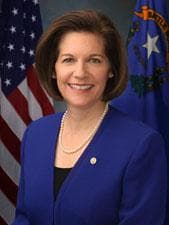
Full profile: /officials/C001113
Source: Congress.gov · FEC
Cosponsors (1)
Members who have signed on to support this bill since introduction. Source: Congress.gov.
Latest Action
The most recent step in the bill's legislative path. Committee Activity below shows referrals and reports; the full action-by-action history including floor proceedings lives at Congress.gov →
Read twice and referred to the Committee on Health, Education, Labor, and Pensions.
2026-03-26
Source: Congress.gov
Committee Activity
Currently in
- Senate Committee on Health, Education, Labor, and PensionsReferred To · 2026-03-26
Previously
- Health, Education, Labor, and Pensions CommitteeReferred To · 2026-03-26
Plain-English Summary
This bill would establish new federal regulations and enforcement measures to shut down illegal drug manufacturing operations and protect communities from the dangers of unregulated chemical labs. It likely includes provisions for law enforcement to identify and prosecute operators of illegal laboratories, while also protecting public health by preventing contamination and explosions that often occur at these sites. The legislation would affect drug enforcement agencies, local law enforcement, and communities near areas where illegal labs operate.
AI-assisted summary generated from the official bill metadata (title, subjects, actions) sourced from Congress.gov. Cached and reviewed. Always verify against the official text linked below.
Subjects
Full Bill Text
Verbatim text published on Congress.gov via GovInfo. Use Cmd+F / Ctrl+F to search within this excerpt.
[Congressional Bills 119th Congress] [From the U.S. Government Publishing Office] [S. 4227 Introduced in Senate (IS)] <DOC> 119th CONGRESS 2d Session S. 4227 To require the Secretary of Health and Human Services, acting through the Assistant Secretary for Preparedness and Response, to carry out a program under which the Secretary requires each covered distributor of a highly pathogenic agent to comply with certain logbook requirements, and for other purposes. _______________________________________________________________________ IN THE SENATE OF THE UNITED STATES March 26, 2026 Ms. Cortez Masto (for herself and Mr. Banks) introduced the following bill; which was read twice and referred to the Committee on Health, Education, Labor, and Pensions _______________________________________________________________________ A BILL To require the Secretary of Health and Human Services, acting through the Assistant Secretary for Preparedness and Response, to carry out a program under which the Secretary requires each covered distributor of a highly pathogenic agent to comply with certain logbook requirements, and for other purposes. Be it enacted by the Senate and House of Representatives of the United States of America in Congress assembled, SECTION 1. SHORT TITLE. This Act may be cited as the ``Preventing Illegal Laboratories and Protecting Public Health Act of 2026''. SEC. 2. REQUIRING CERTAIN DISTRIBUTORS OF HIGHLY PATHOGENIC AGENTS TO KEEP A LOGBOOK OF SALES, LEASES, LOANS, AND OTHER TRANSFERS. (a) Program.--The Secretary shall carry out a program under which the Secretary requires each covered distributor of a highly pathogenic agent to comply with the logbook requirements of subsection (c). (b) List of Highly Pathogenic Agents.-- (1) Development.--The Secretary shall develop and maintain a list of all agents that meet the definition of a highly pathogenic agent in subsection (e). (2) Initial list.--The Secretary shall develop the initial list required by paragraph (1) not later than 6 months after the date of enactment of this Act. (3) Periodic review.--The Secretary shall annually review and update the list required by paragraph (1). (4) Consultation; consideration.--In developing and updating the list required by paragraph (1), the Secretary shall-- (A) consult with relevant agencies, including the Centers for Disease Control and Prevention, the National Institutes of Health, the Department of Homeland Security, the Department of Agriculture, the Department of the Interior, and the Department of Defense; (B) take into consideration the latest edition of ``Biosafety in Microbiological and Biomedical Laboratories'' published by the Centers for Disease Control and Prevention and the National Institutes of Health (or any successor to such publication); and (C) take into consideration the latest edition of ``NIH Guidelines for Research Involving Recombinant or Synthetic Nucleic Acid Molecules'' published by the National Institutes of Health (or any successor to such publication). (c) Logbook Requirements.-- (1) In general.--Each covered distributor shall maintain, in accordance with such criteria and format as the Secretary may require, an electronic list (in this section referred to as a ``logbook'') of the sales, leases, loans, or other transfers by such distributor of each highly pathogenic agent on the list under subsection (b). (2) Contents.--The covered distributor shall, for each sale, lease, loan, or other transfer referred to in paragraph (1), include in the logbook-- (A) the agent by name; (B) the name, address, telephone number, and email address of the purchaser; (C) other relevant identifying business information of the purchaser, as the Secretary determines appropriate; (D) a short description of-- (i) the purchaser's intended use of the highly pathogenic agent; and (ii) where the purchaser will house the agent; (E) the date and time of the sale, lease, loan, or other transfer; (F) the method, date, and time of transfer of the highly pathogenic agent; (G) a physical or electronic…
Show the remaining 1,524 wordsHide the remaining 1,524 words
signature of the purchaser; and (H) such other data elements as the Secretary may require. (3) Sale requirements.--In the case of a sale, lease, loan, or other transfer to which paragraph (1) applies, the covered distributor shall not sell the highly pathogenic agent unless-- (A) the prospective purchaser, in physical form or electronically in compliance with the Electronic Signatures in Global and National Commerce Act (42 U.S.C. 7001 et seq.)-- (i) presents an identification card that provides a photograph and is issued by a State or the Federal Government, or a document that, with respect to identification, is considered acceptable for purposes of sections 274a.2(b)(1)(v)(A) and 274a.2(b)(1)(v)(B) of title 8, Code of Federal Regulations (or successor regulations); and (ii) verifies by signature in the logbook-- (I) the purchaser's name and address; (II) a short description of-- (aa) the purchaser's intended use of the agent; and (bb) where the purchaser will house the agent; (III) the date and time of the sale, lease, loan, or other transfer; and (IV) the method, date, and time of transfer of the agent; and (B) the covered distributor-- (i) determines that the name entered in the logbook corresponds to the name provided on the identification card described in subparagraph (A)(i), and that the information entered pursuant to subparagraph (A)(ii) is correct; and (ii) enters in the logbook the name of the highly pathogenic agent. (4) Notice.--The covered distributor shall include in the logbook, in accordance with criteria of the Secretary, a notice to purchasers that entering false statements or misrepresentations in the logbook may subject the purchasers to criminal penalties under section 1001 of title 18, United States Code, which notice specifies the maximum fine and term of imprisonment under such section. (5) Duration of maintenance of entries.-- (A) Retention period.--The covered distributor shall maintain each entry in the logbook for not fewer than 3 years after the date on which the entry is made. (B) Successor entity.--If ownership of a covered distributor changes, the successor entity shall assume custody of and responsibility for all logbooks for the remainder of the 3-year retention period required by subparagraph (A). (6) Disclosure of logbooks.--The Secretary shall establish restrictions on disclosure of information in logbooks. Such regulations shall-- (A) provide for the disclosure of the information, as appropriate, to the Secretary, Federal, State, local, Tribal, and territorial law enforcement agencies, and State health officials; and (B) prohibit accessing, using, or sharing information in the logbooks for any purpose other than-- (i) to ensure compliance with this section; (ii) to protect public health and safety; or (iii) to protect national security. (7) FOIA exemption.--Logbooks and any derivative data are exempt from disclosure under section 552(b)(3) of title 5, United States Code. (8) Applicability.--A transfer of a highly pathogenic agent between laboratories within a single institution of higher education (as defined in section 101 of the Higher Education Act of 1965 (20 U.S.C. 1001)) does not constitute a sale, lease, loan, or other transfer of the agent for purposes of paragraph (1). (9) Audits.--The Secretary shall establish a risk-based compliance review process by which the Secretary may conduct audits of logbooks when the Secretary has cause to believe a violation of this section has occurred. The Secretary shall focus audits conducted under this paragraph on higher-risk distributors and suspicious patterns. (d) False Statements or Misrepresentations by Purchasers.--For purposes of section 1001 of title 18, United States Code, providing information to a covered distributor for purposes of entering such information in a logbook shall be considered a matter within the jurisdiction of the executive, legislative, or judicial branch of the Government of the United States. (e) Definitions.--In this section: (1) The term ``covered distributor''-- (A) means an entity that sells, leases, loans, or otherwise transfers for value or not for value a highly pathogenic agent, except that such term does not include an employee or agent of such a distributor; and (B) includes a publicly funded repository or biobank that sells, leases, loans, or otherwise transfers a highly pathogenic agent, as described in subparagraph (A). (2) The term ``highly pathogenic agent''-- (A) subject to subparagraph (B), means a pathogenic agent that meets the criteria of ``risk group 3'' or any higher level risk groups as such risk groups are defined in the latest edition of ``NIH Guidelines for Research Involving Recombinant or Synthetic Nucleic Acid Molecules'' published by the National Institutes of Health (or any successor to such publication); and (B) excludes any biological agent or toxin that is regulated under section 351A of the Public Health Service Act (42 U.S.C. 262a) or section 212 of the Agricultural Bioterrorism Protection Act of 2002 (7 U.S.C. 8401). (3) The term ``Secretary'' means the Secretary of Health and Human Services, acting through the Assistant Secretary for Strategic Preparedness and Response. (f) Rule of Construction.--Nothing in this section shall be construed to supersede or otherwise affect the Federal Select Agent Program under section 351A of the Public Health Service Act (42 U.S.C. 262a) and section 212 of the Agricultural Bioterrorism Protection Act of 2002 (7 U.S.C. 8401). SEC. 3. EVALUATION OF HIGH-CONTAINMENT LABORATORIES. (a) In General.--The National Security Advisor, in consultation with the Secretary of Health and Human Services, the Secretary of Agriculture, the Secretary of Defense, the Secretary of Homeland Security, the Secretary of the Interior, the Director of National Intelligence, and such other Federal officials as the National Security Advisor determines appropriate, shall identify a single Federal entity to oversee a periodic strategic evaluation of high-containment laboratories in the United States. (b) Topics.--Each strategic evaluation under subsection (a) shall include-- (1) an assessment of-- (A) the number, location, and mission of high- containment laboratories; (B) the capacity of such existing laboratories to effectively meet national goals to counter threats to biosafety and biosecurity; (C) the physical security measures at high- containment laboratories; (D) the aggregate risks associated with-- (i) such existing laboratories; and (ii) expanding the numbers and facilities of such laboratories; and (E) the type of oversight needed for high- containment laboratories; and (2) up-to-date national standards, developed by the Federal entity identified under subsection (a), that-- (A) are developed by the Federal entity identified under subsection (a) in consultation with members of the scientific community, for the design, construction, commissioning, operation, and long-term maintenance of high-containment laboratories; and (B) take into consideration applicable regulations and guidance for high-containment laboratories. (c) Reporting.--Upon completion of each strategic evaluation under subsection (a), the Federal entity identified under subsection (a) shall submit to the President and to Congress a report on the results of such evaluation and include in each such report recommendations on-- (1) addressing gaps in Federal oversight of high- containment laboratories; and (2) utilizing high-containment laboratories for protecting public health and ensuring biosafety and biosecurity in the United States. (d) Public Health Biosafety and Biosecurity Team.-- (1) In general.--The Federal entity identified under subsection (a) shall maintain a team, to be known as the Public Health Biosafety and Biosecurity Team, to serve as a single point of contact for State, local, Tribal, and territorial agencies regarding questions relating to laboratory biosafety and biosecurity. (2) Establishment.--The Federal entity identified under subsection (a) shall establish the Public Health and Biosecurity Team, as required by paragraph (1), not later than one year after such official is first designated. (3) Duties.--The Public Health Biosafety and Biosecurity Team shall be the single point of contact in the Federal Government for State, local, Tribal, and territorial agencies on-- (A) issues related to-- (i) oversight of high-containment laboratories; (ii) the impact of high-containment laboratories on public health; or (iii) connecting State, local, Tribal, and territorial officials with the relevant Federal agency or agencies on matters related to high- containment laboratories; and (B) other issues as the Federal entity identified under subsection (a) determines appropriate. (e) Feasibility Study.-- (1) In general.--The Federal entity identified under subsection (a) shall conduct a feasibility study on establishing and maintaining a database on existing high- containment laboratories in the United States for the purpose of making such database accessible to Federal, State, local, Tribal, and territorial officials. (2) Database described.--The database considered under paragraph (1) shall be a database designed to include, with respect to each high-containment laboratory, the following information: (A) The identity of the owners of the laboratory. (B) The address of the laboratory. (C) The status of any licensing or certification of the laboratory required under Federal, State, local, Tribal, or territorial law. (D) Any legal violations by, and disciplinary action taken against, the laboratory. (E) Such additional information as the Federal entity identified under subsection (a) determines appropriate to protect biosafety and biosecurity. (3) Report to congress.--Upon completion of the feasibility study under this subsection, the Federal entity identified under subsection (a) shall submit to Congress a report on the results of such study. (f) Definition.--In this section, the term ``high-containment laboratory'' means a laboratory that is suitable for ``biosafety level 3'' or any higher biosafety level procedures, as defined in the latest edition of ``Biosafety in Microbiological and Biomedical Laboratories'' published by the Centers for Disease Control and Prevention and the National Institutes of Health (or any successor to such publication). <all>
Related legislation
Bills by the same sponsor or covering overlapping subjects.
- S1574Tribal Access to Electronic Evidence ActPassed Senate · 2026-10-05
- S4406Next-Generation Geothermal Research and Development ActReferred to Committee · 2026-09-30
- S5681A bill to provide for the protection of the duties of the Inspector General of the Federal Housing Finance Agency.Referred to Committee · 2026-09-30
- S4166SECURE Grid ActReferred to Committee · 2026-09-30