Stop CHEATERS Act
Sponsor
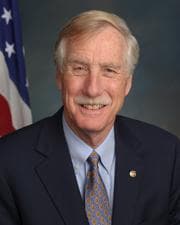
Source: Congress.gov · FEC
Cosponsors (28)
Members who have signed on to support this bill since introduction. Source: Congress.gov.
- Amy Klobuchar (D-MN)Original· 2026-04-15
- Andy Kim (D-NJ)Original· 2026-04-15
- Ben Ray Luján (D-NM)Original· 2026-04-15
- Bernard Sanders (I-VT)Original· 2026-04-15
- Brian Schatz (D-HI)Original· 2026-04-15
- Charles E. Schumer (D-NY)Original· 2026-04-15
- Chris Van Hollen (D-MD)Original· 2026-04-15
- Christopher A. Coons (D-DE)Original· 2026-04-15
- Cory A. Booker (D-NJ)Original· 2026-04-15
- Elizabeth Warren (D-MA)Original· 2026-04-15
- Gary C. Peters (D-MI)Original· 2026-04-15
- Jeanne Shaheen (D-NH)Original· 2026-04-15
- Jeff Merkley (D-OR)Original· 2026-04-15
- John Fetterman (D-PA)Original· 2026-04-15
- John W. Hickenlooper (D-CO)Original· 2026-04-15
- Lisa Blunt Rochester (D-DE)Original· 2026-04-15
- Mark R. Warner (D-VA)Original· 2026-04-15
- Martin Heinrich (D-NM)Original· 2026-04-15
- Michael F. Bennet (D-CO)Original· 2026-04-15
- Peter Welch (D-VT)Original· 2026-04-15
- Richard Blumenthal (D-CT)Original· 2026-04-15
- Richard J. Durbin (D-IL)Original· 2026-04-15
- Ron Wyden (D-OR)Original· 2026-04-15
- Ruben Gallego (D-AZ)Original· 2026-04-15
- Sheldon Whitehouse (D-RI)Original· 2026-04-15
- Tammy Duckworth (D-IL)Original· 2026-04-15
- Tim Kaine (D-VA)Original· 2026-04-15
- Tina Smith (D-MN)Original· 2026-04-15
Latest Action
The most recent step in the bill's legislative path. Committee Activity below shows referrals and reports; the full action-by-action history including floor proceedings lives at Congress.gov →
Committee Activity
Currently in
- Senate Committee on FinanceReferred To · 2026-04-15
Previously
- Finance CommitteeReferred To · 2026-04-15
Plain-English Summary
Stop Corporations and High Earners from Avoiding Taxes and Enforce the Rules Strictly Act or the Stop CHEATERS Act This bill provides additional appropriations to the Internal Revenue Service (IRS) for FY2026-FY2031 and establishes reporting requirements related to tax enforcement for high-income individuals and corporations. The bill provides specified appropriations to the IRS for FY2026-FY2031 for purposes such as tax enforcement, taxpayer services, technology and operations support, and business systems modernization. The funds provided by the bill remain available until expended. The bill also requires the IRS to submit a report to Congress every two years that includes a comprehensive description of a plan to shift more IRS auditing and enforcement assets toward high-income individuals and large corporations, recruit and retain auditors with the skills essential to audit high-income individuals and large corporations, and increase voluntary compliance among high-income individuals and large corporations. The report must also include (1) a description of the progress that has been made in implementing the plan; and (2) an analysis of how much of the difference between the taxes owed and the taxes collected by the IRS is attributable to taxpayers at different income levels, including high-income individuals and large corporations. The bill also requires the Treasury Inspector General for Tax Administration to submit a report to Congress evaluating the IRS's plan and its progress in implementing the plan.
Plain-English rewrite of the Congressional Research Service summary published on Congress.gov. Cached and reviewed.
Subjects
Full Bill Text
Verbatim text published on Congress.gov via GovInfo. Use Cmd+F / Ctrl+F to search within this excerpt.
[Congressional Bills 119th Congress] [From the U.S. Government Publishing Office] [S. 4298 Introduced in Senate (IS)] <DOC> 119th CONGRESS 2d Session S. 4298 To provide appropriations for the Internal Revenue Service to overhaul technology and strengthen enforcement, and for other purposes. _______________________________________________________________________ IN THE SENATE OF THE UNITED STATES April 15 (legislative day, April 14), 2026 Mr. King (for himself, Ms. Warren, Mr. Kaine, Mr. Whitehouse, Mr. Schumer, Mr. Wyden, Mr. Bennet, Mr. Blumenthal, Ms. Blunt Rochester, Mr. Booker, Mr. Coons, Ms. Duckworth, Mr. Durbin, Mr. Fetterman, Mr. Gallego, Mr. Heinrich, Mr. Hickenlooper, Mr. Kim, Mr. Lujan, Mr. Merkley, Mr. Peters, Mr. Sanders, Mr. Schatz, Mrs. Shaheen, Mr. Van Hollen, Mr. Warner, Mr. Welch, Ms. Smith, and Ms. Klobuchar) introduced the following bill; which was read twice and referred to the Committee on Finance _______________________________________________________________________ A BILL To provide appropriations for the Internal Revenue Service to overhaul technology and strengthen enforcement, and for other purposes. Be it enacted by the Senate and House of Representatives of the United States of America in Congress assembled, SECTION 1. SHORT TITLE. This Act may be cited as the ``Stop Corporations and High Earners from Avoiding Taxes and Enforce the Rules Strictly Act'' or the ``Stop CHEATERS Act''. SEC. 2. ADDITIONAL APPROPRIATIONS FOR THE INTERNAL REVENUE SERVICE. (a) Enforcement.--In addition to other amounts, there is appropriated the following amounts for necessary expenses for tax enforcement activities of the Internal Revenue Service to pursue the objectives described in section 3(a)(1), including to determine and collect owed taxes, to provide legal and litigation support, to conduct criminal investigations, to enforce criminal statutes related to violations of internal revenue laws and other financial crimes, to purchase and hire passenger motor vehicles (31 U.S.C. 1343(b)), and to provide other services as authorized by 5 U.S.C. 3109, at such rates as may be determined by the Commissioner: (1) For fiscal year 2026, $3,600,000,000. (2) For fiscal year 2027, $5,000,000,000. (3) For fiscal year 2028, $6,500,000,000. (4) For fiscal year 2029, $8,200,000,000. (5) For fiscal year 2030, $10,100,000,000. (6) For fiscal year 2031, $12,200,000,000. (b) Taxpayer Services.--In addition to other amounts, there are appropriated the following amounts to provide taxpayer services, including pre-filing assistance and education, filing and account services, and taxpayer advocacy services: (1) For fiscal year 2026, $1,400,000,000. (2) For fiscal year 2027, $1,600,000,000. (3) For fiscal year 2028, $1,600,000,000. (4) For fiscal year 2029, $1,600,000,000. (5) For fiscal year 2030, $1,700,000,000. (6) For fiscal year 2031, $1,700,000,000. (c) Technology and Operations Support.--There are appropriated the following additional amounts for the ``Department of the Treasury-- Internal Revenue Service--Operations Support'' account to overhaul outdated technology of the Internal Revenue Service and improve the capacity of the Internal Revenue Service to detect fraud and noncompliance: (1) For fiscal year 2026, $900,000,000. (2) For fiscal year 2027, $4,500,000,000. (3) For fiscal year 2028, $4,500,000,000. (4) For fiscal year 2029, $4,800,000,000. (5) For fiscal year 2030, $4,800,000,000. (6) For fiscal year 2031, $5,900,000,000. (d) Business Systems Modernization.--There are appropriated the following additional amounts for necessary expenses of the Internal Revenue Service's business systems modernization program, but not including the operation and maintenance of legacy systems: (1) For fiscal year 2026, $1,000,000,000. (2) For fiscal year 2027, $900,000,000. (3) For fiscal year 2028, $300,000,000. (4) For fiscal year 2029, $300,000,000. (5) For fiscal year 2030, $300,000,000. (6) For fiscal year 2031, $300,000,000. (e) Availability.--Each additional amount appropriated by this section shall remain available until expended. SEC. 3. REPORTS TO CONGRESS. (a) In General.--Not later than 1 year after the date of the enactment of this Act and every 2 years thereafter, the Commissioner…
Show the remaining 179 wordsHide the remaining 179 words
of Internal Revenue shall submit to Congress a report containing-- (1) a comprehensive description of-- (A) a plan to-- (i) shift more of the auditing and enforcement assets of the Internal Revenue Service toward high-income individuals and large corporations, (ii) recruit and retain auditors with the skills essential to audit high-income individuals and large corporations, and (iii) increase voluntary compliance among high-income individuals and large corporations, and (B) the progress made in implementing such plan, and (2) an analysis of how much of the difference between tax liabilities owed to the United States under the Internal Revenue Code of 1986 and those liabilities actually collected by the Internal Revenue Service are attributable to taxpayers at different income levels, including high-income individuals and large corporations. (b) Inspector General.--Not later than 1 year after the first report is submitted under subsection (a) and every 2 years thereafter, the Treasury Inspector General for Tax Administration shall submit to Congress a report evaluating the plan described in subsection (a)(1) and the progress made by the Internal Revenue Service in implementing such plan. <all>
Related legislation
Bills by the same sponsor or covering overlapping subjects.
- S5652Build American Efficiency ActReferred to Committee · 2026-09-30
- SRES905A resolution designating September 25, 2026, as "National Lobster Day".Introduced · 2026-09-24
- S5497Providing Veterans Essential Medications ActReferred to Committee · 2026-09-24
- S5466FASTER ActReferred to Committee · 2026-09-23