S4340Referred to Committee
Stop Climate Shakedowns Act of 2026
Introduced
In Committee
3
Passed One Chamber4
Passed Both5
Signed into Law119th
Congress
2026-04-16
Introduced
3
Cosponsors
S
ⓘType
Sponsor
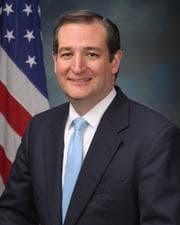
Ted Cruz
Republican · TX · Senator
Votes with party: 75.7% (868 recorded votes)
Top industries funding sponsor:
- Conservative Groups$464k
Full profile: /officials/C001098
Source: Congress.gov · FEC
Cosponsors (3)
Members who have signed on to support this bill since introduction. Source: Congress.gov.
Latest Action
The most recent step in the bill's legislative path. Committee Activity below shows referrals and reports; the full action-by-action history including floor proceedings lives at Congress.gov →
Committee Activity
Currently in
- Senate Committee on the JudiciaryReferred To · 2026-04-16
Previously
- Judiciary CommitteeReferred To · 2026-04-16
Plain-English Summary
This bill would shield energy companies and workers in the mining, oil, gas, and power industries from lawsuits seeking damages or court orders to stop their operations, even if their products cause harm. The protection would apply across the entire energy supply chain, from extraction and refinement to sale to consumers. The measure would significantly limit the ability of individuals, communities, and governments to sue energy producers for environmental damage, health problems, or other injuries allegedly caused by fossil fuels and energy products.
AI-assisted summary generated from the official bill metadata (title, subjects, actions) sourced from Congress.gov. Cached and reviewed. Always verify against the official text linked below.
Subjects
Environmental Protection
Full Bill Text
Verbatim text published on Congress.gov via GovInfo. Use Cmd+F / Ctrl+F to search within this excerpt.
[Congressional Bills 119th Congress] [From the U.S. Government Publishing Office] [S. 4340 Introduced in Senate (IS)] <DOC> 119th CONGRESS 2d Session S. 4340 To prohibit liability against those engaged in the mining, extraction, production, refinement, transportation, distribution, marketing, manufacture, or sale of energy for damages or injunctive or other relief from the use of their products, and for other purposes. _______________________________________________________________________ IN THE SENATE OF THE UNITED STATES April 16 (legislative day, April 14), 2026 Mr. Cruz (for himself, Mr. Budd, Mr. Cotton, and Mr. Lee) introduced the following bill; which was read twice and referred to the Committee on the Judiciary _______________________________________________________________________ A BILL To prohibit liability against those engaged in the mining, extraction, production, refinement, transportation, distribution, marketing, manufacture, or sale of energy for damages or injunctive or other relief from the use of their products, and for other purposes. Be it enacted by the Senate and House of Representatives of the United States of America in Congress assembled, SECTION 1. SHORT TITLE. This Act may be cited as the ``Stop Climate Shakedowns Act of 2026''. SEC. 2. CONGRESSIONAL DECLARATION; PURPOSES; FINDINGS. (a) Congressional Declaration.--Congress declares that the general welfare and the common defense and security require effective action-- (1) to develop, and increase the efficiency of, all energy sources to meet the needs of present and future generations; (2) to increase the productivity of the economy of the United States and strengthen the position of the United States in regard to international trade; (3) to make the United States self-sufficient in energy; and (4) to promote and preserve affordable energy for families and businesses in the United States. (b) Purposes.--The purposes of this Act are-- (1) to provide for the regulation of interstate commerce; and (2) to promote the production and use of affordable, abundant, and reliable energy resources. (c) Findings.--Congress finds that-- (1) affordable, abundant, and reliable energy resources are a necessary component of the general welfare of the United States; (2) the production and use of abundant energy resources promotes-- (A) the national security of the United States; and (B) the health, safety, and welfare of the citizens of the United States; (3) the regulation of interstate, international, and transboundary emissions in the ambient air is within the exclusive jurisdiction of Federal law; (4) the efforts of States to impose liability on persons engaged in the energy business for interstate and global emissions, whether through State tort law, consumer protection claims, the passage and enforcement of so-called ``climate superfund laws'', or other civil actions, invade the exclusive jurisdiction of the Federal Government; (5) the efforts to attribute local weather patterns and the local harms that result from meteorological events, such as floods, droughts, hurricanes, wildfires, or heat waves, to persons engaged in the energy business lack scientific credibility and are, therefore, arbitrary; (6) the efforts of States and municipalities to impose retroactive liability on persons engaged in the energy business for otherwise lawful conduct offends elementary considerations of fairness and the Constitution of the United States; (7) the efforts described in paragraphs (4), (5), and (6)-- (A) are a strain on the judiciary; (B) erode public confidence in the administration of justice; (C) threaten to destabilize entire industries that are lawfully engaging in commerce in the United States; and (D) burden the interstate, Tribal, and foreign commerce of the United States; (8) the efforts described in paragraphs (4), (5), and (6) undermine the national security of the United States, as affordable, abundant, and reliable energy is critical for the readiness of the Armed Forces of the United States and the ability to deploy those Armed…
Show the remaining 776 wordsHide the remaining 776 words
Forces to deter and counter the adversaries of the United States; (9) the efforts described in paragraphs (4), (5), and (6) offend the equal sovereign dignity that each of the States enjoys, invading the autonomy of the other States within their respective spheres; (10) the Commerce Clause of section 8 of article I of the Constitution of the United States authorizes Congress to regulate all commerce among the several States, with foreign nations, and with Indian Tribes; and (11) to discharge the constitutional duties of Congress, the Commerce Clause of section 8 of article I of the Constitution of the United States empowers Congress to craft legislation under such terms and conditions as are necessary and proper. SEC. 3. DEFINITIONS. In this Act: (1) Climate suit.--The term ``climate suit'' means any suit in law or equity that is brought against any person engaged in the energy business that seeks damages, including punitive damages, injunctive or declaratory relief, or abatement, restitution, or any form of equitable or other relief for alleged past or future harm resulting directly or indirectly from climate change, including because of marketing, alleged misrepresentation, alleged failure to warn, or any other speech. (2) Energy.--The term ``energy'' means crude oil, natural gas, lease condensates, natural gas liquids, refined petroleum products, or coal. (3) Energy penalty law.--The term ``energy penalty law'' means any State law, regulation, or ordinance that purports to require compensatory payments from, or otherwise expose to liability, any person engaged in the energy business that the law, regulation, or ordinance deems, either directly or through an administrative process, responsible for alleged costs or harms resulting directly or indirectly from climate change, including because of marketing, alleged misrepresentation, alleged failure to warn, or any other speech. (4) Greenhouse gas.--The term ``greenhouse gas'' means a gas released into the atmosphere that traps heat, including carbon dioxide, methane, and nitrous oxide. (5) Person.--The term ``person'' means any individual, corporation, company, association, firm, partnership, society, joint stock company, trade association, or other entity, including any governmental entity, such as a State. (6) Person engaged in the energy business.--The term ``person engaged in the energy business'' means a person that devotes time, attention, or labor to the mining, extraction, production, refinement, transportation, distribution, manufacture, or sale of energy as a regular course of business in or affecting interstate commerce. (7) Qualified liability action.--The term ``qualified liability action'' means a climate suit or any action or proceeding to implement or enforce an energy penalty law that is brought by any person against a person engaged in the energy business. (8) State.--The term ``State'' includes-- (A) each of the several States, the District of Columbia, the Commonwealth of Puerto Rico, the United States Virgin Islands, Guam, American Samoa, and the Commonwealth of the Northern Mariana Islands; (B) any other territory or possession of the United States; (C) any political subdivision or instrumentality of an entity described in subparagraph (A) or (B); and (D) any State official acting in their official capacity. (9) Trade association.--The term ``trade association'' means any corporation, unincorporated association, federation, business league, or professional or business organization-- (A) that is not organized or operated for profit; (B) that is an organization described in subsection (c)(6) of section 501 of the Internal Revenue Code of 1986 and exempt from taxation under subsection (a) of that section; and (C) 2 or more members of which are people engaged in the energy business. SEC. 4. PROHIBITION ON ENERGY PENALTY LAWS AND THE BRINGING OF QUALIFIED LIABILITY ACTIONS IN FEDERAL OR STATE COURT. (a) In General.--A qualified liability action may not be filed or maintained in any Federal or State court. (b) Dismissal of Pending Actions.--Any qualified liability action that is pending on the date of enactment of this Act shall be immediately dismissed by the court in which the qualified liability action is brought or is currently pending. (c) Effect on State Laws.--Each energy penalty law is void and of no effect. (d) Federal Preemption.-- (1) In general.--The regulation of greenhouse gas emissions and climate change is and continues to be governed exclusively by Federal law and regulated by Federal agencies with authority delegated to those Federal agencies by Congress. (2) No private right of action.--No private right of action or claim shall be maintained, implied, or inferred under any State law with respect to climate change-related harms from greenhouse gas emissions. SEC. 5. SEVERABILITY. If any provision of this Act or the application of such provision to any person or circumstance is held to be unconstitutional, the remainder of this Act and the application of the provision to any other person or circumstance shall not be affected. <all>
Related legislation
Bills by the same sponsor or covering overlapping subjects.
- S283Illegal Red Snapper and Tuna Enforcement ActEnacted into Law · 2026-10-15
- S4668Protect College Sports Act of 2026Passed Senate · 2026-10-05
- S4009Falun Gong and Victims of Forced Organ Harvesting Protection ActPassed Senate · 2026-10-05
- S3798Safe Access to Cash Act of 2026Passed Senate · 2026-10-05