S4363Referred to Committee
Engineering Biology Readiness Act
Introduced
In Committee
3
Passed One Chamber4
Passed Both5
Signed into Law119th
Congress
2026-04-21
Introduced
1
Cosponsors
S
ⓘType
Sponsor
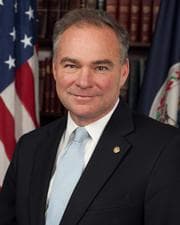
Tim Kaine
Democrat · VA · Senator
Votes with party: 76.9% (904 recorded votes)
Full profile: /officials/K000384
Source: Congress.gov · FEC
Cosponsors (1)
Members who have signed on to support this bill since introduction. Source: Congress.gov.
Latest Action
The most recent step in the bill's legislative path. Committee Activity below shows referrals and reports; the full action-by-action history including floor proceedings lives at Congress.gov →
Read twice and referred to the Committee on Homeland Security and Governmental Affairs.
2026-04-21
Source: Congress.gov
Committee Activity
Currently in
- Senate Committee on Homeland Security and Governmental AffairsReferred To · 2026-04-21
Previously
- Homeland Security and Governmental Affairs CommitteeReferred To · 2026-04-21
Plain-English Summary
The proposal would establish federal programs and funding to prepare the United States for advances in engineering biology—the science of designing and modifying living organisms for practical applications. It aims to help government agencies, researchers, and companies develop the tools, expertise, and safety standards needed to work with engineered biological systems while managing potential risks. The bill affects scientists, biotechnology companies, federal agencies, and ultimately the public by shaping how the country approaches this emerging field.
AI-assisted summary generated from the official bill metadata (title, subjects, actions) sourced from Congress.gov. Cached and reviewed. Always verify against the official text linked below.
Subjects
Government Operations and Politics
Full Bill Text
Verbatim text published on Congress.gov via GovInfo. Use Cmd+F / Ctrl+F to search within this excerpt.
[Congressional Bills 119th Congress] [From the U.S. Government Publishing Office] [S. 4363 Introduced in Senate (IS)] <DOC> 119th CONGRESS 2d Session S. 4363 To extend the requirement for annual briefings on National Biodefense Strategy and to require analysis and recommendations relating to the risks of engineering biology, and for other purposes. _______________________________________________________________________ IN THE SENATE OF THE UNITED STATES April 21, 2026 Mr. Kaine (for himself and Mr. Budd) introduced the following bill; which was read twice and referred to the Committee on Homeland Security and Governmental Affairs _______________________________________________________________________ A BILL To extend the requirement for annual briefings on National Biodefense Strategy and to require analysis and recommendations relating to the risks of engineering biology, and for other purposes. Be it enacted by the Senate and House of Representatives of the United States of America in Congress assembled, SECTION 1. SHORT TITLE. This Act may be cited as the ``Engineering Biology Readiness Act''. SEC. 2. EXTENSION OF REQUIREMENT FOR ANNUAL BRIEFINGS ON NATIONAL BIODEFENSE STRATEGY. Section 1086(d) of the National Defense Authorization Act for Fiscal Year 2017 (6 U.S.C. 104(d)) is amended by striking ``March 1, 2025'' and inserting ``the date that is five years after the date of the enactment of the National Defense Authorization Act for Fiscal Year 2027''. SEC. 3. ANALYSIS AND RECOMMENDATIONS RELATING TO ENGINEERING BIOLOGY RISKS. (a) In General.--The first time after the date of the enactment of this Act that findings are provided to the appropriate congressional committees pursuant to the biennial update of the biodefense threat assessment under section 364(d)(1)(D) of the William M. (Mac) Thornberry National Defense Authorization Act for Fiscal Year 2021 (6 U.S.C. 106(d)(1)(D)), such findings shall include an analysis of, and recommendations to enhance, the readiness of the United States national security enterprise and life science research enterprise against engineering biology risks. (b) Matters Included.-- (1) Analysis.--The analysis required by subsection (a) shall include the following: (A) An assessment of the threat to national security and public safety posed by current and anticipated engineering biology risks. (B) A description of current lines of research and development in covered departments and agencies relating to biodefense against engineering biology risks, including prevention, deterrence, preparedness, detection, response, attribution, recovery, and mitigation. (C) An analysis of authorities, regulations, and programs pertaining to engineering biology risks, in the United States, including biosafety, biosecurity, and biodefense. (D) An evaluation of gaps, deficiencies, redundancies, and ambiguities in authorities and regulations pertaining to engineering biology risks. (E) Such other matters as the heads of the covered departments and agencies jointly consider relevant. (2) Recommendations.--The recommendations required by subsection (a) shall include recommendations for the following: (A) Aligning lines of research and development across covered departments and agencies to reduce redundant efforts and promote the mutual benefit for purposes of biosafety, biosecurity, and biodefense against engineering biology risks. (B) Modernizing biosafety, biosecurity, and biodefense authorities, regulations, and programs pertaining to engineering biology risks to ensure the United States-- (i) mitigates the safety and security threat to national security and public safety posed by engineering biology risks; and (ii) benefits from the research, development, application, and dissemination of innovations in engineering biology under an enduring governance framework that accommodates novel discoveries and capabilities in life sciences research; (C) Establishing a program or programs, or modernizing an existing program or programs-- (i) to establish and enforce safeguards to mitigate engineering biology risks to national security or public safety; and (ii) to identify best practices, promulgate voluntary guidance, and provide consultation on matters of biosecurity and biosafety in the United States. (D) For purposes of subparagraphs (B) and (C), detailed proposed…
Show the remaining 225 wordsHide the remaining 225 words
legislative action and an estimate of the amount of funding necessary to ensure that relevant programs have adequate resources. (E) Such other matters as the heads of the covered departments and agencies jointly consider relevant. (c) Consultation.--The recommendations described in subsection (b)(2) shall be developed in consultation with-- (1) individuals representing industry, academia, and civil society, including representatives of the life sciences research enterprise who have not received any Federal grant or contract in the preceding five years; and (2) such other government agencies or interested stakeholders as the heads of the covered departments and agencies jointly consider appropriate. (d) Form.--The analysis and recommendations required by this section shall be submitted in unclassified form but may include a classified annex. (e) Definitions.--In this section: (1) The term ``covered departments and agencies'' means the departments and agencies included in section 364(a) of the William M. (Mac) Thornberry National Defense Authorization Act for Fiscal Year 2021 (6 U.S.C. 106(a)). (2) The term ``engineering biology'' has the meaning given such term in section 10002 of the Research and Development, Competition, and Innovation Act (42 U.S.C. 18901). (3) The term ``engineering biology risk'' means a risk to national security or public safety arising from the misuse, abuse, or accidental release of materials arising from, or the misuse or abuse of methods, tools, or information pertaining to, engineering biology. <all>
Related legislation
Bills by the same sponsor or covering overlapping subjects.
- S5657SOS Campus ActReferred to Committee · 2026-09-30
- S5660SUCCESS Act of 2026Referred to Committee · 2026-09-30
- S603A bill to designate the General George C. Marshall House, in the Commonwealth of Virginia, as an affiliated area of the National Park System, and for other purposes.Enacted into Law · 2026-09-25
- S5540PREP Act of 2026Referred to Committee · 2026-09-24