Protect Moms From Domestic Violence Act
Sponsor
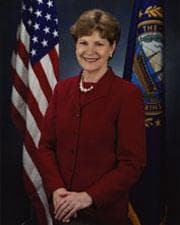
Full profile: /officials/S001181
Source: Congress.gov · FEC
Cosponsors (4)
Members who have signed on to support this bill since introduction. Source: Congress.gov.
Latest Action
The most recent step in the bill's legislative path. Committee Activity below shows referrals and reports; the full action-by-action history including floor proceedings lives at Congress.gov →
Read twice and referred to the Committee on Health, Education, Labor, and Pensions.
2026-04-27
Source: Congress.gov
Committee Activity
Currently in
- Senate Committee on Health, Education, Labor, and PensionsReferred To · 2026-04-27
Previously
- Health, Education, Labor, and Pensions CommitteeReferred To · 2026-04-27
Plain-English Summary
The government would fund a study to understand how intimate partner violence increases the risk of serious health problems or death during pregnancy and childbirth. Researchers would examine the connection between domestic abuse and maternal health outcomes to help doctors and public health officials better protect pregnant women who are experiencing violence. This research could lead to improved screening and support services for pregnant women in abusive relationships.
AI-assisted summary generated from the official bill metadata (title, subjects, actions) sourced from Congress.gov. Cached and reviewed. Always verify against the official text linked below.
Subjects
Full Bill Text
Verbatim text published on Congress.gov via GovInfo. Use Cmd+F / Ctrl+F to search within this excerpt.
[Congressional Bills 119th Congress] [From the U.S. Government Publishing Office] [S. 4387 Introduced in Senate (IS)] <DOC> 119th CONGRESS 2d Session S. 4387 To study the extent to which individuals are more at risk of maternal morbidity or mortality as a result of being a victim of intimate partner violence. _______________________________________________________________________ IN THE SENATE OF THE UNITED STATES April 27, 2026 Mrs. Shaheen (for herself and Ms. Murkowski) introduced the following bill; which was read twice and referred to the Committee on Health, Education, Labor, and Pensions _______________________________________________________________________ A BILL To study the extent to which individuals are more at risk of maternal morbidity or mortality as a result of being a victim of intimate partner violence. Be it enacted by the Senate and House of Representatives of the United States of America in Congress assembled, SECTION 1. SHORT TITLE. This Act may be cited as the ``Protect Moms From Domestic Violence Act''. SEC. 2. STUDY BY NATIONAL ACADEMY OF MEDICINE. (a) In General.--The Secretary of Health and Human Services shall seek to enter into an arrangement with the National Academy of Medicine (or, if the Academy declines to enter into such arrangement, another appropriate entity) to study how domestic violence, dating violence, sexual assault, stalking, human trafficking, sex trafficking, child sexual abuse, forced marriage, reproductive coercion, intergenerational violence, trauma, or psychiatric disorders impact risk for maternal morbidity and maternal mortality, including intimate partner homicide. (b) Topics.--The study under subsection (a) shall-- (1) examine-- (A) whether and how domestic violence, dating violence, sexual assault, stalking, human trafficking, sex trafficking, child sexual abuse, forced marriage, reproductive coercion, intergenerational violence, trauma, or psychiatric disorders increase the risk of suicide, homicide, substance use, drug overdose, or poor birth outcomes among pregnant and postpartum persons; and (B) the extent to which domestic violence, dating violence, sexual assault, stalking, human trafficking, sex trafficking, child sexual abuse, forced marriage, reproductive coercion, intergenerational violence, trauma, or psychiatric disorders are social determinants of health; and (2) give particular focus to impacts among diverse communities, including Black and African American, Hispanic and Latino, American Indian, Native Hawaiian, Pacific Islander, Alaskan Native, and LGBTQIA2S+ birthing persons, and adolescent mothers. SEC. 3. GRANTS FOR INNOVATIVE APPROACHES TO IMPROVE MATERNAL AND CHILD HEALTH OUTCOMES. (a) In General.--The Secretary of Health and Human Services, acting through the Administrator of the Health Resources and Services Administration, and in collaboration with the Assistant Secretary of the Administration for Children and Families, the Director of the Indian Health Service, the Assistant Secretary for Mental Health and Substance Use, and the Secretary of Veterans Affairs, shall award grants to eligible entities for developing and implementing innovative approaches, including culturally relevant public and provider education campaigns, to improve maternal and child health outcomes of victims of domestic violence, dating violence, sexual assault, stalking, human trafficking, sex trafficking, child sexual abuse, forced marriage, reproductive coercion, intergenerational violence, trauma, or psychiatric disorders. (b) Report to Congress on Best Practices.--Not later than 3 years after the date of enactment of this Act, and every 3 years thereafter, the Secretary of Health and Services shall report to Congress on best practices for developing and implementing innovative approaches described in subsection (a). (c) Eligible Entity.--To seek a grant under this section, an entity shall be-- (1) a State, local governmental entity, or federally recognized Tribal government; (2) a nonprofit organization or community-based organization that provides prevention or intervention services related to domestic violence, dating violence, sexual assault, stalking, human trafficking, sex trafficking, child sexual abuse, forced marriage, reproductive coercion, intergenerational violence, trauma, or psychiatric disorders; (3) an Indian Tribe, Tribal organization, or Urban…
Show the remaining 628 wordsHide the remaining 628 words
Indian organization (as such terms are defined in section 4 of the Indian Health Care Improvement Act (25 U.S.C. 1603)); (4) a Tribal epidemiology center described in section 214 of the Indian Health Care Improvement Act (25 U.S.C. 1621m); (5) a federally qualified health center (as defined in section 1861(aa) of the Social Security Act (42 U.S.C. 1395x(aa))); (6) a clinic certified as a certified community behavioral health clinic pursuant to section 223 of the Protecting Access to Medicare Act of 2014 (42 U.S.C. 1396a); (7) an entity, the principal purpose of which is to provide health care, such as a hospital, clinic, health department, or freestanding birth center; (8) an institution of higher education (as defined in section 101 of the Higher Education Act of 1965 (20 U.S.C. 1001)); (9) a substance use disorder treatment program with specialized services for parents; or (10) a hospital or other health care facility of the Department of Veterans Affairs. (d) Priority in Awarding Grants.--In awarding grants under this section, the Secretary of Health and Human Services shall give priority to applicants proposing-- (1) to address domestic violence, dating violence, sexual violence, and mental health and substance use disorders among pregnant persons; (2) to address issues relating to people experiencing domestic violence and sexual violence who are pregnant, persons at risk for becoming pregnant due to violence or abuse, and postpartum persons experiencing violence; (3) to develop or implement innovative approaches, including cultural bias training, antiracism training or implicit bias interruption or reduction strategies, and strategies to identify and prevent domestic violence within all racial, cultural, ethnic and community groups, including Black or African American, Hispanic or Latino, American Indian, Native Hawaiian, Pacific Islander, Alaskan Native, and LGBTQIA2S+ persons; (4) to develop or implement innovative approaches at Tribal epidemiology centers; (5) to develop or implement innovative approaches relating to the improvement of maternal health surveillance; or (6) to facilitate shared learning and dissemination of information through convening meetings with other grant recipients under this section. (e) Authorization of Appropriations.--To carry out this section, there is authorized to be appropriated $15,000,000 for each of fiscal years 2027 through 2029. SEC. 4. GUIDANCE. Not later than 2 years after the date of enactment of this Act, the Secretary of Health and Human Services shall publish and disseminate to States, Indian Tribes, territories, health care providers, and managed care entities guidance on-- (1) developing protocols on and providing-- (A) universal education on healthy relationships and intimate partner violence; (B) routine assessment of intimate partner violence and mental and behavioral health conditions; and (C) health promotion and strategies for trauma- informed care plans; and (2) creating sustainable partnerships between health care providers and community-based organizations that address domestic violence, dating violence, sexual assault, stalking, human trafficking, sex trafficking, child sexual abuse, forced marriage, reproductive coercion, or intergenerational violence. SEC. 5. DEFINITIONS. In this Act: (1) Freestanding birth center.--The term ``freestanding birth center'' has the meaning given that term in section 1905(l) of the Social Security Act (42 U.S.C. 1396d(1)). (2) Maternal morbidity.--The term ``maternal morbidity'' means a health condition, including a mental health condition or substance use disorder, that-- (A) is attributed to or aggravated by pregnancy or childbirth; and (B) results in significant short-term or long-term consequences to the health of the individual who was pregnant. (3) Maternal mortality.--The term ``maternal mortality''-- (A) means death that-- (i) occurs during, or within the 1-year period after, pregnancy; and (ii) is attributed to or aggravated by pregnancy-related or childbirth complications; and (B) includes a suicide, drug overdose death, homicide (including a domestic violence-related homicide), or other death resulting from a mental health or substance use disorder attributed to or aggravated by pregnancy-related or childbirth complications. (4) Postpartum.--The term ``postpartum'' means the 12-month period following childbirth. <all>
Related legislation
Bills by the same sponsor or covering overlapping subjects.
- S5633STEP Improvement Act of 2026Referred to Committee · 2026-09-30
- SRES924A resolution designating October 7, 2026, as "Energy Efficiency Day" in celebration of the economic and environmental benefits that have been driven by private sector innovation and Federal energy efficiency policies.Introduced · 2026-09-29
- SRES895A resolution designating the week of October 4, 2026, through October 10, 2026, as "National Community Policing Week".Introduced · 2026-09-23
- SRES855A resolution acknowledging that it is in the national interest of the United States to support democratic actors in the Russian Federation, commending the work of Russian civil society and independent media to expose and respond to the crimes of the government of Vladimir Putin and pursue accountability for such crimes.Referred to Committee · 2026-09-16