LIFT AI Act
Sponsor
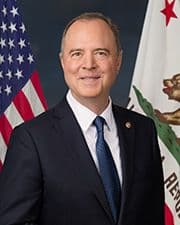
Full profile: /officials/S001150
Source: Congress.gov · FEC
Cosponsors (1)
Members who have signed on to support this bill since introduction. Source: Congress.gov.
Latest Action
The most recent step in the bill's legislative path. Committee Activity below shows referrals and reports; the full action-by-action history including floor proceedings lives at Congress.gov →
Read twice and referred to the Committee on Commerce, Science, and Transportation.
2026-04-28
Source: Congress.gov
Committee Activity
Currently in
- Senate Committee on Commerce, Science, and TransportationReferred To · 2026-04-28
Previously
- Commerce, Science, and Transportation CommitteeReferred To · 2026-04-28
Plain-English Summary
Literacy in Future Technologies Artificial Intelligence Act or the LIFT AI Act This bill authorizes the National Science Foundation to make merit-based grants to institutions of higher education, nonprofit organizations, and consortia of such entities to support artificial intelligence (AI) literacy for K-12 students and educators. Grants may be used for research and development of educational curricula, instructional material, professional development for teachers, and evaluation methods for AI literacy at the K-12 level.
Plain-English rewrite of the Congressional Research Service summary published on Congress.gov. Cached and reviewed.
Subjects
Full Bill Text
Verbatim text published on Congress.gov via GovInfo. Use Cmd+F / Ctrl+F to search within this excerpt.
[Congressional Bills 119th Congress] [From the U.S. Government Publishing Office] [S. 4414 Introduced in Senate (IS)] <DOC> 119th CONGRESS 2d Session S. 4414 To improve educational efforts related to artificial intelligence literacy at the elementary school and secondary school level, and for other purposes. _______________________________________________________________________ IN THE SENATE OF THE UNITED STATES April 28, 2026 Mr. Schiff (for himself and Mr. Rounds) introduced the following bill; which was read twice and referred to the Committee on Commerce, Science, and Transportation _______________________________________________________________________ A BILL To improve educational efforts related to artificial intelligence literacy at the elementary school and secondary school level, and for other purposes. Be it enacted by the Senate and House of Representatives of the United States of America in Congress assembled, SECTION 1. SHORT TITLE. This Act may be cited as the ``Literacy in Future Technologies Artificial Intelligence Act'' or the ``LIFT AI Act''. SEC. 2. PREPARING K-12 EDUCATORS AND STUDENTS FOR AN AI LITERATE FUTURE. (a) Sense of Congress.--It is the sense of Congress that-- (1) artificial intelligence (AI) is rapidly transforming the modern world, driving innovation across industries, enhancing productivity, and reshaping the way we live and work; (2) to ensure the United States remains a global leader in this technological revolution, the United States should provide the Nation's youth with opportunities to cultivate the skills and understanding necessary to use and create the next generation of AI technology; (3) it is the policy of the United States to promote AI literacy and proficiency among people in the United States by promoting the appropriate integration of AI into education, providing comprehensive AI training for educators, and fostering early exposure to AI concepts and technology to develop an AI-ready workforce and the next generation of AI innovators in the United States; (4) as strategic adversaries pursue AI technology for the purposes of surveillance, weaponization, and economic competition, maintaining United States leadership through an AI literate public is essential; and (5) awards made under this section should recognize-- (A) the rapidly evolving nature of AI technology, and identify and focus on those skills that will remain relevant to AI literacy considering likely changes in AI capabilities; and (B) student progression to more advanced topics as they progress through K-12 education. (b) Awards.--The Director may make awards on a merit-reviewed, competitive basis to institutions of higher education or nonprofit organizations (or a consortium thereof) to support research activities to develop educational curricula, instructional material, teacher professional development, and evaluation methods for AI literacy at the K-12 level. (c) Use of Award Funds.--Activities funded by awards made under this section may include the following: (1) Formal and informal K-12 education curriculum development focused on the essential abilities and competencies necessary for AI literacy that is learner-centered, project- based, and can be personalized in the classroom and other learning environments. (2) Engaging State and local educational agencies, superintendents, principals, educators, or other school leaders of students in kindergarten through grade 12 in professional learning opportunities to-- (A) enhance AI literacy and proficiency; (B) promote responsible use of AI; and (C) develop best practices. (3) Developing AI literacy evaluation tools and resources for educators assessing proficiency in AI literacy. (4) Designing and implementing professional development courses and experiences in AI literacy, including mentoring, for State and local educational agencies, principals, educators, or other school leaders that integrate in-person, virtual, and distance learning experiences. (5) Development of hands-on learning tools to assist in developing and improving AI literacy. (6) Augmenting the existing curriculum to incorporate AI literacy where appropriate, including responsible use of AI in learning. (7) Additional activities determined appropriate by the…
Show the remaining 161 wordsHide the remaining 161 words
Director. (d) Implementation.--The Director may carry out this section by making awards through new or existing programs. (e) Definitions.--In this section: (1) AI literacy.--The term ``AI literacy'' means having the age-appropriate knowledge and ability to use artificial intelligence effectively, to critically interpret outputs, to solve problems in an AI-enabled world, and to mitigate potential risks. (2) Artificial intelligence; ai.--The terms ``artificial intelligence'' and ``AI'' have the meaning given the term ``artificial intelligence'' in section 5002 of the National Artificial Intelligence Initiative Act of 2020 (15 U.S.C. 9401). (3) Director.--The term ``Director'' means the Director of the National Science Foundation. (4) Institution of higher education.--The term ``institution of higher education'' has the meaning given that term in section 101 of the Higher Education Act of 1965 (20 U.S.C. 1001). (5) K-12 education.--The term ``K-12 education'' means elementary schools and secondary schools (as such terms are defined in section 8101 of the Elementary and Secondary Education Act of 1965 (20 U.S.C. 7801)). <all>
Related legislation
Bills by the same sponsor or covering overlapping subjects.
- S5604Improving Species Recovery ActReferred to Committee · 2026-09-30
- SRES932A resolution requesting information on Venezuela's human rights practices pursuant to section 502B(c) of the Foreign Assistance Act of 1961.Referred to Committee · 2026-09-30
- S5569Oil Company Windfall Profits Tax Act of 2026Referred to Committee · 2026-09-28
- S5439A bill to direct the Secretary of Agriculture to improve safety standards for wildland firefighters.Referred to Committee · 2026-09-17