Moms Matter Act
Sponsor
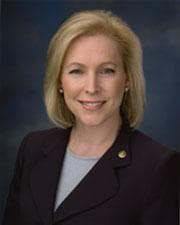
Full profile: /officials/G000555
Source: Congress.gov · FEC
Cosponsors (8)
Members who have signed on to support this bill since introduction. Source: Congress.gov.
Latest Action
The most recent step in the bill's legislative path. Committee Activity below shows referrals and reports; the full action-by-action history including floor proceedings lives at Congress.gov →
Read twice and referred to the Committee on Health, Education, Labor, and Pensions.
2026-05-18
Source: Congress.gov
Committee Activity
Currently in
- Senate Committee on Health, Education, Labor, and PensionsReferred To · 2026-05-18
Plain-English Summary
The bill would expand mental health and addiction treatment services for pregnant women and new mothers, including improving access to screening, counseling, and medication-assisted treatment. It aims to help healthcare providers better identify and treat conditions like postpartum depression and anxiety, as well as substance use disorders during pregnancy and after childbirth. The legislation would affect pregnant women, new mothers, healthcare providers, and hospitals that serve these populations.
AI-assisted summary generated from the official bill metadata (title, subjects, actions) sourced from Congress.gov. Cached and reviewed. Always verify against the official text linked below.
Subjects
Full Bill Text
Verbatim text published on Congress.gov via GovInfo. Use Cmd+F / Ctrl+F to search within this excerpt.
[Congressional Bills 119th Congress] [From the U.S. Government Publishing Office] [S. 4552 Introduced in Senate (IS)] <DOC> 119th CONGRESS 2d Session S. 4552 To address maternal mental health conditions and substance use disorders, and for other purposes. _______________________________________________________________________ IN THE SENATE OF THE UNITED STATES May 18, 2026 Mrs. Gillibrand (for herself, Ms. Blunt Rochester, and Mr. Booker) introduced the following bill; which was read twice and referred to the Committee on Health, Education, Labor, and Pensions _______________________________________________________________________ A BILL To address maternal mental health conditions and substance use disorders, and for other purposes. Be it enacted by the Senate and House of Representatives of the United States of America in Congress assembled, SECTION 1. SHORT TITLE. This Act may be cited as the ``Moms Matter Act''. SEC. 2. MATERNAL MENTAL HEALTH EQUITY GRANT PROGRAM. (a) In General.--The Secretary of Health and Human Services, acting through the Assistant Secretary for Mental Health and Substance Use, shall establish a program to award grants to eligible entities to address maternal mental health conditions and substance use disorders, with a focus on demographic groups with elevated rates of maternal mortality, severe maternal morbidity, maternal health disparities, or other adverse perinatal or childbirth outcomes. (b) Application.--To be eligible to receive a grant under this section, an eligible entity shall submit to the Secretary an application at such time, in such manner, and containing such information as the Secretary may require. (c) Priority.--In awarding grants under this section, the Secretary shall give priority to an eligible entity that-- (1) is, or will partner with, a community-based organization to address maternal mental health conditions and substance use disorders described in subsection (a); (2) is operating in an area with elevated rates of maternal mortality, severe maternal morbidity, maternal health disparities, or other adverse perinatal or childbirth outcomes; and (3) is operating in a health professional shortage area designated under section 332 of the Public Health Service Act (42 U.S.C. 254e). (d) Use of Funds.--An eligible entity that receives a grant under this section shall use the grant for the following: (1) Establishing or expanding maternity care programs to improve the integration of maternal mental health and behavioral health care services into primary care settings where pregnant individuals regularly receive health care services. (2) Establishing or expanding group prenatal care programs or postpartum care programs. (3) Expanding existing programs that improve maternal mental and behavioral health during the prenatal and postpartum periods, with a focus on individuals from demographic groups with elevated rates of maternal mortality, severe maternal morbidity, maternal health disparities, or other adverse perinatal or childbirth outcomes. (4) Providing services and support for pregnant and postpartum individuals with maternal mental health conditions and substance use disorders, including referrals to addiction treatment centers that offer evidence-based treatment options. (5) Addressing stigma associated with maternal mental health conditions and substance use disorders, with a focus on individuals from demographic groups with elevated rates of maternal mortality, severe maternal morbidity, maternal health disparities, or other adverse perinatal or childbirth outcomes. (6) Raising awareness of warning signs of maternal mental health conditions and substance use disorders, with a focus on pregnant and postpartum individuals from demographic groups with elevated rates of maternal mortality, severe maternal morbidity, maternal health disparities, or other adverse perinatal or childbirth outcomes. (7) Establishing or expanding programs to prevent suicide or self-harm among pregnant and postpartum individuals. (8) Offering evidence-aligned programs at freestanding birth centers that provide maternal mental and behavioral health care education, treatments, and services, and other services for individuals throughout the prenatal and postpartum period. (9) Establishing or expanding programs to provide…
Show the remaining 1,613 wordsHide the remaining 1,613 words
education and training to maternity care providers with respect to-- (A) identifying potential warning signs for maternal mental health conditions or substance use disorders in pregnant and postpartum individuals, with a focus on individuals from demographic groups with elevated rates of maternal mortality, severe maternal morbidity, maternal health disparities, or other adverse perinatal or childbirth outcomes; and (B) in the case where such providers identify such warning signs, offering referrals to mental and behavioral health care professionals. (10) Developing a website, or other source, that includes information on health care providers who treat maternal mental health conditions and substance use disorders. (11) Establishing or expanding programs in communities to improve coordination between maternity care providers and mental and behavioral health care providers who treat maternal mental health conditions and substance use disorders, including through the use of toll-free hotlines. (12) Carrying out other programs aligned with evidence- based practices for addressing maternal mental health conditions and substance use disorders for pregnant and postpartum individuals from demographic groups with elevated rates of maternal mortality, severe maternal morbidity, maternal health disparities, or other adverse perinatal or childbirth outcomes. (e) Reporting.-- (1) Eligible entities.--An eligible entity that receives a grant under subsection (a) shall submit annually to the Secretary, and make publicly available, a report on the activities conducted using funds received through a grant under this section. Such reports shall include quantitative and qualitative evaluations of such activities, including the experience of individuals who received health care through such grant. (2) Secretary.--Not later than the end of fiscal year 2030, the Secretary shall submit to Congress a report that includes-- (A) a summary of the reports received under paragraph (1); (B) an evaluation of the effectiveness of grants awarded under this section; (C) recommendations with respect to expanding coverage of evidence-based screenings and treatments for maternal mental health conditions and substance use disorders; and (D) recommendations with respect to ensuring activities described under subsection (d) continue after the end of a grant period. (f) Definitions.--In this section: (1) Eligible entity.--The term ``eligible entity'' means-- (A) a community-based organization serving pregnant and postpartum individuals, including such organizations serving individuals from demographic groups with elevated rates of maternal mortality, severe maternal morbidity, maternal health disparities, or other adverse perinatal or childbirth outcomes; (B) a nonprofit or patient advocacy organization with expertise in maternal mental and behavioral health; (C) a maternity care provider; (D) a mental or behavioral health care provider who treats maternal mental health conditions or substance use disorders; (E) a State or local governmental entity, including a State or local public health department; (F) an Indian Tribe or Tribal organization (as such terms are defined in section 4 of the Indian Self- Determination and Education Assistance Act (25 U.S.C. 5304)); and (G) an Urban Indian organization (as such term is defined in section 4 of the Indian Health Care Improvement Act (25 U.S.C. 1603)). (2) Freestanding birth center.--The term ``freestanding birth center'' has the meaning given that term under section 1905(l) of the Social Security Act (42 U.S.C. 1396d(1)). (3) Maternal mortality.--The term ``maternal mortality'' means a death occurring during or within a 1-year period after pregnancy, caused by pregnancy-related or childbirth complications, including a suicide, overdose, or other death resulting from a mental health or substance use disorder attributed to or aggravated by pregnancy-related or childbirth complications. (4) Maternity care provider.--The term ``maternity care provider'' means a health care provider who-- (A) is a physician, a physician assistant, a midwife who meets, at a minimum, the international definition of a midwife and global standards for midwifery education as established by the International Confederation of Midwives, an advanced practice registered nurse, a doula accredited by a State to receive reimbursement for doula services under a State plan (or a waiver of such plan) under title XIX of the Social Security Act (42 U.S.C. 1396 et seq.), or a lactation consultant certified by the International Board of Lactation Consultant Examiners; and (B) has a focus on maternal or perinatal health. (5) Postpartum and postpartum period.--The terms ``postpartum'' and ``postpartum period'' refer to the 1-year period beginning on the last day of the pregnancy of an individual. (6) Secretary.--The term ``Secretary'' means the Secretary of Health and Human Services. (7) Severe maternal morbidity.--The term ``severe maternal morbidity'' means a health condition, including a mental health condition or substance use disorder, attributed to or aggravated by pregnancy or childbirth that results in significant short-term or long-term consequences to the health of the individual who was pregnant. (g) Authorization of Appropriations.--To carry out this section, there is authorized to be appropriated $25,000,000 for each of fiscal years 2027 through 2031. SEC. 3. GRANTS TO GROW AND DIVERSIFY THE MATERNAL MENTAL AND BEHAVIORAL HEALTH CARE WORKFORCE. Title VII of the Public Health Service Act is amended by inserting after section 757 of such Act (42 U.S.C. 294f) the following new section: ``SEC. 758. MATERNAL MENTAL AND BEHAVIORAL HEALTH CARE WORKFORCE GRANTS. ``(a) In General.--The Secretary may award grants to entities to establish or expand programs described in subsection (b) to grow and diversify the maternal mental and behavioral health care workforce. ``(b) Use of Funds.--Recipients of grants under this section shall use the grants to grow and diversify the maternal mental and behavioral health care workforce by-- ``(1) establishing schools or programs that provide education and training to individuals seeking appropriate licensing or certification as mental or behavioral health care providers who will specialize in maternal mental health conditions or substance use disorders; or ``(2) expanding the capacity of existing schools or programs described in paragraph (1), for the purposes of increasing the number of students enrolled in such schools or programs, including by awarding scholarships for students. ``(c) Prioritization.--In awarding grants under this section, the Secretary shall give priority to any entity that-- ``(1) has demonstrated a commitment to recruiting and retaining students and faculty from racial and ethnic minority groups; ``(2) has developed a strategy to recruit and retain a diverse pool of students into the maternal mental or behavioral health care workforce program or school supported by funds received through the grant, particularly from racial and ethnic minority groups and other underserved populations; ``(3) has developed a strategy to recruit and retain students who plan to practice in a health professional shortage area designated under section 332; ``(4) has developed a strategy to recruit and retain students who plan to practice in an area with significant maternal health disparities, to the extent practicable; and ``(5) includes in the standard curriculum for all students within the maternal mental or behavioral health care workforce program or school a bias, racism, or discrimination training program that includes training on implicit bias and racism. ``(d) Reporting.--As a condition on receipt of a grant under this section for a maternal mental or behavioral health care workforce program or school, an entity shall agree to submit to the Secretary an annual report on the activities conducted through the grant, including-- ``(1) the number and demographics of students participating in the program or school; ``(2) the extent to which students in the program or school are entering careers in-- ``(A) health professional shortage areas designated under section 332; and ``(B) areas with significant maternal health disparities, to the extent such data are available; and ``(3) whether the program or school has included in the standard curriculum for all students a bias, racism, or discrimination training program that includes training on implicit bias and racism, and if so the effectiveness of such training program. ``(e) Period of Grants.--The period of a grant under this section shall be up to 5 years. ``(f) Application.--To seek a grant under this section, an entity shall submit to the Secretary an application at such time, in such manner, and containing such information as the Secretary may require, including any information necessary for prioritization under subsection (c). ``(g) Technical Assistance.--The Secretary shall provide, directly or by contract, technical assistance to entities seeking or receiving a grant under this section on the development, use, evaluation, and postgrant period sustainability of the maternal mental or behavioral health care workforce programs or schools proposed to be, or being, established or expanded through the grant. ``(h) Report by the Secretary.--Not later than 4 years after the date of enactment of this section, the Secretary shall prepare and submit to Congress, and post on the website of the Department of Health and Human Services, a report on the effectiveness of the grant program under this section at-- ``(1) recruiting students from racial and ethnic minority groups and other underserved populations; ``(2) increasing the number of mental or behavioral health care providers specializing in maternal mental health conditions or substance use disorders from racial and ethnic minority groups and other underserved populations; ``(3) increasing the number of mental or behavioral health care providers specializing in maternal mental health conditions or substance use disorders working in health professional shortage areas designated under section 332; and ``(4) increasing the number of mental or behavioral health care providers specializing in maternal mental health conditions or substance use disorders working in areas with significant maternal health disparities, to the extent such data are available. ``(i) Definitions.--In this section: ``(1) Racial and ethnic minority group.--The term `racial and ethnic minority group' has the meaning given such term in section 1707(g)(1). ``(2) Mental or behavioral health care provider.--The term `mental or behavioral health care provider' means a health care provider in the field of mental and behavioral health, including substance use disorders, acting in accordance with State law. ``(j) Authorization of Appropriations.--To carry out this section, there is authorized to be appropriated $15,000,000 for each of fiscal years 2027 through 2031.''. <all>
Related legislation
Bills by the same sponsor or covering overlapping subjects.
- S5594A bill to establish the Data Protection Agency, protect the privacy of individuals, and for other purposes.Referred to Committee · 2026-09-29
- S5483Seneca Nation Law Enforcement Efficiency ActReferred to Committee · 2026-09-23
- S1288Finger Lakes National Heritage Area ActReported by Committee · 2026-09-17
- SRES859A resolution recognizing the 25th anniversary of the terrorist attacks of September 11, 2001, honoring the memory of the victims, recognizing the courage and sacrifice of the heroes who answered the call to serve, acknowledging the charitable organizations that continue to support survivors and victims' families, and reaffirming the enduring commitment of the United States to never forget.Introduced · 2026-09-16