9–8–8 Connect Act
Sponsor
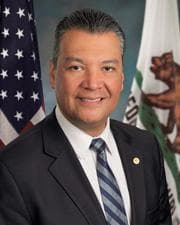
Full profile: /officials/P000145
Source: Congress.gov · FEC
Cosponsors (5)
Members who have signed on to support this bill since introduction. Source: Congress.gov.
Latest Action
The most recent step in the bill's legislative path. Committee Activity below shows referrals and reports; the full action-by-action history including floor proceedings lives at Congress.gov →
Read twice and referred to the Committee on Health, Education, Labor, and Pensions. (Sponsor introductory remarks on measure: CR S2444-2445)
2026-05-21
Source: Congress.gov
Committee Activity
Currently in
- Senate Committee on Health, Education, Labor, and PensionsReferred To · 2026-05-21
Plain-English Summary
The bill would provide federal grants to crisis centers that offer follow-up support to people who have received suicide prevention and crisis intervention services, helping ensure they get continued care after their initial crisis contact. It would also improve how accessible the 988 suicide and crisis lifeline is to people who need it, making it easier for Americans to reach help when they're in distress. These changes aim to strengthen the mental health safety net by supporting both immediate crisis response and longer-term recovery services.
AI-assisted summary generated from the official bill metadata (title, subjects, actions) sourced from Congress.gov. Cached and reviewed. Always verify against the official text linked below.
Subjects
Full Bill Text
Verbatim text published on Congress.gov via GovInfo. Use Cmd+F / Ctrl+F to search within this excerpt.
[Congressional Bills 119th Congress] [From the U.S. Government Publishing Office] [S. 4640 Introduced in Senate (IS)] <DOC> 119th CONGRESS 2d Session S. 4640 To amend the Public Health Service Act to award grants to eligible crisis centers to provide follow-up services to individuals receiving suicide prevention and crisis intervention services, to amend the Communications Act of 1934 to improve the accessibility of 9-8-8, and for other purposes. _______________________________________________________________________ IN THE SENATE OF THE UNITED STATES May 21, 2026 Mr. Padilla (for himself, Mr. Tillis, Ms. Klobuchar, Mr. King, Mrs. Shaheen, and Mr. Blumenthal) introduced the following bill; which was read twice and referred to the Committee on Health, Education, Labor, and Pensions _______________________________________________________________________ A BILL To amend the Public Health Service Act to award grants to eligible crisis centers to provide follow-up services to individuals receiving suicide prevention and crisis intervention services, to amend the Communications Act of 1934 to improve the accessibility of 9-8-8, and for other purposes. Be it enacted by the Senate and House of Representatives of the United States of America in Congress assembled, SECTION 1. SHORT TITLE. This Act may be cited as the ``9-8-8 Connect Act''. SEC. 2. GRANTS FOR FOLLOW-UP SERVICES TO INDIVIDUALS RECEIVING SUICIDE PREVENTION AND CRISIS INTERVENTION SERVICES. Title V of the Public Health Service Act is amended by inserting after section 520E-4 (42 U.S.C. 290bb-36d) the following: ``SEC. 520E-5. FOLLOW-UP SERVICES TO INDIVIDUALS RECEIVING SUICIDE PREVENTION AND CRISIS INTERVENTION SERVICES. ``(a) In General.--The Secretary, acting through the Assistant Secretary, shall award grants to eligible crisis centers to provide follow-up services to individuals receiving suicide prevention and crisis intervention services. ``(b) Eligibility.--To be eligible to seek a grant under this section, a crisis center shall be a member of the network of crisis centers coordinated under section 520E-3(b)(1). ``(c) Selection.--The Secretary shall select recipients of grants under this section based on the relative needs, including capacity and service gaps, of the eligible crisis centers applying for such grants. ``(d) Technical Assistance.--The Secretary shall provide technical assistance to recipients of grants under this section regarding best practices for the implementation of services through such grants. ``(e) Use of Funds.-- ``(1) In general.--A crisis center receiving a grant under this section shall use the grant to provide follow-up services to individuals who directly contact the 9-8-8 Suicide and Crisis Lifeline (including by call, text, or chat) and who are identified by the crisis center as being at risk of suicide or experiencing a mental health or substance use crisis. ``(2) Follow-up services.--Follow-up services referred to in paragraph (1)-- ``(A) may include-- ``(i) check-ins to assess well-being and level of risk; ``(ii) outreach to ensure engagement in services and supports, in coordination with mobile crisis service providers if involved; ``(iii) collaboration with family, caregivers, and natural social supports; and ``(iv) referrals based on the needed level of care; and ``(B) shall be provided only to individuals described in paragraph (1), consistent with subsection (f). ``(f) Informed Consent and Privacy Protections.-- ``(1) In general.--A crisis center receiving a grant under this section may provide follow-up services to an individual only after obtaining the informed consent of such individual. ``(2) Elements of consent.--In obtaining informed consent under paragraph (1), the crisis center shall clearly and conspicuously disclose-- ``(A) the nature, scope, and purpose of follow-up services; ``(B) the types of communications that may be used; ``(C) the duration and frequency of such follow-up; and ``(D) the individual's right to decline or withdraw consent at any time without affecting access to crisis services. ``(3) Limitation.--Follow-up services under this section may not include the sharing of personally identifiable…
Show the remaining 507 wordsHide the remaining 507 words
information with third parties without the express, written, and revocable consent of the individual, except as otherwise required by Federal or State law. ``(4) No unintended interventions.--A crisis center shall ensure that follow-up services are conducted in a manner that does not result in involuntary or coercive interventions absent imminent risk. ``(5) Guidance.--Not later than 1 year after the date of enactment of this section, the Secretary, acting through the Assistant Secretary for Mental Health and Substance Use, shall develop and disseminate model national standards for informed consent and privacy protections specific to follow-up services under this section, consistent with applicable Federal and State privacy laws, including the Health Insurance Portability and Accountability Act of 1996. ``(g) Authorization of Appropriations.--To carry out this section, there is authorized to be appropriated $30,000,000 for fiscal year 2026, to remain available until expended.''. SEC. 3. 9-8-8 IMPROVEMENT. (a) Definitions.--In this section: (1) 9-8-8.--The term ``9-8-8'' means 9-8-8, as designated as the universal telephone number within the United States for the purpose of the national suicide prevention and mental health crisis hotline system under section 251(e)(4) of the Communications Act of 1934 (47 U.S.C. 251(e)(4)). (2) Commercial mobile service.--The term ``commercial mobile service'' has the meaning given the term in section 332(d) of the Communications Act of 1934 (47 U.S.C. 332(d)). (3) Non-service-initialized handset.--The term ``non- service-initialized handset'' has the meaning given the term in section 9.10(o)(3)(i) of title 47, Code of Federal Regulations, or any successor regulation. (b) Transmission of All Calls and Texts.-- (1) In general.--Not later than 270 days after the date of enactment of this Act, the Federal Communications Commission shall promulgate regulations to ensure that each provider of commercial mobile service transmits all calls and text messages made or sent to 9-8-8, including a call or text message that originates from a non-service-initialized handset (if the call or text message originates on a phone using a compliant radio frequency protocol of the provider). (2) Implementation.--A provider of commercial mobile service shall comply with the regulations promulgated under paragraph (1) not later than 1 year after the date on which the regulations are promulgated. (c) Configuration of Multi-Line Telephone Systems for Direct Dialing.-- (1) In general.--Section 721 of the Communications Act of 1934 (47 U.S.C. 623) is amended-- (A) in the section heading, by inserting ``and 9-8- 8'' after ``9-1-1''; (B) in subsection (a), by inserting ``or 9-8-8'' after ``9-1-1''; and (C) in subsection (b), by inserting ``or 9-8-8'' after ``9-1-1''. (2) Applicability.-- (A) In general.--The amendments made by paragraph (1) shall apply to actions occurring on and after the date that is 2 years after the date of enactment of this Act. (B) Exception.--The amendment made by paragraph (1)(C) shall not apply to the management or operation of a multi-line telephone system installed before the date that is 2 years after the date of enactment of this Act, if the system is not able to be configured to satisfy the requirements of the amendment, without an improvement to the hardware or software of the system. <all>
Related legislation
Bills by the same sponsor or covering overlapping subjects.
- S5352Desalination Reauthorization ActReferred to Committee · 2026-09-30
- S5634SPELL ActReferred to Committee · 2026-09-30
- S5585BRIDGE Act of 2026Referred to Committee · 2026-09-29
- SRES919A resolution honoring the leadership of Lonnie G. Bunch III, Secretary of the Smithsonian Institution and recognizing his career as a public servant and the enduring value of the Smithsonian Institution to the people of the United States.Referred to Committee · 2026-09-29