Alaska National Guard Rural Community Revival Act
Sponsor
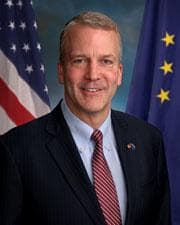
- Conservative Groups$4,600k
Full profile: /officials/S001198
Source: Congress.gov · FEC
Cosponsors (0)
Members who have signed on to support this bill since introduction. Source: Congress.gov.
No cosponsors on record. Bills can pass without cosponsors — this often means the sponsor introduced the bill alone, either because it's a messaging bill, a chairman's mark, or simply early in the legislative cycle.
Latest Action
The most recent step in the bill's legislative path. Committee Activity below shows referrals and reports; the full action-by-action history including floor proceedings lives at Congress.gov →
Committee Activity
Currently in
- Senate Committee on Armed ServicesReferred To · 2026-06-23
Plain-English Summary
The legislation would create a plan to help revitalize and upgrade National Guard facilities and operations in rural areas across the country. This would affect rural communities that host National Guard units, as well as Guard members stationed in those areas, by potentially improving infrastructure, equipment, and services. The goal is to ensure that National Guard capabilities in less populated regions keep pace with those in urban areas.
AI-assisted summary generated from the official bill metadata (title, subjects, actions) sourced from Congress.gov. Cached and reviewed. Always verify against the official text linked below.
Subjects
Full Bill Text
Verbatim text published on Congress.gov via GovInfo. Use Cmd+F / Ctrl+F to search within this excerpt.
[Congressional Bills 119th Congress] [From the U.S. Government Publishing Office] [S. 4858 Introduced in Senate (IS)] <DOC> 119th CONGRESS 2d Session S. 4858 To provide for a National Guard Rural Revival and Modernization Plan. _______________________________________________________________________ IN THE SENATE OF THE UNITED STATES June 23, 2026 Mr. Sullivan introduced the following bill; which was read twice and referred to the Committee on Armed Services _______________________________________________________________________ A BILL To provide for a National Guard Rural Revival and Modernization Plan. Be it enacted by the Senate and House of Representatives of the United States of America in Congress assembled, SECTION 1. SHORT TITLE. This Act may be cited as the ``Alaska National Guard Rural Community Revival Act''. SEC. 2. NATIONAL GUARD RURAL COMMUNITY REVIVAL. (a) Strategy and Implementation Plan Required.--Not later than 90 days after the date of the enactment of this Act, the Secretary of the Army, in coordination with the Chief of the National Guard Bureau, shall develop a comprehensive strategy and roadmap to optimize Army National Guard readiness, force posture, and infrastructure in remote or isolated areas to include the Arctic. The strategy shall take into consideration the posture and plans of the United States Northern Command as well as Golden Dome for America in the assessment and development of the strategy, to ensure infrastructure investments meet homeland defense requirements and maximize operational effectiveness. The strategy shall be known as the ``Army National Guard Rural Revival and Modernization Plan'' (referred to in this section as the ``Plan''). (b) Elements of the Plan.--The Plan required under subsection (a) shall include, at a minimum, the following: (1) Infrastructure review.--A comprehensive audit and assessment of all National Guard armories, readiness centers, training support centers, and ranges within remote or isolated areas. The audit should include an assessment of necessary facilities improvements and include a plan for-- (A) joint-force and extreme-cold-weather tactical training, including integrated survival, mobility, logistics, and combat operations specific to degraded and contested Arctic environments; (B) forward-operating logistical hubs, cold-weather equipment staging, and intra-theater supply-chain distribution points; (C) emergency management, disaster response, and homeland defense staging zones; and (D) communications nodes and remote command-and- control capabilities. (2) End-strength and billet optimization strategy.--A feasible plan to address and fill critically vacant, unassigned, or under-strength National Guard billets within the designated regions to meet increasing operational tempo (OPTEMPO). The optimization plan shall include-- (A) an analysis of recruitment and retention barriers unique to rural, isolated, or high-cost geographic areas; (B) a targeted marketing, recruitment, and localized incentives framework, including specialized remote duty allowances, signing bonuses, and educational stipends, designed to source personnel directly from local and rural communities; and (C) a potential rotational assignment framework to temporarily bridge immediate operational readiness gaps while permanent personnel pipelines are materialized to include associated funding. (3) Dual-use center modernization blueprint.--A comprehensive capitalization and modernization plan for existing multi-mission, dual-use facilities. The blueprint shall-- (A) identify specific structural and technological upgrades necessary to sustain prolonged, multi-domain operations in austere environments, predicated on a comprehensive cyber-resilience and vulnerability assessment of the existing operational technology at installations and facilities, with an emphasis on-- (i) grid resilience, microgrid integration, and continuous primary power capabilities under extreme environmental degradation; (ii) communications modernization, including secure tactical satellite integration and redundant high-latitude network systems; (iii) hangar, maintenance bay, and cold- storage runway and housing upgrades to handle modern tactical, rotary-wing, and autonomous aerial platforms, and personnel; and (iv) dual-use airfield infrastructure reutilization and expansion of existing runways to accommodate modern military and civilian aircraft; and (B) ensure all proposed command and control (C2) and facility infrastructure is engineered to operate seamlessly within Denied,…
Show the remaining 300 wordsHide the remaining 300 words
Degraded, Intermittent, or Limited environments, incorporating resilient closed and restricted network architectures. (c) Commingling and Private-Sector Leveraging Planning Framework.-- In developing the facility expansion and modernization elements of the Plan, the Secretary of the Army shall evaluate and identify opportunities to leverage enhanced use lease (EUL) authorities or enter into public-private partnerships. The Plan shall-- (1) include specific strategies to co-locate dual-use commercial, community, or telecommunications infrastructure within National Guard footprints to lower Federal infrastructure cost premiums and enhance installation resilience; and (2) establish or clarify statutory data-sharing authorities and indemnification for the rapid exchange of cyber threat intelligence, risk assessments, and incident response data between the Department of Defense and the co-located commercial entities. (d) Direct Funding and Minor Construction Threshold Recommendations.--The Plan shall include an assessment of funding mechanisms and potential legislative adjustments required to execute the infrastructure developments, conversions, and modifications identified under the Plan, including an evaluation of how the Secretary may utilize funds available for unspecified minor military construction under section 2805 of title 10, United States Code. (e) Congressional Briefings and Reporting.-- (1) Initial briefing.--Not later than 180 days after the date of the enactment of this Act, the Secretary of the Army and the Chief of the National Guard Bureau shall provide an interim briefing to the congressional defense committees on the initial findings of the armory audit and the initial personnel recruitment milestones. (2) Final report.--Concurrently with the submission of the President's budget request for the upcoming fiscal year following the completion of the Plan, the Secretary of the Army shall submit to the congressional defense committees a formal report detailing the finalized strategy. (f) Congressional Defense Committees Defined.--In this Act, the term ``congressional defense committees'' has the meaning given the term in section 101(a) of title 10, United States Code. <all>
Related legislation
Bills by the same sponsor or covering overlapping subjects.
- S5649Alaska Native Vietnam Era Veterans Land Allotment Fulfillment Act of 2026Referred to Committee · 2026-09-30
- S5479No Chinese Seafood in Congress ActReferred to Committee · 2026-09-23
- S5438Alaska’s Right to Produce Act 2.0Introduced · 2026-09-22
- S5404Jimmy Lai Hong Kong Political Prisoner Accountability Act of 2026Referred to Committee · 2026-09-16