STRONG GRID Act of 2026
Sponsor
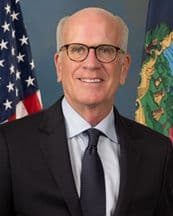
Full profile: /officials/W000800
Source: Congress.gov · FEC
Cosponsors (0)
Members who have signed on to support this bill since introduction. Source: Congress.gov.
No cosponsors on record. Bills can pass without cosponsors — this often means the sponsor introduced the bill alone, either because it's a messaging bill, a chairman's mark, or simply early in the legislative cycle.
Latest Action
The most recent step in the bill's legislative path. Committee Activity below shows referrals and reports; the full action-by-action history including floor proceedings lives at Congress.gov →
Read twice and referred to the Committee on Energy and Natural Resources.
2026-07-29
Source: Congress.gov
Committee Activity
Currently in
- Senate Committee on Energy and Natural ResourcesReferred To · 2026-07-29
Plain-English Summary
The proposal would update federal energy rules to help communities and businesses build and operate microgrids—small, localized power systems that can operate independently or connect to the main electrical grid. This would make it easier for neighborhoods, hospitals, military bases, and other facilities to generate and manage their own electricity, potentially improving reliability during outages and reducing energy costs. The changes would affect utility companies, property owners, and consumers who could benefit from more flexible and resilient local power options.
AI-assisted summary generated from the official bill metadata (title, subjects, actions) sourced from Congress.gov. Cached and reviewed. Always verify against the official text linked below.
Subjects
Full Bill Text
Verbatim text published on Congress.gov via GovInfo. Use Cmd+F / Ctrl+F to search within this excerpt.
[Congressional Bills 119th Congress] [From the U.S. Government Publishing Office] [S. 5159 Introduced in Senate (IS)] <DOC> 119th CONGRESS 2d Session S. 5159 To amend the Public Utility Regulatory Policies Act of 1978 to support microgrids, and for other purposes. _______________________________________________________________________ IN THE SENATE OF THE UNITED STATES July 29, 2026 Mr. Welch introduced the following bill; which was read twice and referred to the Committee on Energy and Natural Resources _______________________________________________________________________ A BILL To amend the Public Utility Regulatory Policies Act of 1978 to support microgrids, and for other purposes. Be it enacted by the Senate and House of Representatives of the United States of America in Congress assembled, SECTION 1. SHORT TITLE. This Act may be cited as the ``Supporting Transformative Resilience, Operations, and Next-Generation Grid Innovation Deployment Act of 2026'' or the ``STRONG GRID Act of 2026''. SEC. 2. CONSIDERATION OF INTERCONNECTION OF MICROGRIDS AND THE BENEFITS OF INVESTMENTS IN RESILIENCE. (a) In General.--Section 111(d) of the Public Utility Regulatory Policies Act of 1978 (16 U.S.C. 2621(d)) is amended by adding at the end the following: ``(22) Interconnection of microgrids.-- ``(A) Definition of microgrid.--In this paragraph, the term `microgrid' means a group of interconnected loads and distributed energy resources (which may include energy generation resources, energy storage, energy efficiency resources, district heating and cooling, combined heat and power, demand response and load control tools, and other management, forecasting, and analytical tools) within clearly defined electrical boundaries that-- ``(i) acts as a single controllable entity with respect to the electric grid; and ``(ii) has the ability-- ``(I) to connect to the electric grid; ``(II) to disconnect from the electric grid; or ``(III) to run in parallel to the electric grid, whether connected to or disconnected from the electric grid. ``(B) Interconnection.--Each State shall consider establishing a regulatory framework for the interconnection of microgrids, which may include revising existing interconnection requirements for distributed energy resources to better account for islanding, resource availability and scheduling, resource protection, and controls. ``(23) Quantifying benefits of investments in resilience.-- ``(A) In general.--Each State shall consider establishing-- ``(i) standards for evaluating and quantifying the benefits of investments in the resilience of the electric grid, including-- ``(I) the events, circumstances, and essential services for which resilience is required; ``(II) the level and duration of service required to achieve resilience; and ``(III) consideration of-- ``(aa) whether critical customers have on-site or behind-the-meter generation capacity; and ``(bb) whether information relating to that capacity has been shared with the applicable utility and relevant regional entities, as necessary; and ``(ii) a valuation methodology to quantify the value of measures to improve the resilience of the electric grid in order to determine whether such investments are justifiable, including a mechanism to determine-- ``(I) the distribution of resilience benefits to ratepayers; and ``(II) the scope over which resilience benefits accrue. ``(B) Defense installations.--Military installations (as defined in section 2801(c) of title 10, United States Code) and other defense installations and infrastructure operated by the Department of Defense shall not be subject to any standards or methodologies established pursuant to subparagraph (A).''. (b) Compliance.-- (1) Time limitation.--Section 112(b) of the Public Utility Regulatory Policies Act of 1978 (16 U.S.C. 2622(b)) is amended-- (A) by indenting paragraphs (4) through (8), and any subparagraphs within those paragraphs, appropriately; and (B) by adding at the end the following: ``(9)(A) Not later than 1 year after the date of enactment of this paragraph, each State regulatory authority (with respect to each electric utility for which the State has ratemaking authority) and each nonregulated electric utility shall commence consideration under section 111, or set a hearing date…
Show the remaining 2,668 wordsHide the remaining 2,668 words
for consideration, with respect to the standards established by paragraphs (22) and (23) of section 111(d). ``(B) Not later than 2 years after the date of enactment of this paragraph, each State regulatory authority (with respect to each electric utility for which the State has ratemaking authority), and each nonregulated electric utility shall complete the consideration and make the determination under section 111 with respect to the standards established by paragraphs (22) and (23) of section 111(d).''. (2) Failure to comply.--Section 112(c) of the Public Utility Regulatory Policies Act of 1978 (16 U.S.C. 2622(c)) is amended by adding at the end the following: ``In the case of the standards established by paragraphs (22) and (23) of section 111(d), the reference contained in this subsection to the date of enactment of this Act shall be deemed to be a reference to the date of enactment of those paragraphs.''. (3) Prior state actions.-- (A) In general.--Section 112 of the Public Utility Regulatory Policies Act of 1978 (16 U.S.C. 2622) is amended-- (i) in each of subsections (d) through (h), by redesignating paragraphs (1) through (3) as subparagraphs (A) through (C), respectively, and indenting appropriately; (ii) in subsections (e) through (h), by striking ``enactment of this subsection'' and inserting ``enactment of that paragraph''; (iii) in subsection (d), in the matter preceding subparagraph (A) (as so redesignated), by striking ``Subsections'' and inserting the following: ``(1) In general.--Subsections''; (iv) in subsection (e), by striking the subsection designation and heading and all that follows through ``Subsections'' in the matter preceding subparagraph (A) (as so redesignated) and inserting the following: ``(2) Time-based metering and communications.-- Subsections''; (v) in subsection (f), by striking the subsection designation and heading and all that follows through ``Subsections'' in the matter preceding subparagraph (A) (as so redesignated) and inserting the following: ``(3) Interconnection.--Subsections''; (vi) in subsection (g), by striking the subsection designation and heading and all that follows through ``Subsections'' in the matter preceding subparagraph (A) (as so redesignated) and inserting the following: ``(4) Demand-response practices.--Subsections''; (vii) in subsection (h), by striking the subsection designation and heading and all that follows through ``Subsections'' in the matter preceding subparagraph (A) (as so redesignated) and inserting the following: ``(5) Electric vehicle charging programs.--Subsections''; and (viii) in subsection (d) (as so amended) by adding at the end the following: ``(6) Interconnection of microgrids; benefits of investments in resilience.--Subsections (b) and (c) shall not apply to the standard established by paragraph (22) or (23), as applicable, of section 111(d) in the case of any electric utility in a State if, before the date of enactment of that paragraph-- ``(A) the State has implemented for the electric utility the applicable standard (or a comparable standard); ``(B) the State regulatory authority for the State or the relevant nonregulated electric utility has conducted a proceeding to consider implementation of the applicable standard (or a comparable standard) for the electric utility; or ``(C) the State legislature has voted on the implementation of the applicable standard (or a comparable standard) for the electric utility during the 3-year period ending on that date of enactment.''. (B) Cross reference.--Section 124 of the Public Utility Regulatory Policies Act of 1978 (16 U.S.C. 2634) is amended by adding at the end the following: ``In the case of the standards established by paragraphs (22) and (23) of section 111(d), the reference contained in this section to the date of enactment of this Act shall be deemed to be a reference to the date of enactment of those paragraphs.''. SEC. 3. STATE ENERGY PROGRAMS. Section 362 of the Energy Policy and Conservation Act (42 U.S.C. 6322) is amended-- (1) in subsection (c)(7)(B), by inserting ``, including microgrids (as defined in section 367(a))'' before the semicolon at the end; and (2) in subsection (d)(10), by inserting ``, such as distributed energy resources and virtual power plants'' before the semicolon at the end. SEC. 4. STATE-ADMINISTERED ASSISTANCE FOR MICROGRIDS. (a) In General.--Part D of title III of the Energy Policy and Conservation Act (42 U.S.C. 6321 et seq.) is amended by adding at the end the following: ``SEC. 367. STATE-ADMINISTERED ASSISTANCE FOR MICROGRIDS. ``(a) Definitions.--In this section: ``(1) Low-income community.--The term `low-income community' means any census block group in which 30 percent or more of the population are individuals with an annual household income equal to, or less than, the greater of-- ``(A) an amount equal to 80 percent of the median income of the area in which the household is located, as reported by the Department of Housing and Urban Development; and ``(B) 200 percent of the Federal poverty line. ``(2) Microgrid.--The term `microgrid' means a group of interconnected loads and distributed energy resources (which may include energy generation resources, energy storage, energy efficiency resources, district heating and cooling, combined heat and power, demand response and load control tools, and other management, forecasting, and analytical tools) within clearly defined electrical boundaries that-- ``(A) acts as a single controllable entity with respect to the electric grid; and ``(B) has the ability to connect to, disconnect from, or run in parallel to the electric grid and operate in grid-connected mode or islanded mode. ``(3) Rural area.--The term `rural area' means any area other than-- ``(A) a city or town that has a population of greater than 50,000 inhabitants; and ``(B) any urbanized area contiguous and adjacent to a city or town described in subparagraph (A). ``(b) Program.--Not later than 1 year after the date of enactment of the STRONG GRID Act of 2026, the Secretary, in consultation with the Director of the Office of Cybersecurity, Energy Security, and Emergency Response, shall establish a program under which the Secretary shall allocate funding to State energy offices to implement an Electric Grid Resilience Program in accordance with this section. ``(c) Funding Allocation.--The Secretary shall allocate funding under subsection (b) in accordance with the allocation formula in effect on December 31, 2024, for the State Energy Program established under this part. ``(d) Electric Grid Resilience Programs.-- ``(1) In general.--An Electric Grid Resilience Program carried out by a State energy office using funds provided under this section shall award competitive grants to eligible entities to support the deployment of microgrids. ``(2) Eligible activities.--A grant awarded under an Electric Grid Resilience Program may be used for-- ``(A) conducting a microgrid needs assessment or feasibility study; ``(B) designing and engineering a microgrid, including the solicitation of technical assistance-- ``(i) to address permitting and siting challenges; ``(ii) to understand the technical characteristics and management of microgrids; ``(iii) to develop a maintenance plan for the microgrid; and ``(iv) to develop cybersecurity and data privacy measures unique to microgrid performance and operation; ``(C) construction of a microgrid and associated energy resources, including-- ``(i) energy generation assets; ``(ii) energy storage; and ``(iii) technologies to manage the operation and security of the microgrid; ``(D) implementation of advanced cybersecurity or operational controls for an existing microgrid; ``(E) the technical and physical operation and maintenance of a newly constructed microgrid; ``(F) training existing staff on the real-time systems specific to microgrids; and ``(G) other activities relating to microgrid deployment, as the applicable State energy office determines to be appropriate. ``(3) Priorities.--In awarding grants under an Electric Grid Resilience Program, a State energy office shall give priority to projects that-- ``(A) improve energy resilience, such as by reducing the frequency, duration, or scale of blackouts or power system failures; ``(B) improve the reliability of electric service; ``(C) generate multiple energy value streams, including ancillary services; ``(D) address a need identified in a State or local hazard mitigation or emergency preparedness plan; ``(E) address a need identified in a State energy security plan (as defined in section 366(a)); ``(F) primarily benefit a rural area or low-income community; ``(G) provide ancillary services to the grid, such as demand management or congestion control; or ``(H) deploy distributed or renewable energy resources. ``(4) Cost share.--The recipient of a grant under an Electric Grid Resilience Program shall be required to provide not less than 25 percent of the cost of the project carried out using the grant. ``(e) Administrative Expenses.--A State may use up to 10 percent of the amount allocated to the State under this section for the costs of administering an Electric Grid Resilience Program. ``(f) Funding.--There is appropriated, out of any funds in the Treasury not otherwise appropriated, $500,000,000 to carry out this section for the period of fiscal years 2027 through 2031.''. (b) Technical Amendment.--The table of contents for the Energy Policy and Conservation Act (Public Law 94-163; 89 Stat. 872) is amended by inserting after the item relating to section 366 the following: ``Sec. 367. State-administered assistance for microgrids.''. SEC. 5. TECHNICAL ASSISTANCE FOR UTILITIES, UTILITY REGULATORS, AND OTHER STAKEHOLDERS. (a) In General.--Title VI of the Public Utility Regulatory Policies Act of 1978 is amended by inserting after section 609 (7 U.S.C. 918c) the following: ``SEC. 610. TECHNICAL, EDUCATIONAL, AND OTHER ASSISTANCE ON MICROGRIDS. ``(a) Definitions.--In this section: ``(1) Eligible entity.--The term `eligible entity' means-- ``(A) an electric utility, including the board of an electric cooperative; ``(B) an electric utility regulator, including a State regulatory authority, such as a public utility commission; ``(C) a State or a State energy office; ``(D) an agency, authority, corporation, or instrumentality of a State or Indian Tribe; ``(E) a unit of local government or a political subdivision of a State or Indian Tribe; ``(F) a policymaker having authority with respect to-- ``(i) an electric utility; ``(ii) the regulation of electric utilities or the sale of electric energy; or ``(iii) any other matter relating to the adoption or use of microgrids; and ``(G) any other relevant entity, as determined by the Secretary. ``(2) Microgrid.--The term `microgrid' has the meaning given the term in section 111(d)(22)(A). ``(3) National laboratory.--The term `National Laboratory' has the meaning given the term in section 2 of the Energy Policy Act of 2005 (42 U.S.C. 15801). ``(4) State energy office.--The term `State energy office' means the State agency responsible for developing a State energy conservation plan under section 362 of the Energy Policy and Conservation Act (42 U.S.C. 6322). ``(b) Technical Assistance on Microgrid Adoption.--The Secretary, on request, shall provide to eligible entities technical assistance to facilitate the adoption and deployment of microgrids, including technical assistance with respect to-- ``(1) interconnection processes; ``(2) valuation and verification of microgrid benefits; ``(3) integrated distribution system and resource planning, including behind-the-meter resources; ``(4) co-locating microgrid infrastructure and large industrial and commercial loads; and ``(5) other relevant considerations, as determined by the Secretary. ``(c) Technical Assistance on Implementation of the STRONG GRID Act of 2026.-- ``(1) In general.--The Secretary, on request, shall provide technical assistance to State agencies and other eligible entities, including State regulatory authorities, State regulated electric utilities, and nonregulated electric utilities, with respect to-- ``(A) regulatory proceedings relating to paragraphs (22) and (23) of section 111(d); ``(B) the adoption or use of microgrids as part of the State Energy Program established under part D of title III of the Energy Policy and Conservation Act (42 U.S.C. 6321 et seq.); or ``(C) the grant program established under section 367(b) of that Act. ``(2) National laboratories.--The Secretary may provide technical assistance under paragraph (1) through the National Laboratories, as the Secretary determines to be appropriate. ``(d) Best Practices.--The Secretary, in coordination with the National Laboratories and in consultation with State energy offices and other stakeholders, as determined by the Secretary, shall develop best practices for the following matters with respect to microgrids and microgrid components: ``(1) Interconnection processes. ``(2) Cybersecurity. ``(3) Personal data protection. ``(4) Ownership. ``(e) Workshops, Roundtables, and Other Activities.--The Secretary shall host workshops, roundtables, information sessions, and other activities to provide to eligible entities education and information about microgrids, including with respect to-- ``(1) the benefits of microgrids and the role of microgrids in strengthening electric grid resilience, reducing emissions, managing demand, and meeting load growth and other energy industry challenges; ``(2) best practices, standards, and protocols for the regulation, development, implementation, operation, and management of microgrids; and ``(3) resources and technical assistance opportunities available to eligible entities from the Secretary and other Federal agencies.''. (b) Clerical Amendment.--The table of contents in section 1(b) of the Public Utility Regulatory Policies Act of 1978 (Public Law 95-617; 92 Stat. 3118) is amended by adding at the end of the items relating to title VI the following: ``Sec. 609. Rural and remote communities electrification grants. ``Sec. 610. Technical, educational, and other assistance on microgrids.''. SEC. 6. PILOT PROGRAM FOR DEMONSTRATION OF INNOVATIVE MICROGRID APPLICATIONS. (a) Definitions.--In this section: (1) Eligible entity.--The term ``eligible entity'' means-- (A) an electric grid operator; (B) an electricity storage operator; (C) an electricity generator; (D) a transmission owner or operator; (E) a distribution provider; (F) a fuel supplier; (G) a State, a territory of the United States, or an Indian Tribe; (H) an agency, authority, corporation, or instrumentality of a State or Indian Tribe; (I) a unit of local government or a political subdivision of a State or Indian Tribe; (J) an institution of higher education; and (K) any other relevant entity, as determined by the Secretary. (2) Pilot program.--The term ``pilot program'' means the pilot program established under subsection (b). (3) Secretary.--The term ``Secretary'' means the Secretary of Energy. (b) Establishment.--Not later than 1 year after the date of enactment of this Act, the Secretary shall establish a pilot program to award grants, on a competitive basis, to eligible entities for projects to demonstrate innovative microgrid deployment. (c) Applications.--An eligible entity seeking a grant under the pilot program shall submit to the Secretary an application at such time, in such manner, and containing such information as the Secretary may require. (d) Priority.--In awarding grants under the pilot program, the Secretary shall give priority to projects that demonstrate innovative microgrid applications, emerging technologies, and distributed energy resources management systems, which may include microgrid projects that-- (1) provide ancillary grid services and supply and demand management; (2) aggregate distributed energy resources into virtual power plants; (3) communicate between demand and generation resources; (4) demonstrate effective cybersecurity management; (5) demonstrate methods to protect microgrids and related energy resources during a grid or microgrid fault; (6) facilitate load transfers to alleviate transmission congestion; (7) manage voltage instability or collapses; (8) demonstrate systems to support microgrid and networked microgrid operations, including coordination and resource sharing; (9) demonstrate systems for multi-microgrid control; (10) demonstrate microgrid capabilities and operation in black-start conditions; (11) demonstrate successful operation of microgrids where direct current systems are the primary basis of design; (12) demonstrate successful microgrid operation with a significant penetration of or complete reliance on renewable energy resources, including storage; or (13) adopt a flexible regulatory framework for high- visibility projects that demonstrate advanced microgrid concepts and technologies. (e) Cost Share.--The Federal share of the cost of a project for which a grant is provided under the pilot program shall not exceed 90 percent. (f) Technical Assistance.--The Secretary may provide technical assistance to recipients of grants under the pilot program with respect to-- (1) the development of microgrid regulatory frameworks; (2) the design of microgrids; and (3) the feasibility of microgrid projects. (g) Reports.-- (1) Report on microgrid benefits and regulatory processes.--Not later than 5 years after the date of enactment of this Act, the Secretary, in coordination with the National Laboratories, shall submit to Congress and publish on a publicly available website of the Department of Energy a report that evaluates the outcomes of the pilot program, including-- (A) the benefits, challenges, and risks of microgrid deployment; and (B) regulatory processes relating to the deployment of microgrids. (2) Report on pilot projects.--Annually, the Secretary shall submit to Congress and publish on a publicly available website of the Department of Energy a report describing each project funded under the pilot program as of the date of the report, including the innovative microgrid deployment, applications, and technologies demonstrated by the project. (h) Authorization of Appropriations.--There is authorized to be appropriated to the Secretary to carry out the pilot program $200,000,000 for the period of fiscal years 2027 through 2031. <all>
Related legislation
Bills by the same sponsor or covering overlapping subjects.
- S5525A bill to eliminate toxic substances in beverage containers, and for other purposes.Referred to Committee · 2026-09-24
- S5472A bill to amend the Internal Revenue Code of 1986 to exclude from gross income grants and the proceeds of transferrable tax credits supporting the development of affordable housing, and for other purposes.Referred to Committee · 2026-09-23
- S5434A bill to amend title VI of the Public Utility Regulatory Policies Act of 1978 to establish a Federal renewable electricity standard for retail electricity suppliers, and for other purposes.Referred to Committee · 2026-09-17
- S5281Consumer Advocacy and Protection Act of 2026Referred to Committee · 2026-08-06