STRATA Act of 2026
Sponsor
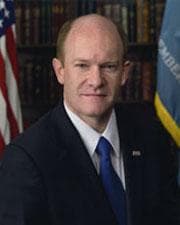
Full profile: /officials/C001088
Source: Congress.gov · FEC
Cosponsors (0)
Members who have signed on to support this bill since introduction. Source: Congress.gov.
No cosponsors on record. Bills can pass without cosponsors — this often means the sponsor introduced the bill alone, either because it's a messaging bill, a chairman's mark, or simply early in the legislative cycle.
Latest Action
The most recent step in the bill's legislative path. Committee Activity below shows referrals and reports; the full action-by-action history including floor proceedings lives at Congress.gov →
Committee Activity
Currently in
- Senate Committee on Foreign RelationsReferred To · 2026-09-30
Plain-English Summary
Plain-English summary pending. Introduced on 2026-09-30. Check back soon — summaries are generated as bills progress through Congress.
Full Bill Text
Verbatim text published on Congress.gov via GovInfo. Use Cmd+F / Ctrl+F to search within this excerpt.
[Congressional Bills 119th Congress] [From the U.S. Government Publishing Office] [S. 5637 Introduced in Senate (IS)] <DOC> 119th CONGRESS 2d Session S. 5637 To establish the Critical Minerals Innovation Partnership, and for other purposes. _______________________________________________________________________ IN THE SENATE OF THE UNITED STATES September 30, 2026 Mr. Coons introduced the following bill; which was read twice and referred to the Committee on Foreign Relations _______________________________________________________________________ A BILL To establish the Critical Minerals Innovation Partnership, and for other purposes. Be it enacted by the Senate and House of Representatives of the United States of America in Congress assembled, SECTION 1. SHORT TITLE; TABLE OF CONTENTS. (a) Short Title.--This Act may be cited as the ``Strategic Technology and Resilient Alliances Act of 2026'' or the ``STRATA Act of 2026''. (b) Table of Contents.--The table of contents for this Act is as follows: Sec. 1. Short title; table of contents. Sec. 2. Sense of Congress. Sec. 3. Definitions. TITLE I--CRITICAL MINERALS INNOVATION PARTNERSHIP PROGRAM Sec. 101. Establishment. Sec. 102. Eligibility. Sec. 103. Notification and briefing. Sec. 104. Elements. Sec. 105. Responsibilities of the Director. Sec. 106. Staff. TITLE II--RELATED MATTERS Sec. 201. International Centers of Excellence for Innovative Critical Minerals Supply Chain Technologies. Sec. 202. Digital platform. Sec. 203. Council consultation and coordination. Sec. 204. Assistance for science and technology cooperation; limitations. TITLE III--SUNSET Sec. 301. Termination of authority. Sec. 302. Use of funds after termination. SEC. 2. SENSE OF CONGRESS. It is the sense of Congress that-- (1) critical minerals are essential inputs for a wide range of advanced and emerging technologies, including energy systems, semiconductors, advanced manufacturing, and defense applications, and continued innovation in their use and production is vital to United States technological leadership; (2) innovation in critical minerals extraction, separation, processing, refining, recycling, and substitution technologies remains insufficient to meet projected United States demand and requires accelerated research, development, and commercialization efforts; (3) cooperation with United States partner countries possessing complementary scientific, technological, and industrial capabilities enhances the ability of the United States to advance innovation across the critical minerals value chain; (4) joint research and development initiatives with partner countries can accelerate breakthroughs in cost-effective, sustainable, and scalable approaches to critical minerals production and use; (5) allied collaboration in materials science, mineral production and extraction technologies, mineral processing technologies, and advanced manufacturing can reduce dependence on legacy methods and enable the development of next-generation technologies; (6) innovation in recycling, recovery, and reuse approaches for critical minerals presents a significant opportunity to expand supply while reducing environmental impact and resource constraints; (7) the development of substitute materials and alternative technologies can mitigate reliance on scarce or supply- constrained critical minerals and enhance long-term technological resilience; (8) shared research infrastructure, data, and scientific expertise among partner countries can improve the efficiency and effectiveness of innovation efforts related to critical minerals; (9) public-private partnerships involving governments, research institutions, and industry are essential to advancing innovation and scaling new technologies in order to bridge the ``valley of death'' in the critical minerals sector; (10) strengthening collaboration among universities, National Laboratories, and private-sector entities across partner countries enhances talent development and supports a robust, market-responsive innovation ecosystem; (11) establishing formal bilateral and multilateral mechanisms for cooperation in critical minerals innovation enables sustained, long-term collaboration and more rapid response to emerging technological challenges; (12) dedicated funding and streamlined authorities for joint innovation initiatives reduce barriers to collaboration and enable more agile development and deployment of critical minerals technologies so as to accelerate the transition of technologies in research and development phases to operational deployment, government integration, and commercial application; (13) advancing innovation in critical minerals…
Show the remaining 3,413 wordsHide the remaining 3,413 words
technologies is essential to maintaining United States leadership in critical and emerging technologies and supporting long-term economic and national security; and (14) activities under this Act should be aligned with existing critical mineral and energy security initiatives. SEC. 3. DEFINITIONS. In this Act: (1) Appropriate congressional committees.--The term ``appropriate congressional committees'' means-- (A) the Committees on Foreign Relations, Energy and Natural Resources, and Commerce, Science, and Transportation of the Senate; and (B) the Committees on Foreign Affairs, Energy and Commerce, and Science, Space, and Technology of the House of Representatives. (2) Country of concern.--The term ``country of concern'' has the meaning given the term ``covered nation'' in section 4872(f) of title 10, United Stats Code. (3) Country of concern entity.--The term ``country of concern entity'' means-- (A) a foreign entity subject to the jurisdiction of, or organized under the laws of, a country of concern; (B) a joint venture, subsidiary, or other entity in which more than 25 percent of the equity interest, voting interest, board representation, or other indicia of control, whether directly or indirectly, is owned or controlled by an entity, or combination of entities, described in subparagraph (A); and (C) a foreign entity owned, directed, or controlled by a foreign entity described in subparagraph (A) or (B). (4) Critical mineral.--The term ``critical mineral'' means any mineral on the list of critical minerals required by section 7002(c)(3) of the Energy Act of 2020 (30 U.S.C. 1606(c)(3)) on or after January 1, 2026. (5) Director.--The term ``Director'' means the Director of the program appointed under section 101(b). (6) Program.--The term ``program'' means the Critical Minerals Innovation Partnership Program established by section 101(a). (7) Secretary.--The term ``Secretary'' means the Secretary of State. (8) Senior united states government official.--The term ``senior United States Government official'' means-- (A) any individual serving in a position at level I of the Executive Schedule under section 5312 of title 5, United States Code; and (B) any individual serving as a presidential special envoy. TITLE I--CRITICAL MINERALS INNOVATION PARTNERSHIP PROGRAM SEC. 101. ESTABLISHMENT. (a) In General.--There is established in the Department of State a program, to be known as the ``Critical Minerals Innovation Partnership Program'', to support the development and adoption of critical minerals innovative technologies with countries and entities, through the establishment of partnerships with those countries and entities, in order to enhance the national security, support the economic competitiveness, and diversify the critical supply chains of the United States. (b) Director.--The Secretary-- (1) shall appoint an individual to be the Director of the program, who shall report to the Under Secretary of Economic Growth, Energy, and the Environment and be responsible for-- (A) matters pertaining to the administration and implementation of the program, including coordinating with the Federal agencies listed in section 105(b)(3)(C); and (B) such other related duties, as the Secretary may from time to time designate; and (2) may, as the Secretary determines appropriate, appoint the Director from among officers and employees of the Department of State. SEC. 102. ELIGIBILITY. (a) Countries.-- (1) Selection.--In carrying out the program, the Secretary shall determine which countries are eligible to participate in the program. (2) Considerations.--In making an eligibility determination under paragraph (1), the Secretary shall consider whether the country-- (A) is an allied or partner country as described in section 2350a(a)(2) of title 10, United States Code; (B) is strategically or commercially important to the United States; (C) has the capacity and commitment to participate in the program; (D) has respect for human and labor rights, and the rule of law; and (E) meets other criteria, as determined by the Secretary. (3) Preference.--In making an eligibility determination under paragraph (1), the Secretary shall, to the maximum extent practicable, give preference to countries that-- (A) are a party to a trade or economic cooperation agreement with the United States; (B) participate in other bilateral or multilateral initiatives, frameworks, or agreements that are identified by the President as promoting United States foreign policy, economic security, or national security objectives, including normalization agreements, regional integration efforts, or strategic economic partnerships; or (C) meet the criteria described in section 607(b) of the Millennium Challenge Act of 2003 (22 U.S.C. 7706(b)). (b) Entities.-- (1) Selection.--In carrying out the program, the Secretary shall determine which entities are eligible to participate in the program. (2) Considerations.--In making an eligibility determination under paragraph (1), the Secretary shall consider whether the entity-- (A) is-- (i) an institution of higher education (as defined in section 101(a) of the Higher Education Act of 1965 (20 U.S.C. 1001(a))); (ii) a federally funded research and development center; (iii) a nonprofit institution with existing partnerships established with relevant federally funded research and development centers; (iv) a private sector entity with existing partnerships established with relevant federally funded research and development centers; or (v) a consortium of entities described in any of clauses (i) through (iv); (B) is not a foreign entity of concern (as defined in section 10612(a) of the CHIPS Act of 2022 (42 U.S.C. 19221(a))); and (C) meets other criteria for eligibility, as determined by the Secretary. (c) Ineligibility.--In carrying out the program, the Secretary may not establish partnerships with-- (1) a country of concern; or (2) a country of concern entity. SEC. 103. NOTIFICATION AND BRIEFING. Not later than 30 days before entering into a partnership with a country or entity under the program, the Director shall-- (1) notify the appropriate congressional committees regarding the proposed partnership; (2) transmit to the appropriate congressional committees the text of the partnership agreement; and (3) provide to the appropriate congressional committees an in-person briefing regarding the partnership. SEC. 104. ELEMENTS. Each partnership entered into with a country or entity participating in the program shall include the following elements: (1) Specific objectives that the country or entity and the United States expect to achieve. (2) The responsibilities of the country or entity and the United States in the achievement of the objectives. (3) Regular quantitative benchmarks, where appropriate, to measure progress towards achieving the objectives. (4) A multiyear plan that-- (A) estimates the amount of contributions, commitments, and other participation to be provided by the United States and the country or entity; (B) identifies proposed mechanisms to implement the plan and provide oversight; and (C) describes how the objectives will be met, including the role of the private sector, Federal Government entities, and any other entities in achieving the objectives. (5) A description of the current and potential participation of other donor countries or entities in achieving the objectives, as applicable. (6) A preferred method of dispute resolution with the country or entity, unless already covered under a related Science and Technology Agreement. (7) A preferred method of intellectual property allocation with the country or entity, unless already covered under a related Science and Technology Agreement. (8) General terms governing notification of the discovery of potentially classifiable or otherwise controlled information with the country or entity, unless already covered under a related Science and Technology Agreement. (9) As appropriate, a process or processes for considering-- (A) solicited proposals; and (B) unsolicited proposals by national, regional, and local government and private corporations, including, where applicable, the use of the digital platform established under section 202 to facilitate submission, review, and coordination of the unsolicited proposals. SEC. 105. RESPONSIBILITIES OF THE DIRECTOR. (a) Sense of Congress.--It is the sense of Congress that the Director should consider utilizing authorities to make grants and enter into cooperative agreements with countries and entities participating in the program that are designated by the Secretary as eligible to receive assistance under this paragraph to increase the administrative and technical capacity of those countries and entities to facilitate the development and implementation of the partnerships. (b) Responsibilities.--The Director shall be responsible for-- (1) establishing dialogue with the representatives of countries and entities participating in the program-- (A) to evaluate proposals submitted through national coordinators; and (B) to recommend joint funding, coordinated procurement, or other joint efforts, as appropriate; (2) in consultation with the Office of International Affairs of the Department of Energy, developing and maintaining multinational strategy and roadmaps identifying vulnerabilities, capacity gaps, and priority investment areas across emerging technologies for critical mineral supply chains; (3) directing the program, which may include coordinating with the International Centers of Excellence for Innovative Critical Minerals Supply Chain Technologies established under section 201, in consultation with Federal departments and agencies, as the Secretary determines relevant, to issue joint or coordinated solicitations, including calls for proposals, grant challenge programs, and co-funded initiatives, to address cross-cutting challenges, which may include-- (A) identifying high-impact priorities, providing technical assistance, and identifying priority innovation, research, and development needs, in consultation with, as the Director determines appropriate-- (i) the White House Office of Science and Technology Policy; and (ii) with respect to the development of National Laboratory partnerships and identification of priority critical minerals innovation activities, the Secretary of Energy; (B) aligning with the capabilities, constraints, and priorities of United States financing agencies, in consultation with, as the Director determines appropriate-- (i) with respect to development finance support including feasibility funding, technical assistance, debt, equity, and political risk assurance for eligible projects, the United States International Development Finance Corporation; (ii) with respect to export credit and related financing for resulting United States export opportunities, the Export-Import Bank of the United States; and (iii) with respect to project preparation, feasibility studies, pilot projects and technical assistance, the United States Trade and Development Agency; and (C) consulting with any other Federal agency that the Secretary determines is appropriate, including-- (i) the Department of Agriculture; (ii) the Department of Commerce; (iii) the Department of Defense; (iv) the Department of Energy; (v) the Department of the Interior; (vi) the Department of Transportation; (vii) the Department of the Treasury; (viii) the Environmental Protection Agency; (ix) the National Security Council; (x) the National Aeronautics and Space Administration; and (xi) the National Science Foundation; (4) convening and coordinating with the governments of countries participating in the program, international institutions, development agencies, and trusted industry partners to align technical standards to enable interoperable technology ecosystems consistent with shared security and economic interests; (5) establishing mechanisms to aggregate and coordinate demand for critical minerals and associated technologies among domestic agencies, allied governments, and private sector entities to enhance market certainty, enable long-term offtake arrangements, and support investment in diversified and secure supply chains; (6) articulating and recommending priority project areas for execution by other relevant Federal departments and agencies; (7) serving as the recipient for unsolicited proposals for projects to be considered for inclusion in any partnership, by national, regional, and local governments and private companies; (8) coordinating safeguards and trust mechanisms, including-- (A) eligibility criteria for countries and entities participating in the program; (B) data governance and security protocols; (C) supply chain transparency requirements; (D) protections for sensitive technologies; and (E) monitoring, reporting and verification approaches; and (9) monitoring outcomes and reporting on progress, including metrics related to-- (A) supply chain resilience; and (B) deployment timelines. (c) Country Teams.--The Director may establish at United States overseas posts working groups, to be known as ``Country Teams'', with a designated lead to implement the partnerships with countries and entities participating in the program. SEC. 106. STAFF. The Director may-- (1) request from heads of relevant Federal departments and agencies, on a reimbursable basis, the detail of personnel to the program, who-- (A) shall have relevant sectoral, financial, technical, or regional expertise; and (B) for the purpose of preserving the allowances, privileges, rights, seniority, and other benefits of the employee, shall remain an employee of the agency from which the employee is detailed; and (2) detail personnel of the program to relevant Federal departments and agencies that are assisting in carrying out the program. TITLE II--RELATED MATTERS SEC. 201. INTERNATIONAL CENTERS OF EXCELLENCE FOR INNOVATIVE CRITICAL MINERALS SUPPLY CHAIN TECHNOLOGIES. (a) Establishment.--The Secretary, in consultation with the Secretary of Energy, shall seek to establish centers, to be known as ``International Centers of Excellence for Innovative Critical Minerals Supply Chain Technologies'' (referred to in this section as ``Centers''), to provide services to countries and entities participating in the program. (b) Purposes.--The purposes of the Centers shall be-- (1) to advance the development, demonstration, and deployment of innovative, responsible, and resource-efficient critical minerals extraction, processing, and recycling technologies; (2) to strengthen technical, regulatory, and institutional capacity in countries and entities participating in the program; (3) to promote transparency, traceability, and adherence to internationally recognized environmental, labor, and human rights standards; and (4) to support secure, diversified, and resilient critical minerals supply chains aligned with United States national and economic security interests. (c) Activities.--The Centers may provide support for-- (1) applied research, pilot projects, and demonstration activities for innovative extraction and processing technologies, including low-impact and non-traditional methods; (2) technical assistance and training to government entities, academic institutions, and private sector partners; (3) cooperation among United States entities and foreign country institutions, including universities, national laboratories, and industry; (4) the development and implementation of regulatory frameworks that-- (A) protect public health and safety; (B) prevent environmental harm; (C) prevent the use of forced or child labor; and (D) improve mine site remediation and closure practices; and (5) data-driven tools and digital systems to enhance monitoring and reporting, including with respect to-- (A) supply chain traceability; (B) operational resource and energy usage efficiency metrics and lifecycle emissions accounting; (C) measurements relating to air quality, water quality, land use, and site remediation; (D) identification and mitigation risks related to labor or practices, community impact, or ecological stewardship; and (E) promoting beneficiation, value addition, and the recycling and reuse of critical minerals. (d) Administration.--The Centers shall be administered by the Director, in coordination with relevant partner countries and the Federal agencies described in section 105(b)(3)(C). SEC. 202. DIGITAL PLATFORM. (a) Establishment.--The Secretary shall establish and maintain a publicly accessible digital platform to facilitate participation by United States entities in activities carried out under the program. (b) Purpose.--The platform shall-- (1) serve as a centralized clearinghouse of opportunities for participation in the program, including solicitations, funding opportunities, pilot projects, and collaborative research initiatives; (2) provide a list of priority capability gaps, technical challenges, and needs identified under paragraph (1); (3) enable United States entities, including early-stage companies, small and medium-sized enterprises, venture-backed firms, research institutions, and consortia, to identify, apply for, and propose participation in the opportunities for participation; and (4) support the submission of both solicited and unsolicited project proposals on a rolling basis. (c) Startup and Emerging Technology Engagement.--In carrying out this section, the Secretary shall-- (1) ensure that early-stage and venture-backed companies are actively considered for participation in partnerships and funding opportunities; (2) develop mechanisms, as appropriate, to facilitate matchmaking between United States entities and partner country stakeholders, including industry, research institutions, and government entities; (3) coordinate, as appropriate, with private sector investors, accelerators, and innovation hubs to increase awareness of opportunities under the program; and (4) as appropriate, consult with-- (A) the United States and Foreign Commercial Service; (B) the United States Trade and Development Agency; (C) the United States International Development Finance Corporation; and (D) the deal teams at United States embassies and consulates. SEC. 203. COUNCIL CONSULTATION AND COORDINATION. (a) National Science and Technology Council.-- (1) Liaison.--The Director shall serve as a liaison to the National Science and Technology Council Subcommittee on International Science and Technology Coordination for the purposes of-- (A) determining primary areas of cooperation that are mutually beneficial to both the United States and countries and entities participating in the program; and (B) when appropriate, creating an action plan to carry out the implementation of the program. (2) Consultation.--In carrying out paragraph (1), the Director and the National Science and Technology Council are encouraged to consult, as appropriate, with the National Academies of Sciences, Engineering, and Medicine, the Department of Energy, the Department of the Interior, and other relevant scientific and technical organizations to inform the identification and selection of priority areas of cooperation. (b) National Defense Technology and Industrial Base Council.-- (1) In general.--The Secretary, in coordination with the countries and entities participating in the program, shall submit technologies supported under the program for consideration to the National Defense Technology and Industrial Base Council to accelerate the transition of commercial technologies developed under the program from research and development to operational deployment, government integration, and commercial application. (2) Consideration.--Technologies submitted under paragraph (1) shall be considered by the National Defense Technology and Industrial Base Council if the technologies have been-- (A) created through the program and approved for submission by the United States and countries and entities participating in the program; or (B) determined to be eligible and submitted for consideration by an allied or partner country as described in section 2350a(a)(2) of title 10, United States Code. SEC. 204. ASSISTANCE FOR SCIENCE AND TECHNOLOGY COOPERATION; LIMITATIONS. (a) Assistance for Science and Technology Cooperation.--Chapter 4 of part II of the Foreign Assistance Act of 1961 (22 U.S.C. 2346 et seq.) is amended by adding at the end the following: ``SEC. 536. ASSISTANCE FOR SCIENCE AND TECHNOLOGY COOPERATION. ``(a) In General.--The President may furnish assistance under this part to countries and organizations, including national and regional institutions, to advance innovation, science, and technologies that advance scientific knowledge, enhance national security, and support the commercial competitiveness of the United States. ``(b) Scope.--Assistance under this section may include grants, cooperative agreements, and technical assistance for projects that demonstrate, deploy, and scale science and technology projects related to critical minerals and energy that result from cooperation between countries and organizations, including national and regional institutions, and the United States, including-- ``(1) advanced extraction technologies; ``(2) processing and refining technologies; ``(3) energy technologies; ``(4) materials science and mineral substitution; ``(5) recycling and recovery technologies; ``(6) advanced manufacturing integration; ``(7) data, mapping, and geological intelligence; ``(8) environmental and resource management technologies; ``(9) fertilizer technologies and innovations; ``(10) biotechnologies; ``(11) pilot and demonstration projects; ``(12) the development, construction, or operation of shared pilot or demonstration facilities in coordination with allied and partner countries as described in section 2350a(a)(2) of title 10, United States Code; and ``(13) other critical and emerging technologies or industry-enabling science and technologies that-- ``(A) pertain to critical mineral supply chains; and ``(B) are central to the economic prosperity, national security, and global leadership of the United States. ``(c) Administration.--The Secretary of State, in consultation with the Secretary of Energy, is responsible for the implementation and management of assistance under this section. ``(d) Congressional Notification.--Not later than 15 days before the date on which funds are obligated for assistance under this section, the Secretary of State shall submit to the Committees on Foreign Relations and Appropriations of the Senate and the Committees on Foreign Affairs and Appropriations of the House of Representatives a notification that includes the amount and nature of the proposed assistance in accordance with the notification procedures required pursuant to section 634A.''. (b) Authorization of Transfers.--The Secretary may make available, from amounts authorized to be appropriated under the heading ``National Security Investment Programs'' in Acts making appropriations for the Department of State, foreign operations, and related programs or Acts making appropriations for national security, Department of State, and related programs (including amounts authorized to be appropriated to the Economic Resilience Initiative), amounts for the purpose of establishing partnerships under the program with allied and partner countries as described in section 2350a(a)(2) of title 10, United States Code to promote allied research, innovation, and rapid deployment of critical and emerging technologies in support of United States and allied economic and national security. (c) Consultation and Notification.--The transfer authority provided by this section is in addition to any other transfer authority provided by law, and is subject to the notification procedures under section 634A of the Foreign Assistance Act of 1961 (22 U.S.C. 2394-1). TITLE III--SUNSET SEC. 301. TERMINATION OF AUTHORITY. (a) Termination.--The authorities provided under this Act and the amendments made by this Act shall terminate on the date that is 10 years after the date of enactment of this Act. (b) Continuation of Existing Agreements.--The termination under subsection (a) shall not apply to-- (1) any bilateral or multilateral partnership, agreement, grant, or cooperative agreement entered into before that date of termination; or (2) any administrative or oversight activities necessary to conclude such a partnership, agreement, grant, contract, or cooperative agreement, as applicable. SEC. 302. USE OF FUNDS AFTER TERMINATION. Funds obligated before the date of termination under section 301(a) may continue to be expended after that date for the purposes for which those funds were originally authorized. <all>
Related legislation
Bills by the same sponsor or covering overlapping subjects.
- S5676Strengthening Civics Education ActReferred to Committee · 2026-09-30
- S5476A bill to impose sanctions with respect to foreign persons that have facilitated Israeli settlement construction in the E1 area of the West Bank.Referred to Committee · 2026-09-23
- S5471AI Systems Transparency ActReferred to Committee · 2026-09-23
- S5307Artificial Intelligence and Innovation Talent ActReferred to Committee · 2026-08-06