S63Referred to Committee
CBW Fentanyl Act
Introduced
In Committee
3
Passed One Chamber4
Passed Both5
Signed into Law119th
Congress
2025-01-09
Introduced
2
Cosponsors
S
ⓘType
Sponsor
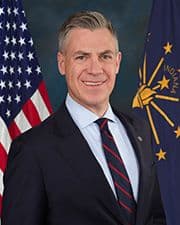
Jim Banks
Republican · IN · Senator
Votes with party: 77.0% (903 recorded votes)
Full profile: /officials/B001299
Source: Congress.gov · FEC
Cosponsors (2)
Members who have signed on to support this bill since introduction. Source: Congress.gov.
Latest Action
The most recent step in the bill's legislative path. Committee Activity below shows referrals and reports; the full action-by-action history including floor proceedings lives at Congress.gov →
Plain-English Summary
Countering Beijing’s Weaponization of Fentanyl Act or the CBW Fentanyl Act This bill establishes escalating sanctions to be applied to a foreign country when certain individuals associated with its government cause harm to another country through actions related to a program to produce, develop, or distribute chemical or biological weapons or specified molecules related to fentanyl production. Specifically, if the President determines that an official, employee, or agent of a foreign governmental entity (including a foreign government or an entity receiving significant material support from a foreign government) acts in a manner that the individual knew, or should have known, would harm another country through actions related to such a program, then the President must impose initial sanctions. Initial sanctions include prohibiting the procurement of goods or services from persons operating in that country's chemical or biological sectors. If the foreign governmental entity does not take corrective actions, the President must impose additional sanctions, which may include terminating certain foreign assistance to the country. If corrective actions are still not taken, the President must prohibit transactions that (1) are subject to U.S. jurisdiction; (2) involve a financial interest of the sanctioned country; and (3) are in foreign commerce or are financial institution transfers or payments. Within five years of enactment, the President may temporarily waive sanctions for vital national security interests. The President must terminate sanctions when certain conditions are met, including that the sanctionable conduct has been addressed.
Plain-English rewrite of the Congressional Research Service summary published on Congress.gov. Cached and reviewed.
Subjects
International Affairs
Full bill text is not yet cached locally.
Related legislation
Bills by the same sponsor or covering overlapping subjects.
- S5599River Ridge Land Conveyance ActReferred to Committee · 2026-09-29
- S5597Service Academy Testing Enhancement Act of 2026Referred to Committee · 2026-09-29
- S5596Military DEI Repeal Act of 2026Referred to Committee · 2026-09-29
- S5595Weapons Resupply, Stockpile, and Assurance ActReferred to Committee · 2026-09-29