A resolution expressing support for the recognition of April as "National Language Access Month".
Sponsor
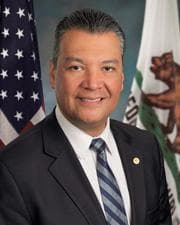
Full profile: /officials/P000145
Source: Congress.gov · FEC
Cosponsors (0)
Members who have signed on to support this bill since introduction. Source: Congress.gov.
No cosponsors on record. Bills can pass without cosponsors — this often means the sponsor introduced the bill alone, either because it's a messaging bill, a chairman's mark, or simply early in the legislative cycle.
Latest Action
The most recent step in the bill's legislative path. Committee Activity below shows referrals and reports; the full action-by-action history including floor proceedings lives at Congress.gov →
Referred to the Committee on Homeland Security and Governmental Affairs. (text: CR S2133-2134)
2026-04-29
Source: Congress.gov
Committee Activity
Currently in
- Senate Committee on Homeland Security and Governmental AffairsReferred To · 2026-04-29
Previously
- Homeland Security and Governmental Affairs CommitteeReferred To · 2026-04-29
Plain-English Summary
This resolution would officially recognize April as "National Language Access Month" to raise awareness about the importance of providing language services to people who don't speak English fluently. The recognition would highlight how language barriers affect immigrants, refugees, patients seeking medical care, and others trying to access government services and information. Supporting this observance aims to encourage organizations and agencies to improve their translation and interpretation services.
AI-assisted summary generated from the official bill metadata (title, subjects, actions) sourced from Congress.gov. Cached and reviewed. Always verify against the official text linked below.
Subjects
Full Bill Text
Verbatim text published on Congress.gov via GovInfo. Use Cmd+F / Ctrl+F to search within this excerpt.
[Congressional Bills 119th Congress] [From the U.S. Government Publishing Office] [S. Res. 699 Introduced in Senate (IS)] <DOC> 119th CONGRESS 2d Session S. RES. 699 Expressing support for the recognition of April as ``National Language Access Month''. _______________________________________________________________________ IN THE SENATE OF THE UNITED STATES April 29, 2026 Mr. Padilla submitted the following resolution; which was referred to the Committee on Homeland Security and Governmental Affairs _______________________________________________________________________ RESOLUTION Expressing support for the recognition of April as ``National Language Access Month''. Whereas over 71,000,000 individuals ages 5 and older in the United States speak a language other than English at home; Whereas over 25,700,000 individuals in the United States have limited English proficiency (LEP) and rely on translation and interpretation services to access vital public services and institutions; Whereas studies show that 47 percent of all immigrant adults in the United States have LEP; Whereas, according to a 2017-2021 Census Bureau estimate, there are at least 500 individual languages and language groups spoken in the United States; Whereas about 30 percent of Asian-American adults, 12 percent of Native Hawaiian and Pacific Islander adults, 32 percent of Hispanic adults, 3 percent of Black adults, and 1 percent of White adults reported having LEP; Whereas nearly 9 percent of the United States population are individuals with LEP, with some States and territories having even higher rates, including-- (1) 54 percent of residents in American Samoa; (2) 20 percent of residents in California; (3) 14 percent of residents in Texas; (4) 12 percent of residents in New York; (5) 12 percent of residents in Florida; and (6) 9 percent of residents in Puerto Rico; Whereas the term ``language access'' means the provision of culturally competent and effective language services to an individual with LEP designed to enhance that individual's access to, understanding of, or benefit from services, activities, and programs; Whereas uneven coverage and implementation of language access contribute to significant disparities for individuals seeking-- (1) employment services; (2) transportation services; (3) financial services; (4) health services; (5) housing services; (6) legal services; and (7) other services; Whereas 31 percent of immigrants with LEP report that language barriers interfere with their ability to access health care services; Whereas 29 percent of immigrants with LEP report that language barriers affect their ability to find or maintain employment; Whereas 25 percent of immigrants with LEP report difficulty applying for government financial assistance for food, housing, or health coverage; Whereas 22 percent of immigrants with LEP report that language barriers have made it difficult to report a crime or seek assistance from law enforcement; Whereas existing legislation protecting language access is integral to ensuring that all Americans can access federally funded programs and policies; Whereas title VI of the Civil Rights Act of 1964 (42 U.S.C. 2000d et seq.) prohibits recipients of Federal funding from discriminating based on national origin; Whereas the Food and Nutrition Act of 2008 (7 U.S.C. 2011 et seq.), originally the Food Stamp Act of 1964, requires that State agencies utilize bilingual personnel and appropriate printed materials when there are a large number of low-income households that speak a language other than English; Whereas the Robert T. Stafford Disaster Relief and Emergency Assistance Act (42 U.S.C. 5121 et seq.) requires the Federal Emergency Management Agency to account for the needs of people with LEP in disaster planning and prohibits discrimination on the basis of English proficiency when providing assistance; Whereas section 1557 of the Patient Protection and Affordable Care Act (42 U.S.C. 18116) prohibits discrimination based on nationality and requires language assistance in the 15 most common languages for health-related programs; Whereas section…
Show the remaining 233 wordsHide the remaining 233 words
203 of the Voting Rights Act of 1965 (52 U.S.C. 10503) requires certain counties and jurisdictions to provide bilingual voting assistance in communities with large numbers of language minorities and LEP citizens; Whereas, for nearly 25 years, both Republican and Democratic Presidents have affirmed the importance of language access through the implementation of Executive Order 13166, ``Improving Access to English Services for Persons with Limited English Proficiency'', which required Federal agencies and grantees to examine the services they provide and provide individuals with LEP ``meaningful access'' to agency services; Whereas the California Department of Education recognizes April as National Bilingual/Multilingual Learner Advocacy Month; Whereas many States and local governments, including the States of New York and Hawaii, recognize April as Language Access Month; and Whereas the purpose of Language Access Month is to increase awareness and celebrate the importance of language access to ensure equitable access to public services and programs for all Americans, including individuals with LEP: Now, therefore, be it Resolved, That the Senate-- (1) supports the recognition of ``National Language Access Month''; (2) affirms the importance of meaningful language access in ensuring equitable participation in Federal programs and services; (3) encourages Federal agencies, States, local governments, and community organizations to promote awareness of language access rights and resources; and (4) encourages the people of the United States to observe National Language Access Month with appropriate ceremonies, programs, and activities. <all>
Related legislation
Bills by the same sponsor or covering overlapping subjects.
- S5352Desalination Reauthorization ActReferred to Committee · 2026-09-30
- S5634SPELL ActReferred to Committee · 2026-09-30
- S5585BRIDGE Act of 2026Referred to Committee · 2026-09-29
- SRES919A resolution honoring the leadership of Lonnie G. Bunch III, Secretary of the Smithsonian Institution and recognizing his career as a public servant and the enduring value of the Smithsonian Institution to the people of the United States.Referred to Committee · 2026-09-29