A resolution expressing support for the designation of April 1, 2026, through April 30, 2026, as "Fair Chance Jobs Month".
Sponsor
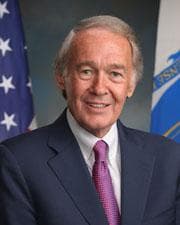
Full profile: /officials/M000133
Source: Congress.gov · FEC
Cosponsors (9)
Members who have signed on to support this bill since introduction. Source: Congress.gov.
- Alex Padilla (D-CA)Original· 2026-04-29
- Amy Klobuchar (D-MN)Original· 2026-04-29
- Cory A. Booker (D-NJ)Original· 2026-04-29
- Elizabeth Warren (D-MA)Original· 2026-04-29
- Mazie K. Hirono (D-HI)Original· 2026-04-29
- Peter Welch (D-VT)Original· 2026-04-29
- Richard J. Durbin (D-IL)Original· 2026-04-29
- Tammy Duckworth (D-IL)Original· 2026-04-29
- Tina Smith (D-MN)Original· 2026-04-29
Latest Action
The most recent step in the bill's legislative path. Committee Activity below shows referrals and reports; the full action-by-action history including floor proceedings lives at Congress.gov →
Referred to the Committee on Health, Education, Labor, and Pensions. (text: CR S2134)
2026-04-29
Source: Congress.gov
Committee Activity
Currently in
- Senate Committee on Health, Education, Labor, and PensionsReferred To · 2026-04-29
Previously
- Health, Education, Labor, and Pensions CommitteeReferred To · 2026-04-29
Plain-English Summary
This resolution expresses support for the designation of April 1, 2026, through April 30, 2026, as Fair Chance Jobs Month.
Plain-English rewrite of the Congressional Research Service summary published on Congress.gov. Cached and reviewed.
Subjects
Full Bill Text
Verbatim text published on Congress.gov via GovInfo. Use Cmd+F / Ctrl+F to search within this excerpt.
[Congressional Bills 119th Congress] [From the U.S. Government Publishing Office] [S. Res. 700 Introduced in Senate (IS)] <DOC> 119th CONGRESS 2d Session S. RES. 700 Expressing support for the designation of April 1, 2026, through April 30, 2026, as ``Fair Chance Jobs Month''. _______________________________________________________________________ IN THE SENATE OF THE UNITED STATES April 29, 2026 Mr. Markey (for himself, Ms. Klobuchar, Mr. Durbin, Ms. Duckworth, Mr. Padilla, Ms. Smith, Mr. Booker, Ms. Hirono, Ms. Warren, and Mr. Welch) submitted the following resolution; which was referred to the Committee on Health, Education, Labor, and Pensions _______________________________________________________________________ RESOLUTION Expressing support for the designation of April 1, 2026, through April 30, 2026, as ``Fair Chance Jobs Month''. Whereas, in the United States-- (1) nearly 80,000,000 people have a record of arrest or conviction; (2) an estimated 19,000,000 people have felony convictions; (3) nearly 13,000,000 people are charged each year with misdemeanor offenses; (4) more than 600,000 people are released each year from Federal and State prisons; (5) Black, Indigenous, and Latino people are 5, 4.2, and 2.4 times more likely than White people to be incarcerated, respectively, and also face higher rates of arrest; and (6) LGBTQ+ individuals are 3 times more likely to be incarcerated and also face higher rates of arrest; Whereas people who have been convicted of a crime and served their sentence continue to face consequences after release due to systemic biases and stigmas against formerly incarcerated individuals; Whereas recidivism rates in the United States are among the highest in the world, with almost 44 percent of people who are released returning to incarceration within 1 year; Whereas, in the United States, nearly 2/3 of the formerly incarcerated population is jobless at any given time; Whereas, in the United States, nearly 14,000 laws and regulations and 48,000 collateral consequences restrict formerly incarcerated individuals from getting professional licenses needed to work in some jobs; Whereas 20 States and the District of Columbia allow occupational licensing boards to categorically reject applicants with prior convictions; Whereas obstacles to employment, such as difficulty obtaining identification needed for employment, add undue burdens on returning citizens and formerly incarcerated individuals; Whereas formerly incarcerated individuals earn nearly $100 less per week than the average worker; Whereas fair-chance employers can leverage financial incentives, such as the work opportunity tax credit, to benefit from hiring formerly incarcerated individuals; Whereas employing returning citizens and formerly incarcerated individuals will result in a robust, vibrant, diverse, and resilient workforce; Whereas having jobs that pay living wages are conducive to health, provide opportunities for skillset development, provide opportunities for promotion, and provide benefits that will facilitate stable employment and reduce recidivism; Whereas returning citizens who have received vocational training while incarcerated are 28 percent more likely to obtain employment within 1 year of reentry into society than those lacking such training; and Whereas, in addition to employment insecurity, returning citizens and formerly incarcerated people face numerous other obstacles to reentry and societal reintegration, including-- (1) housing insecurity and homelessness rates that are 10 times higher than the general public; (2) near total restrictions in 12 States on access to temporary assistance for needy families established under part A of title IV of the Social Security Act (42 U.S.C. 601 et seq.) or the supplemental nutrition assistance program established under the Food and Nutrition Act of 2008 (7 U.S.C. 2011 et seq.); and (3) greater prevalence of chronic health conditions, lower quality and coverage of health insurance, and mortality rates that are 13 times higher than the general public: Now, therefore, be it Resolved, That the Senate-- (1) expresses support for the designation of…
Show the remaining 203 wordsHide the remaining 203 words
April 1, 2026, through April 30, 2026, as ``Fair Chance Jobs Month''; and (2) supports efforts to-- (A) ensure that people directly impacted by incarceration obtain stable and high-quality employment, housing, healthcare, and nutrition; (B) dismantle structural barriers to fair-chance hiring and employment, such as licensing restrictions, employer liability, and insurance restrictions; (C) expand workforce development programs for returning citizens, formerly incarcerated individuals, and others directly impacted by incarceration, including-- (i) pre-apprenticeship programs; (ii) registered apprenticeship programs; (iii) career coaching, resume building, technology literacy, and other skillset development programs; and (iv) programs that educate employers on best practices for, and the benefits of, fair- chance hiring; (D) match job providers with returning citizens and formerly incarcerated individuals seeking jobs; (E) support efforts from labor unions and worker organizations to engage returning citizens and formerly incarcerated individuals who are seeking jobs; (F) publicize work opportunities that are open to applicants with prior arrest or conviction records; and (G) foster greater collaboration and dialogue between Federal, State, and local government agencies, community-based organizations, advocacy groups, employers, labor unions, currently and formerly incarcerated individuals, and others directly impacted by incarceration to enhance fair-chance hiring and employment and help to heal communities impacted by mass incarceration. <all>
Related legislation
Bills by the same sponsor or covering overlapping subjects.
- S5567Civilian Climate Corps for Jobs and Justice ActReferred to Committee · 2026-09-24
- S5544Facial Recognition and Biometric Technology Moratorium Act of 2026Referred to Committee · 2026-09-24
- S5541Cybersecurity and AI Board of Investigations Act of 2026Referred to Committee · 2026-09-24
- S5524Workforce Opportunities for Communities in Recovery ActReferred to Committee · 2026-09-24