A resolution designating the week of April 20 through 26, 2026, as "National Dark Sky Week".
Sponsor
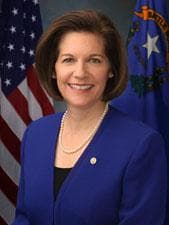
Full profile: /officials/C001113
Source: Congress.gov · FEC
Cosponsors (3)
Members who have signed on to support this bill since introduction. Source: Congress.gov.
Latest Action
The most recent step in the bill's legislative path. Committee Activity below shows referrals and reports; the full action-by-action history including floor proceedings lives at Congress.gov →
Submitted in the Senate, considered, and agreed to without amendment and with a preamble by Unanimous Consent. (consideration: CR S2109; text: CR S2134-2135)
2026-04-29
Source: Congress.gov
Plain-English Summary
The Senate has designated the week of April 20-26, 2026, as "National Dark Sky Week" to raise awareness about light pollution and the importance of protecting dark skies for astronomy, wildlife, and human health. During this week, communities and organizations are encouraged to promote efforts to reduce unnecessary outdoor lighting and educate the public about how artificial light affects stargazing, ecosystems, and sleep patterns. The designation recognizes that preserving access to natural darkness benefits everyone from amateur astronomers to nocturnal animals to ordinary people trying to see the stars.
AI-assisted summary generated from the official bill metadata (title, subjects, actions) sourced from Congress.gov. Cached and reviewed. Always verify against the official text linked below.
Subjects
Full Bill Text
Verbatim text published on Congress.gov via GovInfo. Use Cmd+F / Ctrl+F to search within this excerpt.
[Congressional Bills 119th Congress] [From the U.S. Government Publishing Office] [S. Res. 701 Agreed to Senate (ATS)] <DOC> 119th CONGRESS 2d Session S. RES. 701 Designating the week of April 20 through 26, 2026, as ``National Dark Sky Week''. _______________________________________________________________________ IN THE SENATE OF THE UNITED STATES April 29, 2026 Ms. Cortez Masto (for herself, Mr. Curtis, Ms. Rosen, and Mr. Kelly) submitted the following resolution; which was considered and agreed to _______________________________________________________________________ RESOLUTION Designating the week of April 20 through 26, 2026, as ``National Dark Sky Week''. Whereas the people of the United States are increasingly seeking opportunities for outdoor recreation, stargazing, and unique nighttime experiences; Whereas national parks, rural communities, and protected landscapes with dark skies attract visitors interested in stargazing, recreation, and nature tourism; Whereas the night sky has significantly impacted cultural traditions and human history; Whereas the ability to observe the stars, planets, and other celestial bodies is an important part of the shared natural heritage of all people and should be preserved for future generations; Whereas dark sky tourism provides economic opportunities for communities located near parks, observatories, and open landscapes; Whereas preserving dark skies supports scientific discovery, astronomic research, and educational opportunities for students and communities; Whereas astronomy education and public stargazing programs inspire interest in science, technology, engineering, and mathematics; Whereas artificial lighting can obscure visibility of the night sky and may limit opportunities for the people of the United States to observe stars, planets, and other celestial phenomena; Whereas excessive artificial light can disrupt wildlife behavior and ecosystems; Whereas many species rely on natural cycles of light and darkness to regulate biological process and ecosystem balance; Whereas reducing brightness at night can save energy, reduce consumption, and lower costs; Whereas artificial lighting has increased significantly in recent decades, contributing to light pollution across the United States; and Whereas efforts to reduce light pollution can be achieved through simple measures such as shielding lights, directing lighting downward, and limiting unnecessary illumination: Now, therefore, be it Resolved, That the Senate-- (1) designates the week of April 20 through 26, 2026, as ``National Dark Sky Week''; (2) encourages Federal agencies to coordinate among themselves to expand safe and informative dark skies opportunities to support local communities and all people of the United States; (3) encourages communities, educators, scientists, and local governments to raise awareness of the value of preserving dark skies; and (4) encourages individuals and organizations to adopt responsible outdoor lighting practices that protect the natural night sky. <all>
Related legislation
Bills by the same sponsor or covering overlapping subjects.
- S1574Tribal Access to Electronic Evidence ActPassed Senate · 2026-10-05
- S4406Next-Generation Geothermal Research and Development ActReferred to Committee · 2026-09-30
- S5681A bill to provide for the protection of the duties of the Inspector General of the Federal Housing Finance Agency.Referred to Committee · 2026-09-30
- S4166SECURE Grid ActReferred to Committee · 2026-09-30