HCONRES114Referred to Committee
Recognizing the significance of equal pay and the disparity in wages paid to men and to Black women.
Introduced
In Committee
3
Passed One Chamber4
Passed Both5
Signed into Law119th
Congress
2026-07-21
Introduced
75
Cosponsors
HCONRES
ⓘType
Sponsor
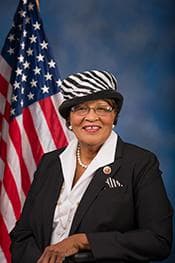
Alma S. Adams
Democrat · NC · Representative
Votes with party: 99.0% (630 recorded votes)
Full profile: /officials/A000370
Source: Congress.gov · FEC
Cosponsors (75)
Members who have signed on to support this bill since introduction. Source: Congress.gov.
- Adam Smith (D-WA-9)Original· 2026-07-21
- Al Green (D-TX-9)Original· 2026-07-21
- Alexandria Ocasio-Cortez (D-NY-14)Original· 2026-07-21
- Andrea Salinas (D-OR-6)Original· 2026-07-21
- André Carson (D-IN-7)Original· 2026-07-21
- April McClain Delaney (D-MD-6)Original· 2026-07-21
- Bennie G. Thompson (D-MS-2)Original· 2026-07-21
- Betty McCollum (D-MN-4)Original· 2026-07-21
- Bonnie Watson Coleman (D-NJ-12)Original· 2026-07-21
- Chellie Pingree (D-ME-1)Original· 2026-07-21
- Christian D. Menefee (D-TX-18)Original· 2026-07-21
- Danny K. Davis (D-IL-7)Original· 2026-07-21
- Debbie Wasserman Schultz (D-FL-25)Original· 2026-07-21
- Deborah K. Ross (D-NC-2)Original· 2026-07-21
- Dina Titus (D-NV-1)Original· 2026-07-21
- Dwight Evans (D-PA-3)Original· 2026-07-21
- Eleanor Holmes Norton (D-DC)Original· 2026-07-21
- Emanuel Cleaver (D-MO-5)Original· 2026-07-21
- Frederica S. Wilson (D-FL-24)Original· 2026-07-21
- Glenn Ivey (D-MD-4)Original· 2026-07-21
- Greg Landsman (D-OH-1)Original· 2026-07-21
- Gregory W. Meeks (D-NY-5)Original· 2026-07-21
- Gwen Moore (D-WI-4)Original· 2026-07-21
- Haley M. Stevens (D-MI-11)Original· 2026-07-21
- Hillary J. Scholten (D-MI-3)Original· 2026-07-21
- Ilhan Omar (D-MN-5)Original· 2026-07-21
- Jahana Hayes (D-CT-5)Original· 2026-07-21
- James R. Walkinshaw (D-VA-11)Original· 2026-07-21
- Janelle S. Bynum (D-OR-5)Original· 2026-07-21
- Janice D. Schakowsky (D-IL-9)Original· 2026-07-21
- Jennifer L. McClellan (D-VA-4)Original· 2026-07-21
- Jerrold Nadler (D-NY-12)Original· 2026-07-21
- Joe Neguse (D-CO-2)Original· 2026-07-21
- John Garamendi (D-CA-8)Original· 2026-07-21
- Jonathan L. Jackson (D-IL-1)Original· 2026-07-21
- Joyce Beatty (D-OH-3)Original· 2026-07-21
- Judy Chu (D-CA-28)Original· 2026-07-21
- Julia Brownley (D-CA-26)Original· 2026-07-21
- Julie Johnson (D-TX-32)Original· 2026-07-21
- Kathy Castor (D-FL-14)Original· 2026-07-21
- LaMonica McIver (D-NJ-10)Original· 2026-07-21
- Lateefah Simon (D-CA-12)Original· 2026-07-21
- Laura Friedman (D-CA-30)Original· 2026-07-21
- Lois Frankel (D-FL-22)Original· 2026-07-21
- Marilyn Strickland (D-WA-10)Original· 2026-07-21
- Mark DeSaulnier (D-CA-10)Original· 2026-07-21
- Mark Pocan (D-WI-2)Original· 2026-07-21
- Mark Takano (D-CA-39)Original· 2026-07-21
- Maxine Dexter (D-OR-3)Original· 2026-07-21
- Maxwell Frost (D-FL-10)Original· 2026-07-21
- Mike Quigley (D-IL-5)Original· 2026-07-21
- Mike Thompson (D-CA-4)Original· 2026-07-21
- Morgan McGarvey (D-KY-3)Original· 2026-07-21
- Nanette Diaz Barragán (D-CA-44)Original· 2026-07-21
- Nikki Budzinski (D-IL-13)Original· 2026-07-21
- Pramila Jayapal (D-WA-7)Original· 2026-07-21
- Rashida Tlaib (D-MI-12)Original· 2026-07-21
- Robin L. Kelly (D-IL-2)Original· 2026-07-21
- Rosa L. DeLauro (D-CT-3)Original· 2026-07-21
- Salud O. Carbajal (D-CA-24)Original· 2026-07-21
- Sarah Elfreth (D-MD-3)Original· 2026-07-21
- Seth Moulton (D-MA-6)Original· 2026-07-21
- Shomari Figures (D-AL-2)Original· 2026-07-21
- Shontel M. Brown (D-OH-11)Original· 2026-07-21
- Shri Thanedar (D-MI-13)Original· 2026-07-21
- Stephen F. Lynch (D-MA-8)Original· 2026-07-21
- Summer L. Lee (D-PA-12)Original· 2026-07-21
- Suzan K. DelBene (D-WA-1)Original· 2026-07-21
- Suzanne Bonamici (D-OR-1)Original· 2026-07-21
- Sydney Kamlager-Dove (D-CA-37)Original· 2026-07-21
- Teresa Leger Fernandez (D-NM-3)Original· 2026-07-21
- Valerie P. Foushee (D-NC-4)Original· 2026-07-21
- Wesley Bell (D-MO-1)Original· 2026-07-21
- Yassamin Ansari (D-AZ-3)Original· 2026-07-21
- Yvette D. Clarke (D-NY-9)Original· 2026-07-21
Latest Action
The most recent step in the bill's legislative path. Committee Activity below shows referrals and reports; the full action-by-action history including floor proceedings lives at Congress.gov →
Committee Activity
Currently in
- House Committee on Education and WorkforceReferred To · 2026-07-21
Plain-English Summary
This resolution acknowledges the wage gap between men and Black women in the workplace, highlighting that Black women typically earn significantly less than men doing similar work. The measure recognizes this pay disparity as a significant issue affecting Black women workers across various industries and job sectors. By bringing attention to this inequality, the resolution aims to underscore the importance of addressing wage discrimination and promoting equal pay practices.
AI-assisted summary generated from the official bill metadata (title, subjects, actions) sourced from Congress.gov. Cached and reviewed. Always verify against the official text linked below.
Full Bill Text
Verbatim text published on Congress.gov via GovInfo. Use Cmd+F / Ctrl+F to search within this excerpt.
[Congressional Bills 119th Congress] [From the U.S. Government Publishing Office] [H. Con. Res. 114 Introduced in House (IH)] <DOC> 119th CONGRESS 2d Session H. CON. RES. 114 Recognizing the significance of equal pay and the disparity in wages paid to men and to Black women. _______________________________________________________________________ IN THE HOUSE OF REPRESENTATIVES July 21, 2026 Ms. Adams (for herself, Mrs. Watson Coleman, Ms. Lois Frankel of Florida, Ms. Leger Fernandez, Mr. Figures, Ms. Norton, Ms. Barragan, Mr. Frost, Ms. Bonamici, Mrs. Foushee, Ms. Strickland, Mr. McGarvey, Mr. Quigley, Mr. Davis of Illinois, Ms. Castor of Florida, Mr. Ivey, Ms. Tlaib, Ms. Scholten, Ms. Kamlager-Dove, Mr. Thompson of California, Mr. Garamendi, Ms. Jayapal, Ms. Lee of Pennsylvania, Ms. Clarke of New York, Ms. Wilson of Florida, Ms. Brown, Mr. Neguse, Ms. McClellan, Ms. DelBene, Ms. McCollum, Mr. Lynch, Mr. Jackson of Illinois, Ms. Omar, Mr. Meeks, Ms. Moore of Wisconsin, Ms. Brownley, Ms. Schakowsky, Ms. Simon, Mr. Carbajal, Mr. Landsman, Ms. Wasserman Schultz, Mr. DeSaulnier, Ms. Budzinski, Mr. Carson, Ms. DeLauro, Ms. Ansari, Ms. Elfreth, Mr. Moulton, Ms. Salinas, Ms. Ross, Ms. Ocasio-Cortez, Ms. Friedman, Ms. Pingree, Ms. Bynum, Ms. Chu, Mr. Bell, Mr. Smith of Washington, Mr. Walkinshaw, Ms. Titus, Mr. Nadler, Mr. Pocan, Mr. Thompson of Mississippi, Mrs. Hayes, Mrs. McIver, Mr. Thanedar, Mr. Menefee, Mrs. McClain Delaney, Ms. Johnson of Texas, Mr. Green of Texas, Mrs. Beatty, Mr. Cleaver, Ms. Kelly of Illinois, Ms. Dexter, Mr. Takano, Mr. Evans of Pennsylvania, and Ms. Stevens) submitted the following concurrent resolution; which was referred to the Committee on Education and Workforce _______________________________________________________________________ CONCURRENT RESOLUTION Recognizing the significance of equal pay and the disparity in wages paid to men and to Black women. Whereas July 21, 2026, is Black Women's Equal Pay Day, a day of observance of the wage gap between working Black women and working white, non-Hispanic men; Whereas section 6(d) of the Fair Labor Standards Act of 1938 (29 U.S.C. 206(d)) (commonly known as the ``Equal Pay Act of 1963'') prohibits discrimination in compensation for equal work on the basis of sex; Whereas title VII of the Civil Rights Act of 1964 (42 U.S.C. 2000e et seq.) prohibits discrimination in compensation because of race, color, religion, national origin, or sex; Whereas, despite the passage of the Equal Pay Act of 1963 6 decades ago, which requires that men and women in the same workplace be given equal pay for equal work, data from the Bureau of the Census show that Black women working full time and year round are paid 65 cents for every dollar paid to white, non-Hispanic men; Whereas, when part-time and part-year workers are included in the comparison, Black women are paid 63 cents for every dollar paid to white, non- Hispanic men; Whereas, if the current trends continue, on average, Black women will have to wait nearly 200 years to achieve equal pay; Whereas the median annual pay for a Black woman in the United States working full time, year round, is $51,660, which means that, if the current wage gap were to continue, the average Black woman would lose nearly $1,113,600 in potential earnings because of the wage gap over the course of a 40-year career; Whereas lost wages mean Black women have less money to support themselves and their families, to save and invest for the future, and to spend on goods and services, causing businesses and the economy to suffer as a result; Whereas the median earnings of Black women are less than the median earnings of white, non-Hispanic men at every level of academic achievement, and in leadership and professional positions;…
Show the remaining 623 wordsHide the remaining 623 words
Whereas Black women with bachelor's and master's degrees experience a larger wage gap in comparison to white, non-Hispanic men than Black women with a high school diploma; Whereas, in the United States, more than 69 percent of Black mothers are the sole or primary breadwinners for their families, compared to slightly more than 33 percent of white, non-Hispanic mothers; Whereas the lack of access to affordable, quality childcare, support for caregivers caring for elderly or disabled family members, paid family and medical leave, paid sick leave, and other family-friendly workplace policies contributes to the wage gap by forcing many Black women to choose between their paycheck or job and getting quality care for themselves or their family members; Whereas Black women's labor force participation has been disproportionately impacted by the attacks on diversity, equity, and inclusion programs in the private sector and Federal Government; Whereas, if the wage gap were eliminated, a Black woman working full time, year round, would have enough money for nearly 2 and \1/2\ additional years of tuition and fees for a 4-year public university, the full cost of tuition and fees for a public 2-year community college, nearly 16 additional months of premiums for employer-based family health insurance coverage with employer contributions, 34 weeks of food for a family of 4, 14 additional months of home ownership costs, including mortgage payments, real estate taxes, insurance, utilities, and fuel costs, 19 additional months of rental costs, including rent payments, utilities, and fuel, 2 years of center-based child care for 1 child, or enough money to pay off the Federal student loan debt of an average borrower in under 2 years; Whereas Black women face dual, compounding discrimination based upon both their race and gender; Whereas at least 37 percent of women have been sexually harassed at the workplace, and over 78 percent of sexual harassment charges filed with the Equal Employment Opportunity Commission are filed by women, yet the prevalence of sexual harassment is likely much higher, as research has found that only a small number of women who experience harassment formally report incidents for reasons including fear of retaliation; Whereas individuals who are targets of harassment are 6.5 times more likely than individuals who are not targets of harassment to change jobs or pass up opportunities for advancement, contributing to the gender wage gap; Whereas Black women are the most likely of all racial and ethnic groups to have filed a sexual harassment charge; Whereas over 6 in 10 workers paid the minimum wage or less are women, and there is an over-representation of women of color in low-wage and tipped occupations; Whereas nearly \1/2\ of private sector workers report that they were either discouraged or prohibited by their employers from discussing wage and salary information, which can hide pay discrimination and prevent remedies; Whereas the pay gap faced by Black women is part of a wider set of disparities faced by Black women in home ownership, unemployment, poverty, access to childcare, and the ability to accumulate wealth; Whereas the gender wage gap for Black women has narrowed by only 4 cents in the last 2 decades; Whereas true pay equity requires a multifaceted strategy that addresses the gendered and racial injustices that Black women face daily; and Whereas many national organizations have designated July 21, 2026, as Black Women's Equal Pay Day to recognize the persistent and detrimental wage gap Black women face: Now, therefore, be it Resolved by the House of Representatives (the Senate concurring), That Congress-- (1) recognizes the disparity in wages paid to Black women and its impact on women, families, and the United States; and (2) reaffirms its support for ensuring equal pay for equal work and narrowing the gender wage gap. <all>
Related legislation
Bills by the same sponsor or covering overlapping subjects.
- HR9669FACT Pilot Program ActReferred to Committee · 2026-07-14
- HR9591Extreme Temperatures Injustice in Prisons Act of 2026Referred to Committee · 2026-07-06
- HR9571Living Wage for Federal Contractors ActReferred to Committee · 2026-07-02
- HR8211Army Security Agency Monument ActReferred to Committee · 2026-04-27