HR10274Referred to Committee
Partnerships for Better Health Act
Introduced
In Committee
3
Passed One Chamber4
Passed Both5
Signed into Law119th
Congress
2026-09-03
Introduced
0
Cosponsors
HR
ⓘType
Sponsor
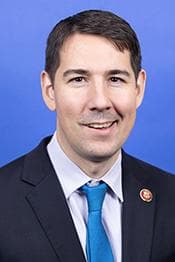
Josh Harder
Democrat · CA · Representative
Votes with party: 94.2% (651 recorded votes)
Full profile: /officials/H001090
Source: Congress.gov · FEC
Cosponsors (0)
Members who have signed on to support this bill since introduction. Source: Congress.gov.
No cosponsors on record. Bills can pass without cosponsors — this often means the sponsor introduced the bill alone, either because it's a messaging bill, a chairman's mark, or simply early in the legislative cycle.
Latest Action
The most recent step in the bill's legislative path. Committee Activity below shows referrals and reports; the full action-by-action history including floor proceedings lives at Congress.gov →
Referred to the Committee on Energy and Commerce, and in addition to the Committee on Agriculture, for a period to be subsequently determined by the Speaker, in each case for consideration of such provisions as fall within the jurisdiction of the committee concerned.
2026-09-03
Source: Congress.gov
Committee Activity
Currently in
- House Committee on AgricultureReferred To · 2026-09-03
- House Committee on Energy and CommerceReferred To · 2026-09-03
Plain-English Summary
Plain-English summary pending. Introduced on 2026-09-03. Check back soon — summaries are generated as bills progress through Congress.
Subjects
Health
Full Bill Text
Verbatim text published on Congress.gov via GovInfo. Use Cmd+F / Ctrl+F to search within this excerpt.
[Congressional Bills 119th Congress] [From the U.S. Government Publishing Office] [H.R. 10274 Introduced in House (IH)] <DOC> 119th CONGRESS 2d Session H. R. 10274 To expand access to integrated, community-driven health and nutrition services for underserved populations with high chronic disease prevalence, through coordinated local partnerships, measurable outcomes, and sustainable delivery models, and for other purposes. _______________________________________________________________________ IN THE HOUSE OF REPRESENTATIVES September 3, 2026 Mr. Harder of California introduced the following bill; which was referred to the Committee on Energy and Commerce, and in addition to the Committee on Agriculture, for a period to be subsequently determined by the Speaker, in each case for consideration of such provisions as fall within the jurisdiction of the committee concerned _______________________________________________________________________ A BILL To expand access to integrated, community-driven health and nutrition services for underserved populations with high chronic disease prevalence, through coordinated local partnerships, measurable outcomes, and sustainable delivery models, and for other purposes. Be it enacted by the Senate and House of Representatives of the United States of America in Congress assembled, SECTION 1. SHORT TITLE. This Act may be cited as the ``Partnerships for Better Health Act''. SEC. 2. COMMUNITY HEALTH PARTNERSHIP GRANTS. (a) In General.--The Secretary of Health and Human Services, in consultation with the Secretary of Agriculture, shall establish a program under which the Secretary concerned will award grants to lead eligible entities to carry out activities that support integrated chronic disease prevention, management, and social support. (b) Application.--A lead eligible entity seeking a grant under this section shall submit an application at such time and in such manner, as the Secretary concerned may require. Such application shall include-- (1) a community needs assessment showing high chronic disease prevalence; (2) a care integration plan linking health and nutrition; (3) a measurable outcomes framework for each year of the grant; and (4) such other information as the Secretary concerned may require. (c) Priority.--In awarding grants under this section, the Secretary concerned shall give priority to applicants serving communities (as determined by the Secretary concerned) that-- (1) have a high prevalence of chronic disease; (2) have high food insecurity; (3) are located in a health professional shortage area with a designation in effect under section 332 of the Public Health Service Act (42 U.S.C. 254e); (4) are medically underserved communities (as defined in section 799B of the Public Health Service Act (42 U.S.C. 295p)); (5) are located in a rural area (as defined in section 1886(d)(2)(D) of the Social Security Act (42 U.S.C. 1395ww)); or (6) are located in an area of persistent poverty (as defined in section 6702 of title 49, United States Code). (d) Use of Funds.--A lead eligible entity that receives a grant under this section (and any member of a local coalition on whose behalf the application under this section is submitted) may use grant funds to-- (1) provide for integrated care delivery through-- (A) the provision of care coordination across clinical, nutrition, and social services; (B) community health workers or patient navigators; (C) providing for referral systems between programs; or (D) transportation services; (2) provide for nutrition and chronic disease education and self-management support through-- (A) peer support and group education sessions; or (B) evidence-based, culturally and linguistically appropriate education materials delivered by a certified diabetes educator; community health worker, or trained peer educators using culturally appropriate printed and digital material; (3) establish or expand a Food Is Medicine program; (4) establish or upgrade data infrastructure and conduct evaluations of outcomes, including through-- (A) upgrades to data collection systems; (B) outcomes tracking; (C) coalition collaboration data; or (D) program evaluation and reporting; and (5)…
Show the remaining 882 wordsHide the remaining 882 words
carry out outreach and enrollment efforts, such as identifying eligible participants in services provided through such a grant and increasing community engagement and trust building with the community to be served by the lead eligible entity. (e) Conditions.--As a condition on the receipt of a grant under this section, the lead eligible entity shall agree-- (1) to exclusively use evidence-based or evidence informed models in providing services described in subsection (d); (2) to serve populations whose family income does not exceed 200 percent of the poverty line (as defined in section 673(2) of the Community Services Block Grant Act (42 U.S.C. 9902(2))) for a family of the size involved, or otherwise medically underserved; and (3) to ensure that each member of the local coalition involved-- (A) maintains partnership agreements among the coalition for the duration of the period of the grant; and (B) participates in any Federal evaluations related to grants made under this section. (f) Supplement, Not Supplant.--Funds made available under this section shall be used to supplement, and not supplant, non-Federal funds that would otherwise be used for activities authorized under this section. (g) Term.--The term of a grant awarded under this section shall not exceed 3 years. A grant may be renewed for an additional 2-year period, based on performance. (h) Reporting.-- (1) In general.--Beginning not later than 6 months after the date on which a lead eligible entity receives a grant under this section, and every year thereafter, a lead eligible entity that receives a grant under this section shall submit to the Secretary concerned a report on-- (A) the outcomes achieved by the program under this section; and (B) the progress made with respect to the design and implementation of the program. (2) Contents.--The report under subsection (a) shall include-- (A) the demographics of participants in programs funded through the grant; (B) the services delivered by such programs; (C) the lessons learned from such programs and barriers to access to services provided by such programs; and (D) the health, social and access, and utilization outcomes of such programs specified in paragraph (3). (3) Outcomes described.--The outcomes described in this paragraph are the following: (A) With respect to health outcomes, whether participants in programs funded through the grant had experienced a reduction in-- (i) HbA1c levels; (ii) blood pressure; or (iii) weight or body mass index (BMI). (B) With respect to social and access outcomes, whether such participants experienced-- (i) a change in food security status; (ii) continuity of care; (iii) increased engagement and retention in programs funded through the grant; or (iv) a change in health behavior and dietary habits. (C) With respect to utilization outcomes, whether within the area served by the entity receiving the grant-- (i) had fewer emergency department visits related to chronic diseases; or (ii) had fewer hospitalizations related to chronic diseases. (i) Definitions.--In this section: (1) Food is medicine program.--The term ``Food is Medicine program'' means a structured intervention in which a healthcare provider prescribes or refers patients to receive, via home delivery, medically appropriate food, nutrition education, and related support as part of a treatment or prevention plan for diet-related disease. (2) Lead eligible entity.--The term ``lead eligible entity'' means the nonprofit or public entity submitting an application for a grant under this section on behalf of a local coalition, that-- (A) has demonstrated-- (i) experience serving underserved or high- risk populations; and (ii) capacity to manage Federal grant funds; (B) has in effect on the date on which the application is submitted, one or more formal agreements with a coalition partner; and (C) is one of the following: (i) A Federally qualified health center (as defined in section 1861(aa) of the Social Security Act (42 U.S.C. 1395x(aa))). (ii) A community health center receiving assistance under section 330 of the Public Health Service Act (42 U.S.C. 254b). (iii) A nonprofit hospital or health system. (iv) A nonprofit organization with demonstrated healthcare expertise. (v) A food bank. (vi) A nonprofit organization with demonstrated nutrition expertise. (3) Local coalition.--The term ``local coalition'' includes-- (A) A clinical partner, such as-- (i) a Federally qualified health center or rural health clinic (as such terms are defined in section 1861(aa) of the Social Security Act (42 U.S.C. 1395x(aa))); (ii) a community health center receiving assistance under section 330 of the Public Health Service Act (42 U.S.C. 254b); or (iii) a nonprofit hospital. (B) A food and nutrition partner, such as a food bank, food pantry network, or nonprofit food provider with capacity to source and deliver medically tailored or disease appropriate foods. (C) A public health or government partner, such as-- (i) a local or State public health department; or (ii) Tribal health authority, where applicable. (D) A community-based organization, including-- (i) a faith-based organization; (ii) a community action agency; (iii) a social service nonprofit; and (iv) an educational institution. (4) Secretary concerned.--The term ``Secretary concerned'' means-- (A) the Secretary of Health and Human Services in the case of grants awarded to an entity specified in clauses (i) through (iv) of paragraph (2)(C); and (B) the Secretary of Agriculture in the case of grants awarded to an entity specified in clauses (v) and (vi) of paragraph (2)(C). (j) Authorization of Appropriations.--There are authorized to be appropriated $15,000,000 for each of fiscal years 2027 through 2031. <all>
Related legislation
Bills by the same sponsor or covering overlapping subjects.
- HR10156Better Jobs through Evidence and Innovation ActReferred to Committee · 2026-08-27
- HR10124Mail Theft and Postal Key Crime Prevention Act of 2026Referred to Committee · 2026-08-20
- HR9406To amend title 38, United States Code, to eliminate the cap on the number of waivers to certain pay limitations that the Secretary of Veterans Affairs may issue for critical health care personnel of the Department of Veterans Affairs.Referred to Committee · 2026-07-06
- HR9243Wildfire Smoke Emergency Declaration Act of 2026Referred to Committee · 2026-06-10