Good Energy Jobs Act of 2026
Sponsor
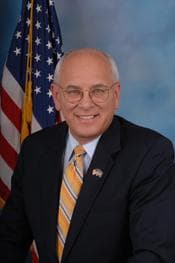
Full profile: /officials/T000469
Source: Congress.gov · FEC
Cosponsors (1)
Members who have signed on to support this bill since introduction. Source: Congress.gov.
Latest Action
The most recent step in the bill's legislative path. Committee Activity below shows referrals and reports; the full action-by-action history including floor proceedings lives at Congress.gov →
Referred to the Committee on Energy and Commerce, and in addition to the Committee on Science, Space, and Technology, for a period to be subsequently determined by the Speaker, in each case for consideration of such provisions as fall within the jurisdiction of the committee concerned.
2026-09-15
Source: Congress.gov
Committee Activity
Currently in
- House Committee on Science, Space, and TechnologyReferred To · 2026-09-15
- House Committee on Energy and CommerceReferred To · 2026-09-15
Plain-English Summary
Plain-English summary pending. Introduced on 2026-09-15. Check back soon — summaries are generated as bills progress through Congress.
Full Bill Text
Verbatim text published on Congress.gov via GovInfo. Use Cmd+F / Ctrl+F to search within this excerpt.
[Congressional Bills 119th Congress] [From the U.S. Government Publishing Office] [H.R. 10402 Introduced in House (IH)] <DOC> 119th CONGRESS 2d Session H. R. 10402 To amend the Department of Energy Organization Act to require financial assistance provided by the Department of Energy to promote high labor standards, community benefits, domestic manufacturing, and investments in small and disadvantaged communities, and for other purposes. _______________________________________________________________________ IN THE HOUSE OF REPRESENTATIVES September 15, 2026 Mr. Tonko (for himself and Ms. Budzinski) introduced the following bill; which was referred to the Committee on Energy and Commerce, and in addition to the Committee on Science, Space, and Technology, for a period to be subsequently determined by the Speaker, in each case for consideration of such provisions as fall within the jurisdiction of the committee concerned _______________________________________________________________________ A BILL To amend the Department of Energy Organization Act to require financial assistance provided by the Department of Energy to promote high labor standards, community benefits, domestic manufacturing, and investments in small and disadvantaged communities, and for other purposes. Be it enacted by the Senate and House of Representatives of the United States of America in Congress assembled, SECTION 1. SHORT TITLE. This Act may be cited as the ``Good Energy Jobs Act of 2026''. SEC. 2. GOOD ENERGY JOBS. (a) Department of Energy Organization Act.--Part C of title VI of the Department of Energy Organization Act (42 U.S.C. 7251 et seq.) is amended by adding at the end the following: ``SEC. 664. PREVAILING WAGES AND APPRENTICESHIPS. ``(a) Prevailing Wages.-- ``(1) In general.--The Secretary shall require that all laborers and mechanics employed by contractors or subcontractors in the performance of construction, alteration, maintenance, or repair work assisted, in whole or in part, by financial assistance, including a grant, loan, loan guarantee, cooperative agreement, or prize competitions, for covered projects provided by the Department shall be paid wages at rates not less than those prevailing on similar construction in the locality as determined by the Secretary of Labor in accordance with subchapter IV of chapter 31 of title 40, United States Code. With respect to the labor standards in this section, the Secretary of Labor shall have the authority and functions set forth in Reorganization Plan Numbered 14 of 1950 (64 Stat. 1267; 5 U.S.C. App.) and section 3145 of title 40, United States Code. ``(2) Flexibility.--The Secretary of Labor and the Secretary may modify the payroll certification requirements of part 3 of title 29, Code of Federal Regulations (or successor regulations), for an entity that receives financial assistance described in paragraph (1) if such entity is a party to a collective bargaining agreement that requires a payroll schedule different than a schedule otherwise required under part 3 of title 29, Code of Federal Regulations, to better align the timing of payroll certification reporting and payroll schedules. ``(b) Apprenticeship Utilization.--The Secretary shall require, as a term or condition of receiving financial assistance, including a grant, loan, loan guarantee, cooperative agreement, or prize competitions, for a covered project provided by the Department, that-- ``(1) not less than 15 percent of the total labor hours of such project are performed by individuals participating in a registered apprenticeship program, as defined in section 3131(e)(3)(b) of the Internal Revenue Code of 1986; and ``(2) the entity receiving the financial assistance adheres to apprentice-to-journey worker ratio requirements as determined by the Secretary and in compliance with Federal and State laws. ``(c) Noncompliance.--The Secretary shall regularly review whether entities that receive financial assistance for covered projects provided by the Department comply with the requirements established pursuant to subsections (a) and (b). In the case of…
Show the remaining 3,195 wordsHide the remaining 3,195 words
an entity determined by the Secretary to have failed to comply with any of such requirements, the Secretary shall implement a corrective action, which may include withholding, recapturing, or terminating the financial assistance provided by the Department to such entity for the covered project. The Secretary shall consider an entity's failure to comply with such requirements when evaluating future applications by such entity for financial assistance, including by flagging such entity for heightened compliance review. ``(d) Public Reporting.--The Secretary shall annually publish aggregate data on wage compliance, apprenticeship utilization, and enforcement actions, including the names of noncompliant entities, on a publicly accessible website. ``(e) Definition of Covered Project.--In this section, the term `covered project' means any construction, alteration, maintenance, or repair project. ``SEC. 665. LABOR NEUTRALITY. ``(a) In General.--The Secretary shall require any entity receiving financial assistance, including a grant, loan, loan guarantee, cooperative agreement, or prize competitions, provided by the Department to make a good-faith certification to the Secretary that such entity shall remain neutral, by taking no position for or against, with respect to the exercise of employees and labor organizations of the right to organize and bargain in accordance with section 7 the National Labor Relations Act (29 U.S.C. 157) for the term of such assistance, including any construction, operations, or maintenance assisted, in whole or in part, by such assistance. ``(b) Coverage of Contractors and Subcontractors.--The labor neutrality requirements established under subsection (a) shall apply to all contractors and subcontractors engaged in activities assisted, in whole or in part, by financial assistance provided by the Department. Each such contractor and subcontractor shall make a good-faith certification of neutrality to the Secretary, and each entity receiving such financial assistance shall be responsible for ensuring compliance throughout the contracting chain. ``(c) Noncompliance.--The Secretary shall regularly review whether entities that receive financial assistance provided by the Department comply with the requirement established pursuant to subsection (a). In the case of an entity determined by the Secretary to have failed to comply with such requirements, the Secretary shall implement a corrective action, which may include withholding, recapturing, or terminating the financial assistance provided by the Department to such entity. The Secretary shall consider an entity's failure to comply with such requirements when evaluating future applications by such entity for financial assistance, including by flagging such entity for heightened compliance review. ``(d) Public Reporting.--The Secretary shall publish each certification made to the Secretary by an entity under subsection (a) on a publicly accessible website. ``SEC. 666. PROJECT LABOR AGREEMENTS. ``(a) In General.--The Secretary shall require each contractor and subcontractor engaged in the construction, alteration, maintenance, or repair of a Department facility costing more than $1,000,000, including contractor-operated National Laboratory and National Nuclear Security Administration facilities, commencing such construction, alteration, maintenance, or repair after the date of enactment of this section, to negotiate or become a party to a project labor agreement. ``(b) Local Hire and Targeted Hire Goals.--The Secretary shall seek to ensure that project labor agreements entered into pursuant to this section include goals, to the extent permitted by law, for local hire and the participation of women, people of color, veterans, justice- involved individuals, and other underrepresented workers. ``(c) Apprenticeship Utilization.--The Secretary shall seek to ensure that project labor agreements entered into pursuant to this section include provisions to employ individuals participating in registered apprenticeship programs, as defined in section 3131(e)(3)(b) of the Internal Revenue Code of 1986, and maintain compliance with Federal- or State-approved apprentice-to-journey worker ratios. ``(d) Noncompliance.--The Secretary shall regularly review whether contractors and subcontractors engaged in the construction, alteration, maintenance, or repair of a Department facility costing more than $1,000,000 comply with the requirement established pursuant to subsection (a). In the case of a contractor or subcontractor determined by the Secretary to have failed to comply with such requirement, the Secretary shall implement a corrective action, which may include withholding, recapturing, or terminating the financial assistance provided by the Department to the contractor or subcontractor. The Secretary shall consider a contractor's or subcontractor's failure to comply with such requirement when evaluating future applications by such contractor or subcontractor for financial assistance, including by flagging such contractor or subcontractor for heightened compliance review. ``(e) Definition of Project Labor Agreement.--In this section, the term `project labor agreement' means a pre-hire collective bargaining agreement with one or more labor organizations, as defined in section 2 of the National Labor Relations Act (29 U.S.C. 152), of which building and construction employees are members, that establishes the terms and conditions of employment for a specific project and is an agreement described in section 8(f) of the National Labor Relations Act (29 U.S.C. 158(f)). ``SEC. 667. COMMUNITY BENEFITS PLANS AND ASSOCIATED AGREEMENTS. ``(a) In General.--The Secretary shall require any entity applying for financial assistance, including a grant, loan, loan guarantee, cooperative agreement, or prize competitions, for a covered project provided by the Department to include a community benefits plan in the application for such financial assistance to ensure broadly shared prosperity resulting from such assistance. The Secretary shall consider the quality of, and specific and measurable commitments contained in, such plan in the evaluation and selection of applications to receive such financial assistance. Such plan shall be informed by a community needs assessment, as described in subsection (b). ``(b) Community Needs Assessment.--A community needs assessment required under subsection (a) shall-- ``(1) identify the communities and populations likely to be affected by the proposed use of the financial assistance for which the entity is applying, including disadvantaged, low- income, and underrepresented workers and residents; ``(2) assess existing workforce, environmental, public health, and other infrastructure conditions in the affected area, using publicly available data (to the extent possible), including job quality conditions, wage levels, worker demographics, barriers to employment, and the availability of support services, which may include child care and transportation services; ``(3) identify community priorities, which may include job quality, local hiring, worker training and advancement opportunities, environmental health, pollution reduction, and energy burden reduction; ``(4) describe the community engagement process used to develop the assessment; and ``(5) identify the measurable benefits sought by community stakeholders and the potential impacts of the proposed use of the financial assistance for which the entity is applying, including impacts on job quality, worker training, and worker retention. ``(c) Community Benefits Plan Contents.--A community benefits plan required under subsection (a) shall-- ``(1) demonstrate how the entity applying for the financial assistance will conduct meaningful documented engagement with and ensure the participation of, including by negotiating to enter into a workforce or community benefits agreement described in subsection (d), an inclusive and representative coalition of local stakeholders that would be affected by the proposed use of the financial assistance, such as labor organizations, community-based organizations, public interest groups, academic institutions, local governments, and, as applicable, Tribal governments; ``(2) demonstrate how the entity applying for the financial assistance has developed and will implement such plan in an accessible and transparent manner; ``(3) demonstrate how the entity applying for the financial assistance will address, as applicable, how the entity's proposed use of the financial assistance will address concerns identified by the community, mitigate harms, and ensure meaningful benefits accrue to disadvantaged communities to advance the goals of the small and disadvantaged communities initiative carried out under section 670, including identification of the specific populations within the affected community that qualify as disadvantaged and a description of the measurable benefits the project will provide to such populations; ``(4) demonstrate how the entity applying for the financial assistance will address other community concerns, such as infrastructure access and adequacy, pollution mitigation, and other concerns that may be related to the proposed use of the financial assistance; and ``(5) contain a plan to promote job quality and access, which shall-- ``(A) demonstrate how the entity applying for financial assistance will use such financial assistance to support, create, or retain high-quality jobs, including jobs that provide wages above prevailing wage rates where feasible, are sufficient to meet regionally adjusted living standards, and provide employer- provided healthcare, retirement benefits, and paid leave, while supporting workforce development, reduced barriers to employment, and safe and healthy workplaces; ``(B) demonstrate how the entity applying for financial assistance will ensure disadvantaged and underrepresented workers have access to high-quality jobs and economic opportunities generated by the entity's proposed use of such financial assistance; ``(C) describe how the proposed use of the financial assistance will avoid worker displacement and ensure retention of existing workers through retraining and upskilling where feasible and consistent with the proposed use of the financial assistance; and ``(D) describe how the entity applying for financial assistance will promote positive labor- management relations, which may include adoption, as appropriate, of project labor agreements, community benefits agreements, collective bargaining agreements, agreements intended to ensure the uninterrupted delivery of services, agreements designed to facilitate first collective bargaining agreements, and voluntary union recognition. ``(d) Workforce and Community Benefits Agreements.--A community benefits plan required under subsection (a) should seek to result in one or more legally enforceable workforce or community agreements consistent with the needs of the relevant workforce and community (which may include a community benefits agreement, a community workforce agreement, a project labor agreement, a collective bargaining agreement, or any other similar contractual agreement) negotiated between the entity and an inclusive and representative coalition of relevant labor organizations, community-based organizations, public interest groups, local governments, and, as applicable, Tribal governments to cover any construction, operations, and maintenance activities associated with a covered project that is subject to an application for financial assistance. ``(e) Transparency.-- ``(1) In general.--The Secretary shall require the public disclosure of detailed summaries of community benefits plans and associated agreements, excluding project labor agreements, developed pursuant to this section. Such disclosure shall include a summary of the details of any such plan and associated agreement, a list of the parties to any such associated agreement, and a description of organizations consulted in the development of such plan and associated agreement, while allowing for the protection of confidential business information, as determined appropriate by the Secretary. The Secretary shall maintain and regularly update a public dashboard summarizing-- ``(A) the commitments made by entities in community benefits plans and associated agreements developed pursuant to this section; and ``(B) the progress of achieving such commitments. ``(2) Periodic reporting on progress.--The Secretary shall require entities that receive financial assistance described in subsection (a) to periodically report on progress made towards fulfilling the commitments included in any community benefits plans and associated agreements developed pursuant to this section. ``(f) Noncompliance.--The Secretary shall regularly review whether entities that receive financial assistance for covered projects provided by the Department comply with the requirements of this section and fulfill the commitments included in community benefits plans and associated agreements developed pursuant to this section. In the case of an entity determined by the Secretary to have failed to comply with any such requirements or to fulfill any such commitments, the Secretary shall implement a corrective action, which may include withholding, recapturing, or terminating the financial assistance provided by the Department to such entity. The Secretary shall consider an entity's failure to comply with any such requirements or to fulfill any such commitments when evaluating future applications by such entity for financial assistance, including by flagging such entity for heightened compliance review. ``(g) Definition of Covered Project.--In this section, the term `covered project' means any construction, alteration, maintenance, or repair project. ``SEC. 668. COMMUNITY BENEFITS AND JOB QUALITY ADVISORY GROUP. ``Not later than one year after the enactment of this section, the Secretary shall establish an advisory group consisting of representatives of labor organizations, community-based organizations (including at least one representative from a union working in construction and at least one representative from a union working in manufacturing), public interest groups, local governments, Tribal governments, academia, and other experts as determined appropriate by the Secretary, to develop recommendations and best practices on the development, implementation, and evaluation of community benefit plans and associated agreements (excluding project labor agreements), and community needs assessments. Such recommendations and best practices shall support the development of metrics to assess the successfulness of such plans, assessments, and agreements, and methods to support transparency and reporting on key metrics. ``SEC. 669. DOMESTIC MANUFACTURING. ``(a) In General.--The Secretary shall promote the commercialization and public availability of inventions made in the United States by United States industry and labor. ``(b) Enhancing United States Competitiveness.--The Secretary shall require that an entity applying for financial assistance, including a grant, loan, loan guarantee, cooperative agreement, or prize competitions, provided by the Department to carry out research, development, or demonstration shall-- ``(1) commit that any products embodying the subject of, or produced through, such research, development, or demonstration will, to the best ability of such entity, be manufactured substantially in the United States; and ``(2) if the entity intends to manufacture any such products, submit to the Secretary a domestic manufacturing plan regarding such products. ``(c) Labor Standards.--The Secretary shall give preference to applications for financial assistance described in subsection (b) that include domestic manufacturing plans that include a commitment to manufacture covered products only using workers covered by collective bargaining agreements, commitments to utilize registered apprenticeship programs (as defined in section 3131(e)(3)(b) of the Internal Revenue Code of 1986) or joint labor-management training programs with a demonstrated capacity to successfully train workers in manufacturing, and other commitments to meet or exceed industry-leading labor standards. The Secretary shall require evidence that any joint labor- management training program has-- ``(1) successfully trained workers in one or more of these industries for at least two years prior to receiving the financial assistance; ``(2) provided workers with a recognized and transferrable credential at the completion of training; and ``(3) meet or exceeded the standards set by the corresponding State Apprenticeship Agency or, in the case that there is no corresponding State Apprenticeship Agency, the Department of Labor. ``(d) Noncompliance.--The Secretary shall regularly review whether entities that receive financial assistance described in subsection (b), and submitted a domestic manufacturing plan under paragraph (2) of such subsection, comply with the requirement of that subsection. If the Secretary determines that such an entity has failed to make reasonable progress toward adhering to the domestic manufacturing plan submitted under subsection (b)(2), the Secretary may implement a corrective action, including withholding, recapturing, or terminating the financial assistance. The Secretary shall consider an entity's failure to make reasonable progress toward adhering to its domestic manufacturing plan when evaluating future applications by such entity for financial assistance, including by flagging such entity for heightened compliance review. ``(e) Prohibition on Offshoring.--No entity receiving financial assistance provided by the Department shall relocate, transfer, or outsource the manufacture of products developed or commercialized using such assistance to a foreign country during the term of the assistance or within a period of five years after the completion of the term of such assistance without prior approval by the Secretary. The Secretary may only grant such approval if the entity demonstrates that no feasible domestic manufacturing option exists. The Secretary shall consider an entity's failure to comply with the requirements of this subsection when evaluating future applications by such entity for financial assistance, including by flagging such entity for heightened compliance review. ``SEC. 670. SMALL AND DISADVANTAGED COMMUNITIES INITIATIVE. ``(a) In General.--The Secretary shall seek to ensure that not less than 40 percent of the financial assistance, including a grant, loan, loan guarantee, cooperative agreement, or prize competitions, provided by the Department through programs listed pursuant to subsection (b) is provided to entities that have committed, through community benefits plans, and enforceable associated agreements, to provide specific, measurable, and meaningful benefits to small or disadvantaged communities, as determined by the Secretary. ``(b) Covered Programs.--Not later than one year after the date of enactment of this section, the Secretary shall, in consultation with stakeholders representing geographically diverse labor and community- based organizations, by rule, issue and regularly update a list of programs that address-- ``(1) climate change; ``(2) energy production, transmission, distribution, storage, and efficiency; ``(3) energy technology manufacturing and related supply chains; ``(4) transportation; ``(5) housing; ``(6) training and workforce development; ``(7) remediation and reduction of legacy pollution; and ``(8) drinking water and wastewater infrastructure. ``(c) Enhanced Consideration for Disadvantaged Communities.--The Secretary shall ensure that financial assistance, including a grant, loan, loan guarantee, cooperative agreement, or prize competitions, provided by the Department, regardless of whether such assistance is provided through a program listed pursuant to subsection (b), to entities that will use such assistance to carry out a project in a small or disadvantaged community-- ``(1) provides meaningful benefits to such community; and ``(2) does not result in significant or permanent increased negative impacts to such community. ``(d) Small or Disadvantaged Communities Initiative Evaluation.-- Not later than one year after the date of enactment of this section, and each year thereafter, the Secretary shall submit to Congress a report on the Department's efforts on carrying out this section. ``(e) Definition of Small or Disadvantaged Community.--In this section, the term `small or disadvantaged community' means a community that-- ``(1) bears burdens of negative public health effects, environmental pollution, or impacts of climate change; ``(2) possesses certain socioeconomic criteria, including historical or structural disinvestment that has resulted in disproportionate environmental or health burdens, or comprises high-concentrations of low- and moderate- income households; or ``(3) has a population of less than 10,000 individuals that the Secretary determines meets sufficient of the criteria described in paragraph (2). ``SEC. 671. DATA COLLECTION AND REPORTING. ``(a) In General.--The Secretary shall require any entity that receives financial assistance, including a grant, loan, loan guarantee, cooperative agreement, or prize competitions, provided by the Department to submit to the Secretary a report, in a manner prescribed by the Secretary, to-- ``(1) determine such entity's compliance with the requirements of sections 664 through 670 of this part; ``(2) enable the assessment by the Secretary of the Department's efforts to support job creation, job quality, apprenticeship utilization, and community benefits; and ``(3) enable the collection and reporting of metrics developed by the Department to track outcomes associated with the requirements of sections 664 through 671 of this part over time. ``(b) Job Quality Evaluation.--Not later than one year after the date of enactment of this section, and each year thereafter, the Secretary shall submit to Congress a report on the Department's efforts on carrying out sections 664 through 670 of this part and other efforts by the Department to promote job quality, job access, and broadly shared prosperity among workers and communities resulting from financial assistance provided by the Department. The Secretary shall make aggregate data related to apprenticeship utilization, wage compliance, and community benefit commitments resulting from financial assistance provided by the Department publicly accessible through a website.''. (b) Table of Contents Amendment.--The table of contents for the Department of Energy Organization Act is amended by adding after the item relating to section 663 the following: ``Sec. 664. Prevailing wages and apprenticeships. ``Sec. 665. Labor neutrality. ``Sec. 666. Project labor agreements. ``Sec. 667. Community benefits plans and associated agreements. ``Sec. 668. Community benefits and job quality advisory group. ``Sec. 669. Domestic manufacturing. ``Sec. 670. Small and disadvantaged communities initiative. ``Sec. 671. Data collection and reporting.''. <all>
Related legislation
Bills by the same sponsor or covering overlapping subjects.
- HR10469To amend the Energy Policy and Conservation Act to provide financial assistance, through States and Indian Tribes, to establish and maintain energy hubs to increase awareness and access to energy and energy efficiency programs and opportunities to improve energy affordability, and for other purposes.Referred to Committee · 2026-09-16
- HRES1555Supporting the designation of September 20, 2026, as "Pharmacy Workforce Suicide Awareness Day" to raise awareness of, and promote a national discussion about, pharmacy workforce suicide and to reduce the stigma of mental health conditions, and for other purposes.Referred to Committee · 2026-09-16
- HR10468To provide financial and technical assistance to State utility commissions to improve the oversight and regulation of energy utilities and ensure the provision of safe and reliable energy utility services at just and reasonable rates, and for other purposes.Referred to Committee · 2026-09-16
- HR10467To amend the Clean Air Act to require the Environmental Protection Agency to impose and collect a charge on the total annual electricity consumption by certain facilities from the owners or operators of such facilities.Referred to Committee · 2026-09-16