Wildland Firefighter Health and Safety Act
Sponsor
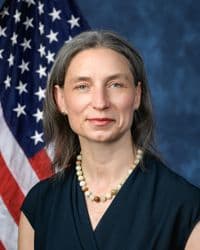
- Climate & Environment$110k
Full profile: /officials/D000635
Source: Congress.gov · FEC
Cosponsors (2)
Members who have signed on to support this bill since introduction. Source: Congress.gov.
Latest Action
The most recent step in the bill's legislative path. Committee Activity below shows referrals and reports; the full action-by-action history including floor proceedings lives at Congress.gov →
Referred to the Committee on Natural Resources, and in addition to the Committees on Agriculture, and Education and Workforce, for a period to be subsequently determined by the Speaker, in each case for consideration of such provisions as fall within the jurisdiction of the committee concerned.
2026-09-17
Source: Congress.gov
Committee Activity
Currently in
- House Committee on Education and WorkforceReferred To · 2026-09-17
- House Committee on AgricultureReferred To · 2026-09-17
- House Committee on Natural ResourcesReferred To · 2026-09-17
Plain-English Summary
Plain-English summary pending. Introduced on 2026-09-17. Check back soon — summaries are generated as bills progress through Congress.
Full Bill Text
Verbatim text published on Congress.gov via GovInfo. Use Cmd+F / Ctrl+F to search within this excerpt.
[Congressional Bills 119th Congress] [From the U.S. Government Publishing Office] [H.R. 10492 Introduced in House (IH)] <DOC> 119th CONGRESS 2d Session H. R. 10492 To authorize the Federal Wildland Firefighter Health and Wellbeing Program, a comprehensive initiative to improve the health of Federal wildland firefighters, and for other purposes. _______________________________________________________________________ IN THE HOUSE OF REPRESENTATIVES September 17, 2026 Ms. Dexter (for herself, Mr. Huffman, and Mr. Gallagher) introduced the following bill; which was referred to the Committee on Natural Resources, and in addition to the Committees on Agriculture, and Education and Workforce, for a period to be subsequently determined by the Speaker, in each case for consideration of such provisions as fall within the jurisdiction of the committee concerned _______________________________________________________________________ A BILL To authorize the Federal Wildland Firefighter Health and Wellbeing Program, a comprehensive initiative to improve the health of Federal wildland firefighters, and for other purposes. Be it enacted by the Senate and House of Representatives of the United States of America in Congress assembled, SECTION 1. SHORT TITLE; TABLE OF CONTENTS. (a) Short Title.--This Act may be cited as the ``Wildland Firefighter Health and Safety Act''. (b) Table of Contents.--The table of contents for this Act is as follows: Sec. 1. Short title; table of contents. Sec. 2. Definitions. Sec. 3. Wildland Firefighter Health Task Force. Sec. 4. Federal Wildland Firefighter Health and Wellbeing Program. Sec. 5. Occupational safety and health research. Sec. 6. Occupational safety and health standards for wildland firefighter protection. Sec. 7. Office of Workers' Compensation Programs. Sec. 8. Duty time for hygiene and gear decontamination for Federal wildland firefighters. Sec. 9. Government Accountability Office study. SEC. 2. DEFINITIONS. In this Act: (1) Advisory panel.--The term ``Advisory Panel'' means the Wildland Firefighter Health Advisory Panel established under section 3(e). (2) Clean apparatus cab protocol.--The term ``clean apparatus cab protocol'' means an exposure-reduction protocol for crew transport vehicles and other apparatuses supporting wildland fire operations-- (A) to prevent the transfer of hazardous, toxic, and carcinogenic materials and compounds; (B) to establish protocols for reducing exposures; and (C) to establish decontamination procedures. (3) Health strategy.--The term ``Health Strategy'' means the Wildland Firefighter Health Strategy developed under section 3(f). (4) Pilot program.--The term ``Pilot Program'' means the respiratory protection pilot program established under section 5(b). (5) Program director.--The term ``Program Director'' means the Federal Wildland Firefighter Health and Wellbeing Program Director appointed under section 4(c). (6) Secretaries.--The term ``Secretaries'' means-- (A) the Secretary of the Interior; and (B) the Secretary of Agriculture, acting through the Chief of the Forest Service. (7) Support staff.--The term ``support staff'' means any Federal employee who supports fire activities outside of their primary job responsibilities-- (A) under the direction of either of the Secretaries; or (B) under a contract or compact with a federally recognized Indian Tribe. (8) Task force.--The term ``Task Force'' means the Wildland Firefighter Health Task Force established under section 3(a). (9) Wellbeing program.--The term ``Wellbeing Program'' means the Federal Wildland Firefighter Health and Wellbeing Program established under section 4(a). (10) Wildland firefighter.--The term ``wildland firefighter'' means a firefighter-- (A) who-- (i) is employed by the Forest Service or the Department of the Interior; (ii) participates in wildland firefighting activities under the direction of either of the Secretaries; or (iii) is under a contract or compact with a federally recognized Indian Tribe; and (B) whose duties primarily relate to fires occurring on forest land, range land, or other wildland, as opposed to structural fires. SEC. 3. WILDLAND FIREFIGHTER HEALTH TASK FORCE. (a) Establishment.--Not later than 90 days after the date of enactment of this Act, the Secretary of Interior, in…
Show the remaining 6,576 wordsHide the remaining 6,576 words
coordination with the Secretary of Agriculture, shall establish within the Department of the Interior an interagency Task Force, to be known as the ``Wildland Firefighter Health Task Force''. (b) Composition.-- (1) In general.--The Task Force shall be composed of representatives of Federal agencies, to be chosen by the Secretaries, including not fewer than 1 representative from each of the following agencies: (A) The Bureau of Land Management. (B) The National Park Service. (C) The Bureau of Indian Affairs. (D) The United States Fish and Wildlife Service. (E) The Forest Service. (F) Wildland firefighting agencies under the Department of Interior or the Department of Agriculture. (G) The National Institute for Occupational Safety and Health. (H) The Occupational Safety and Health Administration. (I) The Environmental Protection Agency. (2) DOD participation.--The Secretaries may extend invitations to relevant Department of Defense representatives to participate as Task Force members. (c) Chairperson.--The Program Director shall be the chair of the Task Force. (d) Responsibilities of the Task Force.--The Task Force shall-- (1) provide for interagency coordination to identify administrative and engineering controls-- (A) to be used during arduous wildland fire operations to prevent or significantly reduce inhalation and dermal exposures to toxic and hazardous substances and conditions; and (B) to the maximum extent practicable, that can be implemented within 180 days of the establishment of the Task Force; (2) develop pilot testing protocols and procedures for the evaluation of respiratory protection technologies during any temporary compliance adjustment period authorized under this Act; (3) provide recommendations to inform the promulgation of any occupational safety and health standards described under section 6; and (4) not later than 1 year after the establishment of the Task Force, develop and make publicly available the Health Strategy in accordance with subsection (f), to be implemented through the Wellbeing Program. (e) Wildland Firefighter Health Advisory Panel.-- (1) In general.--Not later than 90 days after the date of enactment of this Act, the Secretary of Interior, in coordination with the Secretary of Agriculture, shall establish an Advisory Panel, to be known as the ``Wildland Firefighter Health Advisory Panel'', to provide recommendations to the Task Force with respect to-- (A) the Health Strategy; and (B) the responsibilities of the Task Force under subsection (d). (2) Scope.--The Advisory Panel shall participate in all aspects of the development and implementation of the Health Strategy, and recommendations and input made by the Advisory Panel shall be considered to be advisory in nature. (3) Advisory panel composition.--The Advisory Panel shall be composed of members with expertise in wildland firefighting, who collectively have a combination of backgrounds, experiences, expertise, and viewpoints, to be appointed by the Secretaries, including-- (A) not fewer than 2 current wildland firefighters at ground operation level; (B) not fewer than 2 former wildland firefighters; (C) representatives of-- (i) unions representing current and former wildland firefighters; (ii) unions representing current and former State and local government firefighters who respond to Federal wildfire incidents; (iii) employee groups representing wildland firefighter interests; (iv) professional organizations; (v) nonprofit research foundations; (vi) State and local fire agencies with established or planned respiratory protection programs; and (vii) Tribal Governments or Tribal fire agencies; (D) academics or researchers with expertise in-- (i) cancer and occupational medicine; (ii) industrial hygiene; (iii) occupational epidemiology; (iv) occupational toxicology; (v) dermatology; and (vi) behavioral health; (E) any other non-Federal stakeholder or expert in wildland firefighting or in wildland firefighter health and wellbeing, as identified by the Task Force; and (F) at the discretion of the Secretaries, representatives of international fire companies with established or planned respiratory protection programs. (4) Term of appointment.--Each Advisory Panel member appointed shall serve a term of 6 years. (5) Vacancies.--Any vacancies on the Advisory Panel-- (A) shall be filled in the same manner in which the original appointment was made; and (B) to the extent practicable, shall be filled within 3 months of a vacancy to ensure continuous balance of expertise. (6) Compensation.--A member of the Advisory Panel shall serve without compensation. (7) Travel expenses.--The Secretary may provide to any member of the Advisory Panel travel expenses, including per diem in lieu of subsistence, at rates authorized for an employee of an agency under subchapter I of chapter 57 of title 5, United States Code, while away from the home or regular place of business of the member in the performance of the duties of the Advisory Panel. (8) Collaboration.--The Task Force and the Advisory Panel shall follow leading practices for effective collaboration, as identified by the Government Accountability Office, including in the document entitled ``Government Performance Management: Leading Practices to Enhance Interagency Collaboration and Address Crosscutting Challenges'' (GAO-23-105520) and published in May 2023. (f) Wildland Firefighter Health Strategy.--The Task Force shall develop, and update not less frequently than once every 3 years, a coordinated Wildland Firefighter Health Strategy to address health concerns for wildland firefighters, to be implemented through the Wellbeing Program, including consideration of-- (1) the availability and use of the best available respiratory protection technologies for wildland firefighting, and any identified needs for improved technologies; (2) opportunities to reduce dermal exposure to hazardous substances encountered during wildland firefighting, including-- (A) implementation of clean apparatus cab protocols; (B) transitioning to protective equipment that does not contain perfluoroalkyl or polyfluoroalkyl substances or other hazardous chemicals; (C) decontamination of gear, clothing, and skin; and (D) recommendations for near-term and long-term implementation options; (3) opportunities to reduce inhalation exposure to hazardous substances encountered during wildland firefighting; (4) strategies to recognize and address mental health needs of wildland firefighters; (5) strategies for long-term exposure tracking and medical surveillance, including-- (A) promoting enrollment in the National Firefighter Registry for Cancer and the national Fire Fighter Cancer Cohort Study; (B) systems to enable wildland firefighters to track individual exposure events over time; (C) the key components of a medical surveillance program, including data integration with existing health and compensation data systems; (D) requirements for a comprehensive baseline medical assessment upon entry into service for all wildland firefighters; and (E) health markers to be tracked consistently with periodic updates, considering lung function and other necessary markers; (6) strategies to increase research and development opportunities to address any critical knowledge gaps, including-- (A) short- and long-term impacts of inhalation and dermal exposures on reproductive health for male and female firefighters, including adverse health outcomes for pregnant firefighters; (B) exposure, lung function, and malignancy tracking necessary to optimize early identification of exposure risks; (C) specific exposure limits and types of monitoring equipment or practices to guide decision- making on the use of respiratory protection; and (D) any other knowledge gaps identified by the Task Force that impede efforts to meet program goals; (7) the amount of time spent by wildland firefighters working in the wildland-urban interface and specific health concerns associated with working in that environment; (8) scientific, technological, cultural, or other challenges necessary to be addressed to understand and to significantly reduce health risks faced by wildland firefighters; and (9) priorities for the grant program described in section 4(g) to support research, pilot testing, and evaluation of exposure reduction technologies and practices. (g) Meetings.--The Task Force and the Advisory Panel shall meet at the call of the Chair but not less frequently than twice per calendar year. (h) Administrative Support.--The Secretary of the Interior shall provide such clerical and technical support as may be necessary to enable the Task Force and the Advisory Panel to carry out the functions and meetings of the Task Force and the Advisory Panel. (i) Authorization of Appropriations.--There is authorized to be appropriated $15,000,000 for each of fiscal years 2027 through 2032 to carry out this section. SEC. 4. FEDERAL WILDLAND FIREFIGHTER HEALTH AND WELLBEING PROGRAM. (a) Establishment.--The Secretary of Interior, in coordination with the Secretary of Agriculture, shall establish and maintain a Federal Wildland Firefighter Health and Wellbeing Program. (b) Purpose.--The purpose of the Wellbeing Program is to improve the long-term health outcomes of wildland firefighters and support personnel by-- (1) addressing occupational exposures to hazardous materials, respiratory hazards, and other risks associated with wildland fire occupations; and (2) focusing on cancer prevention and early detection. (c) Program Director.-- (1) In general.--The Wellbeing Program shall be headed by a Federal Wildland Firefighter Health and Wellbeing Program Director, who shall be appointed by the Secretary of the Interior, in coordination with the Secretary of Agriculture. (2) Initial appointment.--Not later than 90 days after the date of enactment of this Act, the initial Program Director shall be appointed. (d) Program Scope.--In carrying out the Wellbeing Program, the Secretary of the Interior, acting through the Program Director and in coordination with the Secretary of Agriculture, shall-- (1) assess occupational health risks faced by wildland firefighters, including risks associated with wildfire smoke, hazardous substances, heat, and other environmental and operational exposures; (2) expand prevention, education, and support services to address trauma and cumulative stress, build coping skills, bolster resiliency, and improve mental preparedness; (3) identify and implement administrative and engineering controls to reduce inhalation hazards and exposure risk; (4) carry out and support demonstrations, experiments, and pilot programs for technology or safety practices; (5) coordinate with manufacturers in the development of respiratory protection technologies and evaluate the efficacy and field use of those technologies through data collection and firefighter feedback, including surveys and interviews; (6) support efforts by the National Institute for Occupational Safety and Health to coordinate with State, Tribal, and local fire services to promote consistency of respirator technology use; (7) develop and administer comprehensive training and education for wildland firefighters on smoke exposure health risks and benefits of respiratory protection; (8) promote a culture among wildland firefighters and support crews to prevent exposure to wildfire smoke; (9) support crew leadership in promoting decontamination and cleanliness practices; (10) implement dermal exposure reduction strategies and clean apparatus cab protocols; (11) support the testing and use of exposure monitoring technologies, including sensors and devices providing real-time air quality or dermal exposure feedback; (12) develop and implement a system for wildland firefighters and support staff to track their own exposure and document their risk over time; (13) develop a medical surveillance protocol, including data integration with existing health and compensation data systems, and share data with the National Institute for Occupational Safety and Health; (14) conduct baseline medical exams, including early indicators of cancer and chronic cardiopulmonary disease, on the hiring of an employee and conduct medical exams annually to track health outcomes; (15) provide access to regular medical screenings for early detection of disease or illness, including cancer screenings and periodic pulmonary function testing; (16) implement hearing protective protocols in accordance with section 1910.95 of title 29, Code of Federal Regulations (or a successor regulation); (17) ensure that the results of any monitoring or medical surveillance are made available to the affected firefighter in a timely manner; and (18) develop a mechanism for wildland firefighters to provide comments or suggestions or ask questions, via a website or another mechanism, which shall allow for anonymous and non- anonymous feedback. (e) Requirement for Wellbeing Program Staffing.-- (1) Full-time staffing.--The Secretaries shall ensure the Wellbeing Program is staffed with a sufficient number of full- time employees necessary to carry out the Program duties, including at least 1 full-time staff at each regional office and at least 4 full-time employees at the national level, with appropriate expertise in-- (A) occupational health; (B) industrial hygiene; (C) epidemiology; (D) toxicology; (E) respiratory protection; (F) wildfire operations; (G) data management; (H) behavioral health; or (I) other related disciplines. (2) Support personnel.--The Secretaries shall provide adequate administrative, technical, analytical, and field support-- (A) to implement the Health Strategy; (B) to oversee pilots and grants; (C) to coordinate with the Task Force and the Advisory Panel; and (D) to meet reporting requirements. (3) Annual certification.--The Program Director shall annually assess and report to Congress whether staffing and funding are sufficient to carry out the Wellbeing Program and identify additional resource needs. (f) Pilot Testing Authority.--The Program Director, in consultation with the Task Force, may implement any pilot programs, demonstration projects, or field testing in coordination with the National Institute for Occupational Safety and Health to assess the feasibility, effectiveness, and operational suitability of protective technologies. (g) Grantmaking Authority.-- (1) In general.--The Program Director, in consultation with the Task Force, may establish and carry out additional grant programs to support-- (A) research, pilot testing, and evaluation of exposure reduction technologies and practices; (B) the acquisition and distribution of respiratory protective equipment; and (C) research and development efforts to address knowledge gaps identified in the Health Strategy. (2) Advisory role for wellbeing program.--The Task Force shall advise the Wellbeing Program with respect to the grant program described in paragraph (1) on-- (A) standards and criteria for grant award determinations; (B) selection of grant applications; and (C) final funding decisions. (h) Coordination.--The Program Director shall consult with the Task Force and the Advisory Panel in carrying out this section at the frequency specified in section 3(g). (i) Worker Compensation Information Sharing.-- (1) In general.--Not later than 90 days after the date of appointment under subsection (c)(2), the Program Director shall set and coordinate bi-annual meetings with the Director of the Office of Workers' Compensation Programs of the Department of Labor to facilitate information-sharing between the workers' compensation programs of the Department of Labor and the Wellbeing Program on issues impacting wildland firefighters' health, benefits, compensation, or any other matters relating to those programs or the Wellbeing Program. (2) Task force and advisory panel.--The information gathered during a meeting described in paragraph (1) shall be shared with the Task Force and the Advisory Panel. (j) Program Performance Plans Assessment.--Not later than 45 days before the end of the first full fiscal year after the date of enactment of this Act, and not later than 45 days before the end of each fiscal year thereafter, following Federal performance management best practices outlined by the Government Accountability Office (including in the document entitled ``Evidence-Based Policymaking: Practices to Help Manage and Assess the Results of Federal Efforts'' (GAO-23-105460)), the Program Director shall complete a plan that-- (1) establishes goals to define Wellbeing Program performance, including-- (A) long-term strategic goals; and (B) near-term performance goals to be achieved over the following 1-year period; (2) expresses those performance goals in an objective, quantifiable, achievable, and measurable form; (3) establishes a balanced set of performance indicators to be used in measuring or assessing progress toward each performance goal, including outcome indicators, as appropriate; (4) establishes data collection protocols for the performance indicators established under paragraph (3) to collect the information and data needed to assess progress toward performance goals; and (5) carries out the tasks described in paragraphs (1) through (4) in consultation with-- (A) the Task Force; and (B) the Advisory Panel and other relevant stakeholders, as the Program Director determines to be appropriate. (k) Assessment and Report.-- (1) In general.--Not later than 60 days after the end of the first full fiscal year after the date of enactment of this Act, and not later than 60 days after the end of each fiscal year thereafter, the Program Director shall submit to Congress a report describing the progress the Wellbeing Program has made toward meeting its performance goals during the prior year, along with-- (A) detailed action plans to improve results for any performance goals that were not met; (B) any challenges or lessons learned identified; and (C) any other findings relevant to Wellbeing Program performance. (2) Task force input.--The Program Director shall develop each report under paragraph (1) with input from the Task Force. (3) Task force meetings.--At the end of each fiscal year, the Program Director shall set a meeting with the Task Force to review Wellbeing Program progress and-- (A) determine the extent to which the Wellbeing Program met its established goals during the prior year; (B) identify and document any challenges the Wellbeing Program faces in meeting its established goals and detailed plans to address them, including an assessment of challenges related to staffing, training, or funding levels; and (C) assess and document lessons learned to be applied in the years going forward. (l) Authorization of Appropriations.--There is authorized to be appropriated $34,000,000 for each of fiscal years 2027 through 2032 to carry out this section. SEC. 5. OCCUPATIONAL SAFETY AND HEALTH RESEARCH. (a) Establishment.--Section 22 of the Occupational Safety and Health Act of 1970 (29 U.S.C. 671) is amended by adding at the end the following: ``(i) Office of Firefighter Health And Safety.-- ``(1) In general.--There shall be permanently established within the Institute an Office of Firefighter Health And Safety (referred to in this subsection as the `Office'), which shall be administered by an Associate Director to be appointed by the Director. ``(2) Purpose.--The purpose of the Office, with respect to firefighting and disaster response occupations, is to-- ``(A) promote fast identification and prevention of new and emerging hazards; ``(B) provide a central point for wildland and structural firefighters, fire-service organizations, and other stakeholders to engage with the broad scope of relevant research and services; ``(C) enhance and accelerate the development of new safety technology, technological applications, and work practices; ``(D) expedite the commercial availability and implementation of such technology and practices in firefighting work; ``(E) study the relationship between work in firefighting and health outcomes over time; ``(F) investigate line-of-duty deaths and serious injuries for the purpose of developing preventive measures; and ``(G) conduct research and develop criteria for new and improved occupational safety and health standards for firefighters. ``(3) Authorities.--To fulfill the purposes described in paragraph (2), the Director, acting through the Office, shall use any authority provided under this Act and shall also have the authority to-- ``(A) award competitive grants to institutions and private entities to encourage the development and manufacture of new and innovative personal protective equipment and safety-enhancing technologies for firefighters; ``(B) award contracts to educational institutions or private entities for the performance of product testing or related work with respect to new firefighting technology and equipment; ``(C) support longitudinal surveillance and biomonitoring research program to evaluate exposures and markers of cancer and other disease risk for wildland fire personnel; ``(D) conduct research on the relationship between work in firefighting and health outcomes over time; ``(E) develop and publish contamination-control and clean apparatus cab criteria to inform agencies' equipment procurement practices; ``(F) conduct experiments, evaluations, and field tests to assess firefighting technology and equipment in settings that realistically reflect conditions of firefighting; ``(G) develop and implement strategies for long- term exposure tracking and medical surveillance, including-- ``(i) systems to enable workers to track individual exposure events over time; ``(ii) registries and cohorts of workers in firefighting; ``(iii) data integration with existing health and compensation data systems; and ``(iv) systems that are consistent and accessible to firefighters and relevant agencies and are permanently retained; and ``(H) coordinate with manufacturers in the development of respiratory protection technologies and evaluate the efficacy and field use of such technologies through data collection and firefighter feedback, including surveys and interviews. ``(4) Report.--Not later than 1 year after the establishment of the Office under this subsection, and every 2 years thereafter, the Director shall submit to the Committee on Education and Workforce of the House of Representatives and the Committee on Health, Education, Labor, and Pensions of the Senate a report that, with respect to the year involved-- ``(A) describes the new health and safety technologies and practices that have been studied, tested, and certified for use, and with respect to such technologies and practices that have been considered but not yet certified for use, the reasons for not certifying; and ``(B) identifies cancer, respiratory, or other medical conditions warranting consideration by the Secretary of Labor for regulatory updates to presumptive coverage under chapter 81 of title 5, United States Code (commonly known as the `Federal Employees' Compensation Act'). ``(5) Wildland firefighter priorities.--With respect to wildland firefighter (as defined in section 2 of the Wildland Firefighter Health and Safety Act) safety, health, and wellbeing, the Director shall-- ``(A) develop, in coordination with the Federal Wildland Firefighter Health and Wellbeing Program established under section 4 of the Wildland Firefighter Health and Safety Act, priorities for research, pilot testing, and evaluation of exposure reduction technologies and practices tailored to the conditions of wildland firefighting; ``(B) develop and implement, in coordination with the Federal Wildland Firefighter Health and Wellbeing Program, strategies to inform wildland firefighters about the National Firefighter Registry for Cancer established under the Firefighter Cancer Registry Act of 2018 (42 U.S.C. 280e-5) and the national Fire Fighter Cancer Cohort Study; ``(C) identify and assess the best available respiratory protective technologies suitable for wildland firefighting, in particular any such technologies that meet the National Fire Protection Agency 1984 Standard on Respirators for Wildland Fire- Fighting Operations and Wildland Urban Interface Operations (or any successor or equivalent standard that provides equal or greater protection); ``(D) periodically analyze and report data about exposures, hazards, and health effects specific to wildland firefighters; and ``(E) develop and support a longitudinal surveillance and biomonitoring research program to evaluate exposures and markers of cancer and other disease risk for wildland fire personnel. ``(6) Coordination.--The Director shall coordinate with the Secretary of the Interior, the Secretary of Agriculture, and heads of relevant agencies to ensure that standards and exposure reduction technologies developed by the Office are integrated into agency procurement requirements, training, programs, and other relevant operational guidance for wildland fire personnel. ``(7) Authorization of appropriations.--There is authorized to be appropriated $10,000,000, to be available through fiscal year 2032 to enable the Institute and the Office to carry out this subsection.''. (b) Respiratory Protection Pilot Program.-- (1) Establishment.--Not later than 1 year after the establishment of the Task Force, the Secretary of the Interior, acting through the Program Director and in coordination with the Secretary of Agriculture and the Director of the National Institute for Occupational Safety and Health, shall design and carry out a pilot program, to be known as the ``respiratory protection pilot program'', to evaluate respiratory protection technologies for use by wildland firefighters. (2) Purpose.--The purpose of the Pilot Program is to assess and identify the feasibility, effectiveness, and usability of respiratory protection technologies for wildland firefighters. (3) Duration.--The Pilot Program shall be carried out for a 2-year period. (4) Scope of pilot program.--In carrying out the Pilot Program, the Director of the National Institute for Occupational Safety and Health shall-- (A) evaluate and test respiratory protection technologies, including respirators and related equipment, that may reduce inhalation exposure to wildfire smoke and other airborne hazards encountered during arduous wildland firefighting; (B) conduct field testing of respiratory protection technologies to assess performance, including heat, exertion, duration of use, and conditions of use; (C) conduct field testing in real-world operational contexts, including line construction, mop-up, and transport; (D) collect data from wildland firefighters on usability, comfort, and compliance with the technology described in subparagraph (A); (E) provide opportunities for wildland firefighter feedback on any aspects of the pilot program; (F) coordinate with manufacturers, researchers, and other experts to support fit testing, refinement, and evaluation of technology; and (G) consult with the Task Force on pilot testing protocols and procedures under section 3(d)(2). (5) Final report.--Not later than 180 days after the end of the period described in paragraph (3), the Secretaries shall submit to the Committees on Natural Resources and Education and the Workforce of the House of Representatives, and the Committees on Energy and Natural Resources and the Health, Education, Labor, and Pensions of the Senate, a final report that includes information regarding-- (A) recommendations to the Occupational Safety and Health Administration for the standards under section 6; (B) the costs associated with carrying out the Pilot Program; (C) the usage of respiratory protection technology under the Pilot Program; (D) the extent of participation in the Pilot Program by wildland firefighters; and (E) any other findings and conclusions with respect to the Pilot Program the Secretary considers appropriate, which may include details on any challenges encountered, any actions needed to address them, and any lessons learned. (6) Authorization of appropriations.--There is authorized to be appropriated $1,500,000 to carry out this section. SEC. 6. OCCUPATIONAL SAFETY AND HEALTH STANDARDS FOR WILDLAND FIREFIGHTER PROTECTION. (a) Interim Final Standard.-- (1) In general.--Not later than 180 days after submission of the report described in section 5(b)(5), the Secretary of Labor, acting through the Occupational Safety and Health Administration, shall issue an interim final standard with respect to protecting the health of wildland firefighters, which shall-- (A) require employers to develop and implement a comprehensive health protection plan that addresses long-term occupational health risks associated with wildland firefighting; and (B) require the provision of respiratory protection, subject to availability and feasibility, consistent with the interim nature of the standard. (2) Inapplicable provisions of law and executive order.-- The following provisions of law and executive orders shall not apply to the issuance of the interim final standard under this subsection: (A) The requirements applicable to occupational safety and health standards under section 6(b) of the Occupational Safety and Health Act of 1970 (29 U.S.C. 655(b)). (B) The requirements of chapters 5 and 6 of title 5, United States Code. (C) Subchapter I of chapter 35 of title 44, United States Code (commonly referred to as the ``Paperwork Reduction Act''). (D) Executive Order No. 12866 (58 Fed. Reg. 51735; relating to regulatory planning and review), as amended. (3) Notice and comment.--The Secretary shall, prior to issuing the interim final standard under this subsection, provide notice in the Federal Register of the interim final standard and a 30-day period for public comment. (4) Development.--The interim final standard shall be developed in coordination with the Task Force and Advisory Panel and shall be informed by the results and findings of the Pilot Program. (5) Effective date of interim final standard.--The interim final standard shall-- (A) take effect on a date that is not later than 30 days after issuance, except that such interim final standard may include reasonable delays due to the availability of personal protective equipment or technology; (B) have the legal effect of an occupational safety and health standard as defined by section 3(8) of the Occupational Safety and Health Act of 1970 (29 U.S.C. 652(8)); and (C) remain in effect until superseded by the final standard promulgated pursuant to subsection (b). (b) Final Standard.-- (1) Proposed final standard.--Not later than 2 years after the submission of the report under section 5(b)(5), pursuant to section 6 of the Occupational Safety and Health Act of 1970 (29 U.S.C. 655), the Secretary of Labor, acting through the Occupational Safety and Health Administration, shall promulgate a proposed final standard with respect to protecting the health of wildland firefighters-- (A) for the purpose described in subparagraphs (A) and (B) of subsection (a)(1); and (B) that shall provide at least as much protection as the interim final standard promulgated under subsection (a). (2) Final standard.--Not later than 5 years after the submission of the final report described in section 5(b)(5), the Secretary shall issue a final standard that shall-- (A) take effect on a date that is not later than 30 days after issuance, except that such final standard may include reasonable delays due to the availability of personal protective equipment or technology; (B) provide no less protection than any wildland firefighter health standard adopted by a State plan that has been approved by the Secretary under section 18 of the Occupational Safety and Health Act of 1970 (29 U.S.C. 667), provided the Secretary finds that the final standard is feasible on the basis of the best available evidence; (C) be effective and enforceable in the same manner and to the same extent as any standard promulgated under section 6(b) of the Occupational Safety and Health Act of 1970 (29 U.S.C. 655(b)); and (D) comply with the requirements described in subsection (c). (c) Requirements for Final Standard.--The requirements described in this subsection shall require-- (1) implementation of engineering and administrative controls, exposure minimization strategies, and operational adjustments when exposure thresholds are exceeded; (2) strategies to encourage respiratory protection from smoke and other hazards including providing fire personnel with the appropriate equipment to protect from wildfire smoke and other respiratory hazards; (3) training and education materials to fire personnel regarding-- (A) how to properly use protective equipment; (B) how long and under what conditions the protective equipment is effective; (C) the potential health impacts of breathing wildfire smoke without proper protection; (D) how heat illness happens, how to recognize it, and how to prevent and treat it; and (E) any additional areas deemed critical for the safety and health of wildland firefighters; (4) strategies to reduce dermal exposure to toxic and hazardous substances and conditions and exposure to PFAS in firefighter gear; (5) guidance on use of exposure monitoring equipment; (6) medical monitoring and surveillance to identify early indicators of exposure-related illness; and (7) decontamination equipment installed in duty stations, vehicles, and other relevant spaces. (d) Collaboration.--The Department of Labor Secretary shall coordinate with the Wildland Firefighter Health Task Force and Advisory Panel when promulgating the standards described in subsection (a) and (b). (e) Compliance Assistance.--The Secretary shall provide technical assistance and advice, consistent with section 21 of the Occupational Safety and Health Act of 1970 (29 U.S.C. 670(d)) to employers subject to the standards with respect to compliance with the standard. SEC. 7. OFFICE OF WORKERS' COMPENSATION PROGRAMS. (a) Special Claims.--Section 8143b of title 5, United States Code, is amended by adding at the end the following: ``(c) Special Claims Handling Unit for Employees in Fire Protection Activities.-- ``(1) Establishment.--The Secretary shall establish a special claims handling unit to process and adjudicate claims for workers' compensation claims submitted by any employee in fire protection activities. ``(2) Training.--Personnel assigned to the specialized claims handling unit shall-- ``(A) receive training and proficiency testing on the duties, operational conditions, and occupational exposures associated with firefighting; and ``(B) possess or develop expertise in occupational illnesses and injuries associated with smoke exposure, hazardous substances, heat, and other hazards encountered during firefighting operations. ``(3) Claims processing.--The Secretary shall ensure that claims submitted by an employee described in paragraph (1) are processed in a timely manner. ``(4) Coordination.--The Secretary of Labor shall work in coordination with the Federal Wildland Firefighter Health and Wellbeing Program established under section 4 of the Wildland Firefighter Health Act and the National Institute for Occupational Safety and Health to develop training and operational guidance for the special claims unit. ``(d) Annual OWCP Report on Firefighter Claims.-- ``(1) Annual reporting requirement.--The Office of Workers' Compensation Programs (in this subsection referred to as `OWCP') shall prepare and publish an annual report of workers' compensation claims submitted by employees in fire protection activities, including claims for traumatic injury and occupational illness occurring in the performance of duty. ``(2) Required contents.--Each report shall include, at a minimum, aggregate data and summary statistics on-- ``(A) claims filed, accepted, denied, pending, and appealed, including rationale for denials; ``(B) categories of occupational exposures that were alleged by the claimant (including smoke or heat) and what categories OWCP accepted as established; ``(C) diagnoses OWCP claimed, accepted, and partially accepted; ``(D) time to decision metrics, including-- ``(i) claim filing to completion of development, or the time it takes from when a claim is filed to the time when OWCP determines that they can issue an initial determination, based on factual and medical evidence submitted; ``(ii) claim filing to initial decision, or the time it takes from when a claim is filed to when the first decision is made to either accept or deny a claim; and ``(iii) claim filing to initial acceptance, if applicable, or the time it takes from when a claim is filed to when the first decision is made, which occurs when there has been a determination that the claim has met all necessary elements, and a list of accepted diagnoses is made; ``(E) data on the use of second opinion physicians, or physicians selected by the government to issue a medical opinion, and referee physicians, or impartial physicians independent from OWCP who issues medical opinions, including-- ``(i) how often these physicians are utilized; ``(ii) the time it takes for each type of physician to issue their opinions; ``(iii) a description of the impact of such opinion on claim outcomes; and ``(iv) total costs paid for such opinions. ``(F) identification and discussion of any systemic issues affecting timely adjudication or access to benefits for Federal firefighters. ``(3) Coordination and use of data.--The Director of the OWCP shall use the information contained in the report to-- ``(A) inform updates to the Wildland Firefighter Health Strategy; ``(B) identify administrative or regulatory barriers to timely medical care and compensation; ``(C) recommend legislative, regulatory, or policy changes to improve outcomes. ``(4) Public availability.--Each report under this subsection shall be made publicly available in a searchable and accessible format, consistent with applicable privacy laws.''. (b) Certain Illnesses and Diseases.--Section 8143b(b)(1) of title 5, United States Code, is amended by striking ``, if the employee'' and all that follows through ``protection activities''. (c) Technical Amendment.--Subsection (b) of section 8143b of such title, as amended by subsection (b), is further amended in the subsection heading by striking ``Diseased'' and inserting ``Diseases''. SEC. 8. DUTY TIME FOR HYGIENE AND GEAR DECONTAMINATION FOR FEDERAL WILDLAND FIREFIGHTERS. (a) Definition of Covered Employee.--In this section, the term ``covered employee'' means a wildland firefighter, including permanent, seasonal, temporary, and emergency appointment personnel, regardless of pay classification. (b) Duty Time.--The Secretaries shall each ensure that each covered employee is provided regular duty time during wildfire operations or prescribed fires, without loss of pay or benefits-- (1) to shower and perform personal hygiene following shifts involving exposure to smoke, ash, perfluoroalkyl or polyfluoroalkyl substances, hazardous substances, or other contaminants; (2) to clean, decontaminate, and maintain personal protective equipment and work clothing, including through the use of washing machines or equivalent cleaning and decontamination methods; and (3) to decontaminate vehicles and closed spaces used to transport or support wildland fire personnel during operations. (c) Health and Safety Purpose.--Duty time provided under subsection (b) shall be-- (1) considered hours of work for purposes of pay, leave, and other employment benefits; and (2) intended to reduce occupational exposure to carcinogens, toxic substances, and other health hazards associated with wildland firefighting. (d) Requirements for Decontamination Infrastructure and Equipment.-- (1) In general.--Not later than 2 years after the date of enactment of this Act, the Secretaries shall ensure that each duty station, fire cache, or other regularly staffed wildland fire facility is equipped with adequate gear decontamination infrastructure. (2) Minimum requirements.--Infrastructure described in paragraph (1) shall include-- (A) decontamination equipment or equivalent systems dedicated to contaminated gear and clothing; (B) appropriate drying equipment; (C) designated cleaning areas; (D) access to hot and cold showers; (E) appropriate wastewater handling or filtration, where feasible; and (F) replacement Personal Protective Equipment (PPE). (3) Capacity.--Infrastructure described in paragraph (1) shall be sufficient to serve assigned personnel without unreasonable delay following exposure. (4) Remote operations.--For remote or temporary operations, the Secretaries shall provide mobile decontamination capability or ensure prompt access to cleaning and hygiene upon return. (5) Maintenance.--The Secretaries shall ensure routine inspection, maintenance, and timely replacement of infrastructure described in paragraph (1). (e) Implementation.--The Secretary may issue guidance or regulations to carry out this section. SEC. 9. GOVERNMENT ACCOUNTABILITY OFFICE STUDY. (a) Study.--Not later than 2 years after the date of enactment of this Act, and every 2 years thereafter for 6 years, the Comptroller General of the United States shall conduct a study to evaluate the progress of the Wellbeing Program. (b) Areas of Focus.--The study required under subsection (a) shall-- (1) assess, at minimum-- (A) the progress of the Wellbeing Program with respect to establishing yearly goals and objectives, and the justification if goals and objectives have not been established; (B) the progress of the Wellbeing Program with respect to meeting its stated goals and objectives, and the justification if goals and objectives have not been met; (C) any challenges or barriers that limit the Wellbeing Program's ability to meet its goals and objectives, and any recommendations for improvements; (D) the extent to which the Task Force and the Advisory Panel are following leading practices for effective collaboration as identified by the Government Accountability Office, including the practices identified in the document entitled ``Government Performance Management: Leading Practices to Enhance Interagency Collaboration and Address Crosscutting Challenges'' (GAO-23-105520) and published in May 2023; (E) the sustained focus and commitment of the Secretaries and the leadership within the Department of the Interior and the Forest Service with respect to addressing and improving the health of wildland firefighters, by examining-- (i) their role in collaborating with key partners through the Task Force and the Advisory Panel; (ii) their role in establishing performance measures, assessing performance information, and making program modifications, as needed, based on performance results; and (iii) any other actions or steps that leadership have taken to demonstrate their sustained focus and commitment to improving wildland firefighter health outcomes; (F) current availability of respiratory equipment in the marketplace to be procured and used by wildland firefighters, including the extent to which respirators that meet National Fire Protection Association standards are available in the commercial marketplace; (G) the extent to which respiratory equipment that is available for procurement meets National Fire Protection Association standards and has been approved by the National Personal Protective Technology Laboratory at the National Institute for Occupational Safety and Health; (H) the barriers, if any, that limit the development, approval, procurement, or widespread adoption of respirators that meet National Fire Protection Association standards for wildland firefighting; (I) the availability of decontamination and clean apparatus cab protocol supplies and infrastructure; (J) the barriers, if any, to implementing clean apparatus cab protocols, progress towards addressing challenges, and recommendations for improvements; (K) any progress made in the testing of exposure monitoring technologies, the results of the testing, and to the extent that exposure data are available, a summary of that data, including any relevant summary statistics, and observations on data quality; (L) progress of the promulgation of the standards pursuant to section 6; (M) progress that the Office of Workers' Compensation Programs of the Department of Labor has made in establishing a special claims handling unit to process and adjudicate workers' compensation claims submitted by employees in fire protection activities, as described in the amendments made by section 7; (N) the extent to which funds or full-time positions allocated to the Wellbeing Program remain dedicated to the Wellbeing Program, including a summary of any diversions or repurposing of funds or full-time positions that were intended for the Wellbeing Program; and (O) the extent possible to identify degree of hazardous exposure, both in toxic exposure type and duration; and (2) summarize-- (A) steps the Wellbeing Program has taken to address the cultural barriers associated with the use of respiratory protection among wildland firefighters, and any evidence of any progress that has been made in reducing these barriers; and (B) the status of any changes to National Fire Protection Association standards as they apply to wildland firefighting respiratory protection, as appropriate. (c) Report.--Not later than 1 year after the conclusion of each study required by subsection (a), the Comptroller General of the United States shall submit to the Committees on Natural Resources and Education and the Workforce of the House of Representatives, and the Committees on Energy and Natural Resources and Health, Education, Labor, and Pensions of the Senate, a report on the results of the study, including any recommendations for legislative or administrative actions. <all>
Related legislation
Bills by the same sponsor or covering overlapping subjects.
- HR10256Taxpayer Relief from Big Oil ActReferred to Committee · 2026-09-03
- HR10255Penalties for Polluters ActReferred to Committee · 2026-09-03
- HR9510VHA OPEN Policies Act of 2026Referred to Committee · 2026-06-30
- HR9270Dignity and Due Process for Children Act of 2026Referred to Committee · 2026-06-11