HR10625Referred to Committee
Medicaid Integrity Improvement Act
Introduced
In Committee
3
Passed One Chamber4
Passed Both5
Signed into Law119th
Congress
2026-09-28
Introduced
5
Cosponsors
HR
ⓘType
Sponsor
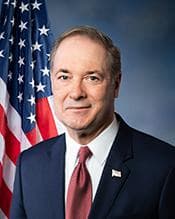
John Joyce
Republican · PA · Representative
Votes with party: 95.1% (672 recorded votes)
Full profile: /officials/J000302
Source: Congress.gov · FEC
Cosponsors (5)
Members who have signed on to support this bill since introduction. Source: Congress.gov.
Latest Action
The most recent step in the bill's legislative path. Committee Activity below shows referrals and reports; the full action-by-action history including floor proceedings lives at Congress.gov →
Committee Activity
Currently in
- House Committee on Energy and CommerceReferred To · 2026-09-28
Plain-English Summary
Plain-English summary pending. Introduced on 2026-09-28. Check back soon — summaries are generated as bills progress through Congress.
Subjects
Health
Full Bill Text
Verbatim text published on Congress.gov via GovInfo. Use Cmd+F / Ctrl+F to search within this excerpt.
[Congressional Bills 119th Congress] [From the U.S. Government Publishing Office] [H.R. 10625 Introduced in House (IH)] <DOC> 119th CONGRESS 2d Session H. R. 10625 To amend title XIX of the Social Security Act to require State Medicaid fraud control units to conduct annual audits. _______________________________________________________________________ IN THE HOUSE OF REPRESENTATIVES September 28, 2026 Mr. Joyce of Pennsylvania (for himself, Mr. Bilirakis, Mr. Pfluger, Mr. Kennedy of Utah, Mr. Carter of Georgia, and Mr. Balderson) introduced the following bill; which was referred to the Committee on Energy and Commerce _______________________________________________________________________ A BILL To amend title XIX of the Social Security Act to require State Medicaid fraud control units to conduct annual audits. Be it enacted by the Senate and House of Representatives of the United States of America in Congress assembled, SECTION 1. SHORT TITLE. This Act may be cited as the ``Medicaid Integrity Improvement Act''. SEC. 2. REQUIRING STATE MEDICAID FRAUD CONTROL UNITS TO CONDUCT ANNUAL AUDITS. Section 1903(q) of the Social Security Act (42 U.S.C. 1396b(q)) is amended-- (1) in the matter preceding paragraph (1), by inserting ``, subject to paragraph (8)(C),'' before ``annually recertifies''; and (2) by adding at the end the following new paragraph: ``(8)(A) Beginning not later than the date that is 1 year after the date of the enactment of this paragraph, and not less frequently than annually thereafter, for purposes of conducting the statewide program under paragraph (3), the entity, in coordination with the Inspector General of the Department of Health and Human Services and the State agency responsible for administering the State plan under this title (as appropriate), audits a statistically valid sample of high-risk providers and suppliers for purposes of identifying potential fraud, waste, and abuse. ``(B) Beginning with respect to the first annual report submitted to the Secretary under paragraph (7) after the date that is 1 year after the date of the enactment of this paragraph, the entity shall include in such report a summary of the audits conducted under this paragraph, including a description of the extent to which overpayments were identified and collected (or referred for collection) on the basis of such audits. ``(C) In the case that the Secretary determines that an entity has not met the requirement under subparagraph (A), the Secretary may nonetheless certify (or recertify) the entity as having met such requirement if the entity submits to the Secretary and implements a corrective action plan meeting such standards as the Secretary may specify. ``(D) For purposes of subparagraph (A), the term `high-risk provider or supplier' means a provider or supplier participating under the State plan (or a waiver of such plan) that-- ``(i) is designated as a high categorical risk under the process for screening providers and suppliers under this title, as established by the Secretary under section 1866(j)(2); or ``(ii) is otherwise identified by the entity as high-risk, based upon risk factors such as abnormal billing patterns, prior audits, payment anomalies, ownership-related risk factors (including ownership changes, undisclosed ownership interests, or affiliations with entities that have been sanctioned or are subject to investigation), or credible allegations of fraud.''. <all>
Related legislation
Bills by the same sponsor or covering overlapping subjects.
- HR1703Choices for Increased Mobility Act of 2026Passed House · 2026-09-30
- HR9984Medicare Access to Radiology Care Act of 2026Referred to Committee · 2026-07-30
- HJRES205Providing for congressional disapproval under chapter 8 of title 5, United States Code, of the rule submitted by the Environmental Protection Agency relating to "California State Motor Vehicle Pollution Control Standards; Notice of Decision Granting a Waiver of Clean Air Act Preemption for California's Advanced Clean Car Program and a Within the Scope Confirmation for California's Zero Emission Vehicle Amendments for 2017 and Earlier Model Years".Referred to Committee · 2026-07-23
- HR9693Patients First Act of 2026Referred to Committee · 2026-07-15