HR10647Referred to Committee
IMD CARE Act
Introduced
In Committee
3
Passed One Chamber4
Passed Both5
Signed into Law119th
Congress
2026-10-01
Introduced
1
Cosponsors
HR
ⓘType
Sponsor
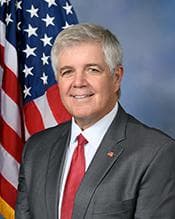
Cliff Bentz
Republican · OR · Representative
Votes with party: 98.2% (672 recorded votes)
Full profile: /officials/B000668
Source: Congress.gov · FEC
Cosponsors (1)
Members who have signed on to support this bill since introduction. Source: Congress.gov.
Latest Action
The most recent step in the bill's legislative path. Committee Activity below shows referrals and reports; the full action-by-action history including floor proceedings lives at Congress.gov →
Committee Activity
Currently in
- House Committee on Energy and CommerceReferred To · 2026-10-01
Plain-English Summary
Plain-English summary pending. Introduced on 2026-10-01. Check back soon — summaries are generated as bills progress through Congress.
Full Bill Text
Verbatim text published on Congress.gov via GovInfo. Use Cmd+F / Ctrl+F to search within this excerpt.
[Congressional Bills 119th Congress] [From the U.S. Government Publishing Office] [H.R. 10647 Introduced in House (IH)] <DOC> 119th CONGRESS 2d Session H. R. 10647 To amend title XIX of the Social Security Act to establish a Medicaid State plan amendment option to provide medical assistance to individuals with a serious mental illness who are patients in certain institutions for mental diseases. _______________________________________________________________________ IN THE HOUSE OF REPRESENTATIVES October 1, 2026 Mr. Bentz (for himself and Mr. Goldman of New York) introduced the following bill; which was referred to the Committee on Energy and Commerce _______________________________________________________________________ A BILL To amend title XIX of the Social Security Act to establish a Medicaid State plan amendment option to provide medical assistance to individuals with a serious mental illness who are patients in certain institutions for mental diseases. Be it enacted by the Senate and House of Representatives of the United States of America in Congress assembled, SECTION 1. SHORT TITLE. This Act may be cited as the ``Individuals in Medicaid Deserve Care that is Appropriate and Responsible in its Execution Act'' or the ``IMD CARE Act''. SEC. 2. STATE PLAN AMENDMENT OPTION TO PROVIDE MEDICAL ASSISTANCE TO INDIVIDUALS WITH A SERIOUS MENTAL ILLNESS WHO ARE PATIENTS IN CERTAIN INSTITUTIONS FOR MENTAL DISEASES. (a) In General.--Title XIX of the Social Security Act (42 U.S.C. 1396 et seq.) is amended-- (1) in section 1905(a), in the subdivision (B) that follows paragraph (32), by inserting ``or section 1915(m)'' after ``described in section 1915(l)''; and (2) in section 1915, by adding at the end the following new subsection: ``(m) State Plan Amendment Option To Provide Medical Assistance for Individuals With a Serious Mental Illness Who Are Patients in Certain Institutions for Mental Diseases.-- ``(1) In general.--With respect to calendar quarters beginning on or after January 1, 2027, a State may elect, through a State plan amendment, to provide medical assistance for items and services furnished to an eligible individual who is a patient in an institution for mental diseases in accordance with the requirements of this subsection. ``(2) Payments.--Subject to paragraphs (3) and (4), amounts expended under a State plan amendment under paragraph (1) for services described in such paragraph furnished, with respect to a 12-month period, to an eligible individual who is a patient in an institution for mental diseases shall be treated as medical assistance for which payment is made under section 1903(a), but only to the extent that such services are furnished for not more than a period of 30 days (whether or not consecutive) during such 12-month period. ``(3) Maintenance of effort.-- ``(A) In general.--As a condition for a State receiving payments under section 1903(a) for medical assistance provided in accordance with this subsection, the State shall (during the period in which it so furnished such medical assistance through a State plan amendment under this subsection) maintain on an annual basis a level of funding expended by the State (and political subdivisions thereof) from non-Federal funds for items and services (including services described in subparagraph (B)) furnished to eligible individuals in outpatient and community-based settings that is not less than the level of such funding for such items and services for fiscal year 2023. ``(B) Services described.--For purposes of subparagraph (A), services described in this subparagraph are the following: ``(i) Outpatient and intensive outpatient mental health and co-occurring substance use disorder services, including case management and care coordination services. ``(ii) Assertive community treatment. ``(iii) Peer support and counselor services. ``(iv) Outpatient medication-assisted treatment, related therapies, and pharmacology. ``(v) Crisis mental health services and substance use disorders services including 24 hours mobile crisis teams,…
Show the remaining 1,400 wordsHide the remaining 1,400 words
crisis receiving and crisis stabilization including specialized programs for in-home stabilization for children and adolescents. ``(vi) Psychiatric rehabilitation encompassing recovery support, supported employment and supportive housing. ``(vii) Services furnished by certified community behavioral health clinics and community mental health centers. ``(viii) Routine monitoring of medication adherence. ``(ix) Medication to treat mental illness. ``(x) Other outpatient and community-based services as designated by the Secretary. ``(C) State reporting requirement.-- ``(i) In general.--Prior to approval of a State plan amendment under this subsection, as a condition for a State receiving payments under section 1903(a) for medical assistance provided in accordance with this subsection, the State shall report to the Secretary, in accordance with the process established by the Secretary under clause (ii), the information deemed necessary by the Secretary under such clause. ``(ii) Process.--Not later than the date that is 12 months after the date of enactment of this subsection, the Secretary shall establish a process for States to report to the Secretary, at such time and in such manner as the Secretary deems appropriate, such information as the Secretary deems necessary to verify a State's compliance with subparagraph (A). ``(4) Ensuring a continuum of services.-- ``(A) In general.--As a condition for a State receiving payments under section 1903(a) for medical assistance provided in accordance with this subsection, the State shall carry out each of the requirements described in subparagraphs (B) through (J). ``(B) Notification.--The State shall require providers, managed care plans, and utilization review entities to implement specified evidence-based, individual placement criteria and utilization management approaches developed by stakeholders using a consensus-based process to ensure placement of eligible individuals in an appropriate level of care, including criteria and approaches to ensure that eligible individuals receive appropriate evidence-based clinical screening prior to being furnished with items and services in an institution for mental diseases, including initial and periodic assessments to determine the appropriate level of care, length of stay, and setting for such care for each individual. The State shall notify the Secretary at such time and in such form and manner as the Secretary shall require how the State will require and implement such placement criteria and utilization management approaches. ``(C) Transition of care.--In order to ensure an appropriate transition for an eligible individual from receiving care in an institution for mental diseases to receiving care at a lower level of clinical intensity within the continuum of care (including outpatient services), the State shall ensure that-- ``(i) a placement in such institution for mental diseases would allow for an eligible individual's successful transition to the community, considering such factors as proximity to an individual's support network (such as family members, employment, and counseling and other services near an individual's residence); ``(ii) enrollees are connected with community-based providers as they prepare to transition out of an institution for mental diseases by covering services provided by these community-based providers to enrollees while they are still residing in the institution for mental diseases or by encouraging institutions for mental diseases to hire peer support specialists to assist with the transition and discharge process and ensure enrollees are connected with providers and other resources in their communities after they leave the institution; ``(iii) institutions for mental diseases assess whether enrollees have access to housing as they are transitioning out and connect such individuals with community providers that coordinate housing services; and ``(iv) all institutions for mental diseases that furnish items and services to individuals for which medical assistance is provided under the State plan-- ``(I) are able to provide care at such lower level of clinical intensity; ``(II) have an established relationship with another facility or provider that is able to provide care at such lower level of clinical intensity and accepts patients receiving medical assistance under this title such that the institution for mental diseases may arrange for individuals to receive such care from such other facility or provider upon transitioning out of that institution for mental diseases; or ``(III) ensure implementation of protocols requiring that contact is made by the institution for mental diseases with each discharged beneficiary within 72 hours of discharge and to ensure access to and engagement in follow-up care. ``(D) Review process.--The State shall have in place a process to review the compliance of institutions for mental diseases with such program standards specified by the State encompassing licensing requirements, auditing processes, utilization review processes and Federal program integrity requirements. ``(E) Care for co-morbid conditions.--The State shall implement a requirement that institutions for mental diseases also screen enrollees for co-morbid physical health conditions and substance use disorders and suicidal ideation and provide for treatment either on-site or via partnerships with local providers for any identified co-occurring conditions. ``(F) Care continuum assessment.-- ``(i) In general.--The State shall, as part of its application for approval of a State plan amendment described in this subsection, complete and submit an assessment of the availability of outpatient and community based behavioral health services for individuals enrolled under a State plan under this title (or waiver of such plan) in each level of care, including how such availability varies by region of the State. ``(ii) Required updates.--The State shall complete an update of such assessment described in clause (i) not later than 12 months after date the State commences such assessment. ``(G) Financing plan.--The State shall consult with the Secretary in succeeding years regarding financing plans to increase the availability of services listed in paragraph (3)(B) where feasible. ``(H) Coordination.--The State shall implement strategies to improve data-sharing between different types of providers (such as mental health, substance use disorder, and physical health providers) and different settings of care (such as hospitals, emergency departments, crisis stabilization providers, community-based treatment providers) as well as strategies to improve the State's capacity to track availability of treatment and crisis stabilization beds and capacity of mental health providers to accept new patients. ``(I) Connections.--The State shall implement strategies to decrease use of emergency departments by enrollees with serious mental illness primarily in need of mental health treatment, including by supporting peer supports and psychiatric consultants in emergency departments to improve connections with services and resources. ``(J) Integration and engagement.--The State shall take actions to increase integration of mental health and substance use disorder treatment in non-specialty care settings including schools, primary care practices, and emergency departments as well as additional strategies to support earlier identification and engagement in treatment among youth with serious mental health conditions including through supported education and supported employment programs. ``(5) Application to managed care.--Payments for, and limitations to, medical assistance furnished in accordance with this subsection shall be in addition to and shall not be construed to limit or supersede the ability of States to make monthly capitation payments to managed care organizations for individuals receiving treatment in institutions for mental diseases in accordance with section 438.6(e) of title 42, Code of Federal Regulations (or any successor regulation). ``(6) Other medical assistance.--The provision of medical assistance for items and services furnished to an eligible individual who is a patient in an institution for mental diseases in accordance with the requirements of this subsection shall not prohibit Federal financial participation for medical assistance for items or services that are provided to such eligible individual in or away from the institution for mental disease during any period in which the eligible individual is receiving items or services in accordance with this subsection. ``(7) Definitions.--In this subsection: ``(A) Eligible individual.--The term `eligible individual' means an individual who-- ``(i) with respect to a State, is enrolled for medical assistance under the State plan or a waiver of such plan; ``(ii) is at least 21 years of age; ``(iii) has not attained 65 years of age; and ``(iv) has at least 1 mental disorder defined in the most recent version of the American Psychiatric Association Diagnostic and Statistical Manual. ``(B) Institution for mental diseases.--The term `institution for mental diseases' has the meaning given that term in section 1905(i).''. (b) Rule of Construction.--Nothing in the amendments made by subsection (a) shall be construed as encouraging a State to place an individual in an inpatient or a residential care setting where a home or community-based care setting would be more appropriate for the individual, or as preventing a State from conducting or pursuing a demonstration project under section 1115 of the Social Security Act to improve access to, and the quality of care for enrollees with serious mental illness or serious emotional disturbance. <all>
Related legislation
Bills by the same sponsor or covering overlapping subjects.
- HR10616Public Access to HHS Health Data Act of 2026Referred to Committee · 2026-09-28
- HR9827Wildfire Reduction Market Expansion Act of 2026Referred to Committee · 2026-07-22
- HR655Dalles Watershed Development ActPassed House · 2026-07-15
- HR9695McCarty and Heideman Air Safety Enhancement ActReferred to Committee · 2026-07-15