HR10675Referred to Committee
BUILD with Allies Act of 2026
Introduced
In Committee
3
Passed One Chamber4
Passed Both5
Signed into Law119th
Congress
2026-10-01
Introduced
1
Cosponsors
HR
ⓘType
Sponsor
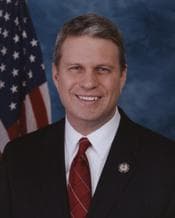
Bill Huizenga
Republican · MI · Representative
Votes with party: 98.2% (659 recorded votes)
Full profile: /officials/H001058
Source: Congress.gov · FEC
Cosponsors (1)
Members who have signed on to support this bill since introduction. Source: Congress.gov.
Latest Action
The most recent step in the bill's legislative path. Committee Activity below shows referrals and reports; the full action-by-action history including floor proceedings lives at Congress.gov →
Committee Activity
Currently in
- House Committee on Foreign AffairsReferred To · 2026-10-01
Plain-English Summary
Plain-English summary pending. Introduced on 2026-10-01. Check back soon — summaries are generated as bills progress through Congress.
Full Bill Text
Verbatim text published on Congress.gov via GovInfo. Use Cmd+F / Ctrl+F to search within this excerpt.
[Congressional Bills 119th Congress] [From the U.S. Government Publishing Office] [H.R. 10675 Introduced in House (IH)] <DOC> 119th CONGRESS 2d Session H. R. 10675 To strengthen critical mineral, energy, manufacturing and technology supply chains, advance innovation and allied cooperation, enhance United States technological leadership and competitiveness, and for other purposes. _______________________________________________________________________ IN THE HOUSE OF REPRESENTATIVES October 1, 2026 Mr. Huizenga (for himself and Mrs. Kim) introduced the following bill; which was referred to the Committee on Foreign Affairs _______________________________________________________________________ A BILL To strengthen critical mineral, energy, manufacturing and technology supply chains, advance innovation and allied cooperation, enhance United States technological leadership and competitiveness, and for other purposes. Be it enacted by the Senate and House of Representatives of the United States of America in Congress assembled, SECTION 1. SHORT TITLE; TABLE OF CONTENTS. (a) Short Title.--This Act may be cited as the ``Building United States Industrial Leadership and Development with Allies Act of 2026'' or the ``BUILD with Allies Act of 2026''. (b) Table of Contents.--The table of contents for this Act is as follows: Sec. 1. Short title; table of contents. Sec. 2. Sense of Congress. Sec. 3. Purposes. Sec. 4. Definitions. TITLE I--CRITICAL MINERAL INNOVATION PARTNERSHIP PROGRAM Sec. 101. Sense of Congress. Sec. 102. Establishment. Sec. 103. Eligibility. Sec. 104. Notification and briefing. Sec. 105. Elements. Sec. 106. Responsibilities of Director. Sec. 107. Staff. Sec. 108. International Centers of Excellence for Innovative Critical Minerals Supply Chain Technologies. Sec. 109. Digital platform. Sec. 110. Facilities and infrastructure support. Sec. 111. Assistance for science and technology cooperation; limitations. Sec. 112. Termination of authority. Sec. 113. Definitions. TITLE II--EXCHANGE PROGRAM TO STRENGTHEN MANUFACTURING WORKFORCE EDUCATION Sec. 201. Manufacturing revitalization exchange program. Sec. 202. Implementation coordination assistance. Sec. 203. Authority to engage in independent consultation. Sec. 204. Study for future expansion. Sec. 205. Sunset. Sec. 206. Definitions. TITLE III--LIST OF ENTITIES CARRYING OUT MINING INVOLVING FORCED LABOR OR CAUSING ENVIRONMENTAL HARM Sec. 301. Annual list of PRC entities carrying out mining involving forced labor, forced child labor, or environmental harm in certain African countries. Sec. 302. Definitions. TITLE IV--FOREIGN PARTNER PROCUREMENT OF UNITED STATES-ORIGIN CYBER AND DIGITAL TECHNOLOGIES Sec. 401. Sense of Congress. Sec. 402. United States Technology Procurement Program. Sec. 403. Office of United States Technology Procurement. Sec. 404. Expanding necessary technology and related expertise at United States overseas missions. Sec. 405. Extending authorization of appropriations for the Regional Technology Officer Program. Sec. 406. Preserving market-based competition for cyber and digital technologies. Sec. 407. Government Accountability Office report. Sec. 408. Definitions. TITLE V--UNITED STATES TRADE AND DEVELOPMENT AGENCY MODERNIZATION Sec. 501. Sense of Congress. Sec. 502. Expansion of country eligibility. Sec. 503. Personnel authorities. TITLE VI--COMBATING CHINA'S UNFAIR AND NON-MARKET-ORIENTED TRADE PRACTICES RELATED TO THE SHIPBUILDING INDUSTRY Sec. 601. Statement of policy to counter shipbuilding practices of the People's Republic of China. Sec. 602. Strategic ports; United States International Development Finance Corporation. Sec. 603. Briefing and report on China Ocean Shipping Company Shipping Heavy Industry and China State Shipbuilding Corporation. Sec. 604. Assistant Secretary for Water, Environment, and Space Affairs. Sec. 605. Exchange program for shipbuilding industry experts. Sec. 606. Maritime investigators. Sec. 607. Allied maritime framework. Sec. 608. Maritime group of nations. Sec. 609. International Maritime Organization. Sec. 610. Definitions. SEC. 2. SENSE OF CONGRESS. It is the sense of Congress that-- (1) secure, resilient, and trusted supply chains for critical minerals, energy systems, advanced manufacturing, and digital infrastructure are essential to United States national security, economic competitiveness, and technological leadership; (2) these supply chains are increasingly interconnected, spanning critical mineral extraction, processing, refining, advanced manufacturing, compute infrastructure, and…
Show the remaining 14,482 wordsHide the remaining 14,482 words
digital systems; (3) deeper coordination between the United States and allied and partner countries in investment, industrial capacity, and supply chains development can improve access to critical inputs and infrastructure and reduce to exposure to concentrated, coercive, or unreliable supply relationships; expanded collaboration in critical minerals extraction, processing, refining, recycling, and substitution technologies can improve supply resilience while improving resource efficiency and environmental performance; (4) joint research, workforce training, and the sharing of infrastructure, data, and expertise among the United States and allied and partner countries can accelerate the development of next-generation materials, semiconductors, mineral processing, and advanced manufacturing technologies across critical supply chains; (5) public-private collaboration involving governments, industry, academic institutions, and research organizations is essential to commercializing innovation and scaling trusted supply ecosystems; (6) coordination among allied and partner nations in investment, industrial capacity, and supply chain development can enhance resilience and reduce vulnerabilities associated with concentrated or adversarial supply dependencies; (7) strengthening secure digital infrastructure, telecommunications systems, and data-driven technologies alongside physical supply chains is critical to supporting the full technology ecosystem underlying artificial intelligence and advanced computing; (8) ensuring trusted technology ecosystems requires strong supply chain integrity measures, including transparency, traceability, and responsible sourcing standards, and addressing the use of forced labor, child labor, and other exploitative labor practices in global critical mineral and related supply chains that undermine market integrity, human rights, and the security of trusted trade relationships; (9) workforce development, technical education, and international exchanges are essential to building long-term capacity across critical minerals, advanced manufacturing, and emerging technology sectors; and (10) strengthening secure and trusted technology ecosystems across critical minerals, semiconductors, shipbuilding, and digital infrastructure enhances the commercial competitiveness of the United States by supporting the export of American technologies and standards to allied and partner markets and expanding global demand for United States-origin innovation. SEC. 3. PURPOSES. The purposes of this Act are to-- (1) strengthen cooperation between the United States and allied and partner countries in strategic sectors, including critical minerals, energy, advanced manufacturing, telecommunications, and emerging technologies; (2) promote secure and resilient supply chains that reduce reliance on foreign adversaries and advance the economic and national security interests of the United States; (3) support the exploration, extraction, processing, refining, recycling, buffer, stock building, and responsible use of critical minerals and rare earth elements through international partnerships and public-private collaboration; (4) advance research, development, innovation, and commercialization in critical and emerging technologies and strengthen United States industrial competitiveness by supporting the development, scaling, and export of United States technologies standards, and industrial capabilities to allied and partner markets; (5) expand workforce development, technical training, educational exchanges, and capacity-building programs to strengthen the industrial and technological capabilities of the United States and its allied and partner countries; (6) enhance the energy and resource security of allied and partner countries through diversification, responsible resource development, environmental stewardship, and efforts to combat illicit mining, forced labor, child labor, corruption, and other destabilizing practices; (7) facilitate strategic investment, financing, and technical assistance for projects that advance shared economic and national security objectives; and (8) strengthen coordination among governments, private industry, academic institutions, research organizations, and other stakeholders to enhance collective resilience and counter malign influence by foreign adversaries. SEC. 4. DEFINITIONS. In this Act-- (1) the term ``allied or partner country'' means a country specified in section 2350a(a)(2) of title 10, United States Code; (2) the term ``appropriate congressional committees'' means-- (A) the Committee on Foreign Affairs of the House of Representatives; and (B) the Committee on Foreign Relations of the Senate; (3) the term ``critical mineral''-- (A) means any mineral on the list of critical minerals required by section 7002(c)(3) of the Energy Act of 2020 (30 U.S.C. 1606(c)(3)) on or after January 1, 2026; and (B) includes-- (i) Helium-3; and (ii) Helium-4; and (4) the terms ``foreign entity of concern'' or ``country of concern'' have the meaning given those terms in section 10612(a)(2) of the CHIPS Act of 2022 (42 U.S.C. 19221(a)(2)); TITLE I--CRITICAL MINERAL INNOVATION PARTNERSHIP PROGRAM SEC. 101. SENSE OF CONGRESS. (a) In General.--It is the sense of Congress that-- (1) critical minerals are essential inputs for a wide range of advanced and emerging technologies, including energy systems, semiconductors, advanced manufacturing, and defense applications, and continued innovation in their use and production is vital to United States technological leadership; (2) innovation in critical minerals extraction, separation, processing, refining, recycling, and substitution technologies remains insufficient to meet projected United States demand and requires accelerated research, development, and commercialization efforts; (3) cooperation with United States partner countries possessing complementary scientific, technological, and industrial capabilities enhances the ability of the United States to advance innovation across the critical minerals value chain; (4) joint research and development initiatives with partner countries can accelerate breakthroughs in cost-effective, sustainable, and scalable approaches to critical minerals production and use; (5) allied collaboration in materials science, mineral production and extraction technologies, mineral processing technologies, and advanced manufacturing can reduce dependence on legacy methods and enable the development of next-generation technologies; (6) innovation in recycling, recovery, and reuse approaches for critical minerals presents a significant opportunity to expand supply while reducing environmental impact and resource constraints; (7) the development of substitute materials and alternative technologies can mitigate reliance on scarce or supply- constrained critical minerals and enhance long-term technological resilience; (8) shared research infrastructure, data, and scientific expertise among partner countries can improve the efficiency and effectiveness of innovation efforts related to critical minerals; (9) public-private partnerships involving governments, research institutions, and industry are essential to advancing innovation and scaling new technologies in order to bridge the ``valley of death'' in the critical minerals sector; (10) strengthening collaboration among universities, national laboratories, and private-sector entities across partner countries enhances talent development and supports a robust, market-responsive innovation ecosystem; (11) establishing formal bilateral and multilateral mechanisms for cooperation in critical minerals innovation enables sustained, long-term collaboration and more rapid response to emerging technological challenges; (12) dedicated funding and streamlined authorities for joint innovation initiatives reduce barriers to collaboration and enable more agile development and deployment of critical minerals technologies so as to accelerate the transition of technologies in research and development phases to operational deployment, government integration, and commercial application; (13) advancing innovation in critical minerals technologies is essential to maintaining United States leadership in critical and emerging technologies and supporting long-term economic and national security; and (14) activities under this title should be aligned with existing critical mineral and energy security initiatives. (b) Regarding the National Science and Technology Council.--It is the sense of Congress that-- (1) the Director should serve as a liaison to the National Science and Technology Council Subcommittee on International Science and Technology Coordination for the purpose of-- (A) determining primary areas of cooperation that are mutually beneficial to both the United States and countries and entities participating in the program; and (B) when appropriate, creating an action plan to carry out the implementation of the program; and (2) in carrying out paragraph (1), the Director and the National Science and Technology Council are encouraged to consult, as appropriate, with the National Academies of Sciences, Engineering, and Medicine and other relevant scientific and technical organizations to inform the identification and selection of priority areas of cooperation. (c) Regarding Coordination With National Defense Technology and Industrial Base Council.--It is the sense of Congress that-- (1) the Department of State, in coordination with the countries and entities participating in the program, should submit technologies supported under the program for consideration to the National Defense Technology and Industrial Base Council to accelerate the transition of commercial technologies developed under the program from research and development to operational deployment, government integration, and commercial application; and (2) technologies should be considered by the Council if they have been-- (A) created through the program and approved for council submission by the United States and countries and entities participating in the program; or (B) determined to be eligible and submitted for consideration by an allied or partner country. SEC. 102. ESTABLISHMENT. (a) In General.--There is established in the Department of State a program, to be known as the ``Critical Minerals Innovation Partnership Program'', to support the development and adoption of critical minerals innovative technologies with countries and entities, through the establishment of partnerships with such countries and entities, in order to enhance the national security, support the economic competitiveness, and diversify the critical supply chains of the United States. (b) Director.--The Secretary-- (1) shall appoint an individual to be the Director of the program, who shall be responsible to the Under Secretary of Economic Affairs for-- (A) matters pertaining to the administration and implementation of the program, including coordinating with the Federal agencies described in section 106(a)(3); and (B) such other related duties as the Secretary may from time to time designate; and (2) if the Secretary determines that it is appropriate, may appoint the Director from among officers or employees of the Department of State. SEC. 103. ELIGIBILITY. (a) Countries.--The Secretary may take into account any considerations in the Secretary's discretion when considering whether a country is eligible to participate in the program, which may include whether-- (1) the country is an allied or partner country listed in section 2350a(a)(2) of title 10, United States Code; (2) the Secretary determines that the country is strategically or commercially important to the United States; and (3) the Secretary determines that the country has the capacity and commitment to participate in the program. (b) Entities.--The Secretary may take into account any considerations in the Secretary's discretion when considering whether an entity is eligible to participate in the program if the entity-- (1) is-- (A) an institution of higher education (as such term is defined in section 101(a) of the Higher Education Act of 1965 (20 U.S.C. 1001(a))); (B) a nonprofit institution; (C) a federally funded research and development center; (D) a private sector entity; or (E) a consortia of entities described in subparagraphs (A) through (D); and (2) is not a foreign entity of concern. (c) Country Preference.--In selecting countries under subsection (a) to participate in the program, the Secretary shall, to the maximum extent practicable, give preference to countries that-- (1) are a party to a trade or economic cooperation agreement with the United States; or (2) participate in other bilateral or multilateral initiatives, frameworks, or agreements that are identified by the President as promoting United States foreign policy, economic security, or national security objectives, including normalization agreements, regional integration efforts, or strategic economic partnerships. (d) Countries of Concern and Entities.--The Secretary may not establish partnerships with any country of concern or foreign entity of concern. SEC. 104. NOTIFICATION AND BRIEFING. Not later than 30 days before the date on which a partnership is entered into with a country or entity under the program, the Director shall-- (1) consult with and notify the appropriate congressional committees regarding the proposed partnership; and (2) provide to the appropriate congressional committees an in-person briefing regarding the partnership. SEC. 105. ELEMENTS. Each partnership instrument with a country or entity participating in the program shall include the following elements: (1) Specific objectives that the country or entity and the United States expect to achieve. (2) The responsibilities of the country or entity and the United States in the achievement of such objectives. (3) Regular, quantitative benchmarks to measure whether appropriate progress towards achieving such objectives has been met. (4) A multiyear plan that-- (A) estimates the amount of contributions, commitments, and other forms of participation to be provided by the United States and the country or entity; (B) identifies proposed mechanisms to implement the plan and provide oversight; and (C) describes how such objectives will be met, including the role of the private sector or third countries in the achievement of such objectives. (5) As appropriate, a description of the current and potential level of participation of other donor countries or entities in the achievement of such objectives, including contributing funds. (6) As appropriate, a method of dispute resolution, unless already covered under a related major science and technology agreement as described in section 504 of the Foreign Relations Authorization Act of 1979 (22 U.S.C. 2656d). (7) As appropriate, a method of intellectual property allocation, unless already covered under a related Science and Technology Agreement, with the country or entity. (8) General terms governing notification of the discovery of potentially classifiable or otherwise controlled information, unless already covered under a related Science and Technology Agreement, with the country or entity. (9) As appropriate, a process or processes for considering-- (A) solicited proposals; and (B) unsolicited proposals by national, regional, or local governments and private corporations, including, where applicable, the use of the digital platform established under section 109 to facilitate submission, review, and coordination of such proposals. SEC. 106. RESPONSIBILITIES OF DIRECTOR. (a) In General.--The Director shall be responsible for-- (1) establishing dialogue with the representatives of countries and entities participating in the program to-- (A) evaluate proposals submitted through the digital platform established under section 109; and (B) recommend joint funding, coordinated procurement, or other joint efforts, as appropriate; (2) developing and maintaining a multinational strategy and roadmaps identifying vulnerabilities, capacity gaps, and priority investment areas across emerging technology for critical mineral supply chains; (3) directing the program, which may include the Centers of Excellence established under section 108 to issue joint or coordinated solicitations, including calls for proposals, grant challenge programs, and co-funded initiatives, to address cross-cutting challenges, which may include-- (A) identifying high-impact priorities, providing technical assistance, and identifying priority innovation, research, and development needs, and in carrying out such activities the Director shall consult with, as appropriate-- (i) the White House Office of Science and Technology policy; and (ii) the Department of Energy with respect to the development of National Laboratory partnerships and identification of priority critical minerals innovation activities; (B) aligning with the capabilities, constraints, and priorities of United States financing agencies, and in carrying out such activities the Director shall consult with, as appropriate-- (i) the United States International Development Finance Corporation with respect to developing finance support including feasibility funding, technical assistance, debt, equity, and political risk assurance for eligible projects; (ii) the Export-Import Bank of the United States with respect to export credit and related financing for resulting United States export opportunities; and (iii) the United States Trade and Development Agency with respect to project preparation, feasibility studies, pilot projects and technical assistance; and (C) consulting with any Federal department or agency that the Secretary determines is appropriate, including-- (i) the National Science Foundation; (ii) the Department of Defense; (iii) the Department of Commerce; (iv) the Department of Transportation; (v) the National Security Council; (vi) the National Aeronautics and Space Administration; (vii) the Department of the Treasury; (viii) the Department of the Interior; (ix) the United States Trade Representatives; (x) the Environmental Protection Agency; and (xi) the Department of Agriculture; (4) convening and coordinating governments of countries, international institutions, development agencies, and trusted industry partners to align technical standards to enable interoperable technology ecosystems consistent with shared security and economic interests; (5) establishing mechanisms to aggregate and coordinate demand for critical minerals and associated technologies among domestic agencies, allied governments, and private sector entities to enhance market certainty, enable long-term offtake arrangements, and support investment in diversified and secure supply chains; (6) articulating and recommending priority project areas for execution by other relevant Federal departments and agencies; (7) serving as the recipient for unsolicited proposals for projects to be considered for inclusion in any partnership, by national, regional, and local governments and private companies; (8) coordinating safeguards and trust mechanisms, including-- (A) eligibility criteria for such countries and entities; (B) data governance and security protocols; (C) supply chain transparency requirements; (D) protections for sensitive technologies; and (E) create monitoring, reporting and verification approaches; and (9) monitoring outcomes and reporting on progress, including metrics related to-- (A) supply chain resilience; and (B) deployment timelines. (b) Contracts, Grants, and Cooperative Agreements.--The Director may-- (1) enter into contracts for required technical support related to partnerships with countries and entities participating in the program; and (2) make grants and enter into cooperative agreements with such countries and entities that are designated by the Secretary as eligible to receive assistance under this paragraph to increase the administrative and technical capacity of such countries and entities to facilitate the development and implementation of the partnerships. (c) Country Teams.--The Director is authorized to establish at diplomatic and consular posts ``Country Teams'' with a designated lead to implement the partnerships with countries and entities participating in the program. SEC. 107. STAFF. (a) Appointments.--The Director may make appointments, without regard to the provisions of sections 3309 through 3318 of title 5, United States Code, of candidates directly to positions in the competitive service, as defined in section 2102 of that title, including experts and highly qualified personnel to support deployment, integration, and commercialization of technology activities, to carry out the program. (b) Detailees.--The Director may-- (1) request from heads of relevant Federal departments and agencies, on a reimbursable basis, the detail of personnel to the program, who-- (A) shall have relevant sectoral, financial, technical, or regional expertise; and (B) shall remain, for the purpose of preserving such employee's allowances, privileges, rights, seniority, and other benefits, an employee of the agency from which the employee is detailed; and (2) further detail personnel of the program to relevant Federal departments and agencies that are assisting in carrying out the program. SEC. 108. INTERNATIONAL CENTERS OF EXCELLENCE FOR INNOVATIVE CRITICAL MINERALS SUPPLY CHAIN TECHNOLOGIES. (a) Establishment.--The Secretary shall seek to establish, within entities participating in the program, centers which shall be known as ``International Centers of Excellence for Innovative Critical Minerals Supply Chain Technologies''. (b) Purposes.--The purposes of the Centers shall be to-- (1) advance the development, demonstration, and deployment of innovative, responsible, and resource-efficient critical minerals extraction, processing, and recycling technologies; (2) strengthen technical, regulatory, and institutional capacity in countries and entities participating in the program; (3) promote transparency, traceability, and adherence to internationally recognized environmental, labor, and human rights standards; and (4) support secure, diversified, and resilient critical minerals supply chains aligned with United States national and economic security interests. (c) Administration.--The Centers shall be administered by the Director of the Critical Minerals Innovation Partnership Program in coordination with relevant partner nations and the Federal agencies listed in section 106(a)(3)(C). (d) Activities.--The Centers may provide support for-- (1) applied research, pilot projects, and demonstration activities for innovative extraction and processing technologies, including low-impact and non-traditional methods; (2) technical assistance and training to government entities, academic institutions, and private sector partners; (3) cooperation among United States entities and country institutions, including universities, national laboratories, and industry; (4) the development and implementation of regulatory frameworks that protect public health and safety, prevent significant environmental harm, prevent the use of forced or child labor, and improve mine site remediation and closure practices; and (5) data-driven tools and digital systems to enhance monitoring and reporting, including with respect to-- (A) supply chain traceability; (B) operational resource and energy usage efficiency metrics and lifecycle emissions accounting; (C) measurements relating to air quality, water quality, land use, and site remediation; (D) identification and mitigation risks related to labor or practices, community impact, or ecological stewardship; and (E) promoting beneficiation, value addition, and the recycling and reuse of critical minerals. SEC. 109. DIGITAL PLATFORM. (a) Establishment.--The Secretary shall establish and maintain a publicly accessible digital platform to facilitate participation by United States entities in activities carried out under the program. (b) Purpose.--The platform shall-- (1) serve as a centralized clearinghouse of opportunities for participation in the program, including solicitations, funding opportunities, pilot projects, and collaborative research initiatives; (2) provide a list of priority capability gaps, technical challenges, and needs identified under paragraph (1); (3) enable United States entities, including early-stage companies, small and medium-sized enterprises, venture-backed firms, research institutions, and consortia, to identify, apply for, and propose participation in such opportunities for participation; and (4) support the submission of both solicited and unsolicited project proposals on a rolling basis. (c) Startup and Emerging Technology Engagement.--In carrying out this section, the Secretary should-- (1) ensure that early-stage and venture-backed companies are actively considered for participation in partnerships and funding opportunities; (2) develop mechanisms, as appropriate, to facilitate matchmaking between United States entities and partner country stakeholders, including industry, research institutions, and government entities; (3) coordinate, as appropriate, with private sector investors, accelerators, and innovation hubs to increase awareness of opportunities under the program; and (4) as appropriate, consult with-- (A) the United States Foreign and Commercial Service; (B) the Department of State; and (C) the Deal Team Initiative. SEC. 110. FACILITIES AND INFRASTRUCTURE SUPPORT. (a) Authorities Granted.-- (1) In general.--The Secretary may obtain by purchase, lease, concessions, license, grant, donations, or otherwise any real or personal property, equity interest, mineral right, infrastructure, facility, or other tangible or intangible asset that the Secretary determines is necessary to carry out the purposes of this title, without regard to sections 3324(a) and (b) of title 31, United States Code, and notwithstanding the provisions of chapter 91 of subtitle VI of title 31, United States Code. (2) Acquisitions.--Acquisitions under this section may be made in any foreign country or, following consultation with the Administrator of the General Services Administration, in the United States. Acquisitions shall be made pursuant to agreements, including contracts, or other arrangements consistent with applicable law and, where applicable and appropriate, with the consent or cooperation of the host government. (3) Actions relating to assets.--The Secretary may hold, manage, operate, maintain, repair, improve, demolish, reconstruct, or otherwise alter assets acquired under this section, directly or through agents, contractors, or other entities, whether corporate or non-corporate, designated by the Secretary, in a manner consistent with the purposes of this title. The Secretary of State may sell, exchange, lease, sublease, license, or otherwise dispose of any property, interest in property, or other right acquired under this section, and the proceeds derived therefrom shall, notwithstanding the provisions of any other law, be applied toward any purposes authorized by this title or held in a revolving fund established by the Secretary for such purpose, as determined by the Secretary. Amounts in said fund shall be available until expended to carry out the purposes of this title. (b) Agreements.--Agreements entered into under subsection (a) may include provisions to-- (1) support the leasing, licensing, or other lawful use of land, facilities, or infrastructure within the jurisdiction of such countries, subject to the consent of the country and consistent with its domestic laws; and (2) enable the establishment, construction, operation, and maintenance of research, development, testing, processing, refining, recycling, manufacturing, refurbishment, or logistics infrastructure related to critical minerals and associated technologies. (c) Rule of Construction.--Nothing in this section may be construed to supersede United States law or the domestic law of countries participating in the program. SEC. 111. ASSISTANCE FOR SCIENCE AND TECHNOLOGY COOPERATION; LIMITATIONS. (a) Assistance for Science and Technology Cooperation.--Chapter 4 of part II of the Foreign Assistance Act of 1961 (22 U.S.C. 2346 et seq.) is amended by adding at the end the following: ``SEC. 536. ASSISTANCE FOR SCIENCE AND TECHNOLOGY COOPERATION. ``(a) In General.--The President may furnish assistance under this part to allied or partner countries or organizations described in section 2350a of title 10, United States Code, to advance innovation, science, and technologies which advance scientific knowledge, enhance national security, support the commercial competitiveness of the United States. ``(b) Scope.--Assistance under this section may include financing for projects that demonstrate, deploy, and scale science and technology projects related to critical minerals and energy, including-- ``(1) advanced extraction technologies; ``(2) processing and refining technologies; ``(3) energy technologies; ``(4) materials science and mineral substitution; ``(5) recycling and recovery technologies; ``(6) advanced manufacturing integration; ``(7) data, mapping, and geological intelligence; ``(8) environmental and resource management technologies; ``(9) biotechnologies; ``(10) fertilizer technologies and innovations; ``(11) pilot and demonstration projects; ``(12) the development, construction, or operation of shared pilot or demonstration facilities in coordination with allied and partner countries; ``(13) activities that support the scale-up and commercialization of technologies, including engineering, testing, and integration into existing industrial systems; ``(14) partnerships with private sector entities to accelerate the transition from pilot and demonstration phases to full commercial deployment; and ``(15) other critical and emerging technologies, or industry enabling science and technology which pertain to critical mineral supply chains and that are central to the economic prosperity, national security, food security, and global leadership of the United States. ``(c) Administration.--The President shall delegate responsibility for the implementation and management of assistance under this section to the Secretary of State. ``(d) Congressional Notification.--Not later than 15 days before the date on which funds are obligated for assistance under this section, the Secretary of State shall submit to the Committee on Foreign Relations of the Senate and the Committee on Foreign Affairs of the House of Representatives a notification that includes the amount and nature of the proposed assistance in accordance with the annual report pursuant to section 634A.''. (b) Authorization of Transfers.--The Secretary is authorized to make available, from amounts authorized to be appropriated under the heading ``National Security Investment Programs'' in Acts making appropriations for the Department of State, foreign operations, and related programs or Acts making appropriations for National Security, Department of State, and Related Programs (including amounts authorized to be appropriated to the Economic Resilience Initiative), amounts for the purpose of establishing partnerships under section 536 of the Foreign Assistance Act of 1961 (as added by subsection (a)) with allied and partner countries to promote allied research, innovation, and rapid deployment of critical and emerging technologies in support of United States and allied economic and national security. (c) Consultation and Notification.--The transfer authority provided by this section is in addition to any other transfer authority provided by law, and is subject to the notification procedures under section 634A of the Foreign Assistance Act of 1961. SEC. 112. TERMINATION OF AUTHORITY. (a) Termination Date.--The authorities provided under this title and amendments made by this title shall terminate on the date that is 7 years after the date of the enactment of this Act. (b) Continuation of Existing Agreements.--The termination under subsection (a) shall not apply to-- (1) any bilateral or multilateral partnership, agreement, grant, contract, or cooperative agreement entered into before the termination date; or (2) any administrative or oversight activities necessary to close out such agreements. (c) Use of Funds After Termination.--Funds obligated before the termination date in subsection (a) may continue to be expended after such date for the purposes for which they were originally authorized. SEC. 113. DEFINITIONS. In this title: (1) Director.--The term ``Director'' means the head of the program appointed under section 102(b). (2) Program.--The term ``program'' means the Critical Minerals Innovation Partnership Program established under section 102(a). (3) Secretary.--The term ``Secretary'' means the Secretary of State. TITLE II--EXCHANGE PROGRAM TO STRENGTHEN MANUFACTURING WORKFORCE EDUCATION SEC. 201. MANUFACTURING REVITALIZATION EXCHANGE PROGRAM. (a) Establishment.--There is established an international exchange program to be known as the ``American Manufacturing Revitalization Exchange Program'' (referred to in this section as the ``Program''), which shall be administered by the Assistant Secretary for Education and Cultural Affairs, in accordance with subsection (c), to increase manufacturing knowledge, training, experience, expertise, and workforce in the United States. (b) Purposes.--The purposes of the Program are the following: (1) To advance the domestic and foreign policy priorities of the United States by promoting an international workforce exchange in manufacturing sectors, including-- (A) robotics; (B) advanced machinery; (C) semiconductors; (D) aeronautics, including space operations; (E) additive manufacturing; (F) ship building, including shipping manufacturing; (G) energy; (H) mining; (I) automotive; and (J) any other sector the Secretary of State, in consultation with the Secretary of Labor and the Secretary of Commerce, identifies as strategically important or critical and would benefit from the Program. (2) To send United States citizens from a trade or manufacturing background to manufacturing institutions, sectors, or companies in allied or partner countries that have entered into trade agreements with the United States to receive training in manufacturing skills. (3) To build relations and to connect manufacturers in the United States with technical institutions and manufacturing entities allied or partner countries to share best practices for machine operations, assembly, management, and other skills and expertise related to manufacturing or supply chain security. (4) To assist in developing a robust and skilled manufacturing workforce in the United States that can support and fill the gaps within the United States manufacturing sectors. (5) To assist in expanding and modernizing the manufacturing labor force in the United States through increased workforce training and registered apprenticeship opportunities. (6) To reduce reliance on the foreign manufacturing industry for skilled labor, components, parts, processes, technology, and products related to national security and the manufacturing sectors and to enhance the competitiveness of the United States within the global manufacturing marketplace. (7) To facilitate innovation with respect to casting, molding, forming, machining, assembling, additive manufacturing, and other processes pertaining to manufacturing. (8) Not to subsidize corporations by funding the workforce training of persons who are affiliated or have minority interest in a United States company that has subsidiaries in an allied or partner country where the program will take place. (c) Administration of Program.-- (1) Prior consultation.--The Assistant Secretary for Education and Cultural Affairs shall administer the Program after consultation with manufacturing industry leaders, Manufacturing USA, the Secretary of Commerce, the Assistant Secretary of Labor for Employment and Training, labor organizations, governments of allied or partner countries, and United States diplomatic and consular posts located in allied or partner countries. (2) Limit on number of participants.--The Assistant Secretary for Education and Cultural Affairs shall select not more than 10 participants for the Program per year. (3) Participant selection.--The Assistant Secretary for Education and Cultural Affairs shall-- (A) select Program participants in accordance with the eligibility criteria under subsection (d) and in consultation with the Secretary of Commerce and the Assistant Secretary of Labor for Employment and Training, Manufacturing USA, and other manufacturing groups; and (B) ensure Program participants come from a wide range of backgrounds and manufacturing regions in the United States. (4) Participant placement.-- (A) In general.--The Assistant Secretary for Education and Cultural Affairs, in coordination with the Secretary of Labor, the Secretary of Commerce, and United States diplomatic and consular posts located in allied or partner countries, shall place Program participants in a manufacturing sector, institution, or company approved by the Assistant Secretary for Education and Cultural Affairs in an allied or partner country. (B) Outreach.--To the extent practicable, the Assistant Secretary for Education and Cultural Affairs, in coordination with United States diplomatic and consular posts, Manufacturing USA, the Secretary of Labor, the Secretary of Commerce, and other relevant Government agencies, shall conduct outreach to relevant manufacturing, workers, and workforce training organizations, as well as relevant manufacturing companies, higher education institutions, and to governments of allied or partner countries the Assistant Secretary determines are likely to produce a range of qualified applicants to be sent abroad. (d) Participant Eligibility Criteria.-- (1) Mandatory requirements.--Each Program participant shall-- (A) have-- (i) trained as an apprentice in a Program- related manufacturing occupation, job, or field, as determined by the Assistant Secretary for Education and Cultural Affairs, in consultation with the Secretary of Labor; (ii) completed a Program-related trade curriculum apprenticeship, or an equivalent registered apprenticeship, as determined by the Assistant Secretary in consultation with the Secretary of Labor; or (iii) enrolled in at least a two-year or four-year higher education institution, trade manufacturing institution, or vocational school and completed necessary pre-requisite courses and training as determined by the Assistant Secretary for Education and Cultural Affairs, in consultation with the Assistant Secretary of Labor for Employment and Training; (B) be a United States citizen; and (C) demonstrate proficiency in language skills or provide a plan to obtain the language skills necessary to participate in the Program with respect to the allied or partner country the participant will be placed in. (2) Additional considerations.--In selecting Program participants, the Assistant Secretary for Education and Cultural Affairs may consider a variety of factors, including whether participants-- (A) have experience as a manager or supervisor in a field related to manufacturing; (B) have experience as an instructor or trainer in a vocation or registered apprenticeship program; (C) hold a degree in a field related to manufacturing; (D) are in a position at a training program overseen by a labor organization; (E) have experience as an administrator in a higher education institution related to manufacturing; or (F) hold a faculty position in an institution or higher education (as such term is defined in section 101 of the Higher Education Act of 1965 (20 U.S.C. 1001)) related to manufacturing. (e) Structure of Program.-- (1) Work plan.--To carry out the purposes described in subsection (b)-- (A) with respect to Program participants, the Assistant Secretary for Education and Cultural Affairs shall, in coordination with United States diplomatic and consular posts in allied or partner countries, Manufacturing USA, and other relevant Federal departments and agencies-- (i) approve a work plan that identifies the target objectives for the participants, including specific duties and responsibilities relating to those objectives; (ii) approve the manufacturing sectors, companies, or institutions in allied or partner countries in which the participants will conduct their workforce exchange; (iii) coordinate and be authorized to enter into agreements with the Secretary of Labor and other relevant Government agencies to provide credentials or recognition of on-the-job training for participants that align with manufacturing industry standards upon completion of the Program; (iv) ensure that the knowledge, skills, and processes acquired by the participant are documented, where practicable, through model- based work instructions, digital assembly documentation, other digital manufacturing knowledge capture platforms, or social media platforms, and disseminated in a public form to Manufacturing USA, manufacturing institutions, and employers upon the participant's return; and (v) find ways for students enrolled in a higher education institution or a vocational or registered apprenticeship program to receive course credit after participation, to the greatest extent possible; and (B) the participants shall-- (i) participate in pre-travel orientation and information sessions to learn about the allied or partner country of destination, the format of the Program, and the work and training expected; (ii) participate in advanced coursework, research projects, or practical training opportunities, offered by the host institution during completion of the Program; (iii) engage with industry partners and skilled experts to gain hands-on experience with respect to best practices in the manufacturing industry; (iv) participate in research projects or practical training opportunities offered by the host institution during completion of the Program; (v) participate in professional development activities, such as conferences, workshops, trainings, and seminars, to expand knowledge of best practices in manufacturing; (vi) train with a professional skilled tradesperson who has specialized expertise related to the manufacturing sector; (vii) record or track, to the best extent possible, their experiences and skills learned, to share with the Bureau of Educational and Cultural Affairs, the Assistant Secretary of Labor for Employment and Training, Manufacturing USA, manufacturing institutions, and other relevant Federal departments and agencies; (viii) serve as a cultural and workforce ambassador of the United States, fostering mutual understanding with the host country's manufacturing community; (ix) participate in professional development activities, such as conferences, workshops, trainings, and seminars, to expand knowledge of global best practices in manufacturing; (x) build and strengthen networks with international peers, skilled tradespersons, and industry professionals to facilitate ongoing collaboration and knowledge exchange; (xi) receive, upon completion of the Program, industry recognized credentials, certificates, letters of completion, or equivalents, to mark the completion of training in the relevant skill or skills developed during the Program; and (xii) be recognized, upon completion of the Program, as alumni and, as such, be eligible to participate in applicable Department of State educational and cultural affairs alumni networks, activities, and professional development opportunities, subject to the availability of appropriations. (2) Program period.--Program periods shall be for a duration to be determined by the Assistant Secretary for Education and Cultural Affairs but may not be for a period longer than 12 months. A one-time renewal for a period not longer than 6 months may be granted by the Assistant Secretary for Education and Cultural Affairs in consultation with the relevant United States diplomatic and consular post and the government of the allied or partner country. (f) Exchange Award.--The Assistant Secretary for Education and Cultural Affairs shall provide each Program participant with a stipend that is equal to the amount needed for the participant's reasonable costs during the Program period, which may include-- (1) living expenses, including housing, basic food costs, and daily transportation; (2) essential training materials and appropriate safety equipment; (3) mandatory visa application, immigration fees, and other essential pre-departure requirements; (4) relocation expenses including airline and rail for Program required travel; (5) in-country travel allowance essential to travel to manufacturing sites and institutions and Program related travels; (6) health care for participant and dependents; (7) software licenses, digital training platforms, and digital tools necessary to participate in trainings and skills learning; and (8) other reasonable related costs approved by the Assistant Secretary for Education and Cultural Affairs in consultation with the Assistant Secretary of Labor for Employment and Training. (g) Reports.--Not later than 1 year after the date of completion of the Program by the initial cohort of participants, and on an annual basis thereafter for 2 years, the Assistant Secretary for Education and Cultural Affairs shall submit to the Committee on Foreign Affairs of the House of Representatives and the Committee on Foreign Relations of the Senate a report providing information on the implementation of the Program, including-- (1) with respect to Program participants-- (A) background information, including-- (i) qualifications; (ii) geographical origins; and (iii) any other relevant information the Assistant Secretary for Education and Cultural Affairs determines necessary; (B) the number of participants; (C) the institutes, sectors, and companies the participants were placed with; (D) the type of work training the participants engaged in; (E) the types of cultural events and activities the participants engaged in; (F) feedback on the Program and lessons learned; (G) the jobs, vocations, or trades sought after or obtained after completing the Program; and (H) feedback from the host institution, industry, or company about the contributions of the participants; (2) a description of manufacturing or work placements selected and their relation to the development of United States region-specific specialties under the Program; (3) a plan for factoring in the lessons learned and acquired skills-based knowledge into Program going forward; (4) the total amount of funds used in support of the Program and efforts taken to maximize the efficiency and effectiveness of the funds used, including encouraging industry partnerships and support of the program; (5) any potential legislative recommendations to improve or enhance the Program to achieve the goals; (6) post-Program information that includes-- (A) the job, vocation, or trade the former participant has sought after or obtained; and (B) a report from the host institution, industry, or company the participant found placement in, about the contributions of the participants; (7) a description of the digital tools, platforms, and methodologies used to capture and transfer manufacturing knowledge from host institutions to United States employers and training programs, and an assessment of their effectiveness; and (8) the total amount of funds used in support of the Program and efforts taken to maximize the efficiency and effectiveness of the funds used, including encouraging industry partnerships and support of the program. SEC. 202. IMPLEMENTATION COORDINATION ASSISTANCE. The Assistant Secretary for Education and Cultural Affairs, is encouraged to enter into agreements with allied or partner countries, and, in particular, in allied or partner countries that have entered into trade agreements with the United States as well as corporate entities, and other appropriate organizations to create forms of assistance for the purposes of supporting and sustaining the development, implementation, administration the American Manufacturing Revitalization Program authorized under this title. SEC. 203. AUTHORITY TO ENGAGE IN INDEPENDENT CONSULTATION. In carrying out the program established by section 202(a), the Assistant Secretary for Education and Cultural Affairs is authorized and encouraged to consult, as appropriate, with Manufacturing USA and other relevant manufacturing, technical, and workforce organizations to inform the identification and selection of other priority manufacturing sectors to cooperate with when carrying out the program. SEC. 204. STUDY FOR FUTURE EXPANSION. The Assistant Secretary for Education and Cultural Affairs shall conduct a study on how to expand and sustain the program established by section 202(a) in the future so that it builds partnerships with private sector, manufacturing entities, the Department of Labor, the Department of Commerce, and labor organizations, which may be conducted in consultation with the Secretary of Labor, the Secretary of Commerce, Manufacturing USA, relevant Federal departments and agencies, and labor organizations. SEC. 205. SUNSET. This title shall terminate on December 31, 2029. SEC. 206. DEFINITIONS. In this title: (1) Assistant secretary.--The term ``Assistant Secretary'' means the Assistant Secretary for Educational and Cultural Affairs. (2) Labor organization.--The term ``labor organization'' has the meaning given that term in section 2(5) of the National Labor Relations Act (29 U.S.C. 152(5)). (3) Manufacturing sector.--The term ``manufacturing sector'' means to engage in the mechanical, physical, or chemical transformation of materials, substances, or components into new products as defined by the North American Industry Classification System 31-33 of the Bureau of Labor Statistics. (4) Manufacturing usa.--The term ``Manufacturing USA'' means the program established under section 34 of the National Institute of Standards and Technology Act (15 U.S.C. 278s). TITLE III--LIST OF ENTITIES CARRYING OUT MINING INVOLVING FORCED LABOR OR CAUSING ENVIRONMENTAL HARM SEC. 301. ANNUAL LIST OF PRC ENTITIES CARRYING OUT MINING INVOLVING FORCED LABOR, FORCED CHILD LABOR, OR ENVIRONMENTAL HARM IN CERTAIN AFRICAN COUNTRIES. (a) In General.--Not less frequently than once each year during the 2-year period beginning on the date of the enactment of this Act, the Secretary of State shall submit to the appropriate congressional committees, and make publicly available, including on the internet, a list of-- (1) each PRC entity that the Secretary reasonably assesses is carrying out mining, including large-scale mining or artisanal and small-scale mining, of critical minerals, gold, or iron in the Democratic Republic of the Congo, Nigeria, Guinea, Zambia, South Africa, or Zimbabwe or other African countries-- (A) using forced labor; (B) using forced child labor; or (C) in a manner that causes environmental harm to a protected area in the country concerned; and (2) each mine, mining zone, or concession at which such mining is carried out. (b) Development of List.--In developing each list required by subsection (a), the Secretary of State shall-- (1) use open-source information, including from press sources and academic, non-profit, and other non-state research organizations or individual researchers, and information received, collected, or otherwise obtained by United States embassies; and (2) consult with the Secretary of Labor, through the Bureau of International Labor Affairs of the Department of Labor, the Secretary of Commerce, the Secretary of the Treasury, the Director of National Intelligence, the United States Trade Representative, and other heads of Federal departments and agencies, and the foreign country counterparts of such individuals in the listed countries in subsection (a)(1), as applicable. (c) Form.--Each list required by subsection (a) shall be made publicly available and submitted to the relevant congressional committees in unclassified form, but the version submitted to the appropriate congressional committees may include a classified annex, if warranted. SEC. 302. DEFINITIONS. In this title: (1) Child.--The term ``child'' means an individual who has not attained the age of 18 years. (2) Environmental harm to a protected area.-- (A) In general.--The term ``environmental harm to a protected area'' means any damage to the environment of a protected area, such as-- (i) contamination of streams, rivers, lakes, or other bodies of water, including aquifers, or soil; (ii) soil degradation or erosion; or (iii) deforestation. (B) Protected area.--For purposes of this paragraph, the term ``protected area'' means any area designated by the government of the country in which the area is located country to receive protected status, such as a national park, game refuge, ecosystem reserve, or other nature preserve. (3) Forced labor.--The term ``forced labor'' has the meaning given that term in section 307 of the Tariff Act of 1930 (19 U.S.C. 1307). (4) PRC entity.--The term ``PRC entity'' means-- (A) an entity under the ownership, control, or influence of-- (i) the Government of the People's Republic of China; (ii) the Chinese Communist Party; or (iii) a military, intelligence, or paramilitary entity of the People's Republic of China; (B) an entity that is organized under the laws of, or otherwise subject to the jurisdiction of, the People's Republic of China (including Hong Kong and Macau); (C) an entity majority-owned, majority-controlled, or majority-financed by an entity described in subparagraph (A) or (B); or (D) a parent, subsidiary, affiliate, or contractor of an entity described in subparagraph (A), (B), or (C), including a joint venture in which an entity described in subparagraph (A), (B), or (C) holds a controlling interest. TITLE IV--FOREIGN PARTNER PROCUREMENT OF UNITED STATES-ORIGIN CYBER AND DIGITAL TECHNOLOGIES SEC. 401. SENSE OF CONGRESS. (a) Sense of Congress.--It is the sense of Congress that-- (1) foreign government partners are increasingly turning towards strategic competitors like the People's Republic of China to procure cyber and digital technologies due to their low-cost, acceptable efficiency, and associated training and maintenance; (2) foreign government partner procurement of cyber and digital technologies from suppliers aligned with strategic competitors of the United States poses significant and distinct risks, including-- (A) supply chain vulnerabilities created by dependence on strategic competitors whose governments may compel access to data, networks, or systems, undermining the cybersecurity and strategic autonomy of the procuring government; (B) the erosion of interoperability and alignment with United States cybersecurity frameworks, standards, and best practices, reducing the ability of foreign government partners to operate securely alongside United States systems and those of United States allies; and (C) the adoption of digital governance practices that are inconsistent with United States economic and national security interests; (3) United States foreign government partners consistently signal strong demand for cyber and digital technologies from trusted United States suppliers; (4) United States initiatives such as ``Pax Silica'' should facilitate technology procurements by building enduring technology partnerships between foreign government partners and United States suppliers, including by-- (A) assisting foreign government partners in navigating regulatory, logistical, and technical hurdles to cyber and digital technology procurement; (B) providing foreign government partners with strategic direction from the United States Government; (C) incorporating foreign government partner needs into program development from the outset; and (D) maintaining long-term engagement with foreign government partners throughout the procurement cycle of trusted cyber and digital technologies; and (5) as the United States seeks to maintain its global competitive edge in critical and emerging technologies, including artificial intelligence, advanced telecommunications, and robotics, it is in the interest of the United States Government to establish policies and procedures that streamline foreign government partners' ability to procure trusted and reliable technologies from the United States and United States allies and partners. SEC. 402. UNITED STATES TECHNOLOGY PROCUREMENT PROGRAM. (a) Establishment.--There is authorized to be established in the Department of State the United States Cyber and Digital Technology Procurement Program (referred to in this title as the ``Program''), which may support ``Pax Silica'', the ``American AI Exports Program'', and other related initiatives to achieve the purposes set forth in subsection (b). To the maximum extent practicable, the Program should seek to serve as a demand-driven mechanism in response to cyber and digital technology needs. (b) Purposes.--The purposes of the Program should include the following: (1) To streamline foreign government partner procurement of trusted cyber and digital technologies, including commercial off-the-shelf technologies, consistent with United States export control laws and cybersecurity standards. (2) To establish long-term cyber and digital technology procurement pipelines with United States providers, including those that continue after the termination of the Program. (3) To identify the appropriate United States Government financing mechanisms to address challenges associated with affordability. (4) To provide a comprehensive package to participating governments that eases the navigation of cyber and digital technology procurement requirements, address technical and system complexity, reflects absorptive capacity, and is compatible with participating government-specific logistical and export controls, including by-- (A) designing and implementing logistics, procurement, deployment, and technical knowledge- transfer plans that enable the participating government to modernize and secure systems; (B) promoting clear guidelines for United States and trusted foreign supplier entry and eligibility; (C) conducting assessments related to the participating government's workforce or technological needs, including any gaps in absorptive capacity, including-- (i) feasibility studies to identify, design, and implement the deployment of cyber and digital technology solutions; and (ii) sustainability assessments to determine the participating government's ability to procure and invest in trusted cyber and digital technologies, including the ability to sustain such investments in the long-term; (D) providing capacity building to ensure that the participating government obtains the relevant skills for requirements identification and assessment, integration of United States technologies into existing operating environments, research and procurement, logistics, deployment, and configuration to ensure a long-term arrangement with suppliers that are headquartered in, or the ultimate parent company of which is headquartered in, the United States; and (E) assisting the participating government in developing a long-term strategy to procure and budget for trusted cyber and digital technology procurements, including beyond the end of the Program's lifecycle. (5) To assess the risks and tradeoffs of participating governments adopting cyber and digital technologies from foreign countries of concern and prioritize participating governments for outreach efforts based on that risk assessment. (c) Covered Cyber and Digital Technologies.--In implementing the Program, the Secretary of State should, in coordination with the participating government, determine which cyber and digital technologies, as well as any other cyber and digital technologies designated by the Secretary of State, to prioritize, including the following: (1) Software and its associated subscriptions and licensing, including-- (A) operating systems; (B) enterprise management software; (C) cloud-based storage solutions and compute access; (D) industrial control and automation software, including supervisory control and data acquisition, distributed control systems, and programmable logic controller programming environments; (E) digital twin, simulation, and modeling software; and (F) cloud and edge orchestration platforms for robotic and operational technology device management. (2) Hardware, including-- (A) processors; (B) human-machine interfaces and operator consoles; (C) networking equipment, including switches, routers, and gateways; (D) industrial networking equipment; (E) biotechnology equipment, including genomic sequencers and related hardware; and (F) other related technologies. (3) Cybersecurity products, including-- (A) firewalls; (B) intrusion detection and prevention systems; (C) Security Information and Event Management systems; (D) threat intelligence and monitoring systems; (E) endpoint detection systems; (F) security operations centers; and (G) secure authentication systems. (4) Telecommunications equipment, including-- (A) subsea fiber-optic cable and associated equipment; (B) cellular equipment, including open radio access network equipment; and (C) satellite-enabling infrastructure. (5) Equipment and related products to enable the adoption of artificial intelligence (AI) solutions, including-- (A) advanced-node integrated circuits, including advanced logic and memory integrated circuits, and products containing such circuits; (B) semiconductor manufacturing equipment and related subcomponents; (C) models, including both closed- and open-weight models; (D) AI model licenses; (E) edge AI capabilities, including next-generation smartphone technology and relevant mobile operating systems; and (F) AI model applications. (d) Annual Review of Covered Cyber and Digital Technologies.--The Secretary of State, in coordination with the Secretary of Commerce and other agencies as appropriate, is authorized to conduct assessments on at least an annual basis to identify the inclusion or removal of technologies under subsection (c) based on the national security risk to the United States of a foreign country of concern gaining significant market share of such technology within an economy that is a foreign government partner. (e) Risk Mitigation Requirements.--Before approving a partnership under the Program, the Secretary of State should-- (1) conduct an assessment of technology misuse and diversion risks, including-- (A) the participating government's export control enforcement capacity; (B) the history of technology transfer to foreign countries of concern, including permitting remote access to technology; and (C) investments by foreign countries of concern in critical sectors within the country of the foreign government partner; (2) establish monitoring and mitigation requirements proportional to the risk assessed under paragraph (1); (3) include end-use monitoring provisions in all Program arrangements; and (4) coordinate with the intelligence community and the Department of Defense regarding counterintelligence and national security risks. (f) Participating Government Contribution.--For each partnership with a participating government under the Program, the Secretary of State should, to the maximum extent practicable, seek appropriate cost- sharing arrangements with the participating government to facilitate the government's long-term buy-in and sustained procurements of trusted cyber and digital technologies. (g) Additional Interagency Coordination.--In implementing the Program, to address challenges associated with affordability, financing, technical evaluations, procurement requirements, and long- term capacity building, the Secretary of State should, on a case-by- case basis, coordinate, as appropriate, with the heads of the relevant Federal departments and agencies, including of the Department of Commerce, the Department of Homeland Security, the Export-Import Bank of the United States, the United States International Development Finance Cooperation, and the United States Trade and Development Agency. (h) Use of Funds.--Funds made available to carry out the Program are authorized to be used-- (1) to provide assistance or financing-- (A) to participating government civilian government agencies; or (B) to law enforcement or military agencies, only if such entities are the owners and operators of the participating government's civilian critical infrastructure; and (2) to develop blended finance mechanisms, co-developed with the foreign government partner that partners with the private sector to advance the objections outlined in subsection (b). (i) Partner Disqualification.-- (1) Prohibition on the use of funds.--No funds are authorized to be made available under this title to-- (A) a foreign country of concern; or (B) any country, entity, or person-- (i) upon which sanctions are imposed by the President; (ii) that is an entity or person on the Entity List maintained by the Bureau of Industry and Security of the Department of Commerce and set forth in Supplement No. 4 to part 744 of title 14, Code of Federal Regulations; (iii) that is an entity on the Military End-User List (Supplement No. 7 to part 744 of the Export Administration Regulations); (iv) any person listed pursuant to section 1260H of the William M. (Mac) Thornberry National Defense Authorization Act for Fiscal Year 2021 (10 U.S.C. 113 note); (v) any person listed on the Federal Communication Commission's Covered List pursuant to the Secure and Trusted Communications Networks Act of 2019 (47 U.S.C. 1601); or (vi) any person listed on the Uyghur Forced Labor Prevention Act Entity List pursuant to the Uyghur Forced Labor Prevention Act (Public Law 117-78). (2) Vetting.--The Secretary of State should vet participating governments to determine whether there is credible information that such government-- (A) has committed serious human rights abuses or engaged in corruption, as defined in section 1 of Executive Order 13818 (50 U.S.C. 1701 note; relating to blocking the property of persons involved in serious human rights abuse or corruption), or is determined to be ineligible for assistance pursuant to section 620M of the Foreign Assistance Act of 1961 (22 U.S.C. 2378d); and (B) uses or is likely to use technologies outlined in subsection (c) and supported by this title to engage in-- (i) violations of human rights; (ii) targeted or bulk surveillance in violation of rule of law principles or fundamental freedoms; (iii) the monitoring of journalists, activists, human rights defenders, opposition parties, or political dissidents; (iv) internet shutdowns or to limit or control elections or protests; (v) political censorship or the targeting and suppression of political speech or political opponents; (vi) denial of access to technology or services based on race, ethnicity, gender, religion, or other discriminatory factors; and (vii) acts of transnational repression. (3) Disqualification.--Any participating government determined by the Secretary of State to engage in the activities described in paragraph (2) shall be ineligible for support or assistance under this title. (j) Regional Technology Officers.--The Secretary of State should, to the maximum extent practicable, leverage the Department of State's Regional Technology Officer Program, pursuant to section 9508 of the Department of State Authorization Act of 2022 (22 U.S.C. 10305), to assist United States diplomatic and consular posts to identify governments to participate in the Program. (k) Foreign Commercial Officers.--As appropriate, the Secretary of State should, in coordination with the Secretary of Commerce, seek to leverage the Foreign Commercial Officer Program to assist United States diplomatic and consular posts to identify governments to participate in the Program. (l) Congressional Notification Requirement.--Not later than 15 days before amounts from the Cyberspace, Digital Connectivity, and Related Technologies Fund established pursuant to section 592 of the Foreign Assistance Act of 1961 (22 U.S.C. 2349cc-1) are obligated for purposes of carrying out this section, the Secretary of State shall submit notification of such obligation to-- (1) the Committee on Foreign Relations in the Senate; (2) the Committee on Appropriations of the Senate; (3) the Committee on Foreign Affairs in the House of Representatives; and (4) the Committee on Appropriations of the House of Representatives. (m) Report.--Not later than one year after the date of the enactment of this Act and annually thereafter for 2 years, the Secretary of State, in coordination with the Secretary of Commerce, shall submit to the appropriate congressional committees a report that includes-- (1) a complete list of foreign government partners in the Program; (2) progress and results achieved in the previous calendar year; (3) the overall amount of purchases or investments each foreign government partner has made since initial participation in the Program; (4) specific cyber and digital technologies acquired by foreign government partners, including-- (A) the name of the provider company or companies; (B) the total value of the procurements; (C) description of the capability; and (D) how the procured capability addresses the original request submitted by the government, if applicable; (5) next steps for each participating government in its respective Program pipeline; (6) any challenges for a government's participation in the Program, including how those challenges are being addressed; and (7) how risks related to technology transfer, if applicable, are being mitigated. (n) Sunset.--The Program shall terminate on the date that is 7 years after the date of the enactment of this Act. SEC. 403. OFFICE OF UNITED STATES TECHNOLOGY PROCUREMENT. (a) Designation of Responsibility.--The Secretary of State may designate an existing office within the Department of State as, or newly establish, an Office of United States Technology Procurement (referred to in this title as the ``Office''), which shall be responsible for administering the Program. (b) Personnel.-- (1) Composition.--The Office should be comprised of a Director, a Deputy Director, and such other staff as the Secretary of State deems appropriate. (2) Staffing.--The Office should include personnel with expertise or experience in performing the following functions: (A) Grant design and management. (B) Program monitoring, evaluation, and learning. (3) Director.--The Director of the Office shall fulfill the following responsibilities: (A) Identify, on an annual basis, specific strategic priorities for the Program consistent with United States national security priorities and objectives. (B) In coordination with the other relevant officials, select and approve all partnerships with foreign government partners under the Program. (C) Conduct oversight, monitoring, and evaluation of the effectiveness of the Program, including long- term outcome assessments, to ensure the Program advances United States foreign policy and national security interests and to ensure monitoring, evaluation, and learning results directly inform future grant decisions. (D) Ensure, to the maximum extent practicable, that all Program activities are carried out in coordination with other Federal efforts to promote the United States technology stack overseas. (E) Compiling and submitting the list required by section 402(m)(1). (c) Special Hiring Authorities.--During the 2-year period beginning on the date of the enactment of this Act, for the purposes of supporting the Director in carrying out the responsibilities of the Office, the Secretary of State may-- (1) appoint up to 10 employees to positions without regard to the provisions of subchapter 1 of chapter 33 of title 5, United States Code, regarding appointments in the competitive service; and (2) fix the rates of basic pay of such employees without regard to chapter 51 and subchapter III of chapter 53 of such title regarding classification and General Schedule pay rates, provided that the rates for such positions do not exceed the annual rate of basic pay in effect for a position at level IV of the Executive Schedule under section 5315 of title 5, United States Code. SEC. 404. EXPANDING NECESSARY TECHNOLOGY AND RELATED EXPERTISE AT UNITED STATES OVERSEAS MISSIONS. (a) Sense of Congress.--It is the sense of Congress that, for the United States Government to successfully implement the Program, it is vital that the United States recruit and retain the necessary talent to facilitate such partnerships. (b) In General.--The Secretary of State should, to the maximum extent possible, take measures to ensure that United States overseas missions in countries that are participating in the Program host at least one full-time personnel with demonstrated proficiency in matters related to cybersecurity, technology, and other related expertise to sufficiently carry out the Program. SEC. 405. EXTENDING AUTHORIZATION OF APPROPRIATIONS FOR THE REGIONAL TECHNOLOGY OFFICER PROGRAM. Subsection (d) of section 9508 of the Department of State Authorization Act of 2022 (22 U.S.C. 10305) is amended by striking ``2027'' and inserting ``2032''. SEC. 406. PRESERVING MARKET-BASED COMPETITION FOR CYBER AND DIGITAL TECHNOLOGIES. (a) Statement of Policy.--It is the policy of the United States to support market-based mechanisms for the export and adoption of United States cyber and digital technologies abroad, and to oppose state- directed or state-controlled economic models that risk to displace or crowd out private-sector competition in cyber and digital technology markets. (b) Rule of Construction.--Nothing in this title may be construed to permit the Secretary of State, in coordination with other relevant Federal agencies, in carrying out the program established by section 402(a)-- (1) to unduly interfere with, or seek to substitute for, market-based competition among United States cyber and digital technology providers; (2) to condition access to program support on the acceptance of commercial terms, partnerships, or business arrangements that United States cyber and digital technology providers would not voluntarily accept in an arm's length commercial transaction; or (3) to require foreign government partners to receive approval from the United States Government for procurements from United States cyber and digital technology providers pursued outside the Program, except as otherwise required by any other regulations or Federal law. (c) Cyber and Digital Technology Small Business Owners.-- Notwithstanding subsection (b), in carrying out the Program, the Secretary of State may provide targeted assistance, including capacity- building support and the facilitation of foreign government partner engagement, to United States small businesses and companies that lack the global reach, existing relationships, or resources to compete independently in foreign government partner procurement markets, provided that such assistance does not confer an unfair competitive advantage over other United States cyber and digital technology providers. SEC. 407. GOVERNMENT ACCOUNTABILITY OFFICE REPORT. Not later than 1 year after the date of the enactment of this Act, and not less frequently than every two years until the date of the termination of the Program under section 402(n), the Comptroller General of the United States should conduct and submit to the appropriate congressional committees a review of the Program. The review should include an assessment of the Department of State's implementation of the Program, including-- (1) the Department of State's capacity to implement the Program, including personnel and budgetary resources; (2) whether the Department of State has established the necessary processes and procedures to successfully achieve the Program objectives outlined in section 402; (3) the Department of State's ability to conduct appropriate monitoring and evaluation of Program implementation; (4) any technologies added or removed from the list under section 402(c) of covered cyber and digital technologies; and (5) any other elements deemed necessary by the Comptroller General of the United States. SEC. 408. DEFINITIONS. In this title: (1) American ai exports program.--The term ``American AI Exports Program'' refers to the Department of Commerce-led initiative to promote the export of American artificial intelligence technologies to advance America's global technological leadership. (2) Foreign government partner.--For purposes of this title, the term ``foreign government partner'' means an international organization or the government of a country (other than a foreign country of concern) approved as a partner by the Secretary of State. (3) International organizations.--The term ``international organizations'' has the meaning given the term in section 1 of the International Organizations Immunities Act (22 U.S.C. 288). (4) Pax silica initiative.--The term ``Pax Silica initiative'' refers to the Department of State-led diplomatic, economic security, and supply chain initiative to strengthen cooperation among the United States, allied countries, partner countries, industry, and other relevant stakeholders for the purpose of developing and securing trusted supply chains and infrastructure necessary for artificial intelligence, semiconductors, advanced manufacturing, and other technologies determined by the Secretary of State to be essential to United States national security, economic security, and technological competitiveness. (5) Trusted cyber and digital technologies.--The term ``trusted cyber and digital technologies'' means technologies, including equipment, services, hardware, or software used in information and communications technology networks, for which the Secretary of State, in coordination with the Secretary of Commerce, has determined-- (A) the provider, supplier, or manufacturer is not owned by, controlled by, or subject to the influence of a foreign country of concern; and (B) do not pose an unacceptable risk to the national security of the United States or the security and safety of United States persons. TITLE V--UNITED STATES TRADE AND DEVELOPMENT AGENCY MODERNIZATION SEC. 501. SENSE OF CONGRESS. It is the sense of Congress that the United States Trade and Development Agency plays a critical role in advancing United States commercial, energy, digital, and infrastructure interests in priority emerging markets by supporting early-stage project preparation and technical assistance and should be authorized to allocate some of its annual program funds for activities in high-income countries that directly affect United States economic and national security. SEC. 502. EXPANSION OF COUNTRY ELIGIBILITY. Section 661(b) of the Foreign Assistance Act of 1961 (22 U.S.C. 2421(b)) is amended-- (1) by redesignating paragraphs (3), (4), and (5) as paragraphs (4), (5), and (6), respectively; and (2) by inserting after paragraph (2) the following: ``(3) Assistance in high-income countries.--Notwithstanding any other provision of law, the Director of the Trade and Development Agency is authorized to provide funds appropriated in a fiscal year for assistance under this section for-- ``(A) activities described in paragraph (2) in high-income countries; or ``(B) projects that serve United States strategic interests in the energy, critical minerals, transport, or telecommunications sectors.''. SEC. 503. PERSONNEL AUTHORITIES. Section 661(c) of such Act (22 U.S.C. 2421(c)) is amended-- (1) in paragraph (2)(C), by striking ``2 may be appointed'' and inserting ``5 may be appointed''; and (2) by adding at the end the following: ``(3) Personal services contractors.-- ``(A) The Director may contract with individuals for personal services, and such individuals may not be considered Federal employees for the purpose of any provision of law administered by the Director of the Office of Personnel Management. ``(B) The Director shall report to Congress each fiscal year describing the number of individuals contracted for personal services by the Trade and Development Agency, the roles of such contractors, and the costs of such contracts.''. TITLE VI--COMBATING CHINA'S UNFAIR AND NON-MARKET-ORIENTED TRADE PRACTICES RELATED TO THE SHIPBUILDING INDUSTRY SEC. 601. STATEMENT OF POLICY TO COUNTER SHIPBUILDING PRACTICES OF THE PEOPLE'S REPUBLIC OF CHINA. It is the policy of the United States to eliminate materials sourced from the People's Republic of China from supply chains necessary for the production of both commercial and military ships through a comprehensive effort, in coordination with allied and partner countries where appropriate, that includes-- (1) relevant knowledge transfer to and skillset development of a shipbuilding labor force in the United States; (2) securing direct investment in United States shipyards by allies and partners; and (3) the development of a coherent long-term strategy to diversify shipbuilding supply chains and expand domestic shipbuilding capacity, incorporating all relevant Federal agencies and departments. SEC. 602. STRATEGIC PORTS; UNITED STATES INTERNATIONAL DEVELOPMENT FINANCE CORPORATION. The Better Utilization of Investments Leading to Development Act of 2018 is amended-- (1) in section 1402(3) (22 U.S.C. 9601(3))-- (A) by striking subparagraph (A); and (B) by redesignating subparagraphs (B) through (G) as subparagraphs (A) through (F), respectively; and (2) in section 1412(f) (22 U.S.C. 9612(f)), by adding at the end the following: ``(4) Harbors or ports (as such terms are defined in section 3 of the Communications Act of 1934 (47 U.S.C. 153)) and related infrastructure.''. SEC. 603. BRIEFING AND REPORT ON CHINA OCEAN SHIPPING COMPANY SHIPPING HEAVY INDUSTRY AND CHINA STATE SHIPBUILDING CORPORATION. (a) Briefing.--Not later than 1 year after the date of the enactment of this Act, the Secretary of State, in coordination with the heads of other Federal agencies and departments the Secretary determines relevant, shall brief the appropriate congressional committees on-- (1) companies or entities with formal or informal financial relationships with-- (A) the China Ocean Shipping Company Shipping Heavy Industry; or (B) the China State Shipbuilding Corporation; and (2) the business practices of such companies and entities. (b) Report.--Not later than 1 year after the date of the enactment of this Act, and annually thereafter for 2 years, the President shall submit to the appropriate congressional committees a report that includes the following: (1) A description of each current and former subsidiary of the China Ocean Shipping Company Shipping Heavy Industry and the China State Shipbuilding Corporation. (2) Any trading practice of an entity described pursuant to paragraph (1) that is subject to review by the United States Trade Representative for being unreasonable, discriminatory, or violating a trade agreement. (3) The degree and extent of direct involvement by the Government of the People's Republic of China in the governance, strategic direction, planning, and commercial operations of-- (A) the China Ocean Shipping Company Shipping Heavy Industry; (B) the China State Shipbuilding Corporation; and (C) the Chinese shipbuilding industry. (4) A description of each shipyard in China that is producing warships for the People's Liberation Army Navy or producing dual-use commercial ships, including ferries and barges, that may be used by the People's Liberation Army Navy. (5) An indication of which such shipyards in the People's Republic of China are conducting business with foreign entities and potentially thereby facilitating the modernization of the People's Liberation Army Navy. SEC. 604. ASSISTANT SECRETARY FOR WATER, ENVIRONMENT, AND SPACE AFFAIRS. Section 9 of the Department of State Appropriations Authorization Act of 1973 (22 U.S.C. 2655a) is amended to read as follows: ``SEC. 9. ASSISTANT SECRETARY FOR WATER, ENVIRONMENT, AND SPACE AFFAIRS. ``(a) Establishment.--There is authorized to be in the Department of State an Assistant Secretary for Water, Environment, and Space Affairs, who shall be responsible to the Under Secretary for Economic Affairs for international matters pertaining to space, oceans and maritime affairs, polar affairs to the extent not inconsistent with section 2651a(c) of title 22, United States Code, international and transboundary environmental quality, the Great Lakes region, freshwater resources and water security, fisheries, wildlife and wildlife trafficking, conservation affairs, and such other related duties as the Secretary may from time to time designate. ``(b) Responsibilities.--The Assistant Secretary for Water, Environment, and Space Affairs shall maintain continuous observation and coordination of all matters described in subsection (a), including, as appropriate, the following: ``(1) Developing United States policy on global environmental security issues with respect to oceans, fisheries, the Antarctic region, waste and global pollution, water resources and water security and other natural resource management and conservation. ``(2) Representing the United States in bilateral and multilateral negotiations involving the law of the sea, including-- ``(A) freedom of navigation, overflight, and other lawful uses of the ocean; ``(B) maritime security; ``(C) United States maritime zones, including the United States extended continental shelf; ``(D) marine science; ``(E) the sustainable management and protection of marine habitats, fisheries, and resources; ``(F) marine pollution; and ``(G) maritime claims and boundaries. ``(3) Leading United States engagement on Antarctica matters and in international oceans and fisheries management agreements and conventions with foreign governments and international organizations to promote solutions that advance United States national security, economic, and environmental interests. ``(4) Coordinating the development of policies and programs to conserve and manage and rehabilitate or restore economically important ecosystems, including forests, wetlands, drylands, coral reefs, and terrestrial and aquatic agroecosystems. ``(5) Developing policies and programs to address international threats to natural resources, such as illicit trade, illegal, unreported and unregulated fishing, wildlife trafficking, illegal mining, and illegal logging and associated trade. ``(6) Supporting effective resolution of transboundary freshwater disputes to minimize conflict, promote economic growth, and protect freshwater supplies through responsible, science-informed management and shared use. ``(7) Developing and implementing United States foreign policy related to air, water and soil pollution and risks to human health and the environment caused by the transboundary movement of chemicals and waste and other forms of pollution to promote environmental quality and economic opportunity, with trade partners and in bilateral and multilateral agreements, arrangements, and institutions. ``(8) Representing the Department in bilateral and multilateral engagements including organizations, institutions, and negotiation of international agreements on issues related to the matters described in subsection (a). ``(9) Developing policies and programs to secure the supply of critical minerals and other valuable materials available to the United States through recycling, recovery, and seabed mining. ``(10) Developing policies and programs, in coordination with the Administrator of the National Aeronautics and Space Administration, the Secretary of Commerce, and the heads of other relevant Federal departments and agencies, as appropriate, to maintain American space superiority by supporting partnerships between the United States and international and private industry partners in the development of infrastructure and policies that promote economic growth in outer space, including-- ``(A) countering malign efforts by foreign adversaries and other actors that threaten United States interests in civil and commercial space; and ``(B) expanding access to foreign markets for United States commercial industry, including by encouraging reforms that reduce barriers to trade and cooperation with United States civil and commercial space actors. ``(11) Leading bilateral and multilateral engagements related to civil and commercial space activities, resilient space services, burden sharing, and other matters related to international space law and diplomacy and other United States international obligations and commitments. ``(12) Leading United States Government engagement with international Global Navigation Satellite Systems providers to ensure compatibility and encourage interoperability of civil global navigation satellite services on United States-based global positioning systems, including through the International Committee on Global Navigation Satellite Systems. ``(13) Leading Department efforts to implement international arrangements and promote cooperation on Earth observation satellite systems. ``(14) Leading United States engagement in multilateral and bilateral forums on international space policy, space law, and related commercial and civil treaties or agreements. ``(15) Leading Department efforts on transparency in space by maintaining the official United States space object registry and promoting best practices for safe operations in space, preservation of the space environment, space traffic coordination, and space situational awareness. ``(16) Leading United States efforts to align foreign space law, regulatory, and policy frameworks with United States- endorsed models, approaches, and best practices. ``(17) At the direction of the Under Secretary for Economic Affairs and the Secretary of State, represent the United States in international maritime diplomacy matters, including-- ``(A) the creation and operation of the Allied Maritime Framework under section 608 of the BUILD with Allies Act of 2026; and ``(B) leading United States engagement in the Maritime Group of Nations under section 609 of the BUILD with Allies Act of 2026. ``(18) Authoring any reports produced by the Department which examine the maritime claims and boundaries of coastal countries and assessing their consistency with international law. ``(19) Leading Department efforts to implement bilateral treaties and agreements related to the management and protection of the Great Lakes. ``(20) Performing such other duties as the Under Secretary for Economic Affairs may from time to time designate. ``(c) Appointment.-- ``(1) Initial appointment.--On the date of the enactment of the BUILD with Allies Act of 2026, the individual serving as the Assistant Secretary for Oceans and International Environmental and Scientific Affairs on the day before such date of enactment shall be the Assistant Secretary for Water, Environment, and Space Affairs. ``(2) Subsequent appointment.--Any subsequent appointment of an individual to the position of Assistant Secretary for Water, Environment, and Space Affairs shall be subject to the advice and consent of the Senate. ``(d) Establishment of Bureau of Water, Environment, and Space Affairs.--The Secretary shall establish a Bureau of Water, Environment, and Space Affairs, which shall perform such functions related to all matters described in subsection (a) and other related duties as the Secretary may from time to time designate. ``(e) Assistant Secretary.--The Assistant Secretary for Water, Environment, and Space Affairs shall be the head of the Bureau of Water, Environment, and Space Affairs.''. SEC. 605. EXCHANGE PROGRAM FOR SHIPBUILDING INDUSTRY EXPERTS. (a) Sense of Congress.--It is the sense of the Congress that the Secretary of State, in consultation with the Secretary of Labor, should initiate an exchange visitor program of technical shipbuilding expertise to increase shipbuilding knowledge, training, experience, and expertise in the American shipbuilding workforce. (b) Authorization To Provide for Exchanges.--Section 102(b) of the Mutual Educational and Cultural Exchange Act of 1961 (22 U.S.C. 2452(b)) is amended-- (1) in paragraph (11), by striking ``and'' at the end; (2) in paragraph (12), by striking the period and inserting ``; and''; and (3) by inserting at the end the following: ``(13) interchanges and visits between the United States and other countries of marine engineers, naval architects, electrical engineers, deck-plate professionals, marine surveyors, shipyard infrastructure analysts, quality assurance and quality control personnel, shipyard project managers, and other experts related to the shipbuilding industry until the date that is 2 years after the date of the enactment of this paragraph. The State Department's Bureau of Educational Affairs will coordinate with the Bureau of Economic, Energy, and Business' Affairs Division for Transportation Affairs to conduct the exchange program.''. SEC. 606. MARITIME INVESTIGATORS. (a) In General.--The Secretary of State shall, in coordination with the Chair of the Federal Maritime Commission, detail to diplomatic and consular posts in countries described in subsection (b) personnel from the Division for Trade Policy and Negotiations and Division for Transportation Affairs of the Bureau of Economic and Business Affairs for the purpose of investigating-- (1) unfair shipping practices, including price-fixing, market manipulation, or unreasonable refusal to deal; (2) specific actions by foreign governments to deny port of entry to United States-flagged vessels; (3) flags of convenience to determine if lower safety, labor, and environmental standards in foreign countries create unfavorable shipping conditions for United States trade; (4) anticompetitive agreements between ocean carriers and marine terminal operators for potential antitrust issues; and (5) mapping the financial relationships of shipping companies of the People's Republic of China, including the Ocean Alliance. (b) Locations of Investigators.--The countries described in this subsection are countries that meet each of the following criteria: (1) The country is among the top 5 countries globally by ship registry size and maintains an ``open registry'', allowing foreign-owned vessels to register under the flag of such country without a residency requirement (also known as a ``flag of convenience'' policy). (2) The country is among the top 15 countries globally with respect to not less than 2 of the following criteria: (A) Shipbuilding, as measured by tonnage as a percentage of global total. (B) Number of citizens or nationals who are merchant mariners. (C) Number of commercially owned ships greater than 1,000 gross weight tonnage. (c) Inclusion of Findings in Investment Climate Statement.--Section 707(b) of the Further Consolidated Appropriations Act, 2020 (22 U.S.C. 9903) is amended by inserting after paragraph (11) the following new paragraph: ``(12) Information about unfair business practices in the maritime, logistics, and shipbuilding sectors in each applicable country or region, including-- ``(A) price-fixing; ``(B) market manipulation; ``(C) unreasonable refusal to deal (as such term is defined for purposes of section 7(d) of the Ocean Shipping Reform Act of 2022 (46 U.S.C. 41104 note)); and ``(D) anticompetitive agreements between ocean carriers and marine terminal operators.''. (d) Disclosure of Certain Investments by Countries Receiving Aid.-- Section 7031(b)(2) of division K of the Consolidated Appropriations Act, 2014 (Public Law 113-76; 128 Stat. 510) is amended by inserting ``and investments in maritime, logistics, and shipbuilding sectors'' after ``allocation practices)''. SEC. 607. ALLIED MARITIME FRAMEWORK. (a) In General.--The President, in coordination with other relevant agencies and departments, shall engage allied countries to develop a shared framework to enhance collective capacity to design, produce, and maintain military and civilian ships, through-- (1) enhancing information exchange between such countries regarding such design, production, and maintenance; (2) expanding procompetitive industrial collaboration with respect to such ships; (3) strengthening the marine industries and the shipbuilding industries in allied countries; and (4) encouraging the observance of counterintelligence best practices and information sharing amongst participating national defense and security services. (b) Elements.--The framework required in subsection (a) shall include-- (1) the establishment of a mechanism to-- (A) ensure countries participating in the framework can access reciprocal ports and shipping support during crises and conflicts; (B) co-develop best-in-class design principles for the construction of ships; (C) collaborate on the construction, repair, interoperability, and other capabilities of new ships to reduce costs; (D) establish guiding principles for production line sequencing and supply chain management; (E) coordinate Cabinet or Minister-level recommendations to drive down the production costs of ships and accelerate the delivery of ships, consistent with relevant laws in the relevant countries; (F) establish a process for determining specific ship types or industry niches that are best suited for allied cooperation; and (G) develop a mechanism to incentivize financial investments from foreign sources and remove barriers to foreign direct investment in shipbuilding; (2) the establishment of a joint workforce-development program between participating shipyards and partner networks engaged in the production of ships for the purpose of training, information sharing, and the exchange of technical advisors; (3) the establishment of a mechanism to develop and share research and development and leverage innovation to promote sustainability and mutual benefit; (4) an agreement among countries participating in the framework to procure ships and ship components from shipyards identified by the participants as shipyards with specialized capabilities and experience in ship production; and (5) an agreement among countries participating in the framework to prevent leakage of dual-use technologies to companies connected to the military of the People's Republic of China. SEC. 608. MARITIME GROUP OF NATIONS. (a) Establishment.--The Secretary of State shall seek to establish a group, to be known as the ``Maritime Group of Nations'', to coordinate regulatory and commerce policies to facilitate a new maritime multimodalism for commercial shipping. (b) Participation.-- (1) Inclusion.--The Secretary of State should invite to the Maritime Group of Nations appropriate counterparts from the governments of countries that meet each of the following criteria: (A) The country is of significant importance for the purposes of establishing and advancing the objectives of the Maritime Group of Nations, as determined by the Secretary of State. (B) The country additionally is among the top 15 countries globally with respect to at least two of the following criteria: (i) Shipbuilding, as measured by tonnage as a percentage of global total. (ii) Number of citizens or nationals who are merchant mariners. (iii) Number of commercially owned ships greater than 1,000 gross weight tonnage. (2) Exclusion.--The Maritime Group of Nations established under subsection (a) may not include a foreign country of concern. (c) Functions.--The Maritime Group of Nations established under subsection (a) should consider the following: (1) Supporting the establishment of maritime prosperity zones across a diverse geography, including areas outside traditional coast shipbuilding and ship repair centers, to-- (A) incentivize and leverage national private capital and investment by allied countries in the maritime industries and waterfront communities; and (B) strengthen industrial base capacity and readiness through shipbuilding, workforce development, and expanded manufacturing incentives. (2) Supporting the development of coordinated actions to counter China's targeted dominance of the maritime, logistics, and shipbuilding. (3) Coordinating a collective position with respect to agreements, regulations, standards, and guidelines issued by the International Maritime Organization that protects United States shipbuilding industries. (4) Implementing and contributing to the exchange visitor program authorized by the amendments made by section 606. SEC. 609. INTERNATIONAL MARITIME ORGANIZATION. The Secretary of State shall direct the United States Ambassador to the United Nations to use the voice, vote, and influence of the United States mission to the United Nations to urge the International Maritime Organization of the United Nations, and the members of its Council, to-- (1) ensure that any measures adopted for the reduction of greenhouse gas emissions from ships-- (A) exclude any limits on conventional crude or diesel, liquified natural gas, or any other type of marine propulsion technology and instead champion an ``energy all'' approach that does not restrict or constrain current or breakthrough fuel types; (B) exclude any financial penalties, carbon taxes, or multilateral funds which are intended to be used to help nations decarbonize; (C) exclude penalties on liquified natural gas, recognize biofuels as viable marine fuels, and support industry-led advances in alternative fuels and other technologies without creating undue advantage or disadvantage to certain fuels or technologies through regulation; (D) mandate the withdrawal or phase out of any regional shipping emissions reduction schemes, including the Emissions Trading System of the European Union; (E) support an ``opt-in'' model consistent with the rules of such organization; and (F) exclude any net-zero 2050 targets the President considers unreasonable; (2) advance the candidacy of United States citizens into senior-level positions within the Organization and its Committee and Subcommittees, including-- (A) International Maritime Organization Assembly; (B) International Maritime Organization Council; and (C) main committees of the International Maritime Organization, including-- (i) the Maritime Safety Committee; (ii) the Marine Environment Protection Committee; (iii) the Legal Committee; (iv) the Technical Cooperation Committee; (v) the Facilitation Committee; and (vi) any Sub-Committee; (3) advance the candidacy of a United States citizen to fill the position of Secretary-General of the International Maritime Organization; (4) combat the anti-competitive practices of the People's Republic of China; (5) advocate at the International Maritime Organization and bilaterally with non-performing Member States for the consistent enforcement of existing safety and technical rules to ensure foreign-flagged vessels meet International Maritime Organization standards; and (6) de-link United States domestic environmental requirements from international certificates to reduce compliance friction for United States shipyards. SEC. 610. DEFINITIONS. In this title: (1) Deck-plate professional.--The term ``deck-plate professional'' means a skilled worker who operates directly on the production floor as a skilled tradesperson with specialized expertise related to a ship's systems and functionality. (2) Unreasonable refusal to deal.--The term ``unreasonable refusal to deal'' has the meaning given that term for purposes of section 7(d) of the Ocean Shipping Reform Act of 2022 (46 U.S.C. 41104 note). <all>
Related legislation
Bills by the same sponsor or covering overlapping subjects.
- HR9517UNLOCK AUKUS ActReferred to Committee · 2026-06-29
- HR8793Veterans Suicide Prevention and Care Enhancement Act of 2026Referred to Committee · 2026-06-12
- HR9097American Manufacturing Revitalization Exchange Program Act of 2026Referred to Committee · 2026-06-02
- HR9096Deport the Terrorists Act of 2026Referred to Committee · 2026-06-02