HR10859Referred to Committee
Biotech Defense Act
Introduced
In Committee
3
Passed One Chamber4
Passed Both5
Signed into Law119th
Congress
2026-10-22
Introduced
0
Cosponsors
HR
ⓘType
Sponsor
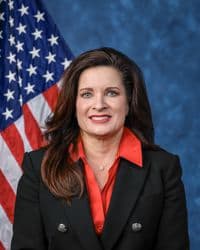
Sheri Biggs
Republican · SC · Representative
Votes with party: 90.9% (673 recorded votes)
Full profile: /officials/B001325
Source: Congress.gov · FEC
Cosponsors (0)
Members who have signed on to support this bill since introduction. Source: Congress.gov.
No cosponsors on record. Bills can pass without cosponsors — this often means the sponsor introduced the bill alone, either because it's a messaging bill, a chairman's mark, or simply early in the legislative cycle.
Latest Action
The most recent step in the bill's legislative path. Committee Activity below shows referrals and reports; the full action-by-action history including floor proceedings lives at Congress.gov →
Referred to the Committee on Armed Services, and in addition to the Committee on Intelligence (Permanent Select), for a period to be subsequently determined by the Speaker, in each case for consideration of such provisions as fall within the jurisdiction of the committee concerned.
2026-10-22
Source: Congress.gov
Committee Activity
Currently in
- House Permanent Select Committee on IntelligenceReferred To · 2026-10-22
- House Committee on Armed ServicesReferred To · 2026-10-22
Plain-English Summary
Plain-English summary pending. Introduced on 2026-10-22. Check back soon — summaries are generated as bills progress through Congress.
Full Bill Text
Verbatim text published on Congress.gov via GovInfo. Use Cmd+F / Ctrl+F to search within this excerpt.
[Congressional Bills 119th Congress] [From the U.S. Government Publishing Office] [H.R. 10859 Introduced in House (IH)] <DOC> 119th CONGRESS 2d Session H. R. 10859 To amend title 10, United States Code, to require the Secretary of Defense to develop a strategy with respect to threats posed by the biotechnology capabilities of foreign adversaries, and for other purposes. _______________________________________________________________________ IN THE HOUSE OF REPRESENTATIVES October 22, 2026 Mrs. Biggs of South Carolina introduced the following bill; which was referred to the Committee on Armed Services, and in addition to the Permanent Select Committee on Intelligence, for a period to be subsequently determined by the Speaker, in each case for consideration of such provisions as fall within the jurisdiction of the committee concerned _______________________________________________________________________ A BILL To amend title 10, United States Code, to require the Secretary of Defense to develop a strategy with respect to threats posed by the biotechnology capabilities of foreign adversaries, and for other purposes. Be it enacted by the Senate and House of Representatives of the United States of America in Congress assembled, SECTION 1. SHORT TITLE. This Act may be cited as the ``Biotech Defense Act''. SEC. 2. COUNTERING BIOTECHNOLOGY THREATS FROM THE PEOPLE'S REPUBLIC OF CHINA. (a) Sense of Congress.--It is the sense of Congress that-- (1) the rapid advancement of the People's Republic of China in biotechnology, including gene-editing, synthetic biology, and dual-use technologies, poses a significant threat to the national security of the United States and its military superiority; (2) China's military-civil fusion strategy integrates civilian biotechnology research with military applications, potentially enabling the development of enhanced soldier capabilities, bioweapons, and other asymmetric threats; (3) China's dominance in global biotechnology supply chains and its strategic investments in United States biotechnology firms risk undermining United States innovation, security, and access to critical resources; (4) the United States must proactively integrate biotechnology threats into its defense planning and intelligence assessments to maintain strategic advantages; and (5) robust oversight of foreign investments and partnerships in the United States biotechnology sector is essential to safeguard sensitive technologies and data from adversarial exploitation. (b) Integration of Threats Into National Defense Strategy.--Chapter 2 of title 10, United States Code, is amended by adding at the end the following new section: ``Sec. 118d. Integration of Biotechnology Threats into National Defense Strategy and Defense Planning Guidance. ``(a) The Secretary of Defense shall develop a strategy to ensure that threats posed by the biotechnology capabilities of foreign adversaries, particularly the People's Republic of China, are integrated into-- ``(1) the National Defense Strategy; and ``(2) the Defense Planning Guidance. ``(b) The strategy required under subsection (a) shall include-- ``(1) an assessment of foreign adversaries' use of military and dual-use biotechnology for military purposes, development of biological agents, and ability to disrupt international and United States supply chains critical to military operations; ``(2) strategies to counter such threats, including investments in U.S. biotechnology research and development, supply chain resilience, and defensive biotechnological capabilities; and ``(3) coordination with allies and international partners to address biotechnology-related national security risks. ``(c) The Secretary of Defense shall develop the strategy required by this section in consultation with the Secretary of State, the Secretary of Health and Human Services, the Secretary of Homeland Security, the Director of National Intelligence, defense and technology industry partners, research and development partners, other Federal research agencies, allies and partners of the United States, and other appropriate organizations. ``(d)(1) The Secretary of Defense shall submit to the appropriate congressional committees a report, in unclassified form but which may contain a classified annex, that includes the strategy developed pursuant to subsection (a). ``(2) In this…
Show the remaining 614 wordsHide the remaining 614 words
subsection, the term `appropriate congressional committees' means-- ``(A) the Committee on Armed Services, the Committee on Foreign Relations, the Committee on Commerce, Science, and Transportation, and the Committee on Banking, Housing, and Urban Affairs of the Senate; and ``(B) the Committee on Armed Services, the Committee on Foreign Affairs, the Committee on Energy and Commerce, and the Committee on Financial Services of the House of Representatives.''. (c) Assessment of China's Use of Biotechnology for Military Modernization.-- (1) In general.--Not later than 180 days after the date of the enactment of this Act, the Director of National Intelligence, in consultation with the Director of the Central Intelligence Agency, the Secretary of Commerce, and the Secretary of Defense, shall submit to the appropriate congressional committees a comprehensive assessment of the People's Republic of China's use of biotechnology for military modernization. (2) Elements of assessment.--The assessment required under paragraph (1) shall include-- (A) an evaluation of China's biotechnology research and development programs with potential military applications, including gene-editing, synthetic biology, and bioinformatics; (B) an analysis of China's military-civil fusion strategy and its impact on advancing military biotechnology capabilities; (C) an assessment of the potential for China to develop biological weapons or other asymmetric biotechnological threats; (D) an assessment of Chinese entities, including private companies, state-owned enterprises, and government bodies, that are developing dual-use biotechnology and any dependencies they have on United States or other foreign technology, components, or services; (E) an evaluation of China's control over global biotechnology supply chains and the implications for United States military readiness; and (F) recommendations for countermeasures, including enhanced intelligence collection, export controls, and international cooperation. (3) Form.--The assessment shall be submitted in an unclassified form, and may contain a classified annex. (d) Interagency Coordination on Biotechnology Risk.-- (1) In general.--Not later than 180 days after the date of the enactment of this Act, the Secretary of Defense, in consultation with the Secretary of State, the Secretary of Commerce, the Secretary of the Treasury, and other appropriate Federal agencies, shall establish monitoring and evaluation mechanisms to conduct risk assessments by convening a Biotechnology Risk Contact Group to carry out the duties described in paragraph (2). (2) Biotechnology risk contact group.--The Biotechnology Risk Assessment Contact Group convened pursuant to paragraph (1) shall-- (A) monitor and assess foreign investments, partnerships, and joint ventures in the United States biotechnology sector, with a focus on investments by entities from the People's Republic of China; (B) identify risks to national security posed by such investments, including the potential transfer of sensitive technologies, intellectual property, or genomic data; (C) coordinate with the Committee on Foreign Investment in the United States to review biotechnology-related transactions; (D) develop and maintain a database of foreign entities involved in the United States biotechnology sector, including their affiliations with foreign governments or military organizations; and (E) provide annual reports to Congress on foreign activities in the United States biotechnology sector, along with recommendations for mitigation measures. (3) Briefing.--Not later than 180 days after the establishment of the Biotechnology Risk Contact Group, and every 90 days thereafter, the Secretary of Defense, in consultation with the Secretary of State, the Secretary of Commerce, and the Secretary of the Treasury, shall brief the appropriate congressional committees on the activities of the Group. (e) Appropriate Congressional Committees Defined.--In this section, the term ``appropriate congressional committees'' means-- (1) the Committee on Armed Services, the Committee on Foreign Relations, the Committee on Commerce, Science, and Transportation, and the Committee on Banking, Housing, and Urban Affairs of the Senate; and (2) the Committee on Armed Services, the Committee on Foreign Affairs, the Committee on Energy and Commerce, and the Committee on Financial Services of the House of Representatives. <all>
Related legislation
Bills by the same sponsor or covering overlapping subjects.
- HR10861Blocking Foreign Cellular Modules in Defense Systems Act of 2026Referred to Committee · 2026-10-22
- HR10860Stop Beijing’s Bots ActReferred to Committee · 2026-10-22
- HR9328Improving Travel for Military Members ActPassed House · 2026-07-14
- HR9592American Space Leadership for the 21st Century ActReferred to Committee · 2026-07-06