PSA Screening for HIM Act
Sponsor
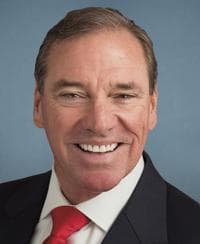
Full profile: /officials/D000628
Source: Congress.gov · FEC
Cosponsors (38)
Members who have signed on to support this bill since introduction. Source: Congress.gov.
- Gregory F. Murphy (R-NC-3)Original· 2025-02-13
- Troy A. Carter (D-LA-2)Original· 2025-02-13
- Yvette D. Clarke (D-NY-9)Original· 2025-02-13
- Betty McCollum (D-MN-4)· 2025-02-27
- Debbie Wasserman Schultz (D-FL-25)· 2025-02-27
- Mike Carey (R-OH-15)· 2025-02-27
- Mike Ezell (R-MS-4)· 2025-02-27
- Max L. Miller (R-OH-7)· 2025-03-04
- Judy Chu (D-CA-28)· 2025-03-10
- Rashida Tlaib (D-MI-12)· 2025-03-10
- April McClain Delaney (D-MD-6)· 2025-03-25
- Eugene Simon Vindman (D-VA-7)· 2025-03-25
- Jennifer L. McClellan (D-VA-4)· 2025-03-25
- Sharice Davids (D-KS-3)· 2025-03-25
- Darren Soto (D-FL-9)· 2025-04-10
- Frank J. Mrvan (D-IN-1)· 2025-04-10
- Steve Cohen (D-TN-9)· 2025-04-10
- Ted Lieu (D-CA-36)· 2025-04-10
- John Joyce (R-PA-13)· 2025-06-10
- Yassamin Ansari (D-AZ-3)· 2025-06-10
- Bennie G. Thompson (D-MS-2)· 2025-06-24
- David Scott (D-GA-13)· 2025-06-24
- Gus M. Bilirakis (R-FL-12)· 2025-06-24
- Alma S. Adams (D-NC-12)· 2025-07-02
- Donald G. Davis (D-NC-1)· 2025-07-02
- Marc A. Veasey (D-TX-33)· 2025-08-01
- Troy Balderson (R-OH-12)· 2025-09-09
- Susie Lee (D-NV-3)· 2025-09-30
- Chris Pappas (D-NH-1)· 2025-10-28
- Josh Riley (D-NY-19)· 2025-12-17
- Scott H. Peters (D-CA-50)· 2026-01-12
- Eleanor Holmes Norton (D-DC)· 2026-03-03
- Emilia Strong Sykes (D-OH-13)· 2026-03-03
- Chellie Pingree (D-ME-1)· 2026-04-20
Latest Action
The most recent step in the bill's legislative path. Committee Activity below shows referrals and reports; the full action-by-action history including floor proceedings lives at Congress.gov →
Committee Activity
Currently in
- House Committee on Energy and CommerceReferred To · 2025-02-13
Previously
- Energy and Commerce CommitteeReferred To · 2025-02-13
Plain-English Summary
Prostate-Specific Antigen Screening for High-risk Insured Men Act or the PSA Screening for HIM Act This bill requires private health insurance plans to cover evidence-based, preventive care and screenings for prostate cancer that are not already covered under the recommendations of the U.S. Preventive Services Task Force for certain men. Specifically, plans must cover such care and screenings for men who are age 40 and over and are at high risk of developing prostate cancer (e.g., with a family history of prostrate cancer). Such coverage must be provided without imposing any cost-sharing requirement.
Plain-English rewrite of the Congressional Research Service summary published on Congress.gov. Cached and reviewed.
Subjects
Full Bill Text
Verbatim text published on Congress.gov via GovInfo. Use Cmd+F / Ctrl+F to search within this excerpt.
[Congressional Bills 119th Congress] [From the U.S. Government Publishing Office] [H.R. 1300 Introduced in House (IH)] <DOC> 119th CONGRESS 1st Session H. R. 1300 To amend title XXVII of the Public Health Service Act to require group health plans and health insurance issuers offering group or individual health insurance coverage to provide coverage for prostate cancer screenings without the imposition of cost-sharing requirements, and for other purposes. _______________________________________________________________________ IN THE HOUSE OF REPRESENTATIVES February 13, 2025 Mr. Dunn of Florida (for himself, Ms. Clarke of New York, Mr. Murphy, and Mr. Carter of Louisiana) introduced the following bill; which was referred to the Committee on Energy and Commerce _______________________________________________________________________ A BILL To amend title XXVII of the Public Health Service Act to require group health plans and health insurance issuers offering group or individual health insurance coverage to provide coverage for prostate cancer screenings without the imposition of cost-sharing requirements, and for other purposes. Be it enacted by the Senate and House of Representatives of the United States of America in Congress assembled, SECTION 1. SHORT TITLE. This Act may be cited as the ``Prostate-Specific Antigen Screening for High-risk Insured Men Act'' or the ``PSA Screening for HIM Act''. SEC. 2. FINDINGS. Congress finds the following: (1) Prostate cancer is the second leading cause of cancer death in men in the United States with 1 in 44 men dying from prostate cancer and more than 35,700 men estimated to die from prostate cancer in 2025. (2) Prostate cancer is the second most commonly diagnosed cancer in the Nation with 1 in 8 men being diagnosed in their lifetimes, 3.3 million men in the United States living with a diagnosis, and over 310,000 men estimated to be diagnosed in 2025. (3) The survival rate for prostate cancer diagnosed in early stage is near 100 percent but prostate cancer diagnosed in late stage has only a 37 percent survival rate. (4) There are few, if any, symptoms of prostate cancer before it reaches late stage. (5) African-American men have a disproportionately higher rate of prostate cancer and are 70 percent more likely to be diagnosed with prostate cancer than White men, with 1 in 6 African-American men developing prostate cancer in their lifetimes. (6) African-American men are 2.1 times more likely to die from prostate cancer than White men. (7) Men with a father or brother with prostate cancer are more than twice as likely to be diagnosed with prostate cancer than men without a family history. (8) The common clinical definition for men at high-risk of prostate cancer includes African-American men and men with a family history. (9) Most of the major cancer and urological societies recommend beginning screening discussions earlier for African- American men and those with a family history of prostate cancer. (10) The United States Preventive Services Task Force has encouraged research on screening African-American men, including whether to screen African-American men at younger ages, and has identified this research as a high-priority cancer research gap. (11) Barriers to screening should be minimized for high- risk men in order to catch asymptomatic prostate cancer before it metastasizes and the survival rate is dramatically reduced. (12) The cost of treating metastatic prostate cancer in the United States health care system is hundreds of millions of dollars more annually than the cost of treating localized, early-stage cancer. SEC. 3. REQUIREMENT FOR GROUP HEALTH PLANS AND HEALTH INSURANCE ISSUERS OFFERING GROUP OR INDIVIDUAL HEALTH INSURANCE COVERAGE TO PROVIDE COVERAGE FOR PROSTATE CANCER SCREENINGS WITHOUT IMPOSITION OF COST-SHARING REQUIREMENTS. (a) In General.--Subsection (a) of section 2713 of the Public Health Service Act…
Show the remaining 435 wordsHide the remaining 435 words
(42 U.S.C. 300gg-13) is amended to read as follows: ``(a) Coverage of Preventive Health Services.-- ``(1) In general.--A group health plan and a health insurance issuer offering group or individual health insurance coverage shall, at a minimum, provide coverage for and shall not impose any cost-sharing requirements for-- ``(A) evidence-based items or services that have in effect a rating of `A' or `B' in the current recommendations of the United States Preventive Services Task Force; ``(B) immunizations that have in effect a recommendation from the Advisory Committee on Immunization Practices of the Centers for Disease Control and Prevention with respect to the individual involved; ``(C) with respect to infants, children, and adolescents, evidence-informed preventive care and screenings provided for in the comprehensive guidelines supported by the Health Resources and Services Administration; ``(D) with respect to women, such additional preventive care and screenings not described in subparagraph (A) as provided for in comprehensive guidelines supported by the Health Resources and Services Administration for purposes of this subparagraph; and ``(E) with respect to men who are age 40 and over and are at high risk of developing prostate cancer (including African-American men and men with a family history of prostate cancer (as defined in paragraph (2))), such additional evidence-based preventive care and screenings not described in subparagraph (A) for prostate cancer. ``(2) Men with a family history of prostate cancer defined.--For purposes of paragraph (1)(E), the term `men with a family history of prostate cancer' means men who have a first-degree relative-- ``(A) who was diagnosed with prostate cancer; ``(B) who developed prostate cancer; ``(C) whose death was a result of prostate cancer; ``(D) who have been diagnosed with a cancer known to be associated with increased risk of prostate cancer; or ``(E) who has a genetic alteration known to be associated with increased risk of prostate cancer. ``(3) Clarification regarding breast cancer screening, mammography, and prevention recommendations.--For the purposes of this Act, and for the purposes of any other provision of law, the current recommendations of the United States Preventive Service Task Force regarding breast cancer screening, mammography, and prevention shall be considered the most current other than those issued in or around November 2009. ``(4) Rule of construction.--Nothing in this subsection shall be construed to prohibit a plan or issuer from providing coverage for services in addition to those recommended by the United States Preventive Services Task Force or to deny coverage for services that are not recommended by such Task Force.''. (b) Effective Date.--The amendment made by subsection (a) shall apply with respect to plan years beginning on or after January 1, 2026. <all>
Related legislation
Bills by the same sponsor or covering overlapping subjects.
- HR10549Patients Choice in Specialty Pharmacy ActReferred to Committee · 2026-09-24
- HR9847Improving CARE for Youth ActReferred to Committee · 2026-07-22
- HR8890Enhancing CLIA Act of 2026Referred to Committee · 2026-05-19
- HR8500Timely Access to Coverage Decisions Act of 2026Referred to Committee · 2026-04-27