PIIA Reform Act
Sponsor
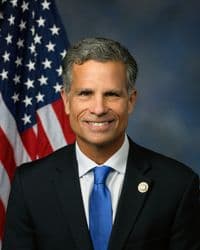
Full profile: /officials/M001204
Source: Congress.gov · FEC
Cosponsors (0)
Members who have signed on to support this bill since introduction. Source: Congress.gov.
No cosponsors on record. Bills can pass without cosponsors — this often means the sponsor introduced the bill alone, either because it's a messaging bill, a chairman's mark, or simply early in the legislative cycle.
Latest Action
The most recent step in the bill's legislative path. Committee Activity below shows referrals and reports; the full action-by-action history including floor proceedings lives at Congress.gov →
Referred to the Committee on Oversight and Government Reform, and in addition to the Committee on Ways and Means, for a period to be subsequently determined by the Speaker, in each case for consideration of such provisions as fall within the jurisdiction of the committee concerned.
2025-02-24
Source: Congress.gov
Committee Activity
Currently in
- House Committee on Oversight and Government ReformReferred To · 2025-02-24
- House Committee on Ways and MeansReferred To · 2025-02-24
Previously
- Ways and Means CommitteeReferred To · 2025-02-24
- Oversight and Government Reform CommitteeReferred To · 2025-02-24
Plain-English Summary
PIIA Reform Act This bill establishes a federal Overpayment Czar position, requires federal agencies to identify certain programs and activities as susceptible to improper payments (i.e., payments that should not have been made or were made in an incorrect amount), and imposes financial penalties on agencies for noncompliance with requirements related to reducing improper payments. The bill establishes the position of Director of Improper Payment Mitigation, to be known as the Overpayment Czar, within the Office of Management and Budget (OMB). The duties of the Overpayment Czar include assisting federal agencies in preventing improper payments and fraud. Under the bill, federal agencies must additionally identify as susceptible to significant improper payments any program or activity that is in the first four years of operation and has or is expected to have outlays exceeding $100 million in any of the first three fiscal years of operation unless, based upon a review of the program or activity, the agency makes a determination to the contrary. The bill requires a reduction in certain appropriations accounts for agencies that do not comply with various requirements related to reducing improper payments (such as publishing improper payments estimates and programmatic corrective action plans). States receiving funding for certain programs, such as Medicaid and unemployment compensation, must use payment integrity tools approved by OMB to reduce overpayments. Each annual governmentwide five-year financial management plan produced by OMB must include a plan to decrease improper payments throughout executive agencies.
Plain-English rewrite of the Congressional Research Service summary published on Congress.gov. Cached and reviewed.
Subjects
Related legislation
Bills by the same sponsor or covering overlapping subjects.
- HR10168Veterans Housing Opportunity ActReferred to Committee · 2026-08-27
- HR7401Small Business Lending Fraud Prevention ActPassed House · 2026-07-13
- HR2066Investing in All of America Act of 2025Enacted into Law · 2026-05-19
- HR8489HUD Payment Integrity and Accountability Act of 2026Referred to Committee · 2026-04-23