Stopping a Rogue President on Trade Act
Sponsor
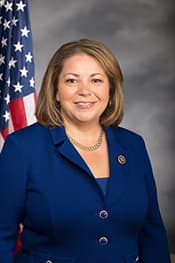
Full profile: /officials/S001156
Source: Congress.gov · FEC
Cosponsors (40)
Members who have signed on to support this bill since introduction. Source: Congress.gov.
- Adam Gray (D-CA-13)Original· 2025-04-10
- Bradley Scott Schneider (D-IL-10)Original· 2025-04-10
- Brendan F. Boyle (D-PA-2)Original· 2025-04-10
- Danny K. Davis (D-IL-7)Original· 2025-04-10
- Donald S. Beyer, Jr. (D-VA-8)Original· 2025-04-10
- Dwight Evans (D-PA-3)Original· 2025-04-10
- Gwen Moore (D-WI-4)Original· 2025-04-10
- Jimmy Gomez (D-CA-34)Original· 2025-04-10
- Jimmy Panetta (D-CA-19)Original· 2025-04-10
- John B. Larson (D-CT-1)Original· 2025-04-10
- Judy Chu (D-CA-28)Original· 2025-04-10
- Lloyd Doggett (D-TX-37)Original· 2025-04-10
- Mike Thompson (D-CA-4)Original· 2025-04-10
- Richard E. Neal (D-MA-1)Original· 2025-04-10
- Stacey E. Plaskett (D-VI-0)Original· 2025-04-10
- Steven Horsford (D-NV-4)Original· 2025-04-10
- Suzan K. DelBene (D-WA-1)Original· 2025-04-10
- Terri A. Sewell (D-AL-7)Original· 2025-04-10
- Thomas R. Suozzi (D-NY-3)Original· 2025-04-10
- Marc A. Veasey (D-TX-33)· 2025-04-28
- Lizzie Fletcher (D-TX-7)· 2025-04-30
- Mike Quigley (D-IL-5)· 2025-05-07
- Josh Gottheimer (D-NJ-5)· 2025-05-14
- James P. McGovern (D-MA-2)· 2025-07-02
- Marilyn Strickland (D-WA-10)· 2025-07-02
- Andrea Salinas (D-OR-6)· 2025-07-14
- Chellie Pingree (D-ME-1)· 2025-07-14
- Jonathan L. Jackson (D-IL-1)· 2025-07-14
- Kelly Morrison (D-MN-3)· 2025-07-14
- André Carson (D-IN-7)· 2025-09-03
- Dina Titus (D-NV-1)· 2025-09-03
- Hillary J. Scholten (D-MI-3)· 2025-09-03
- Rick Larsen (D-WA-2)· 2025-09-03
- Timothy M. Kennedy (D-NY-26)· 2025-09-03
- Debbie Wasserman Schultz (D-FL-25)· 2025-10-06
- Jim Costa (D-CA-21)· 2025-10-06
- Johnny Olszewski, Jr. (D-MD-2)· 2025-10-17
- Shri Thanedar (D-MI-13)· 2025-10-17
- Adriano Espaillat (D-NY-13)· 2025-11-17
- Julie Johnson (D-TX-32)· 2026-02-04
Latest Action
The most recent step in the bill's legislative path. Committee Activity below shows referrals and reports; the full action-by-action history including floor proceedings lives at Congress.gov →
Referred to the Committee on Ways and Means, and in addition to the Committee on Rules, for a period to be subsequently determined by the Speaker, in each case for consideration of such provisions as fall within the jurisdiction of the committee concerned.
2025-04-10
Source: Congress.gov
Committee Activity
Currently in
- House Committee on Ways and MeansReferred To · 2025-04-10
- House Committee on RulesReferred To · 2025-04-10
Plain-English Summary
Stopping a Rogue President on Trade Act This bill terminates specified executive orders imposing duties (i.e., tariffs) on certain imports into the United States. It also requires the President to receive congressional approval in order to take certain trade actions. Specifically, the bill terminates duties imposed under the following executive orders (or any executive orders that are substantially similar to these executive orders): Executive Order 14257 , which imposed a 10% tariff on most imports to the United States and additional duties on specified trading partners; Executive Order 14193 , which imposed a 25% tariff on most imports from Canada (except for Canadian energy or energy resources, which have a 10% tariff); and Executive Order 14194 , which imposed a 25% tariff on most imports from Mexico. Additionally, the bill prohibits the President from imposing or increasing a duty, quota, or tariff-rate quota on imports entering the United States, or preventing the application of trade agreement concessions on imports, unless a joint resolution of approval is enacted into law. The bill provides exclusions from this congressional approval requirement, such as imposing antidumping and countervailing duties under the Tariff Act of 1930. (Antidumping laws provide relief to U.S industries and workers that are materially injured or threatened with injury due to imports of like products sold in the U.S. market at less than fair value, while countervailing duty laws provide such relief from imports of products subsidized by a foreign government or public entity.)
Plain-English rewrite of the Congressional Research Service summary published on Congress.gov. Cached and reviewed.
Subjects
Related legislation
Bills by the same sponsor or covering overlapping subjects.
- HRES1427Expressing support for the designation of July 10th as Journeyman Lineworkers Recognition Day.Referred to Committee · 2026-07-13
- HR9296Strengthening Social Security Act of 2026Referred to Committee · 2026-06-11
- HR8996Rental Housing Investment ActReferred to Committee · 2026-05-21
- HR8632PFAS Cleanup ActReferred to Committee · 2026-04-30