Cosmetic Safety for Communities of Color and Professional Salon Workers Act of 2025
Sponsor
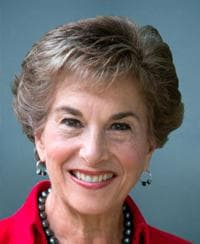
Full profile: /officials/S001145
Source: Congress.gov · FEC
Cosponsors (17)
Members who have signed on to support this bill since introduction. Source: Congress.gov.
- Ayanna Pressley (D-MA-7)Original· 2025-07-16
- Bonnie Watson Coleman (D-NJ-12)Original· 2025-07-16
- Debbie Dingell (D-MI-6)Original· 2025-07-16
- Dwight Evans (D-PA-3)Original· 2025-07-16
- Eleanor Holmes Norton (D-DC)Original· 2025-07-16
- Rashida Tlaib (D-MI-12)Original· 2025-07-16
- Ro Khanna (D-CA-17)Original· 2025-07-16
- Shri Thanedar (D-MI-13)Original· 2025-07-16
- Sara Jacobs (D-CA-51)· 2025-07-17
- Lloyd Doggett (D-TX-37)· 2025-07-23
- Doris O. Matsui (D-CA-7)· 2025-08-01
- Yvette D. Clarke (D-NY-9)· 2026-04-21
- Lizzie Fletcher (D-TX-7)· 2026-04-27
Latest Action
The most recent step in the bill's legislative path. Committee Activity below shows referrals and reports; the full action-by-action history including floor proceedings lives at Congress.gov →
Referred to the Committee on Energy and Commerce, and in addition to the Committee on Education and Workforce, for a period to be subsequently determined by the Speaker, in each case for consideration of such provisions as fall within the jurisdiction of the committee concerned.
2025-07-16
Source: Congress.gov
Committee Activity
Currently in
- House Committee on Education and WorkforceReferred To · 2025-07-16
- House Committee on Energy and CommerceReferred To · 2025-07-16
Previously
- Energy and Commerce CommitteeReferred To · 2025-07-16
- Education and Workforce CommitteeReferred To · 2025-07-16
Plain-English Summary
Cosmetic Safety for Communities of Color and Professional Salon Workers Act of 2025 This bill establishes programs and requirements to address the effects of harmful chemicals in cosmetics on consumers and salon workers, particularly in communities of color, and subjects synthetic braids to regulation by the Food and Drug Administration (FDA). Specifically, the FDA must establish safety standards for synthetic braids. Synthetic braids that do not meet such standards must be labeled with a specified warning. The bill also requires the Department of Health and Human Services (HHS) to conduct (or award grants for) research on harmful chemicals most commonly found in cosmetics marketed to and used by women and girls of color and professional nail, hair, and beauty salon workers. HHS must publish reports summarizing this research, including recommendations for reducing potentially unsafe exposures. In addition, the FDA must award grants to support the development of alternative, safer chemicals that may be used in place of harmful chemicals in cosmetics. HHS must also establish, through grants to eligible entities, national resource centers on beauty justice and salon worker health and safety to educate consumers and salon workers, respectively, about harmful chemicals in cosmetics. Finally, the Occupational Safety and Health Administration must require manufacturers and importers of professional cosmetic products to make safety data sheets available in multiple languages for cosmetics that include certain hazardous chemicals. Employers, including salon operators, must make the relevant safety data sheet available to any employee exposed to a product subject to this requirement.
Plain-English rewrite of the Congressional Research Service summary published on Congress.gov. Cached and reviewed.
Subjects
Related legislation
Bills by the same sponsor or covering overlapping subjects.
- HR10792FTC Whistleblower Act of 2026Referred to Committee · 2026-10-09
- HR10701FTC Autonomy ActReferred to Committee · 2026-10-01
- HR10600Abortion is Health Care Everywhere Act of 2026Referred to Committee · 2026-09-24
- HR10459Patriotic Corporations of America Act of 2026Referred to Committee · 2026-09-16