Election Mail Act
Sponsor
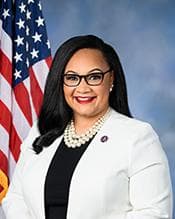
Full profile: /officials/W000788
Source: Congress.gov · FEC
Cosponsors (54)
Members who have signed on to support this bill since introduction. Source: Congress.gov.
- Al Green (D-TX-9)Original· 2025-08-05
- Andrea Salinas (D-OR-6)Original· 2025-08-05
- André Carson (D-IN-7)Original· 2025-08-05
- Angie Craig (D-MN-2)Original· 2025-08-05
- April McClain Delaney (D-MD-6)Original· 2025-08-05
- Ayanna Pressley (D-MA-7)Original· 2025-08-05
- Bennie G. Thompson (D-MS-2)Original· 2025-08-05
- Christopher R. Deluzio (D-PA-17)Original· 2025-08-05
- Cleo Fields (D-LA-6)Original· 2025-08-05
- Dave Min (D-CA-47)Original· 2025-08-05
- Delia C. Ramirez (D-IL-3)Original· 2025-08-05
- Dwight Evans (D-PA-3)Original· 2025-08-05
- Ed Case (D-HI-1)Original· 2025-08-05
- Eleanor Holmes Norton (D-DC)Original· 2025-08-05
- Emanuel Cleaver (D-MO-5)Original· 2025-08-05
- Emilia Strong Sykes (D-OH-13)Original· 2025-08-05
- Gregory W. Meeks (D-NY-5)Original· 2025-08-05
- Henry C. "Hank" Johnson, Jr. (D-GA-4)Original· 2025-08-05
- Janice D. Schakowsky (D-IL-9)Original· 2025-08-05
- Jasmine Crockett (D-TX-30)Original· 2025-08-05
- Jennifer L. McClellan (D-VA-4)Original· 2025-08-05
- Jesús G. "Chuy" García (D-IL-4)Original· 2025-08-05
- Jonathan L. Jackson (D-IL-1)Original· 2025-08-05
- Kevin Mullin (D-CA-15)Original· 2025-08-05
- Kweisi Mfume (D-MD-7)Original· 2025-08-05
- LaMonica McIver (D-NJ-10)Original· 2025-08-05
- Lateefah Simon (D-CA-12)Original· 2025-08-05
- Lloyd Doggett (D-TX-37)Original· 2025-08-05
- Marilyn Strickland (D-WA-10)Original· 2025-08-05
- Paul Tonko (D-NY-20)Original· 2025-08-05
- Raja Krishnamoorthi (D-IL-8)Original· 2025-08-05
- Rashida Tlaib (D-MI-12)Original· 2025-08-05
- Robert C. "Bobby" Scott (D-VA-3)Original· 2025-08-05
- Robin L. Kelly (D-IL-2)Original· 2025-08-05
- Sarah Elfreth (D-MD-3)Original· 2025-08-05
- Sean Casten (D-IL-6)Original· 2025-08-05
- Seth Moulton (D-MA-6)Original· 2025-08-05
- Sheila Cherfilus-McCormick (D-FL-20)Original· 2025-08-05
- Shomari Figures (D-AL-2)Original· 2025-08-05
- Shontel M. Brown (D-OH-11)Original· 2025-08-05
- Shri Thanedar (D-MI-13)Original· 2025-08-05
- Stephen F. Lynch (D-MA-8)Original· 2025-08-05
- Summer L. Lee (D-PA-12)Original· 2025-08-05
- Suzan K. DelBene (D-WA-1)Original· 2025-08-05
- Sydney Kamlager-Dove (D-CA-37)Original· 2025-08-05
- Terri A. Sewell (D-AL-7)Original· 2025-08-05
- Yassamin Ansari (D-AZ-3)Original· 2025-08-05
- Yvette D. Clarke (D-NY-9)Original· 2025-08-05
- George Latimer (D-NY-16)· 2025-09-19
- Seth Magaziner (D-RI-2)· 2025-10-03
- Wesley Bell (D-MO-1)· 2025-10-03
- Becca Balint (D-VT)· 2026-03-25
Latest Action
The most recent step in the bill's legislative path. Committee Activity below shows referrals and reports; the full action-by-action history including floor proceedings lives at Congress.gov →
Referred to the Committee on House Administration, and in addition to the Committee on Oversight and Government Reform, for a period to be subsequently determined by the Speaker, in each case for consideration of such provisions as fall within the jurisdiction of the committee concerned.
2025-08-05
Source: Congress.gov
Committee Activity
Currently in
- House Committee on House AdministrationReferred To · 2025-08-05
- House Committee on Oversight and Government ReformReferred To · 2025-08-05
Previously
- Committee on House AdministrationReferred To · 2025-08-05
- Oversight and Government Reform CommitteeReferred To · 2025-08-05
Plain-English Summary
Election Mail Act This bill addresses the delivery and processing of election mail for federal elections, including by establishing certain standards for mail-in ballots. Specifically, the bill requires the U.S. Postal Service (USPS) to ensure (to the maximum extent practicable) same-day processing of mail-in ballots, postmark each ballot, carry election mail (e.g., voter registration applications and mail-in ballots) as first-class mail that is free of postage, appoint an election mail coordinator at each area office and district office, and consult annually with Indian tribes regarding barriers to voting for eligible voters living on Indian lands. The bill prohibits the USPS, within 120 days of a federal election, from making any operational change that would restrict the prompt and reliable delivery of election mail. Each state and jurisdiction must provide with each mail-in ballot a return envelope with an intelligent mail barcode. This requirement does not apply to a state or jurisdiction that uses an alternative system that enables voters to track the ballot through the mail. The bill requires election officials to count mail-in ballots that are postmarked by election day and arrive within seven days after the election.
Plain-English rewrite of the Congressional Research Service summary published on Congress.gov. Cached and reviewed.
Subjects
Related legislation
Bills by the same sponsor or covering overlapping subjects.
- HRES1620Supporting the goals and ideals of "National Nonviolence Week" to raise awareness of youth violence in the United States.Referred to Committee · 2026-10-06
- HJRES216Proposing an amendment to the Constitution of the United States to prohibit the use of slavery and involuntary servitude as a punishment for a crime.Referred to Committee · 2026-09-15
- HR10239Equal Pay for Equal Work ActReferred to Committee · 2026-09-02
- HR1640HEIRS Act of 2025Referred to Committee · 2026-09-01