Air Permitting Improvements to Protect National Security Act of 2025
Sponsor
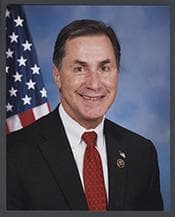
Full profile: /officials/P000609
Source: Congress.gov · FEC
Cosponsors (11)
Members who have signed on to support this bill since introduction. Source: Congress.gov.
- Dan Crenshaw (R-TX-2)· 2026-01-12
- Randy K. Weber, Sr. (R-TX-14)· 2026-01-12
- Barry Moore (R-AL-1)· 2026-01-14
- Craig A. Goldman (R-TX-12)· 2026-01-14
- Earl L. "Buddy" Carter (R-GA-1)· 2026-01-21
- Julie Fedorchak (R-ND)· 2026-01-21
- Rick W. Allen (R-GA-12)· 2026-01-21
- Nicholas A. Langworthy (R-NY-23)· 2026-02-09
- Robert F. Onder, Jr. (R-MO-3)· 2026-02-09
- John R. Moolenaar (R-MI-2)· 2026-02-23
- Young Kim (R-CA-40)· 2026-03-04
Latest Action
The most recent step in the bill's legislative path. Committee Activity below shows referrals and reports; the full action-by-action history including floor proceedings lives at Congress.gov →
Committee Activity
Currently in
- House Committee on Energy and CommerceReported By · 2026-04-28
Previously
- Energy and Commerce CommitteeReported By · 2026-04-28
- Energy and Commerce CommitteeMarkup By · 2026-01-21
- House Committee on Energy and CommerceMarkup By · 2026-01-21
- Energy and Commerce CommitteeReferred To · 2025-12-03
- House Committee on Energy and CommerceReferred To · 2025-12-03
Plain-English Summary
This bill would streamline the air pollution permitting process for projects deemed important to national security, allowing the federal government to approve certain industrial facilities and infrastructure more quickly while still maintaining environmental protections. The changes would primarily affect companies building defense-related manufacturing plants, energy infrastructure, and other facilities that officials consider critical to national security, potentially reducing the time and regulatory requirements for these projects compared to standard environmental reviews.
AI-assisted summary generated from the official bill metadata (title, subjects, actions) sourced from Congress.gov. Cached and reviewed. Always verify against the official text linked below.
Subjects
Full Bill Text
Verbatim text published on Congress.gov via GovInfo. Use Cmd+F / Ctrl+F to search within this excerpt.
[Congressional Bills 119th Congress] [From the U.S. Government Publishing Office] [H.R. 6373 Reported in House (RH)] <DOC> Union Calendar No. 544 119th CONGRESS 2d Session H. R. 6373 [Report No. 119-627] To amend the Clean Air Act to establish authority for the President to waive the requirement for an advanced manufacturing facility or a critical mineral facility to offset increased emissions of any air pollutant, and for other purposes. _______________________________________________________________________ IN THE HOUSE OF REPRESENTATIVES December 3, 2025 Mr. Palmer introduced the following bill; which was referred to the Committee on Energy and Commerce April 28, 2026 Additional sponsors: Mr. Crenshaw, Mr. Weber of Texas, Mr. Moore of Alabama, Mr. Goldman of Texas, Mrs. Fedorchak, Mr. Allen, Mr. Carter of Georgia, Mr. Onder, Mr. Langworthy, Mr. Moolenaar, and Mrs. Kim April 28, 2026 Committed to the Committee of the Whole House on the State of the Union and ordered to be printed _______________________________________________________________________ A BILL To amend the Clean Air Act to establish authority for the President to waive the requirement for an advanced manufacturing facility or a critical mineral facility to offset increased emissions of any air pollutant, and for other purposes. Be it enacted by the Senate and House of Representatives of the United States of America in Congress assembled, SECTION 1. SHORT TITLE. This Act may be cited as the ``Air Permitting Improvements to Protect National Security Act of 2025''. SEC. 2. SUPPORTING CRITICAL MANUFACTURING. Section 173 of the Clean Air Act (42 U.S.C. 7503) is amended-- (1) in subsection (c), by adding at the end the following: ``(3) National Security Waiver.--Upon application by the owner or operator of a new or modified advanced manufacturing facility or critical mineral facility (as such terms are defined in subsection (f)(2)), the President may waive, in whole or in part, any requirement that is in effect under this part for such advanced manufacturing facility or critical mineral facility to offset increased emissions of any air pollutant if the President determines it is in the national security interests of the United States to waive such requirement. The President may not delegate such a determination to any other person.''; and (2) by adding at the end the following: ``(f) Alternative Requirements for Advanced Manufacturing Facilities and Critical Mineral Facilities.-- ``(1) In general.--The permitting authority of a State shall allow a new or modified major stationary source that is an advanced manufacturing facility or a critical mineral facility to offset emissions from such source by alternative or innovative means under the following conditions: ``(A) The source demonstrates to the satisfaction of the permitting authority of the State that it has used all reasonable means to obtain and utilize offsets, as determined on an annual basis, for the emissions increases beyond allowable levels, that all available offsets are being used, and that sufficient offsets are not available to the source. ``(B) The source will comply with an alternative measure, imposed by the permitting authority, designed to offset any emission increases beyond permitted levels not directly offset by the source. In lieu of imposing any alternative offset measures, the permitting authority may impose an emissions fee to be paid to such authority of a State which shall be an amount no greater than 1.5 times the average cost of stationary source control measures adopted in that area during the previous 3 years. The permitting authority shall utilize the fees in a manner that maximizes the emissions reductions in that area. ``(2) Definitions.--In this subsection: ``(A) Advanced manufacturing facility.--The term `advanced manufacturing facility' means a facility the primary purpose of which is the manufacturing of semiconductors…
Show the remaining 116 wordsHide the remaining 116 words
or semiconductor manufacturing equipment. ``(B) Critical mineral facility.--The term `critical mineral facility' means a facility primary purpose of which is the extraction, processing, refining, or milling of a critical mineral (as designated by the Secretary of the Interior).''. Union Calendar No. 544 119th CONGRESS 2d Session H. R. 6373 [Report No. 119-627] _______________________________________________________________________ A BILL To amend the Clean Air Act to establish authority for the President to waive the requirement for an advanced manufacturing facility or a critical mineral facility to offset increased emissions of any air pollutant, and for other purposes. _______________________________________________________________________ April 28, 2026 Committed to the Committee of the Whole House on the State of the Union and ordered to be printed
Related legislation
Bills by the same sponsor or covering overlapping subjects.
- HR9617CHARM ActPassed House · 2026-09-16
- HJRES211Providing congressional disapproval under chapter 8 of title 5, United States Code, of the rule submitted by the Environmental Protection Agency relating to "California State Motor Vehicle Pollution Control Standards; Notice of Decision Granting a Waiver of Clean Air Act Preemption for California's 2009 and Subsequent Model Year Greenhouse Gas Emission Standards for New Motor Vehicles".Referred to Committee · 2026-08-06
- HR8467ZOMBIE ActPassed House · 2026-06-11
- HR2076Lulu’s LawReported by Committee · 2026-04-09