Data Center Community Impact Act
Sponsor
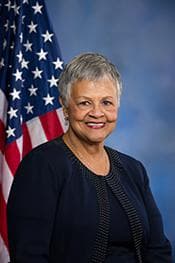
Full profile: /officials/W000822
Source: Congress.gov · FEC
Cosponsors (16)
Members who have signed on to support this bill since introduction. Source: Congress.gov.
- Adelita S. Grijalva (D-AZ-7)Original· 2026-03-05
- Eleanor Holmes Norton (D-DC)Original· 2026-03-05
- Rashida Tlaib (D-MI-12)Original· 2026-03-05
- Robert Menendez (D-NJ-8)Original· 2026-03-05
- Shri Thanedar (D-MI-13)Original· 2026-03-05
- Steve Cohen (D-TN-9)Original· 2026-03-05
- Summer L. Lee (D-PA-12)Original· 2026-03-05
- Valerie P. Foushee (D-NC-4)Original· 2026-03-05
- Daniel S. Goldman (D-NY-10)· 2026-03-12
- Pramila Jayapal (D-WA-7)· 2026-03-17
- Ilhan Omar (D-MN-5)· 2026-03-26
- Betty McCollum (D-MN-4)· 2026-04-15
- Lateefah Simon (D-CA-12)· 2026-04-23
Latest Action
The most recent step in the bill's legislative path. Committee Activity below shows referrals and reports; the full action-by-action history including floor proceedings lives at Congress.gov →
Committee Activity
Currently in
- House Committee on Energy and CommerceReferred To · 2026-03-05
Previously
- Energy and Commerce CommitteeReferred To · 2026-03-05
Plain-English Summary
This bill would likely require large data centers to assess and report on their impact to local communities, particularly regarding energy use, water consumption, and other environmental effects. The measure aims to give communities and regulators better information about how data centers affect their areas, potentially leading to stricter rules or mitigation requirements for companies operating these facilities. Data center operators, tech companies, and local governments would be the main groups affected by increased transparency and possible new regulations.
AI-assisted summary generated from the official bill metadata (title, subjects, actions) sourced from Congress.gov. Cached and reviewed. Always verify against the official text linked below.
Subjects
Full Bill Text
Verbatim text published on Congress.gov via GovInfo. Use Cmd+F / Ctrl+F to search within this excerpt.
[Congressional Bills 119th Congress] [From the U.S. Government Publishing Office] [H.R. 7858 Introduced in House (IH)] <DOC> 119th CONGRESS 2d Session H. R. 7858 To require the Secretary of Energy to conduct a study on the effect of data centers on communities of color and low-income communities, and for other purposes. _______________________________________________________________________ IN THE HOUSE OF REPRESENTATIVES March 5, 2026 Mrs. Watson Coleman (for herself, Ms. Tlaib, Ms. Norton, Ms. Lee of Pennsylvania, Mrs. Foushee, Mr. Cohen, Mr. Menendez, Mr. Thanedar, and Mrs. Grijalva) introduced the following bill; which was referred to the Committee on Energy and Commerce _______________________________________________________________________ A BILL To require the Secretary of Energy to conduct a study on the effect of data centers on communities of color and low-income communities, and for other purposes. Be it enacted by the Senate and House of Representatives of the United States of America in Congress assembled, SECTION 1. SHORT TITLE. This Act may be cited as the ``Data Center Community Impact Act''. SEC. 2. FINDINGS. Congress finds the following: (1) Data centers are a significant and growing source of energy consumption in the United States, accounting for approximately 4.4 percent of total United States electricity use in 2023, with projections estimating growth to between 6.7 percent and 12 percent as demand for computing power and artificial intelligence increases. (2) The energy usage of data centers has tripled over the last decade and is projected to double or triple again by 2028. Water-cooling infrastructure for data centers consumed approximately 17 billion gallons of water in 2023, a figure projected to increase substantially by 2028, while an estimated 211 billion additional gallons of water were used to generate the electricity consumed by data centers. (3) Communities of color, low-income communities, Indian Tribes, and other vulnerable populations, such as persons with disabilities, children, and the elderly, are disproportionately burdened by environmental hazards that include exposure to polluted air, waterways, and landscapes. (4) Communities subject to environmental injustice have been subjected to systemic racial, social, and economic injustices and face a disproportionate burden of adverse human health impacts, a higher risk of intentional, unconscious, and structural discrimination, and disproportionate energy burdens. (5) The siting and operation of data centers have raised environmental and public health concerns for nearby communities, including in Memphis, Tennessee, where a large- scale facility was built near a predominantly Black neighborhood already burdened by existing pollution issues. (6) The Federal Government has a responsibility to protect public health and community safety pursuant to the Clean Air Act and the Federal Water Pollution Control Act (commonly referred to as the Clean Water Act), including through the evaluation of emerging sources of environmental and energy- related impacts. SEC. 3. STUDY AND REPORT ON THE EFFECT OF DATA CENTERS ON COMMUNITIES OF COLOR AND LOW-INCOME COMMUNITIES. (a) In General.--The Secretary of Energy, in coordination with the Administrator of the Environmental Protection Agency, the Secretary of Commerce, the Chair of the Federal Energy Regulatory Commission, and the Council on Environmental Quality, shall conduct a study on the effect of data centers on communities of color and low-income communities. (b) Included Information.--The study required by subsection (a) shall include the following information: (1) The amount of water consumed by data centers, including how such consumption affects local water supplies and drought- prone regions. (2) The amount of energy consumed by data centers, including the amount of such energy generated from fossil fuels and the effect of such consumption on peak load on the electric grid. (3) How such data centers affect air quality, including the amount of emissions from backup diesel generators and associated…
Show the remaining 503 wordsHide the remaining 503 words
infrastructure operated by data centers. (4) The effect of data centers on soil and land-use practices, including land-use practices relating to agriculture and local food sources. (5) The effect of data centers on the electric grid, including with respect to any increase in rates for electricity. (6) How the cooling processes used by data centers affect wastewater systems. (7) The effects of constructing and operating data centers on the creation and displacement of jobs. (8) The effects of data centers on State and local tax revenue, including with respect to tax incentives and whether benefits flow to the community in which the data center is located. (9) The effects of data centers on the value of property located in nearby residential areas. (10) How data centers affect public health risks related to pollution, stress on natural resources, summer heat, and heat island effects. (c) Consultation.--In conducting the study required by subsection (a), the Secretary of Energy shall consult with relevant local government entities and Indian Tribes. (d) Report.--Not later than the date that is 18 months after the date of enactment of this section, the Secretary of Energy shall provide to Congress a report that includes-- (1) an assessment of the information included in the study required by subsection (a); (2) a map that identifies where data centers are located relative to communities of color and low-income communities; (3) recommendations for Federal coordination on how to mitigate potential harms of data centers; and (4) proposed guidelines or recommendations for best practices that States and local government entities may adopt to mitigate potential harms of data centers. SEC. 4. DEFINITIONS. In this Act: (1) Community of color.--The term ``community of color'' means a geographically distinct area in which the population of any of the following categories of individuals is higher than the average population of that category for the State in which the community is located: (A) Black. (B) African American. (C) Asian. (D) Pacific Islander. (E) Hispanic. (F) Latino. (G) Middle Eastern or North African. (2) Data center.--The term ``data center'' has the meaning given such term in section 453(a) of the Energy Independence and Security Act of 2007 (42 U.S.C. 17112(a)). (3) Indian tribe.--The term ``Indian Tribe'' has the meaning given the term ``Indian tribe'' in section 4 of the Indian Self-Determination and Education Assistance Act (25 U.S.C. 5304). (4) Local governmental entity.--The term ``local governmental entity'' means any municipal government or county government with jurisdiction over local land use decisions. (5) Low-income community.--The term ``low-income community'' means any census block group in which 30 percent or more of the population are individuals with an annual household income equal to, or less than, the greater of-- (A) an amount equal to 80 percent of the median income of the area in which the household is located, as reported by the Department of Housing and Urban Development; and (B) 200 percent of the Federal poverty line. (6) State.--The term ``State'' includes the District of Columbia and any territory of the United States. <all>
Related legislation
Bills by the same sponsor or covering overlapping subjects.
- HRES1450Condemning all forms of hate.Referred to Committee · 2026-07-22
- HR9208HEAR Act of 2026Referred to Committee · 2026-06-08
- HR9114Gig Is Up ActReferred to Committee · 2026-06-02
- HR9044Minority Fellowship Program Reauthorization Act of 2026Referred to Committee · 2026-05-26