HR8489Referred to Committee
HUD Payment Integrity and Accountability Act of 2026
Introduced
In Committee
3
Passed One Chamber4
Passed Both5
Signed into Law119th
Congress
2026-04-23
Introduced
0
Cosponsors
HR
ⓘType
Sponsor
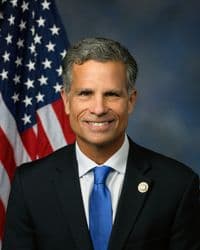
Daniel Meuser
Republican · PA · Representative
Votes with party: 97.8% (637 recorded votes)
Full profile: /officials/M001204
Source: Congress.gov · FEC
Cosponsors (0)
Members who have signed on to support this bill since introduction. Source: Congress.gov.
No cosponsors on record. Bills can pass without cosponsors — this often means the sponsor introduced the bill alone, either because it's a messaging bill, a chairman's mark, or simply early in the legislative cycle.
Latest Action
The most recent step in the bill's legislative path. Committee Activity below shows referrals and reports; the full action-by-action history including floor proceedings lives at Congress.gov →
Committee Activity
Currently in
- House Committee on Financial ServicesReferred To · 2026-04-23
Previously
- Financial Services CommitteeReferred To · 2026-04-23
Plain-English Summary
The federal government would be required to study how much money is being lost to fraud, errors, and improper payments in housing assistance programs that help low-income people afford rent. This assessment would examine both project-based assistance (where aid goes to specific apartment buildings) and tenant-based assistance (where aid follows individual renters), helping identify where money is being wasted or misused. The findings could lead to better oversight and stronger controls to protect taxpayer dollars in these housing programs.
AI-assisted summary generated from the official bill metadata (title, subjects, actions) sourced from Congress.gov. Cached and reviewed. Always verify against the official text linked below.
Subjects
Housing and Community Development
Full Bill Text
Verbatim text published on Congress.gov via GovInfo. Use Cmd+F / Ctrl+F to search within this excerpt.
[Congressional Bills 119th Congress] [From the U.S. Government Publishing Office] [H.R. 8489 Introduced in House (IH)] <DOC> 119th CONGRESS 2d Session H. R. 8489 To require the Secretary of Housing and Urban Development to conduct an improper payment assessment for project-based and tenant-based assistance, and for other purposes. _______________________________________________________________________ IN THE HOUSE OF REPRESENTATIVES April 23, 2026 Mr. Meuser introduced the following bill; which was referred to the Committee on Financial Services _______________________________________________________________________ A BILL To require the Secretary of Housing and Urban Development to conduct an improper payment assessment for project-based and tenant-based assistance, and for other purposes. Be it enacted by the Senate and House of Representatives of the United States of America in Congress assembled, SECTION 1. SHORT TITLE. This Act may be cited as the ``HUD Payment Integrity and Accountability Act of 2026''. SEC. 2. DEFINITIONS. In this Act: (1) Department.--The term ``Department'' means the Department of Housing and Urban Development. (2) Project-based assistance; tenant-based assistance.--The terms ``project-based assistance'' and ``tenant-based assistance'' have the meanings given those terms in section 8(f) of the United States Housing Act of 1937 (42 U.S.C. 1437f(f)). (3) Public housing agency.--The term ``public housing agency'' has the meaning given the term in section 3(b) of the United States Housing Act of 1937 (42 U.S.C. 1437a(b)). (4) Secretary.--The term ``Secretary'' means the Secretary of Housing and Urban Development. SEC. 3. MANDATORY COMPLIANCE DATE. (a) In General.--Not later than December 1, 2027, the Secretary shall include, as part of the agency financial report for fiscal year 2027 required under OMB Circular No. A-36, a compliant improper payment assessment for project-based assistance and tenant-based assistance. (b) Detailed Plan and Timeline.--The Secretary shall develop and execute a detailed plan and timeline for testing and reporting improper payment estimates in the Office of Public and Indian Housing's Tenant- Based Rental Assistance program and the Office of Multifamily Housing's Project-Based Rental Assistance program, in full compliance with Federal law and applicable guidance issued by the Office of Management and Budget. SEC. 4. IDENTIFYING FRAUD IN HOUSING AND RENTAL ASSISTANCE. (a) Public and Section 8 Housing.-- (1) In general.--Not later than 60 days after making a determination described in paragraph (2), the Secretary shall notify the Inspector General of the Department of the determination. (2) Determination.--A determination described in this paragraph is a determination that-- (A) the aggregate amount of housing assistance payments or grants paid under the United States Housing Act of 1937 (42 U.S.C. 1437 et seq.) for a ZIP Code and county or county equivalent increased by more than 100 percent in a single year; or (B) the number of owners, landlords, or public housing agencies receiving Federal rental assistance or operating subsidies increased in a ZIP Code and county or county equivalent by more than 100 percent in a single year. (b) Community Development and Disaster Recovery Grants.-- (1) In general.--Not later than 60 days after making a determination described in paragraph (2), the Secretary shall notify the Inspector General of the Department of the determination. (2) Determination.--A determination described in this paragraph is a determination that-- (A) the aggregate amount paid under the Community Development Block Grant program under title I of the Housing and Community Development Act of 1974 (42 U.S.C. 3601 et seq.) or funds paid under the Community Development Block Grant program for Disaster Recovery for a specific project or within a ZIP Code and county equivalent increased by more than 100 percent in a single year; or (B) the number of sub-recipients or contractors receiving payments under the programs described in subparagraph (A) in a specific jurisdiction increased by…
Show the remaining 403 wordsHide the remaining 403 words
more than 100 percent in a single year. (c) Audit by the Inspector General of HUD.--Not later than 2 years after the date of enactment of this Act, and annually thereafter, the Inspector General of the Department shall-- (1) identify, based on the results of notifications received under subsection (a)(1) or (b)(1), any program or geographic area in which the aggregate amount paid or the number of participating housing providers increased by not less than 400 percent during the preceding 5-year period; and (2) audit any such program, agency, or recipient to ensure compliance with improper payment testing requirements and to detect potential fraudulent activity. SEC. 5. INSPECTOR GENERAL OVERSIGHT. (a) Pre-Validation.--Not later than 180 days before the deadline described in section 3(a), the Inspector General of the Department shall certify whether or not-- (1) the methodology chosen by the Secretary for the assessment described in that section is statistically sound and addresses all material findings from financial statement audits and program audits conducted by the Inspector General related to improper payment testing, eligibility tier verification, and validation of payments to property owners; and (2) the Secretary made a serious effort to conduct a data draw and receive supporting documents needed to conduct the assessment described in section 3(a). (b) Fraud Risk Assessment.-- (1) In general.--The Inspector General of the Department shall conduct, and submit to the Committee on Banking, Housing, and Urban Affairs and the Committee on Homeland Security and Governmental Affairs of the Senate a report on, a separate fraud risk assessment specifically for the approximately $50,000,000,000 expended annually for rental assistance, including tenant-based ad project-based assistance under section 8(o) of the United States Housing Act of 1937 (42 U.S.C. 1437f(o)), to identify high-risk nodes in the payment chain. (2) Data draw and analytics.--In conducting the assessment under paragraph (1), the Inspector General shall of the Department shall-- (A) execute a comprehensive data draw from all relevant departmental and third-party contract administrator systems to reconcile payments at the eligibility tier; (B) identify specific barriers preventing the Department from reestablishing computer matching agreements with the ``Do Not Pay'' database of the Department of the Treasury; and (C) include in the report an analysis on how system enhancement funding provided in previous fiscal years has been utilized to specifically address noncompliance with subchapter IV of chapter 33 of title 31, United States Code, and other provisions of law related to improper payments. <all>
Related legislation
Bills by the same sponsor or covering overlapping subjects.
- HR10168Veterans Housing Opportunity ActReferred to Committee · 2026-08-27
- HR7401Small Business Lending Fraud Prevention ActPassed House · 2026-07-13
- HR2066Investing in All of America Act of 2025Enacted into Law · 2026-05-19
- HR8162Regulatory Review Improvement Act of 2026Referred to Committee · 2026-03-30