EMPOWER Act
Sponsor
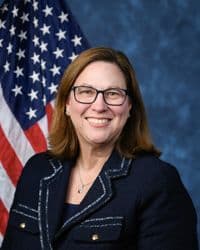
- Climate & Environment$5k
Full profile: /officials/J000310
Source: Congress.gov · FEC
Cosponsors (0)
Members who have signed on to support this bill since introduction. Source: Congress.gov.
No cosponsors on record. Bills can pass without cosponsors — this often means the sponsor introduced the bill alone, either because it's a messaging bill, a chairman's mark, or simply early in the legislative cycle.
Latest Action
The most recent step in the bill's legislative path. Committee Activity below shows referrals and reports; the full action-by-action history including floor proceedings lives at Congress.gov →
Committee Activity
Currently in
- House Committee on Foreign AffairsReferred To · 2026-04-29
Previously
- Foreign Affairs CommitteeReferred To · 2026-04-29
Plain-English Summary
The State Department would work with private companies and other organizations to help women in South and Central Asia gain better access to jobs, business opportunities, and economic resources. The bill aims to strengthen existing partnerships and create new ones that support women's financial independence and economic participation in countries like India, Pakistan, Afghanistan, and others in the region. This would affect women entrepreneurs and workers in those areas, as well as American companies and nonprofits involved in international development.
AI-assisted summary generated from the official bill metadata (title, subjects, actions) sourced from Congress.gov. Cached and reviewed. Always verify against the official text linked below.
Subjects
Full Bill Text
Verbatim text published on Congress.gov via GovInfo. Use Cmd+F / Ctrl+F to search within this excerpt.
[Congressional Bills 119th Congress] [From the U.S. Government Publishing Office] [H.R. 8575 Introduced in House (IH)] <DOC> 119th CONGRESS 2d Session H. R. 8575 To strengthen the public-private partnerships and policy efforts of the Department of State to advance women's economic security in South and Central Asia, and for other purposes. _______________________________________________________________________ IN THE HOUSE OF REPRESENTATIVES April 29, 2026 Ms. Johnson of Texas introduced the following bill; which was referred to the Committee on Foreign Affairs _______________________________________________________________________ A BILL To strengthen the public-private partnerships and policy efforts of the Department of State to advance women's economic security in South and Central Asia, and for other purposes. Be it enacted by the Senate and House of Representatives of the United States of America in Congress assembled, SECTION 1. SHORT TITLE. This Act may be cited as the ``Enhancing Mobilization of Public- Private Organizations for Women's Economic Rights Act'' or the ``EMPOWER Act''. SEC. 2. FINDINGS. Congress finds the following: (1) Women's full and unfettered political, economic, and social participation is vital to realizing universal human rights, global prosperity, peace, and security. (2) Women's labor force participation, asset ownership, and economic security are development multipliers, promoting family financial resilience, community health and development, children's educational attainment, and poverty reduction, among other development gains across South and Central Asia. (3) Women's economic participation and opportunity, educational attainment, health and survival, and political empowerment are directly proportional to countries' economic competitiveness. (4) Women make up about 33 percent of South Asia's labor force, among the lowest female labor force participation rates in the world, yet gender parity in employment could increase South Asia's Gross Domestic Product by between 19 to 58 percent. (5) While the percentage varies across the five Central Asian states, Tajikistan and Uzbekistan also have some of the lowest female labor force participation rates in the world, at 29.6 percent and 35.9 percent, respectively. (6) The Women's Councils are consortia of public-private partnerships between the Department of State and United States and South Asian businesses, civil society, and universities, to matchmake technology, networks, expertise, and resources of our corporate and civil society members to create more impact together than any entity could alone. (7) The Women's Councils implement President Trump's Presidential Memorandum on Promoting Women's Global Development and Prosperity and the bipartisan Women, Peace, and Security Act of 2017. (8) The Women's Councils accelerate women's economic empowerment in South and Central Asian countries, growing economies and advancing stability and prosperity for all, at no cost to American taxpayers. SEC. 3. STATEMENT OF POLICY. It is the policy of the United States to promote women's economic security and advancement, including in South and Central Asia, as an integral part of the broader conduct of United States foreign policy in the region. SEC. 4. WOMEN'S COUNCILS AND PUBLIC-PRIVATE PARTNERSHIPS ADVANCING WOMEN'S ECONOMIC SECURITY IN SOUTH AND CENTRAL ASIA. (a) In General.--The Secretary of State shall maintain and seek to expand existing women's councils and other public-private partnerships that-- (1) forge ties between the United States and countries in South and Central Asia, by catalyzing commitments from the private sector, civil society, and academia; and (2) advance women's employment, entrepreneurship and access to education, such as the United States-Pakistan Women's Council, the United States-India Alliance for Women's Economic Empowerment, and the Alliance for Afghan Women's Economic Resilience. (b) Sense of Congress.--It is the sense of Congress that the activities authorized under subsection (a) should support-- (1) women's financial inclusion and access; (2) women's access to mentorship; (3) women's asset ownership; (4) incubation and scaling of women-owned startups and small and medium enterprises; (5)…
Show the remaining 343 wordsHide the remaining 343 words
access to procurement opportunities by women entrepreneurs; (6) career-enhancing educational opportunities; (7) women in science, technology, engineering, the arts and mathematics; (8) the care economy; and (9) addressing legal and social barriers to women's economic empowerment. (c) Location.--Activities authorized under this section may be conducted in the United States, in countries in South and Central Asia, or in third countries. SEC. 5. ESTABLISHMENT OF UNIT. (a) In General.--The Secretary of State shall establish within the Bureau of South and Central Asian Affairs a Unit responsible for overseeing the public-private partnerships described in section 4(a). Such Unit shall be led by a Special Advisor for Women's Economic Security, who shall report to the Assistant Secretary of State for South and Central Asia. (b) Special Advisor.--The Special Advisor for Women's Economic Security shall-- (1) be appointed by the Secretary of State, including from among existing officials or employees of the Department of State to serve as the Special Advisor in addition to that official or employee's existing role; and (2) have the rank and status of Ambassador. (c) Designated Point of Contact.--Each United States diplomatic and consular post the Special Advisor determines relevant shall designate a point of contact from among the personnel of such post, whose duties shall include identifying and tracking relevant private sector commitments with respect to the public-private partnerships overseen by the Unit established under subsection (a). SEC. 6. REPORT. (a) In General.--Not later than 1 year after the date of the enactment of this Act, the Secretary of State shall submit to the appropriate congressional committees a report that includes-- (1) a description of the steps taken to implement this Act, including allocated personnel and funding; (2) the status of the commitments and partnerships described in section 4(a); and (3) economic data on the impact of work of the Unit authorized by section 5. (b) Appropriate Congressional Committees Defined.--In this section, the term ``appropriate congressional committees'' means the following: (1) The Committee on Foreign Affairs of the House of Representatives. (2) The Committee on Foreign Relations of the Senate. <all>
Related legislation
Bills by the same sponsor or covering overlapping subjects.
- HR10564Enduring Accountability ActReferred to Committee · 2026-09-24
- HR10365AmeriCorps Access for Dreamers ActReferred to Committee · 2026-09-14
- HR9192Prior Authorization Reform for Autoimmune and Blood Disorders ActReferred to Committee · 2026-06-08
- HR8817FORTIFY ActReferred to Committee · 2026-05-14