Smoke and Heat Ready Communities Act of 2025
Sponsor
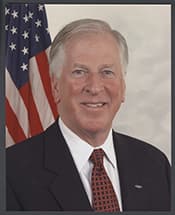
Full profile: /officials/T000460
Source: Congress.gov · FEC
Cosponsors (23)
Members who have signed on to support this bill since introduction. Source: Congress.gov.
- Dina Titus (D-NV-1)Original· 2025-01-31
- Doris O. Matsui (D-CA-7)Original· 2025-01-31
- Eleanor Holmes Norton (D-DC)Original· 2025-01-31
- George Whitesides (D-CA-27)Original· 2025-01-31
- Jimmy Panetta (D-CA-19)Original· 2025-01-31
- Julia Brownley (D-CA-26)Original· 2025-01-31
- Kevin Mullin (D-CA-15)Original· 2025-01-31
- Mark DeSaulnier (D-CA-10)Original· 2025-01-31
- Nanette Diaz Barragán (D-CA-44)Original· 2025-01-31
- Raul Ruiz (D-CA-25)Original· 2025-01-31
- Ro Khanna (D-CA-17)Original· 2025-01-31
- Robert Garcia (D-CA-42)Original· 2025-01-31
- Yassamin Ansari (D-AZ-3)Original· 2025-01-31
- Jim Costa (D-CA-21)· 2025-02-04
- Joe Neguse (D-CO-2)· 2025-02-04
- Suzanne Bonamici (D-OR-1)· 2025-02-04
- Judy Chu (D-CA-28)· 2025-03-06
- Val T. Hoyle (D-OR-4)· 2025-03-06
- Maxine Waters (D-CA-43)· 2025-03-10
- Maxine Dexter (D-OR-3)· 2025-03-24
- Kim Schrier (D-WA-8)· 2025-10-31
- Janelle S. Bynum (D-OR-5)· 2025-11-21
- Pramila Jayapal (D-WA-7)· 2026-03-19
Latest Action
The most recent step in the bill's legislative path. Committee Activity below shows referrals and reports; the full action-by-action history including floor proceedings lives at Congress.gov →
Referred to the Committee on Energy and Commerce, and in addition to the Committee on Science, Space, and Technology, for a period to be subsequently determined by the Speaker, in each case for consideration of such provisions as fall within the jurisdiction of the committee concerned.
2025-01-31
Source: Congress.gov
Plain-English Summary
Smoke and Heat Ready Communities Act of 2025 This bill authorizes the Environmental Protection Agency (EPA) to make grants to air pollution control agencies to support the development and implementation of programs that support local communities in detecting, preparing for, communicating with the public about, or mitigating the environmental and public health aspects of wildfire smoke and extreme heat. The EPA must establish a formula to distribute the grants among air pollution control agencies. The bill requires the EPA to establish four Centers of Excellence for Wildfire Smoke and Extreme Heat at institutions of higher education to research (1) the effects of smoke emissions from wildland fires and extreme heat on public health, and (2) the means by which communities can better respond to impacts from such conditions. Additionally, the EPA must begin to carry out research to study the health effects of smoke emissions from wildland fires and extreme heat; develop and disseminate personal and community-based interventions to reduce exposure to, and health effects of, wildland fire smoke emissions and extreme heat; increase the quality of smoke and extreme heat monitoring and prediction tools and techniques; and develop implementation and communication strategies. The EPA must also establish a competitive grant program to assist certain entities (e.g., a state) in developing and implementing collaborative community plans for mitigating the impacts of smoke emissions from wildland fires and extreme heat.
Plain-English rewrite of the Congressional Research Service summary published on Congress.gov. Cached and reviewed.
Subjects
Related legislation
Bills by the same sponsor or covering overlapping subjects.
- HRES1628Supporting the designation of the week beginning on October 10, 2026, as "National Wildlife Refuge Week".Referred to Committee · 2026-10-15
- HR10508To strengthen services provided in rural areas, and for other purposes.Referred to Committee · 2026-09-17
- HR9489GRACE for Military Survivors ActReferred to Committee · 2026-06-25
- HRES1376Supporting the contributions and goals of Lavender Growers Month.Referred to Committee · 2026-06-18