CONSENT Act
Sponsor
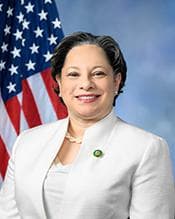
Full profile: /officials/M001227
Source: Congress.gov · FEC
Cosponsors (1)
Members who have signed on to support this bill since introduction. Source: Congress.gov.
Latest Action
The most recent step in the bill's legislative path. Committee Activity below shows referrals and reports; the full action-by-action history including floor proceedings lives at Congress.gov →
Committee Activity
Currently in
- House Committee on the JudiciaryReferred To · 2026-06-04
Plain-English Summary
I don't have enough information to write an accurate summary. The bill title "CONSENT Act" and subjects listed as "None" don't provide the specific details about what this legislation would do, who it affects, or what problem it addresses. To write a factual summary for a general audience, I would need access to the bill's actual text or a description of its provisions.
AI-assisted summary generated from the official bill metadata (title, subjects, actions) sourced from Congress.gov. Cached and reviewed. Always verify against the official text linked below.
Subjects
Full Bill Text
Verbatim text published on Congress.gov via GovInfo. Use Cmd+F / Ctrl+F to search within this excerpt.
[Congressional Bills 119th Congress] [From the U.S. Government Publishing Office] [H.R. 9155 Introduced in House (IH)] <DOC> 119th CONGRESS 2d Session H. R. 9155 To establish a private right of action against a person who transmits unsolicited intimate visual depictions. _______________________________________________________________________ IN THE HOUSE OF REPRESENTATIVES June 4, 2026 Ms. McClellan (for herself and Mr. Moran) introduced the following bill; which was referred to the Committee on the Judiciary _______________________________________________________________________ A BILL To establish a private right of action against a person who transmits unsolicited intimate visual depictions. Be it enacted by the Senate and House of Representatives of the United States of America in Congress assembled, SECTION 1. SHORT TITLE. This Act may be cited as the ``Curbing Online Non-consensual Sexually Explicit Nudity Transfers Act'' or the ``CONSENT Act''. SEC. 2. TRANSMISSION OF UNSOLICITED INTIMATE VISUAL DEPICTIONS. (a) Definitions.--In this section: (1) Consent.--The term ``consent'' means an affirmative, conscious, and voluntary authorization made by an individual free from force, fraud, duress, misrepresentation, or coercion. (2) Intimate digital forgery.--The term ``intimate digital forgery'' means any intimate visual depiction of an identifiable individual that-- (A) falsely represents, in whole or in part-- (i) the identifiable individual; or (ii) the conduct or content that makes the intimate visual depiction intimate; (B) is created through the use of software, machine learning, artificial intelligence, or any other computer-generated or technological means, including by adapting, modifying, manipulating, or altering an authentic intimate visual depiction; and (C) is indistinguishable from an authentic intimate visual depiction of the identifiable individual when viewed as a whole by a reasonable person. (3) Intimate visual depiction.--The term ``intimate visual depiction''-- (A) has the meaning given the term in section 1309 of the Consolidated Appropriations Act, 2022 (15 U.S.C. 6851); and (B) includes an intimate digital forgery. (4) Transmit.--The term ``transmit'', with respect to a depiction-- (A) means to send the depiction directly to 1 or more individuals; and (B) does not include publishing the depiction. (b) Civil Action.-- (1) Right of action.-- (A) Prohibited transmissions.--If an individual 18 years of age or older, or any person that is not an individual, (referred to in this subparagraph as the ``sender'') knowingly transmits to an individual (referred to in this subparagraph as the ``recipient'') an intimate visual depiction, in or affecting interstate or foreign commerce or using any means or facility of interstate or foreign commerce, without the consent of the recipient, knowing that, or recklessly disregarding whether, the recipient has not provided consent to receive the intimate visual depiction, the recipient may bring a civil action against the sender in an appropriate district court of the United States for relief under paragraph (2). (B) Rights on behalf of certain individuals.--If an individual who receives an intimate visual depiction as described in subparagraph (A) is under 18 years of age, incompetent, or incapacitated, a legal guardian of the individual may bring a civil action under that subparagraph on behalf of the individual. (C) Privacy protection for minors.-- (i) In general.--If a civil action is brought under subparagraph (A) on behalf of an individual who is a minor when the complaint is filed or by an individual who was a minor when the acts giving rise to the civil action took place, the plaintiff may elect to use the plaintiff's initials or a pseudonym in all filings with the court. (ii) Requirement.--If a plaintiff elects to proceed using the plaintiff's initials or a pseudonym under clause (i), the court and each other party to the action shall use the plaintiff's initials or a pseudonym in-- (I) any order, filing, or other such document;…
Show the remaining 202 wordsHide the remaining 202 words
and (II) any proceeding that is transcribed by a court reporter. (D) Exceptions.--A civil action under subparagraph (A) may not be brought against a person who transmits an intimate visual depiction for a good faith medical, educational, or law enforcement purpose. (2) Relief.--In a civil action brought under paragraph (1), an individual may obtain-- (A) either-- (i) statutory damages of not more than $1,000; or (ii) compensatory damages for emotional distress; (B) reasonable attorney fees and costs; and (C) a temporary restraining order, a preliminary injunction, or a permanent injunction ordering the defendant to cease transmitting intimate visual depictions to the plaintiff without consent. (3) Relation to criminal laws.--Nothing in this subsection shall be construed to modify, impair, or supersede any provision of criminal law. (c) Rule of Construction.--Nothing in this section shall be construed or applied so as to abridge the exercise of rights guaranteed under the First Amendment to the Constitution of the United States. (d) Severability.--If any provision of this section, or the application of such provision to any person or circumstance, is held to be unconstitutional, the remainder of this section, and the application of the provision to any other person or circumstance, shall not be affected. <all>
Related legislation
Bills by the same sponsor or covering overlapping subjects.
- HR10240Behavioral Health Crisis Services Expansion Act of 2026Referred to Committee · 2026-09-10
- HR5243To amend title XVIII of the Social Security Act to increase data transparency for supplemental benefits under Medicare Advantage.Referred to Committee · 2026-06-25
- HRES1357Acknowledging and apologizing for the mistreatment of, and discrimination against, lesbian, gay, bisexual, and transgender individuals who served the United States in the uniformed services, the Foreign Service, and the Federal civil service and committing to the pursuit of equal rights, protections, and respect for all LGBT servicemembers and Federal civil servants.Referred to Committee · 2026-06-11
- HR9177Improving Mentorship in STEM Higher Education ActReferred to Committee · 2026-06-08